Workplace Power Quality Monitoring Services
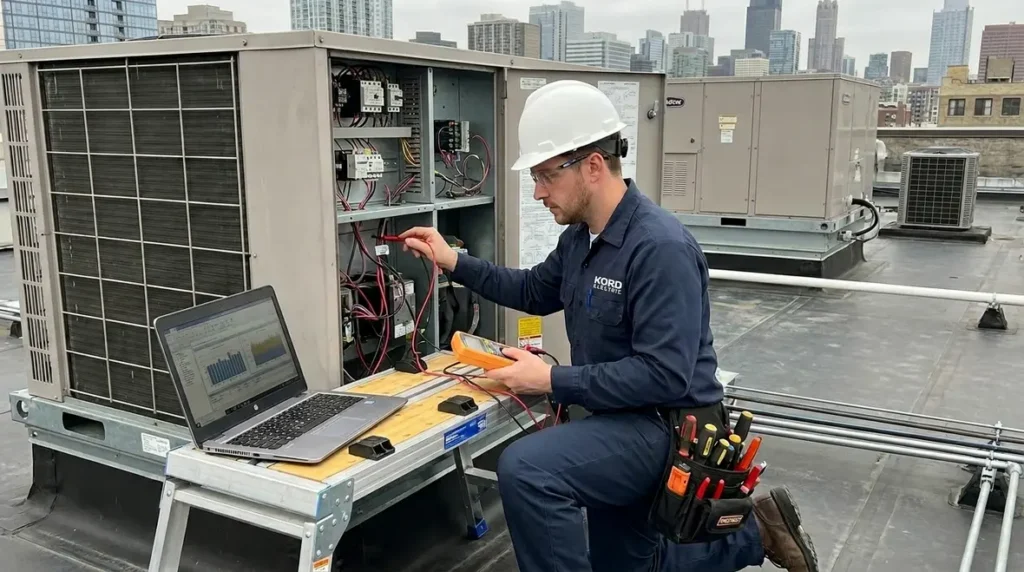
At Kord Electric, we start every troubleshooting job with workplace power quality monitoring that captures what the grid is doing at your facility, not what we hope it is doing. In the first few days, our team listens to the electrical story: voltage dips, frequency drift, harmonics, and those sneaky events that make equipment behave like it is tired and dramatic, even though it is brand new. Then, step by step, our technicians and expert service staff translate the data into clear next actions so your commercial and industrial systems can run consistently.
Troubleshooting power quality with monitoring that tells the truth
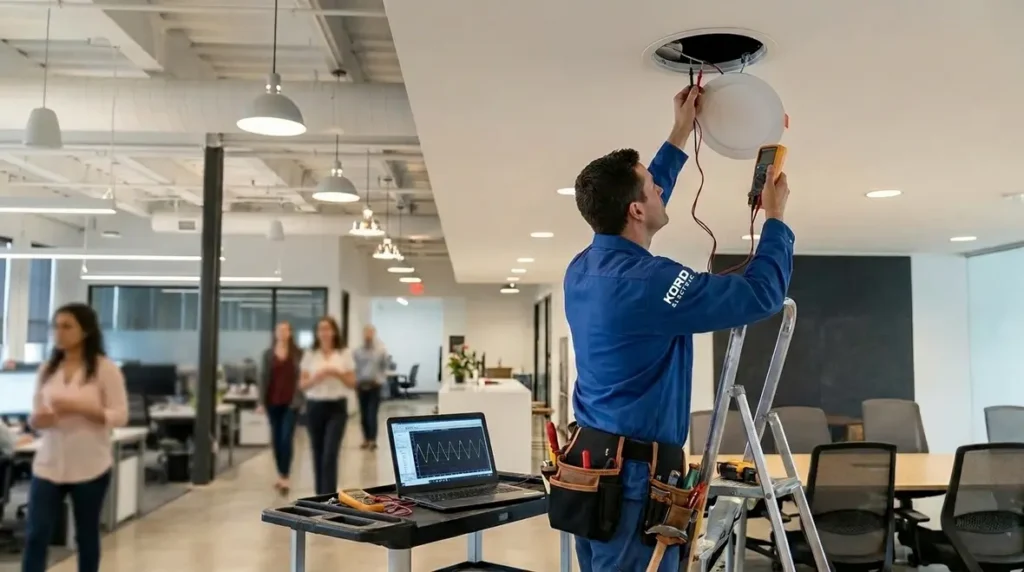
When power quality slips, the symptoms look random. A conveyor motor slows down. A production line restarts too often. An office wing’s lighting flickers at the same time every afternoon. However, human memory is unreliable, and “it happens all the time” rarely means “every time.” That is why we rely on workplace power quality monitoring using event capture and steady state measurements. Our technicians review waveforms, not just averages, so they can separate normal operation from real faults.
Moreover, we treat the electrical system like a living network. Instead of guessing, we measure at the right locations. Then we map the readings to loads, panels, feeders, and switchgear behavior. As a result, others can stop blaming new equipment or “bad luck.” In most commercial and industrial facilities, the root cause is a specific pattern: a torque event, a switching surge, a loose connection that heats up under load, or an arc that only shows itself during certain operating cycles.

What we measure, and why it matters to uptime
Monitoring does not just find a problem. It explains how and when it affects performance. Our expert service staff looks for several common categories because each one points to a different action plan. Here is how we approach the data.
Voltage sags and swells: These events can trip drives, reset controls, and cause process interruptions. We connect the timing to major start events and transfer operations.
Harmonics: Nonlinear loads create distortion that heats transformers, stresses motors, and can interfere with sensitive electronics. We confirm the harmonic profile and the likely source.
Frequency issues: Even small drift can affect some motor driven systems and synchronization controls.
Transients and switching spikes: These short events can damage power supplies and degrade insulation over time.
Unbalance: Uneven phase loading leads to overheating and uneven torque. We check current balance and look for single phase loading patterns.
Then we compare the measured power quality signals against the facility’s operational timeline. After that, we recommend corrections that reduce risk without slowing your work. For example, a drive complaint often traces back to supply conditions, not the drive itself. Yes, electronics can be moody, but when the waveforms look wrong, the culprit is usually upstream.

Where the trouble hides in commercial and industrial buildings
In major property buildings, power quality issues rarely stay in one box. They show up at the load, but they often start earlier. Therefore, our technicians trace from utility interface through distribution and into the end use equipment. We focus on the electrical paths that match your duty cycle and your critical loads.
Most of the time, we find trouble in places like these:
Incoming service and transformer area: connections, tap settings, aging equipment, and insulation health all affect voltage stability.
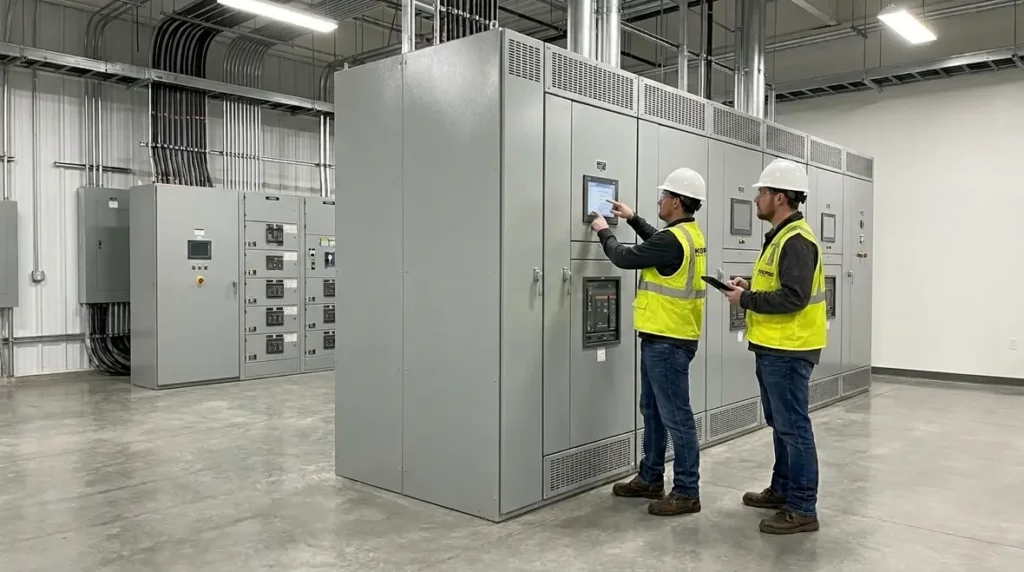
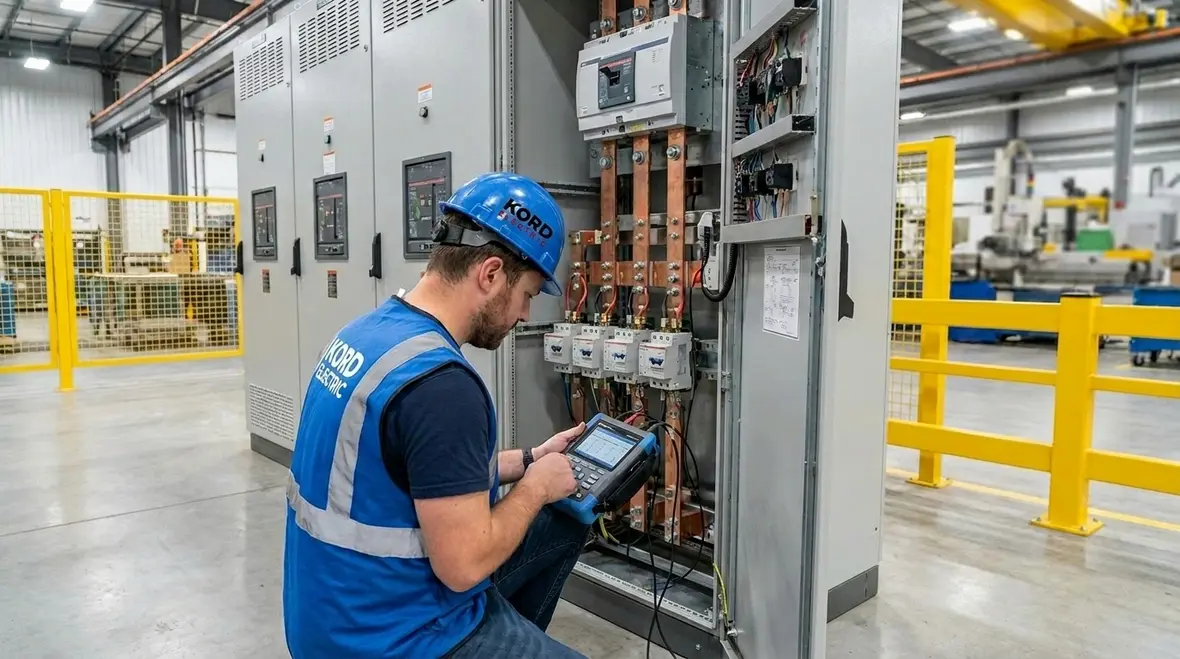
Switchgear and busbar connections: loose terminations can create intermittent arcs that are hard to catch without event capture.
Motor control centers and variable frequency drive panels: switching and rectifier behavior can introduce distortion and create momentary events.
Distribution feeders: long runs, improper grounding, and overloaded sections can raise unbalance and temperature stress.
Backup power interactions: generators and transfer switches can change the quality of power during switching. We verify timing and synchronization behavior.
At times, the “real” fault is not visible during calm hours. It appears only when a large pump starts, when chillers stage up, or when a production line changes speed. Consequently, we schedule monitoring to cover the operating windows that match your critical operations.

How we diagnose root causes and plan fixes
Once we gather readings, we do not just hand you a report. We conduct a structured diagnosis that connects the data to real equipment behavior. Our expert service staff explains findings in plain language, because a facility manager should not need an electrical engineering degree to understand risk.
First, we confirm the measurement validity. Then we align events to facility load logs, control sequences, and maintenance history. After that, we evaluate the likely sources based on the shape of the waveforms. For instance, a certain harmonic pattern often points to specific rectifier types, while certain transient shapes can match switching operations in distribution gear.
Next, we prioritize fixes by impact and urgency. We focus on solutions that reduce nuisance trips and equipment stress, while we keep safety and uptime front and center. Sometimes the best move is simple and fast, like tightening a connection and verifying torque. Other times, we recommend power factor correction, harmonic filtering, or coordination changes to protect controls and drives.
Here is a common scenario we see in commercial and industrial facilities. A team reports repeated drive trips. When we review workplace power quality monitoring, we find a voltage sag that coincides with a large motor start. Then, we check coordination settings and feeder loading. After we adjust the system and stabilize the supply, the drive trips drop dramatically. It is like finding out the smoke alarm was fine the whole time and the toaster was actually burning, not the wallpaper.

Monitoring plus maintenance: keeping power stable over time
After corrective work, many facilities think the job is done. In reality, power quality changes as operations evolve. New production steps start. Lighting upgrades roll out. A new pump gets added. Therefore, we plan monitoring as a process, not a one time photo shoot.
We help others build a repeatable rhythm. We capture baseline readings. We validate improvements. Then we monitor again after major changes. Additionally, our technicians recommend maintenance steps that protect stability, such as periodic inspections of terminations, verification of grounding connections, and confirmation of cooling performance in critical electrical rooms.
At Kord Electric, we also help teams set practical triggers for action. Instead of waiting for a failure, we define thresholds based on the event patterns we see. That means your staff can respond quickly and safely, with less guesswork and fewer emergency callouts. And yes, we know emergency callouts are popular in movies, but they are not a lifestyle anyone should settle for in a facility that runs every day.
For facilities that want a structured, long term approach, many teams also combine workplace power quality monitoring with broader electrical preventive maintenance programs that keep panels, switchgear, and critical circuits in healthy condition over time.
Dual column view: quick actions tied to power quality symptoms
|
Symptom in the facility What teams report during operations |
What our technicians check How monitoring narrows the cause |
|
Motor stalling or sluggish acceleration |
Voltage sag timing, unbalance, and feeder stress during starts |
|
Frequent drive faults or control resets |
Transient capture, waveform distortion, and supply stability at the drive panel |
|
Lighting flicker at predictable hours |
Sags or switching events, phase balance, and upstream switching activity |
|
Transformer or motor overheating complaints |
Harmonics, load imbalance, and sustained distortion levels |
In some facilities, these symptoms also connect directly to broader voltage stability issues. When instability begins as subtle swings rather than obvious failures, targeted support for voltage fluctuations in commercial and industrial buildings can work hand in hand with workplace power quality monitoring to protect sensitive systems.
FAQ about workplace power quality monitoring
Call Kord Electric for consistent performance
If your facility suffers from unexplained trips, unstable equipment behavior, or recurring “mystery” issues, you do not need more guesses. We want to capture the facts with workplace power quality monitoring, and then help your team fix the cause, not just the symptom. Our technicians and expert service staff bring clear explanations, targeted diagnostics, and practical next steps for commercial and industrial facilities.
For leaders responsible for production floors, major property buildings, and data-driven operations, pairing monitoring with structured service makes a measurable difference. In addition to workplace power quality monitoring, Kord Electric supports broader reliability efforts, from electrical preventive maintenance programs to focused services that resolve voltage fluctuations in commercial and industrial facilities before they turn into downtime stories.
If you are ready to move from mystery symptoms to clear, data-driven answers, Kord Electric can help you align monitoring, maintenance, and corrective work into one practical plan that protects uptime.