
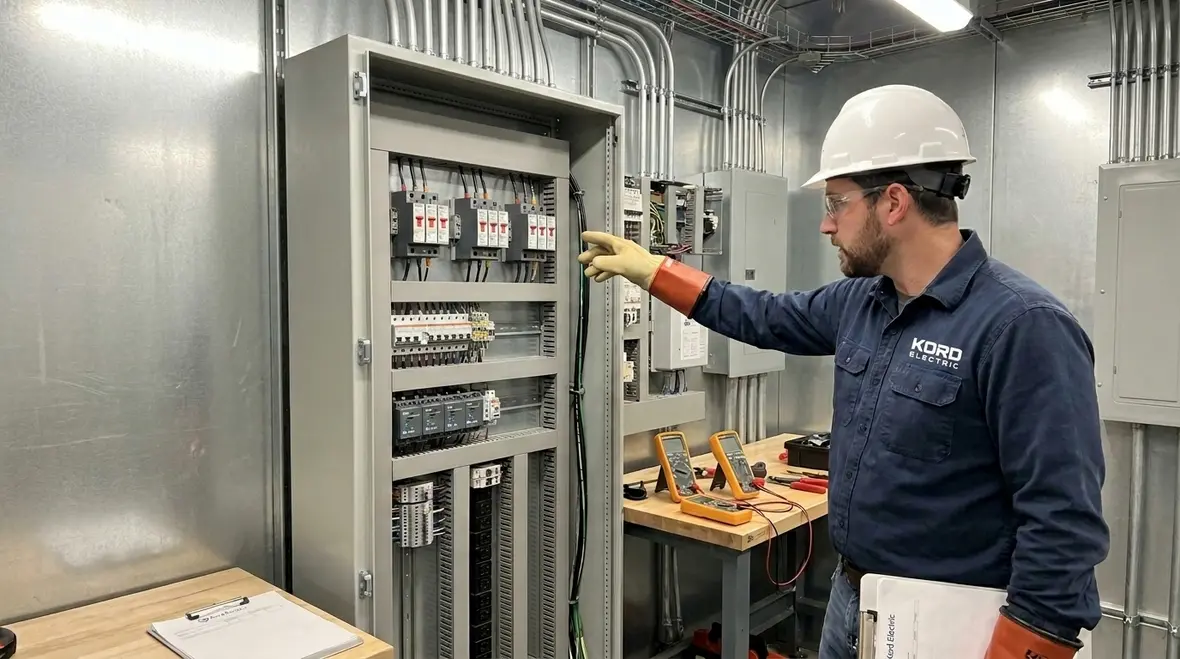
Advanced Surge Protection for Commercial Systems
Advanced Surge Protection Strategies for Commercial Electrical Systems
At Kord Electric, we know a commercial building does not get the luxury of “we will deal with it later.” That is why our technicians focus on advanced surge protection strategies for commercial electrical systems from day one, and then keep refining them as real-world conditions change. We plan protection like seasoned chefs plan a menu: one step alone will not save the day, but the full setup can. And yes, surges still show up uninvited, like a sitcom character who always enters at the worst time. We help major property buildings and industrial facilities reduce equipment stress, avoid nuisance downtime, and protect the systems businesses rely on daily.
In this article, our expert service staff explains how we build protection in layers, test what matters, and coordinate the whole electrical system so a surge does not travel like it owns the place.
Why surges hit commercial sites, and what it costs
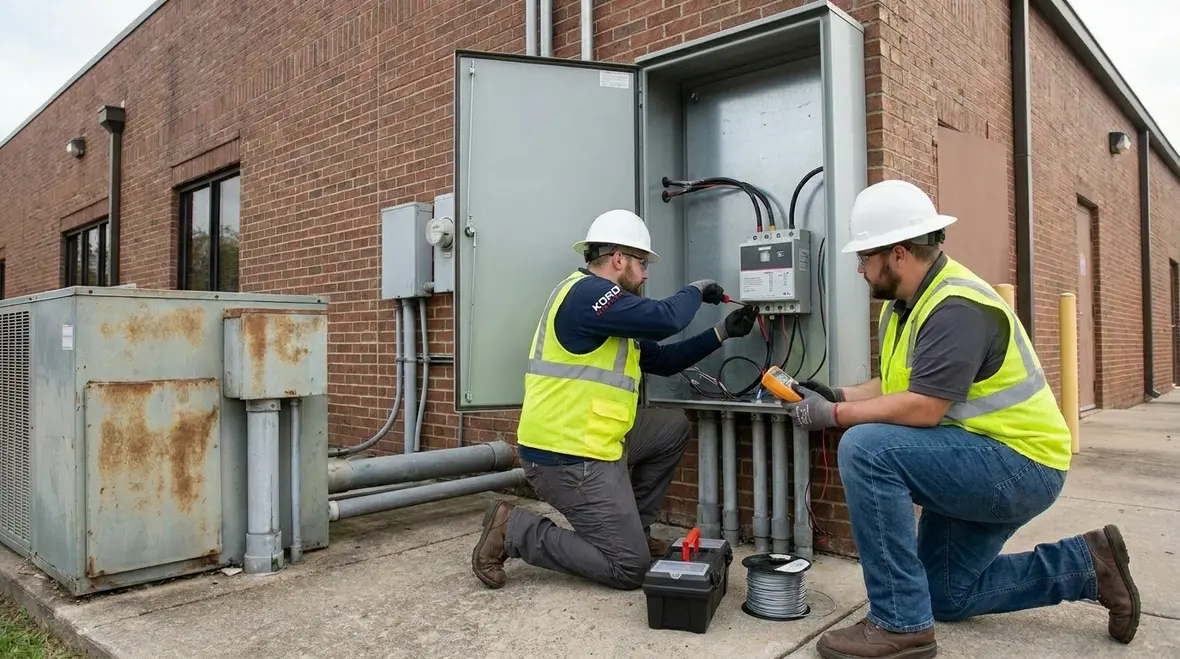
Commercial and industrial facilities face surges from multiple sources: utility switching, lightning exposure, motor starts, drives, solar inverters, and even normal operations that happen every day. While a typical residential home may survive with a few grumpy electronics, major property buildings carry lighting controls, HVAC systems, security platforms, elevators, communications gear, and process equipment that respond poorly to sudden voltage changes.
When surges pass through, they can cause silent damage. The equipment may still work, but performance degrades, parts wear faster, and failures show up weeks later. Therefore, companies often pay twice: once in repairs and again in downtime that interrupts operations. In addition, replacement timelines can stretch because many components require lead time, especially for industrial and custom control gear.
For facilities already dealing with unstable voltage, flicker, or nuisance trips, combining engineered surge protection with a structured maintenance program helps catch deeper infrastructure issues before they disrupt production or damage sensitive equipment. Many facilities pair surge strategies with diagnostics focused on voltage fluctuation and power quality review to understand how everyday conditions stress critical loads over time.
Layered protection: protect power, data, and the control layer

We do not rely on a single device and call it a day. Instead, we use a layered approach that matches how surges behave as they move through a system. First, we treat the service entrance and main distribution as the front line. Next, we protect branch circuits feeding sensitive loads, such as variable frequency drives, HVAC control panels, and lighting control modules. Then, we address the control and data paths, because control signals and communications cables can pick up energy just as easily as power conductors.
Our technicians also consider coordination, meaning protective devices work together instead of fighting each other. If devices fail to coordinate, one may clamp too late or too early, which shifts stress downstream. However, when we coordinate properly, the energy drains in a controlled way and stays within the equipment’s safe limits.
We also look beyond the obvious high-voltage gear. Building automation networks, access control cabling, and low-voltage control loops can all become hidden surge pathways. Treating those lines as part of the same protective envelope as the switchgear keeps sensitive electronics from becoming the “weakest link” every time a disturbance hits the building.
How layered commercial surge protection strategies work in practice
In a typical major property building, we may specify a high-capacity Type 1 SPD at the service entrance, coordinated Type 2 devices at main distribution panels, and finely tuned protection at branch panels feeding critical areas such as data rooms, elevator controls, and mechanical spaces. From there, we select point-of-use devices and data line protection where particularly sensitive loads live. The result is a staircase of protection levels that intercepts energy gradually rather than forcing one device to do all the work.
Designing coordination with SPD selection and placement
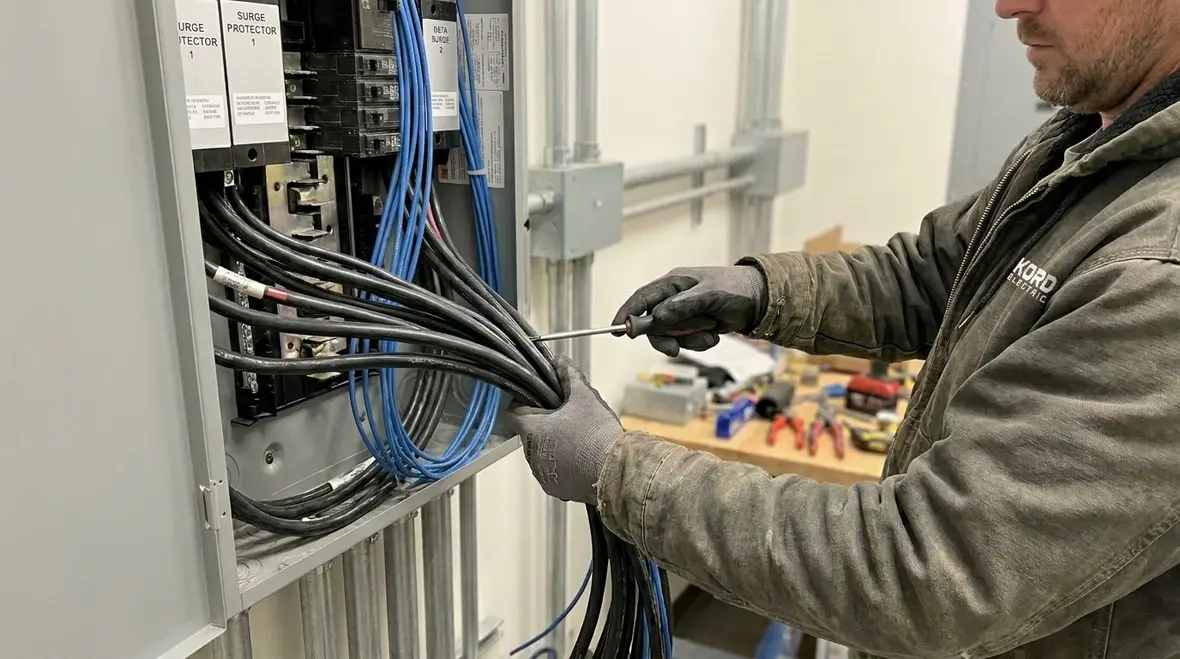
When we speak with others in facility management, the same question comes up: “Which surge protective device should we buy?” We answer with a more useful idea: the best choice depends on the electrical design, load types, and the building’s grounding and bonding conditions.
We help teams by selecting surge protective devices based on their role in the system. We evaluate voltage ratings, surge current capacity, clamping levels, and response characteristics. We also confirm where devices install so they shorten the path the surge must take. In other words, placement matters. A good SPD located far from the panel or equipment it protects can act like putting a fire extinguisher in the parking lot and hoping the smoke teleports.
Then we verify grounding and bonding because a surge cannot safely “go somewhere” if the pathway is inconsistent. Our expert service staff explains that bonding keeps metal parts at compatible electrical potential, which reduces the chance of stray current, equipment noise, and damage to control electronics.
Coordinating surge devices with maintenance planning
Good commercial surge protection strategies never sit on their own island. We align device selection and placement with broader electrical preventive maintenance so inspections, testing, and upgrades all pull in the same direction. When coordination is built into the maintenance cycle, facility teams do not just install SPDs and forget them; they verify performance and adjust as the building evolves.
Testing, monitoring, and documentation in our maintenance plans
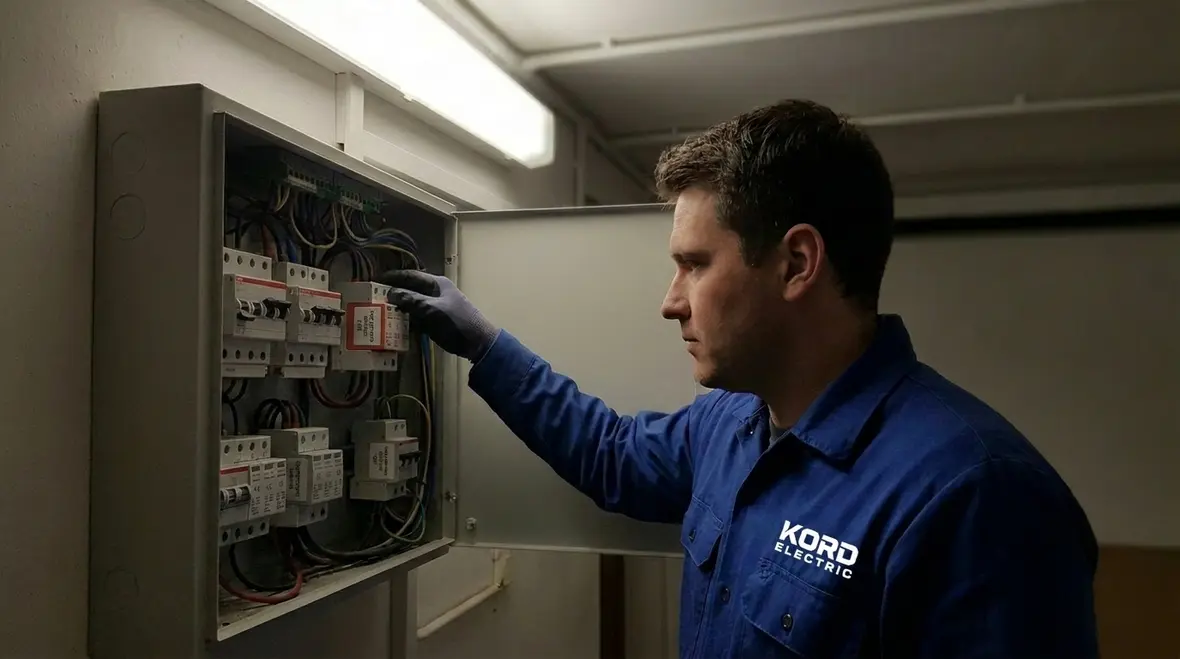
Protection that never gets checked is like an alarm system with the batteries removed. So, we build testing and documentation into commercial and industrial electrical maintenance plans. If you have not already seen our approach to maintenance scheduling, our team follows a structured method, then adjusts the plan based on your site’s risk profile and operating patterns.
To keep things practical, we focus on what we can measure. We inspect SPD indicators, verify connections, and check for signs of wear, heat, or loose terminations at distribution points. Additionally, we review event history where available, so your team understands what the site experienced and how close it came to damaging thresholds.
Most important, we document findings in a way facility teams can use. Therefore, your maintenance crew does not rely on “memory” or vague notes. Instead, they get clear records that support future upgrades, budgeting, and compliance needs for major property buildings and industrial facilities.
If you want a deeper look at how we structure those programs, explore our detailed guide on commercial and industrial electrical maintenance plans, where we walk through how routine inspections, power quality analysis, and reporting all reinforce long-term system reliability.
Why surge protection belongs inside your preventive maintenance plan
When surge devices are folded into a preventive maintenance routine, facility managers gain hard data instead of wishful thinking. Thermal scans, torque checks, visual inspections, and power quality logging all help confirm whether commercial surge protection strategies are performing as intended or whether upgrades, replacements, or additional layers are needed to match current risk.
Managing power quality and sensitive loads
Surge protection works best when it sits inside a bigger power quality strategy. At Kord Electric, we look at harmonics, voltage dips, and the way sensitive loads behave under stress. For example, in a commercial mechanical room, variable speed drives can create ripple effects in the electrical environment. If the system lacks proper filtering and coordination, the combination of surges and distortion becomes more damaging than either issue alone.
We also pay attention to the “quiet” equipment that people forget until it stops working: control transformers, PLC racks, network switches, access control systems, and building automation interfaces. These devices may not fail instantly. Yet they can degrade over time, which is why our technicians treat surge protection strategies for commercial electrical systems as part of an integrated reliability plan.
And yes, reliability is a business decision. If your building automation fails at 2 a m, your staff will learn what sleep deprivation really is. Let us help you avoid that training program.
Connecting surge protection with broader commercial power services
Voltage stability, panel capacity, and grounding quality all influence how well surge protection performs. That is why many facility teams pair surge reviews with services focused on voltage fluctuation, panel labeling, or electrical safety compliance. When these areas move in step, commercial surge protection strategies become part of a larger framework that keeps equipment healthy and operations predictable.
Where and how we add protection across panels, feeders, and equipment
Every major property building has a different electrical layout, and industrial facilities can vary even more. For that reason, we map your distribution paths and identify vulnerable points. Then we add protection where it helps most, not where it sounds good in a brochure.
Common targets include service entrance gear, main switchboards, distribution panels feeding HVAC controls, lighting control panels, and branch circuits that supply sensitive equipment. We also evaluate feeder routes and cable types, since surge energy can couple through certain conductor layouts.
In industrial settings, we additionally consider equipment cabinets, power distribution for process areas, and any panels serving control systems linked to production. Our expert service staff walks your team through the results in plain language, so facility managers understand not only what we installed, but why it belongs there.
Then, as part of ongoing maintenance, we re-check connections and device condition. We know that vibration, thermal cycling, and construction changes can affect performance. Therefore, we plan follow-ups as part of a long-term electrical strategy.
Coordinating surge protection with other commercial upgrades
Many facilities address surge protection alongside larger projects such as rewiring, lighting improvements, or electrical preventive maintenance. When panels are already being opened and circuits evaluated, it becomes the ideal time to confirm SPD placement, add new devices where needed, and verify labeling so everyone knows exactly which equipment is protected and how.
FAQ
Call Kord Electric for a surge protection review
If you operate a major property building or an industrial facility, you need surge protection strategies that match your system, your loads, and your maintenance schedule. Kord Electric brings expert service staff, proven testing, and coordinated design so your electrical gear stays reliable when the unexpected shows up. Contact us to review your service entrance, distribution panels, and sensitive control loads, then build a plan that fits your risk level and operating needs. Let’s protect what powers your business, quietly and confidently.
To make surge planning even more effective, many clients combine a surge protection review with dedicated electrical preventive maintenance services. This gives your facility a coordinated plan for inspections, testing, surge protection, and long-term system reliability under one umbrella.
If your building is already experiencing unstable power, voltage swings, or unexplained downtime, our team can also connect surge protection design with broader power quality diagnostics so problems are corrected at the source, not just treated at the surface.


