EV Charger Station Scalability for Commercial Sites
Commercial and industrial owners increasingly ask one quiet but serious question: how do we plan for EV charger growth without tearing up the electrical room later? That’s where EV charger station scalability matters. At Kord Electric, we plan charging the way smart operators plan parking, not like people who build a boat then decide they also need a submarine. Using calm, step by step guidance from our technicians and expert service staff, we help facilities add ports over time while keeping power stable, permits in order, and downtime low. And yes, we know nobody wants a surprise shutdown. We would rather earn your trust than read your emergency text at 2 a.m.
Commercial EV charging planning that avoids future electrical stress
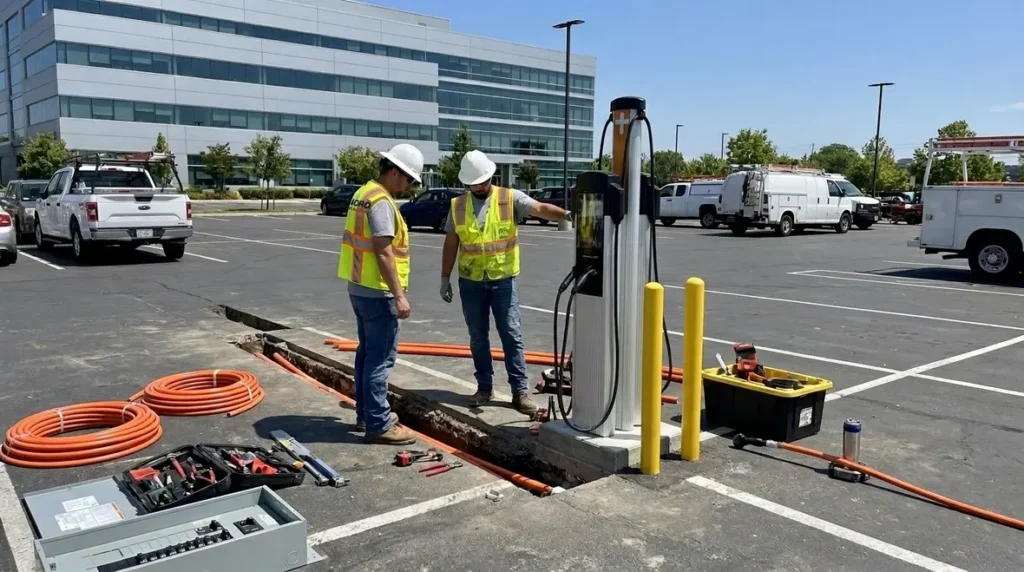
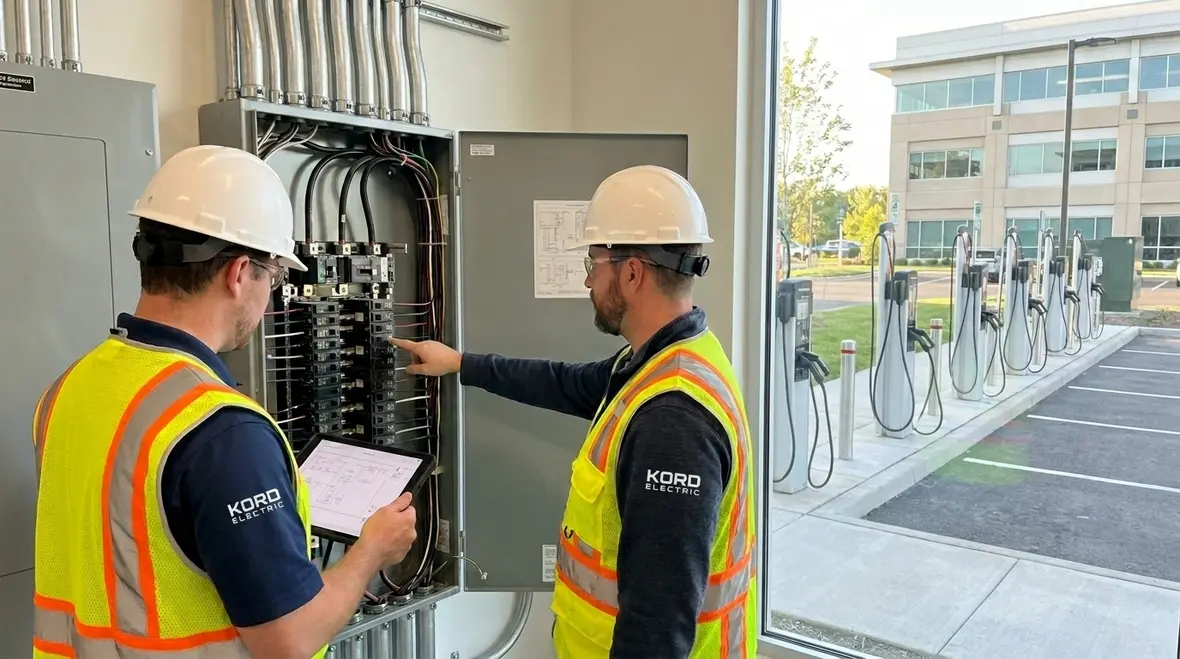
In most major property buildings, the electrical system behaves like a nervous orchestra. When you add chargers without a plan, the system starts playing louder than it should. Therefore, we begin with load planning before we pull a single cable. We review the service size, transformer capacity, panel schedules, and existing mechanical loads. Then, we look at how charging demand changes across the day, not just the average month.
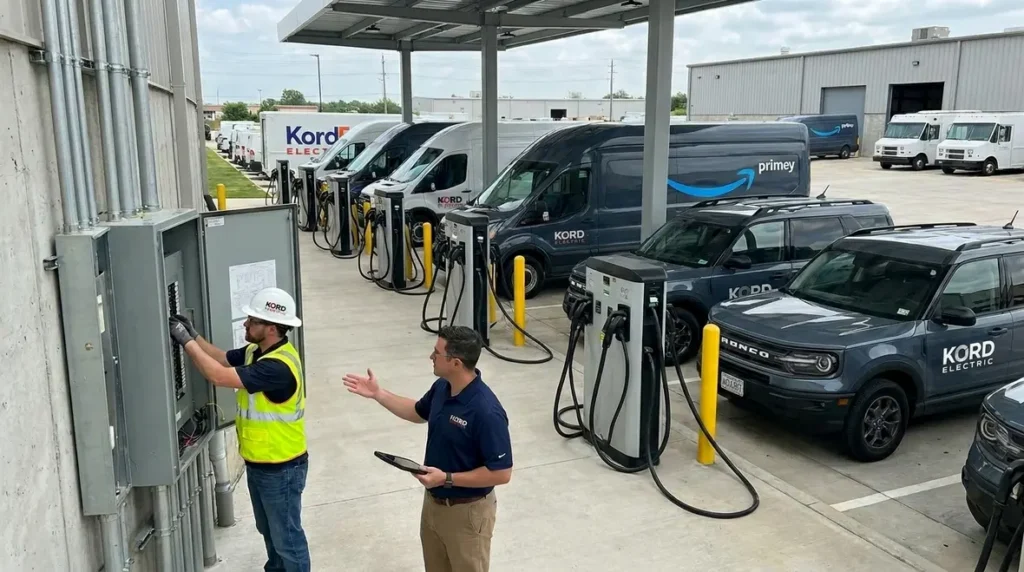
Next, our team maps out a clear path for expansion. For example, we identify where future branch circuits can land and where conduit space can remain open. As a result, adding more stations later becomes a controlled upgrade instead of a rushed construction event. Meanwhile, we also consider charging behavior. Some fleets charge in waves after shifts, while visitors charge in bursts. That timing affects the peak draw and helps us design smarter power management.
Finally, we align the plan with how your facility actually operates. If operations run seven days a week, we schedule work in low impact windows. If your staff counts on predictable power, we build in safeguards that reduce surprises. Our expert service staff explains each decision in plain language, so others in your organization can confidently support the project.
Why load management and future cabling pathways matter
When people hear “scalability,” they often picture only more charger stations. However, scalability starts earlier: with the electrical backbone. We use load management strategies that allow the system to share capacity when multiple vehicles charge at once. In turn, this helps avoid upgrading the entire service just because you added a few more ports.
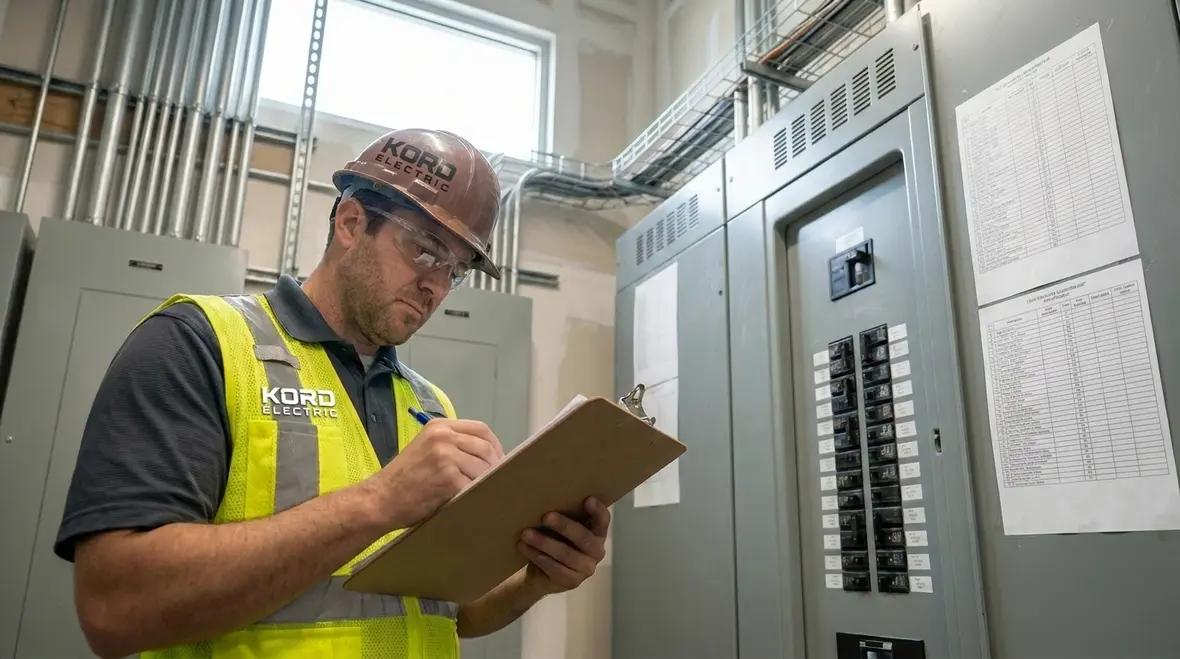
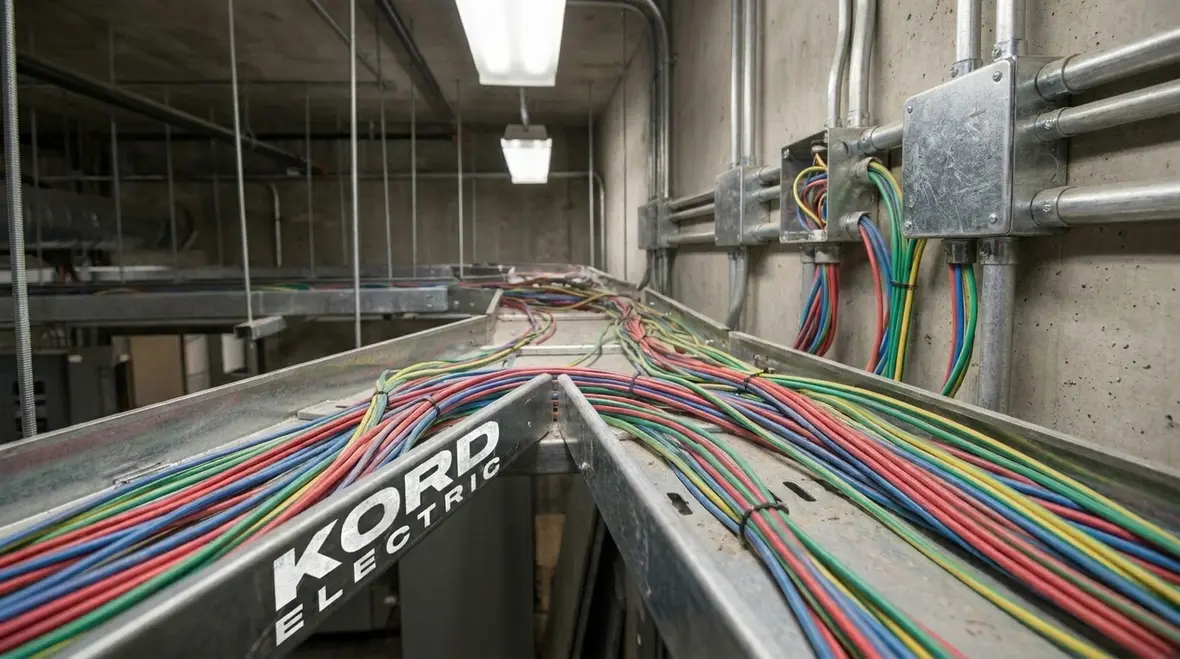
We also focus on cabling pathways and panel allocation. Even when the current load fits, the physical route for future wiring can become the real bottleneck. Therefore, we plan conduit runs, cable trays, and pull boxes with expansion in mind. If a facility closes ceilings or racks permanently, then later additions can turn into expensive demolition. We avoid that by laying out a route that supports phased growth.
In addition, we plan for proper ratings and protection. We size components for safe operation under real conditions, not only ideal ones. Then we add the right controls so the charging system can respond to changing demand. That is how we keep the electrical system calm while the parking lot gets busier.
How Kord Electric fits EV charging into a long term maintenance mindset
Many commercial and industrial owners treat electrical work as a set of one time tasks. Then, years later, they act shocked that wear shows up. Our approach runs deeper. We connect installation planning to long term maintenance and performance checks, especially for high use equipment like EV chargers.
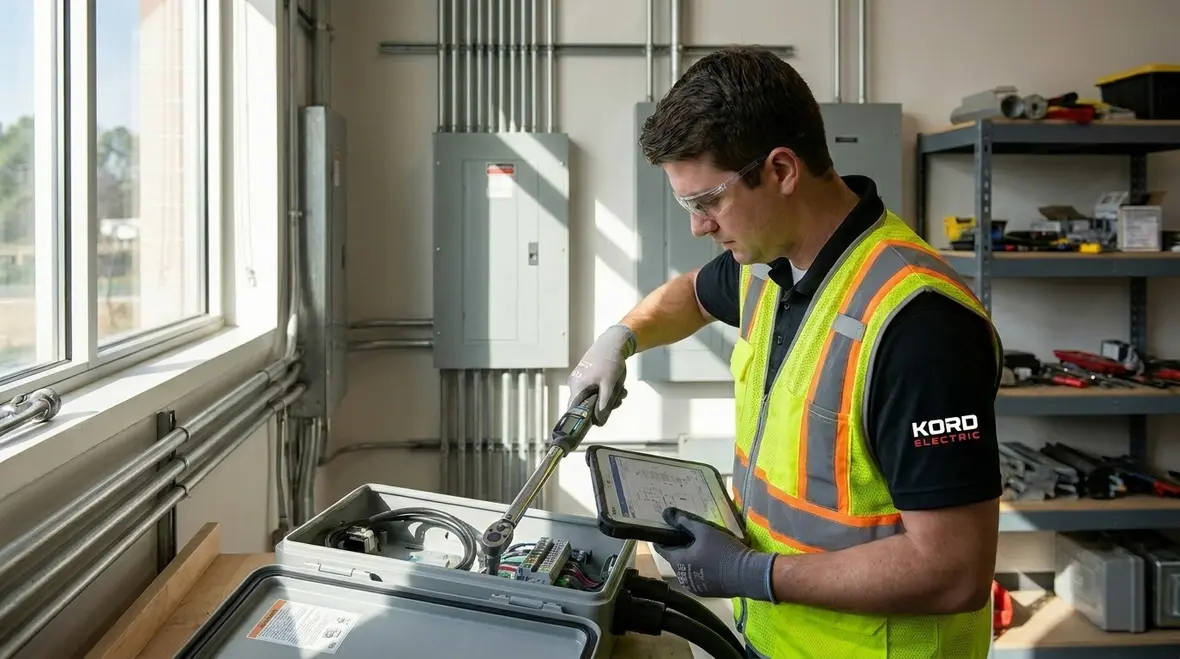
When you follow the model described in our commercial and industrial electrical maintenance plan, you stop guessing and start tracking. You see what is changing, and you act before the small issues grow loud. Our technicians and expert service staff use structured inspections to verify connections, protective devices, and safe operation. They also review performance trends so you can plan service around real data.
For example, we look at torque on critical terminations, evaluate thermal conditions, and check for signs of moisture or heat stress in equipment rooms. We also verify that charging equipment controls operate as intended. In practice, this prevents downtime and protects your investment. And yes, nobody enjoys the “everything is fine” moment right before it is not.
Phased installation strategy for major property buildings
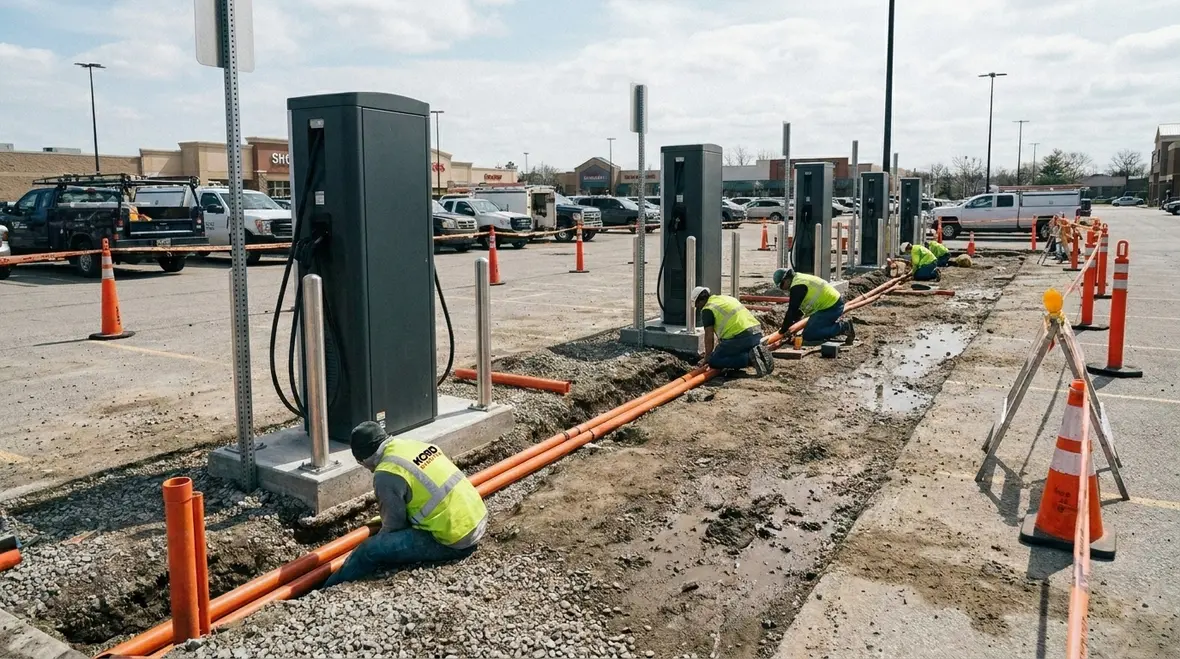
Large facilities rarely add chargers all at once. Instead, they grow in phases based on demand, fleet contracts, and budget cycles. That means the initial design must support the next phases without breaking the first one. We build phased installation plans that keep the site usable during upgrades, and we do it with clear milestones.
First, we define the target growth window. We ask what you want in year one, year two, and beyond. Then we translate those goals into electrical capacity and layout needs. Next, we choose equipment and wiring routes that leave room for additional ports. If a future area needs chargers, we can pre plan conduit locations so the expansion work stays focused and fast.
Also, we coordinate with site stakeholders. Property managers, facility supervisors, and maintenance leads all have different priorities. Our technicians explain what will happen, where access is needed, and how long the downtime risk lasts. As a result, the work fits the building rhythm rather than disrupting it.
Finally, we document the installation details clearly. That way, when a new charging phase begins, your team already has the information needed to move ahead safely and quickly.
Safety, permits, and reliability in real building conditions
Commercial and industrial projects carry real consequences when safety gets treated like an afterthought. Therefore, we take permitting, code compliance, and safety checks seriously at every step. We also account for real conditions, like heat in equipment rooms, vibration near mechanical areas, and access limits for maintenance.
Moreover, EV charging adds continuous load, so it changes how equipment should be monitored. We ensure that protective devices and conductors match the expected load and the charging pattern. We also verify grounding and bonding so fault protection stays reliable. If your chargers share power with other building loads, we confirm that the system behaves properly under peak demand.
Reliability also means communication and controls. We test how the charging network responds to demand changes and confirm stable operation. Then we verify that the charger stations report status correctly, so your team knows what is happening without guessing.
And here is the part where we try to keep everyone sane: we make sure your staff understands the system basics. Our expert service staff walks through safe use expectations, what alerts mean, and how to request support. That reduces confusion and prevents small problems from becoming bigger ones.
Financing and operational planning for charger growth
Owners do not only ask about hardware. They ask about budgets, scheduling, and operational impact. In other words, EV charger station scalability includes how you manage costs and disruptions over time. We help by designing systems that limit expensive rework and reduce the chance of repeat construction.
For example, when we plan for expansion early, we often avoid costly upgrades to panels, conduit routes, or service elements that would otherwise need to be replaced later. That reduces the total cost across phases. It also helps you plan work during scheduled maintenance windows instead of emergency repairs.
Operational planning also includes staff training and service response. If a charger fails, you want a clear process for reporting and restoring service. Our service team supports commercial and industrial facilities with a focus on uptime and safe operation. In addition, we align the maintenance schedule with how your building runs. If traffic peaks during certain hours, we plan inspections around that reality.
So, while people love to talk about “future proofing,” we prefer practical planning. We build a system that can grow without turning your electrical infrastructure into a never ending construction site.
FAQ
Conclusion: call Kord Electric before you grow
If you are planning EV charging for a commercial or industrial facility, start with smart, scalable design now, not after the first expansion. Kord Electric helps major property buildings add chargers in phases with load planning, safe installation, and ongoing maintenance thinking. Our technicians and expert service staff walk you through each step, so your team understands what is built and why it will last.
To explore how this planning connects with broader maintenance, you can review our commercial and industrial electrical maintenance plans for a deeper look at long term reliability. And when you are ready to turn design into installed hardware, Kord Electric’s dedicated EV charger installation services help you move from EV charger station scalability on paper to safe, code compliant stations in the field.
Contact us today to plan your next charging phase with confidence, keep your electrical system steady as demand grows, and align EV charging with the rest of your commercial or industrial electrical strategy.