
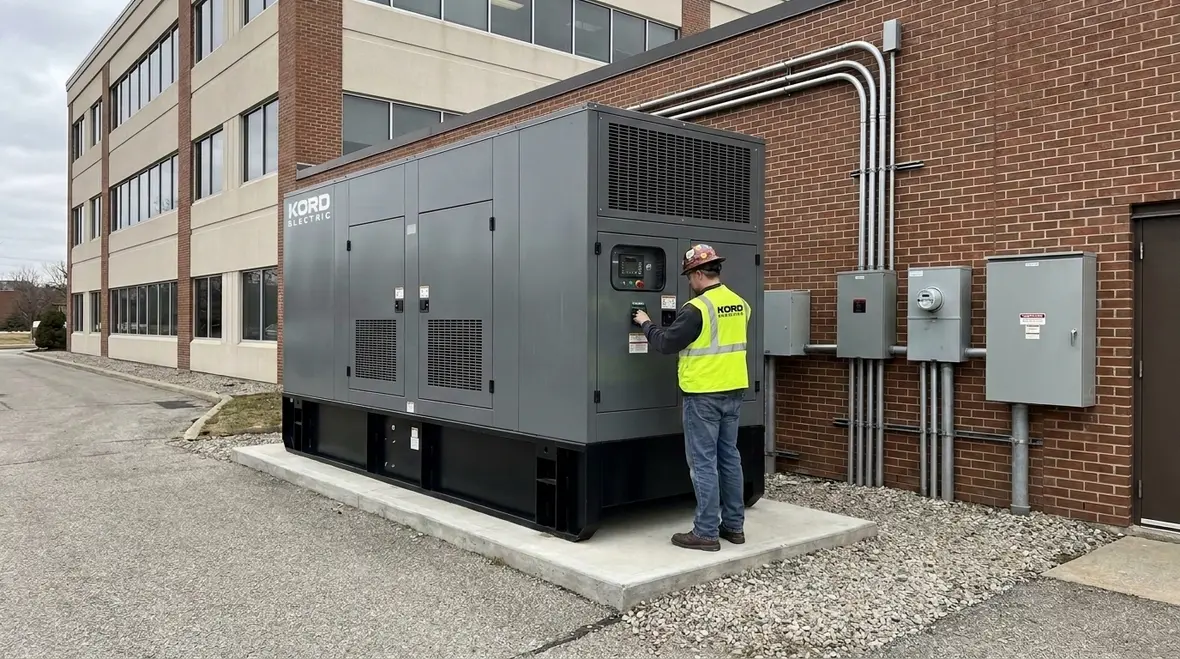
Backup Power Solutions for Commercial Buildings
Backup power that keeps commercial life running during outages
When the lights go out in a storefront, the impact feels immediate. Yet for owners of office parks, warehouses, hospitals, multi tenant buildings, and other commercial and industrial facilities, an outage is more than inconvenience. It is risk, lost productivity, and sometimes safety issues. That is why backup power solutions commercial buildings depend on planning, correct equipment, and clean installation. At Kord Electric, we help facilities stay steady when utility power fails. And yes, we explain everything clearly so the system does not feel like a mystery box that occasionally beeps like a smoke alarm with opinions.
In this guide, we cover what a facility should expect before, during, and after an outage. Then we walk through generator sizing, transfer equipment, monitoring, and maintenance so the backup system performs when it matters most.
How facilities choose standby generator power that fits real demand

Commercial buildings do not all load the same. Therefore, the correct approach starts with measuring what the facility actually runs. Kord Electric technicians begin with a load review that considers HVAC, lighting, refrigeration, pumps, elevators, IT racks, and any specialized process equipment. Then, we identify which loads must run, which loads can wait, and which loads should never share the same starting surge.
Next, we determine whether the generator must handle continuous loads, startup loads, or both. For instance, cooling systems can draw high starting current. Meanwhile, refrigeration compressors may cycle on and off. As a result, oversizing can waste money, and undersizing can lead to nuisance shutdowns.
Also, people often assume “bigger is safer.” That idea sounds good until the power transfer happens and the system behaves like it has stage fright. We plan for stability instead. Because when a major property needs power, it cannot afford guesswork.
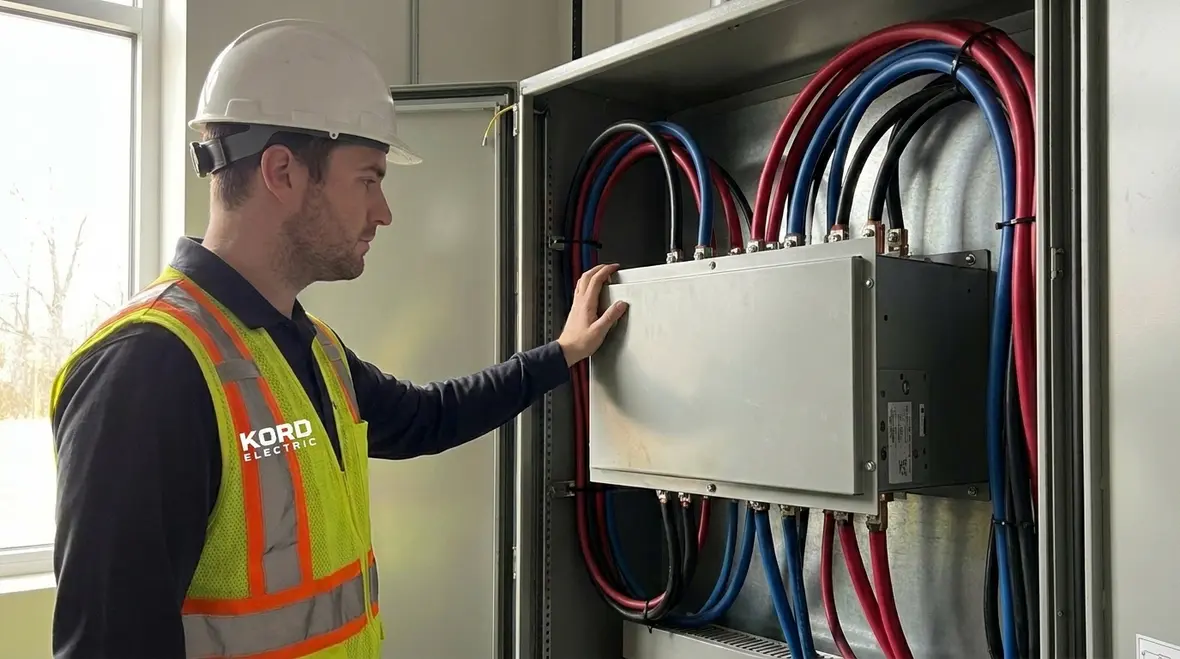
For facilities that want to dive deeper into project planning, Kord Electric’s generator installation cost guide for commercial facilities explains how real load calculations, site conditions, and transfer equipment all shape the final system budget instead of leaving it to guesswork.
Transfer switches and safe power flow, explained in plain language
Many outages happen fast. So, facilities require a quick, safe changeover from utility power to generator power. That changeover happens through transfer equipment. For most commercial and industrial applications, a well matched transfer switch prevents backfeed and keeps the generator isolated from the grid.
At Kord Electric, our expert service staff explain the basic sequence in a way operators can understand. First, utility power drops. Then the control system detects the event. After that, the generator starts and the transfer switch moves loads to the generator. Finally, the facility runs on standby until utility power returns, and the system transitions back with proper timing.
Now, here is where things get practical. If the transfer timing does not match the building’s operating needs, sensitive equipment can suffer. However, when the controls and protection align with the load type, the changeover stays smooth.
In larger sites that depend on critical continuity, those transfer schemes often go hand in hand with broader emergency power design and testing practices, such as the approaches Kord Electric describes in their emergency power and continuity planning resources. Together, they help ensure the transition from utility to backup power feels like a controlled sequence, not a surprise jump cut.
Site planning and generator installation details that affect performance
In commercial generator installation, the job does not end when the unit sits on the pad. Therefore, Kord Electric follows the installation guide mindset: correct location, proper ventilation, correct exhaust routing, solid electrical connections, and dependable control wiring. When a facility wants consistent uptime, these details matter.
For example, we confirm the generator location supports safe access for service. We also consider noise, airflow, and code requirements. Likewise, we verify fuel setup and fuel storage planning so the system can run long enough during extended outages. If the facility uses natural gas, we coordinate gas supply considerations. If it uses diesel, we help plan for on site storage and safe handling.
We also pay attention to the electrical pathway. That includes correct conduit routing, safe bonding and grounding, and correct sizing of conductors. Additionally, we verify that load circuits and controls meet the planned transfer strategy. When we do it right the first time, the system performs like a professional: calm, steady, and ready.
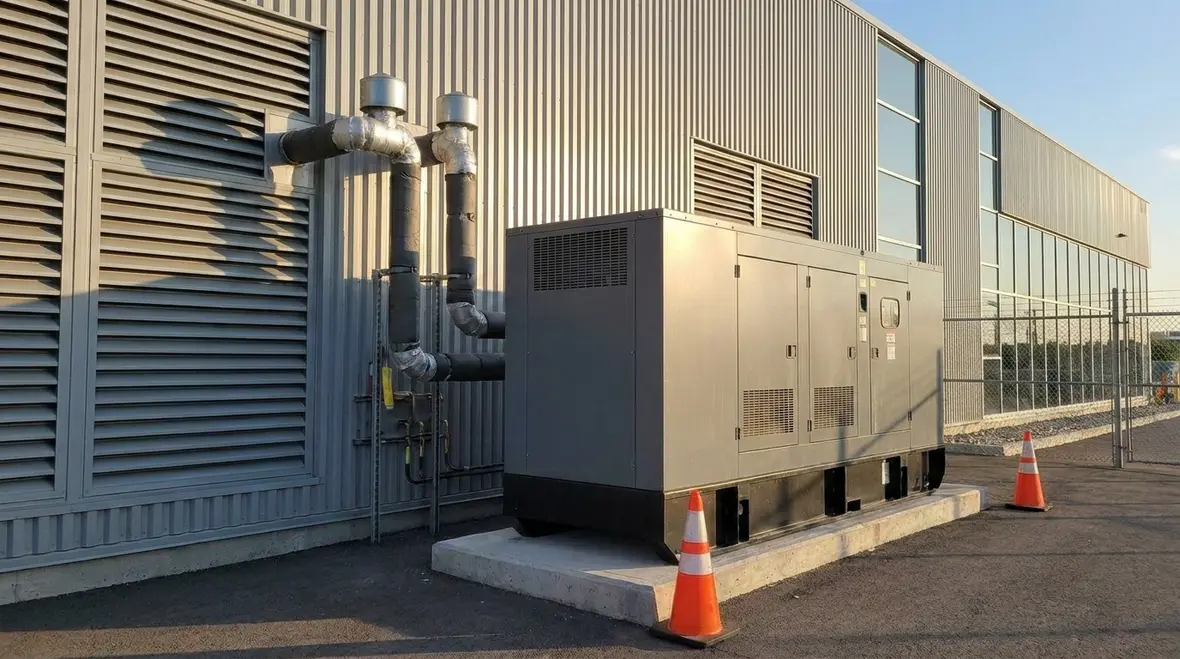
If your facility is mapping out wider upgrades, Kord Electric’s electrical infrastructure upgrade planning guide shows how to fold generator and backup power planning into broader electrical improvements so the whole system grows together instead of in isolated patches.
Monitoring, control, and how teams manage outages without panic
Power systems are not just hardware anymore. In fact, many facilities now expect remote monitoring and status alerts. Consequently, the generator controller and transfer controls should provide clear signals about operating modes, maintenance intervals, and fault states.
Kord Electric helps our commercial clients plan a simple operating approach. During an outage, the goal is not to troubleshoot. Instead, the goal is to keep critical systems running while the right people handle communications and recovery. Therefore, we recommend clear alarm setup and a simple escalation plan.
Our technicians also coach facility managers on what they will see. They explain startup behavior, load acceptance, and what normal alarms look like. In the same way you would teach someone the rules before a game, we make sure operators understand the system’s “language.” That reduces downtime, and it reduces the kind of confusion that feels like trying to stream a show on a bad Wi Fi night.
And when utility power returns, we ensure the return to normal happens as intended. That includes timing, stable voltage control, and transfer back to utility after conditions meet safe criteria.
Maintenance schedules that keep standby systems ready, not hopeful
A generator can look perfect and still fail when asked to perform. That is why planned maintenance matters for backup power solutions commercial buildings. Our team emphasizes a schedule that matches the equipment and the building’s risk profile. For major properties, we recommend maintenance that covers engine health, battery condition, transfer switch operation, and load testing when appropriate.
During routine service, our technicians inspect key components and verify control function. They also check for signs of wear, leaks, or abnormal voltage behavior. Meanwhile, they test start and transfer logic so the system behaves as the design intended.
We also help clients understand the tradeoffs of “waiting until something breaks.” In a commercial environment, that is gambling with operations. Instead, we take a proactive path. When the plan is followed, the system’s reliability rises and surprises drop.
For facilities that operate across multiple tenants and critical services, pairing generator maintenance with a structured electrical preventive maintenance plan creates a consistent rhythm of testing, documentation, and fine tuning, so the entire electrical ecosystem supports uptime instead of reacting to emergencies.
Common mistakes in commercial backup power projects
Many problems we see come from avoidable errors during planning or installation. First, some facilities skip a real load analysis and size the generator based on guesswork. Then, others choose transfer equipment without matching the electrical protection needs. After that, teams might overlook fuel setup and run time assumptions.
Another mistake involves service access and ventilation. If the unit cannot be serviced safely or its airflow gets restricted, technicians cannot maintain it properly. Also, poor cable routing and incorrect grounding can cause nuisance faults or harmful conditions.
Finally, teams sometimes treat the system as “set it and forget it.” However, backup power is not a decoration. It works best when trained operators, clear monitoring, and disciplined maintenance support it.
Kord Electric helps commercial and industrial facilities avoid those issues. We bring a structured process so the finished system aligns with the building’s real needs, not just the brochure. For owners across the region, that same disciplined approach extends to broader Los Angeles County electrical services that tie backup systems, distribution, and safety into one coordinated plan.
FAQ
Conclusion: plan your outage readiness with Kord Electric
When a facility depends on uptime, backup power cannot be an afterthought. Kord Electric supports commercial and industrial buildings with careful planning, professional generator installation, clear system explanations, and maintenance that keeps equipment ready. If your team wants a stable plan for outages, we will review your loads and recommend the right setup. Then our expert technicians install and support the system so your operations stay powered. Whether you are evaluating new generators or tying them into wider electrical improvements, Kord Electric also offers dedicated commercial generator installation guidance so your project supports a long term resilience strategy, not just a single purchase.
If you are planning upgrades across a portfolio of properties, our commercial services team can align backup power design, transfer schemes, and maintenance schedules so every building follows the same playbook when the grid misbehaves. That way, when the next outage arrives, your tenants and teams experience a calm, coordinated response instead of a scramble.
From initial assessment through installation and long term maintenance, Kord Electric delivers backup power solutions commercial buildings rely on when utility service fails. Connect with our team to review your current setup, identify gaps, and design a roadmap that keeps your operations running.


