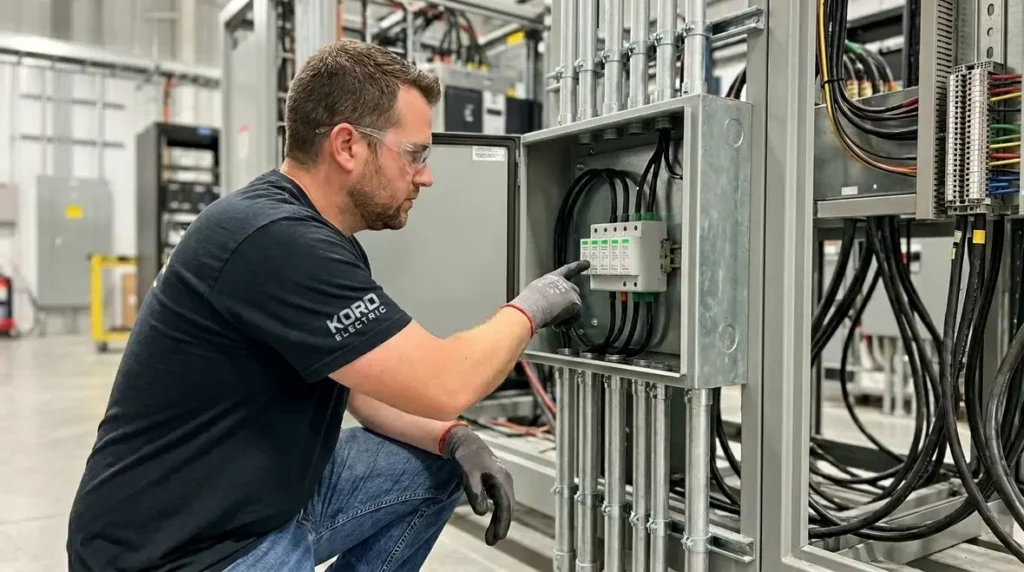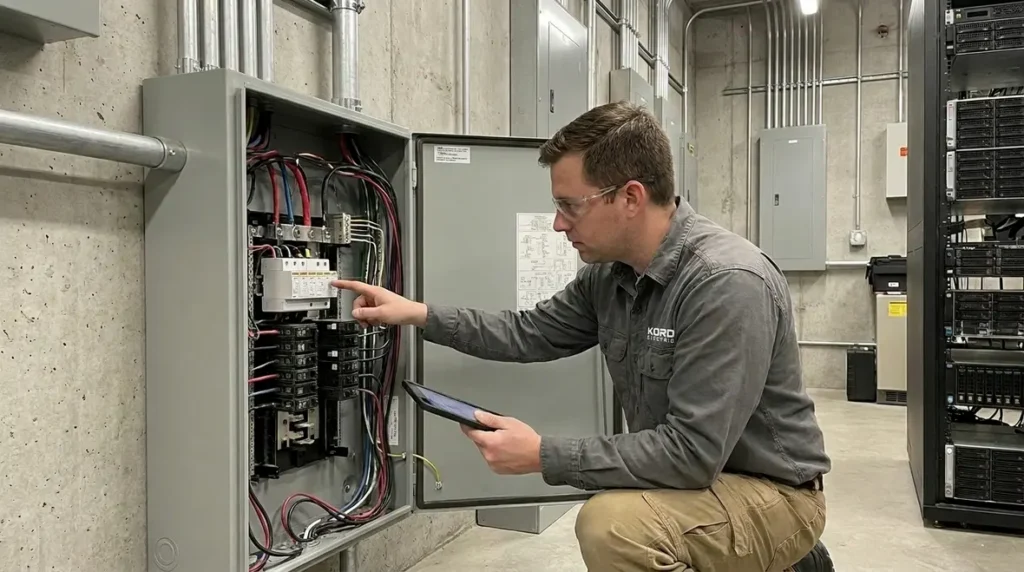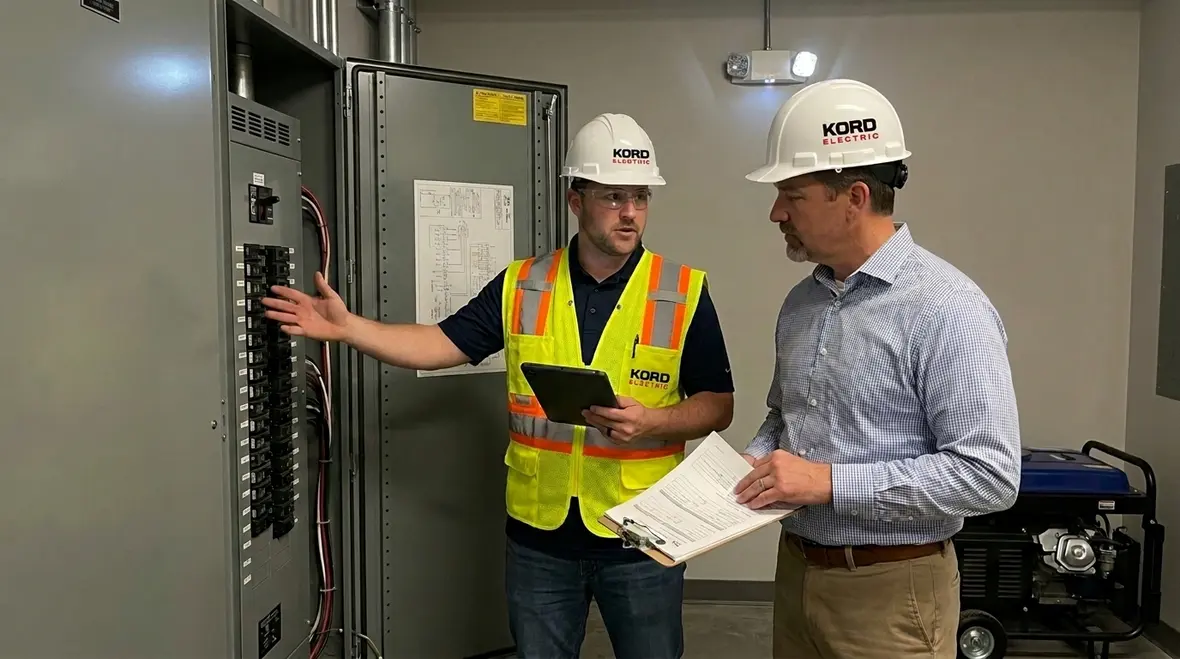
Business Continuity Plan for Electrical Failures
When the lights go out at a commercial site, people tend to react like it is a surprise plot twist, even though the last outage should have already taught everyone the lesson. That is why Kord Electric supports a business electrical emergency response approach, so teams can stabilize power fast, protect equipment, and reduce downtime while decisions stay clear.
In this article, we explain how we develop a Business Continuity Plan for electrical failures for commercial and industrial facilities and major property buildings only. Then we show how our technicians and expert service staff walk clients through the process in plain language, because complicated talk during a crisis helps nobody, including the HVAC system.
What a Business Continuity Plan does when electrical power fails
In practice, a Business Continuity Plan turns an electrical failure from a chaos event into a managed sequence of actions. Others often treat outages like a single moment, but we plan for the full chain: detection, safety, diagnosis, temporary power decisions, repair, and recovery. Therefore, the plan covers both the first 15 minutes and the weeks afterward, when costs, compliance, and customer trust still matter.
Our process starts by identifying the site’s critical loads. For major property buildings, these commonly include life safety systems, elevators, access control, fire alarm power, critical communication, data rooms, and certain mechanical systems. For industrial facilities, we prioritize production and safety circuits that keep people safe and reduce damage to motors, drives, and control systems.
Next, we define roles and response thresholds. When alarms appear, the plan must say who confirms the issue, who contacts the right stakeholders, and who can approve temporary operating modes. Meanwhile, our technicians explain the why behind each step, so managers do not guess during stress. Think of it as a calm script, not a mystery novel where the villain is a loose connection.
How our team maps electrical failure risks across commercial sites
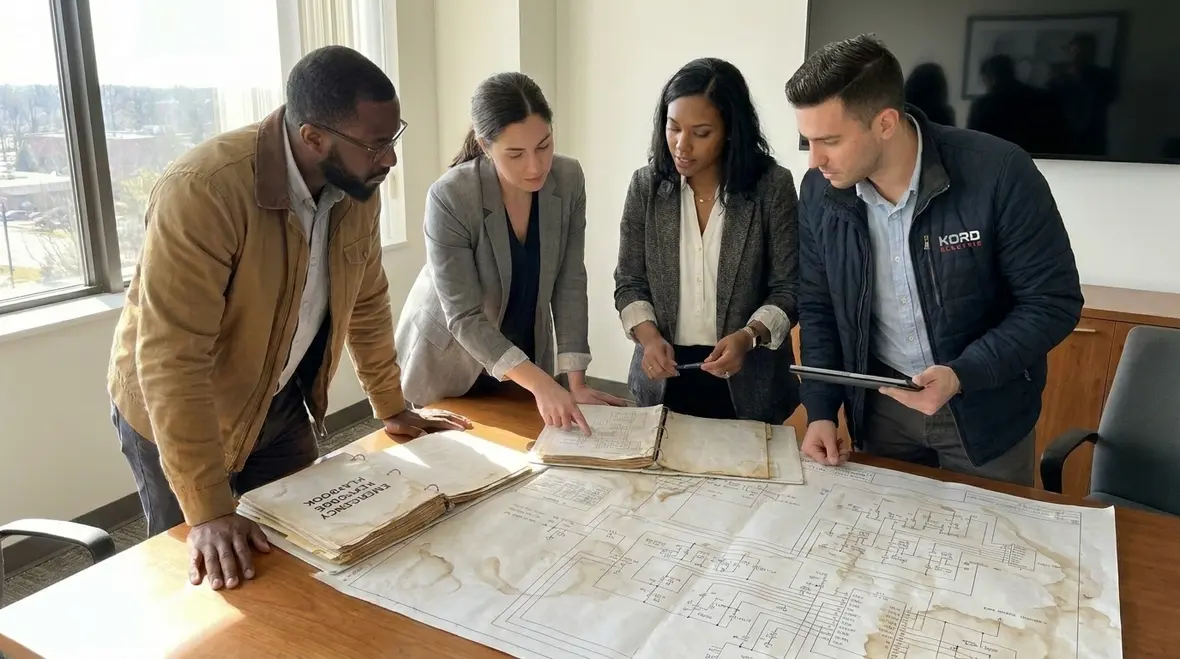
Every building has a different pain point. One site suffers from utility dips and harmonic issues. Another sees frequent switchgear faults. Still others face aging feeders or transfer switch problems that do not fail until they feel like it. To handle that reality, we map electrical failure risks using the actual site conditions, not generic checklists.
First, we gather data: one line diagrams, panel schedules, generator documentation, UPS runtimes, protective device settings, and recent maintenance history. Then we review the operating patterns: peak loads, seasonal changes, and any critical process windows. As a result, the plan aligns with how the site truly runs, not how it is supposed to run on paper.
After that, our expert service staff helps clients separate “likely events” from “high impact but unlikely events.” We also include human factors such as after hours access, vendor lead times, and permit requirements. Finally, we test assumptions through tabletop exercises, so people practice decisions before the problem shows up in the real world.
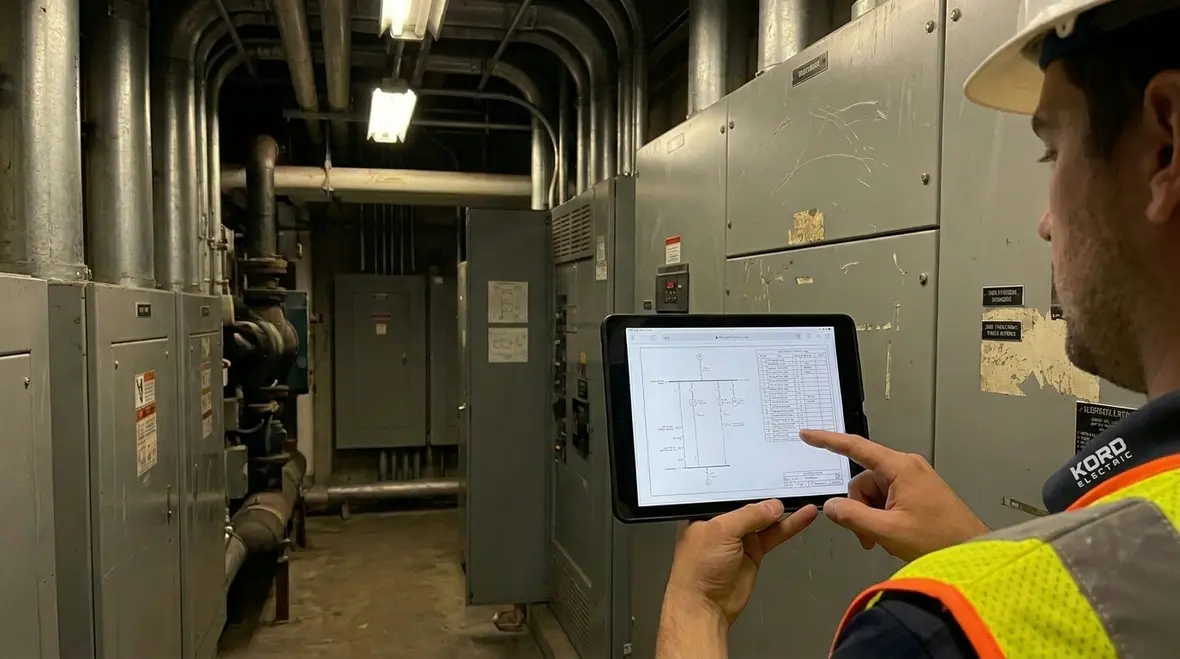
Building the response playbook for a business electrical emergency response
When we build a response playbook, we focus on speed with control. The first goal is safety, not heroics. Therefore, the plan includes clear steps for isolating circuits, checking for signs of overheating or arcing, and verifying that staff follow lockout and tagout procedures where required.
Then we define the power restoration path. Depending on the facility, that path may involve utility restoration, generator start, UPS bridging, or load shedding. Our technicians explain each option and what it protects, so leadership understands tradeoffs. For example, the plan may allow temporary reduction of non critical loads to keep critical systems alive until repairs finish.
To keep communication strong during a business electrical emergency response, we establish call trees and escalation timelines. We also prepare message templates for internal teams and external stakeholders. In other words, people spend less time sounding confused on the phone and more time doing the right work.
Below is the dual column view we use with many clients to keep planning practical and easy to read:
| Failure Stage | Action Focus |
| 0 to 15 minutes | Confirm safety, identify affected loads, secure the site, start the incident workflow |
| 15 to 60 minutes | Stabilize power using generator or UPS as needed, reduce load risk, document findings |
| 1 to 4 hours | Diagnose switchgear or feeder issues, validate protective device behavior, plan targeted repair |
| After restoration | Perform corrective actions, update settings if required, schedule follow up testing and training |
Temporary power strategies that prevent damage, not just darkness
Staying powered is not the same as staying safe. A poor temporary power setup can cause equipment damage, which is a fun way of saying “you pay twice.” To avoid that, we define criteria for when and how to use backup systems. Our expert service staff reviews generator and UPS capabilities, including starting current limits, transfer switch timing, and runtime expectations under actual loads.
For commercial and industrial sites, we also plan for load control. We identify circuits that can pause without harming life safety or critical operations. Then we design a staged load approach so the system does not overload during startup. Additionally, we include procedures for monitoring voltage, frequency, and heat indicators so the team recognizes trouble early.
We also cover documentation. When an outage happens, technicians must record what happened: alarms, breaker states, protective device trips, visible damage, and response times. This information supports troubleshooting and helps management show what they did when questions arrive later, because questions always arrive later, like a sequel nobody asked for.

Testing, drills, and updates that keep the plan from becoming wall art
A Business Continuity Plan only helps if people trust it. Therefore, we run drills that simulate real conditions for commercial and industrial facilities and major property buildings. We schedule exercises at intervals that match change cycles, such as equipment upgrades, tenant changes, new production lines, or generator service events.
During drills, we focus on both technical actions and decision making. Teams practice confirming critical loads, contacting the right parties, and executing the temporary power steps in sequence. Meanwhile, our technicians explain what signals to watch during generator transitions and what “normal” looks like versus “stop and investigate.” That way, leadership gains confidence, and operators do not treat every alarm like a false start.
After each drill, we update the plan. We adjust contact lists, refine load shedding priorities, and update response times based on real performance. As a result, the plan stays current and reduces gaps that show up only when the lights actually flicker.
FAQ for electrical continuity planning
Conclusion: protect uptime with a plan built for your facility
If your business depends on stable power, waiting until the next outage feels like playing roulette with a critical asset. At Kord Electric, we build Business Continuity Plans for commercial and industrial facilities and major property buildings so electrical failures trigger a controlled response, not a scramble. Our team also supports broader Los Angeles County electrical services to keep your infrastructure reliable long before an outage shows up.
Contact us to review your critical loads, backup power strategy, and response playbook. Then we will help your teams test, train, and update the plan, so you can recover faster and keep operations steady.
Let’s turn the next alarm into a procedure, not a panic.