Business Continuity Power Planning Guide
At Kord Electric, we help commercial and industrial facilities stay steady when the grid does what grids do best: surprise people. That is why business continuity power planning sits at the center of our approach to continuity and reliability. In this guide, we lay out how others should plan for outages before they happen, so the lights, controls, refrigeration, and critical processes keep working. We also explain what our technicians and expert service staff look for in the field, because no one should have to “figure it out later” with production on the line. And yes, we will keep it practical, not mythical. You know, like those movies where everything keeps running even during a crisis. Real life does not cooperate that nicely.
What business continuity power planning looks like in the real world
Business continuity power planning begins with clarity, not guesswork. First, we identify which loads must stay on, which can tolerate short interruptions, and which can wait for normal power. Then we map those needs to the facility’s electrical architecture. After that, we align power backup options with the actual behavior of your systems during an outage.
To keep it grounded, our technicians typically start by reviewing one line diagrams, load schedules, and historic outage data when available. Next, we verify how motors start, how drives behave, and whether controls rely on stable voltage and frequency. In short, we plan power delivery like a system, not like a collection of separate parts. That is the difference between “having backup” and having backup that performs.
At this stage, we also encourage others to ask a simple but uncomfortable question: what happens when the power fails and equipment does what it is designed to do. Some systems will shut down safely. Others will restart in a rush. And those restarts, if unmanaged, can turn a planned continuity win into a nuisance tripfest.
Define critical loads, then protect the workflow
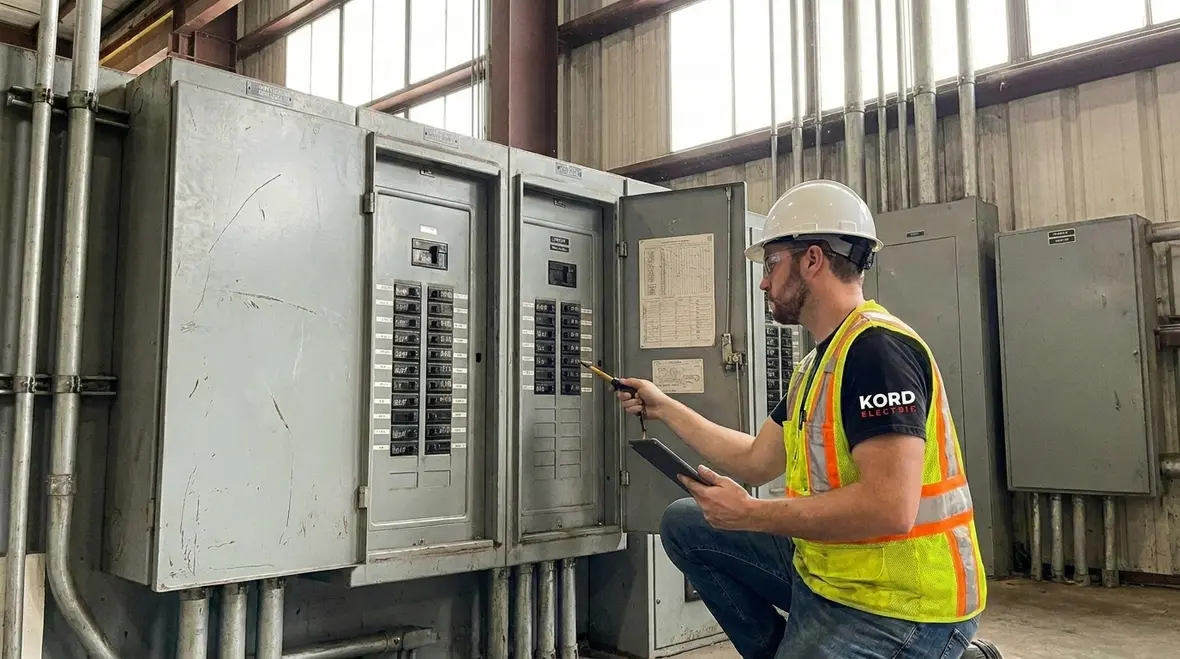
Our expert service staff guides customers through load classification with a focus on workflow, because a continuity plan should protect people, process, and product. For commercial and industrial facilities, that often includes life safety loads, security systems, network equipment, building automation, and any process equipment that cannot pause without cost or risk.
However, the “critical” list should never be a copy and paste from another building. Loads change. Tenants change. Equipment ages. Therefore, we help others build a load roster that reflects how the facility operates today.
Then we set transition expectations. For example, some loads need immediate transfer, while others can accept a brief interruption. Meanwhile, certain processes may require orderly shutdown before backup becomes necessary. When we plan in this sequence, we reduce surprises during real outages.
To make it simple, we recommend others define three tiers: Tier one runs during an outage with no delay. Tier two runs after transfer with some acceptable downtime. Tier three can shed load until utility power returns. This structure keeps design decisions from drifting.
Choose backup systems based on runtime and duty cycle
Once critical loads are defined, the next step is selecting a backup approach that matches runtime needs and the facility’s power demand profile. In most commercial and industrial settings, we see combinations of generators, paralleling systems, battery-based solutions for ride through, and sometimes utility transfer strategies that align with building policies.
Our technicians review not just the total kilowatts, but also the starting and running behavior of connected equipment. For example, standby systems must handle motor inrush and control power requirements. Also, if a facility runs high-demand cycles, the generator sizing needs to account for that duty profile, not the average load on a calm day when nobody is manufacturing anything.
Additionally, we consider fuel strategy, maintenance access, and the site conditions that influence reliability. Fuel supply matters, ventilation matters, and the physical placement of equipment matters. So, we evaluate the full picture, because backup that works on paper but fails on a bad day is still a failure.
Design transfer and protection for clean, safe transitions
After selecting the power source, we focus on how the facility transitions between utility and backup. This is where many continuity plans fall apart, because transfer equipment and protective coordination determine whether systems start calmly or panic.
We help others plan for transfer equipment ratings, response timing, and sequencing. Next, we verify that breakers and protective devices coordinate with generator performance. Then we address harmonics and voltage regulation concerns, since modern drives and power supplies can make waveforms less polite than older gear.
Our expert service staff also checks for control logic that can cause repeated retries during an outage. If the facility’s control system keeps “asking” for stable power, and stable power keeps arriving inconsistently, equipment may cycle. Therefore, we design for stable transfer and stable control behavior, so operations resume without chaos.
And here is the playful truth: the electrical system does not care that you had the best intentions. It cares that the timing, protection, and control inputs are correct. We make them correct.
Plan for reliability: maintenance, testing, and failure modes
Power planning is not a one-time design exercise. It becomes a living program. For commercial and industrial facilities, we recommend others build a maintenance schedule that aligns with manufacturer requirements and actual usage. However, we also urge customers to test like they mean it.
We guide the testing plan around transfer sequences, load bank behavior when appropriate, and verification that critical circuits function as expected under real conditions. When testing occurs, our technicians document results and compare them to design targets. If something drifts, we address it before the next outage makes the issue public.
At the same time, we prepare for failure modes. For instance, if a controller module fails, will the system bypass safely or fail hard? If a battery bank degrades, will ride through still happen long enough to prevent crashes? If a sensor misreads voltage, will the system interpret that as a fault and refuse to transfer?
These questions protect continuity. They also protect budgets, because a small repair done early beats an emergency done at full stress. And stress, as anyone in corporate life knows, is basically the overtime you did not approve.
Budget continuity with smarter electrical planning
Many facility managers ask about cost and timeline, and they do it for a reason. Continuity work competes with other priorities. So we explain how spending connects to risk and performance. When others treat continuity as “just add a generator,” costs can rise later due to redesign, coordination issues, and repeated site visits.
If you want a useful reference on planning commercial electrical changes, Kord Electric has guidance on the rewiring cost guide for commercial electrical systems. That article supports the broader planning mindset, because electrical upgrades often involve more than new conductors. They can involve distribution coordination, panel updates, labeling, and load path verification. In continuity work, those same realities show up when we add backup capacity or reconfigure critical circuits.
In practice, business continuity power planning budgets should include design time, equipment, controls, testing, and future maintenance. Also, the plan should account for permitting and integration with existing distribution. Thus, we help others build a realistic project scope that reduces surprises. After all, continuity projects are not just installed. They must be verified.
And for a little pop culture honesty, continuity planning is like building a season of a TV show: the finale only works if every episode supports it. Skipping the earlier structure often leads to an ending nobody likes.
Connect continuity planning with regional electrical support
For facilities operating across Southern California, continuity work rarely happens in isolation. Many commercial and industrial buildings rely on Los Angeles County electrical services to keep production on schedule while upgrades move forward. Regional support shortens response time when testing reveals issues, and it keeps long-term business continuity power planning grounded in real operating conditions instead of theory.
Pairing continuity design with local troubleshooting and maintenance means transfer tests, load bank runs, and protective device adjustments get handled by a team that already understands your shift patterns, your critical zones, and your preferred downtime windows. That combination turns continuity plans into everyday reliability instead of a binder on a shelf.
FAQ: business continuity power planning for commercial facilities
Conclusion: build continuity with Kord Electric
When others plan for outages late, the facility pays in downtime, rushed repairs, and unpredictable restarts. Kord Electric helps commercial and industrial teams build business continuity power planning that keeps critical systems operating, with designs validated through testing and expert field support. If you want a continuity approach that fits your loads, your workflow, and your budget, reach out to us. Our technicians and service experts will walk you through the path from load definition to safe transition and reliable performance. Start now, and the next outage can stay boring.
As you evaluate your own facility, consider how continuity aligns with other electrical priorities such as upgrades, troubleshooting, and regional service coverage. The more tightly your business continuity power planning connects to your everyday maintenance and project decisions, the easier it becomes to keep your power system steady no matter what the grid is doing outside your walls.