California Commercial EV Charging Permit Guide
At Kord Electric, we help commercial and industrial facilities, as well as major property buildings, move from “we should do this someday” to “our chargers are working today.” In this guide, we cover commercial ev charging station permit california planning in a practical way that reduces surprises for property owners, facility managers, and contractors. And yes, permits can feel like a slow DMV line, but with the right prep, it moves faster than you think. We will explain what our technicians and expert service staff look for, how the permitting path usually works, and how to avoid the mistakes that cause delays. By the time you finish reading, you will have a clear plan you can hand to your team with confidence.
How the permit process starts for businesses
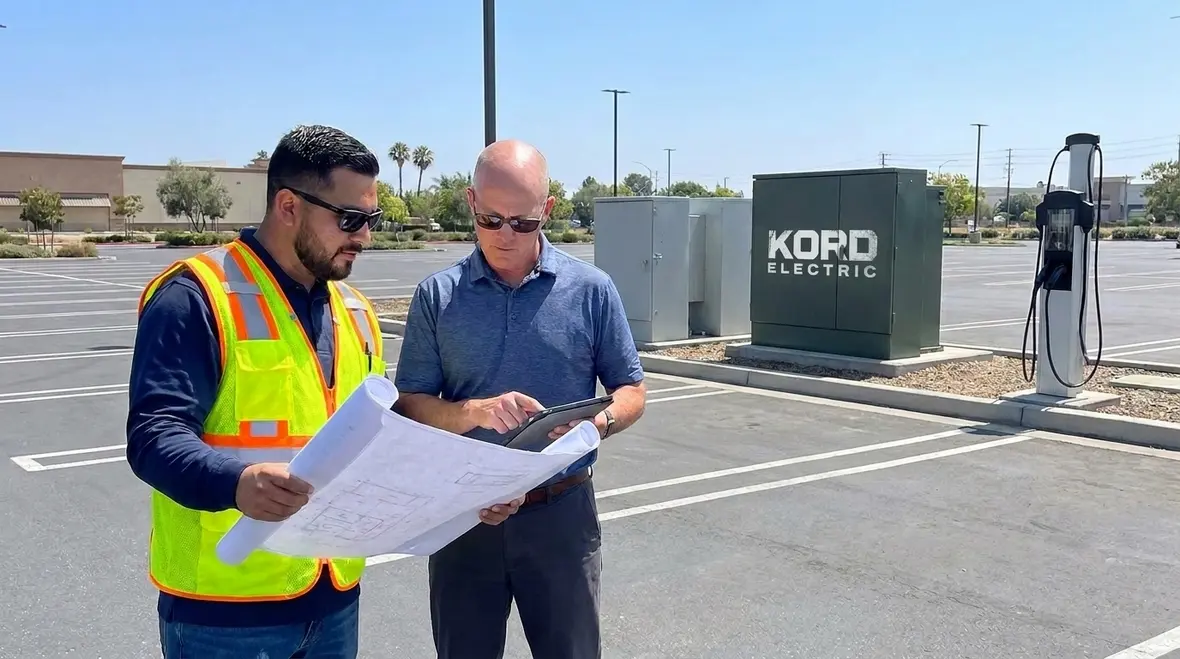
Most projects fail at the same point: people begin with the charger equipment, but the permitting process begins with the site. Therefore, we start by confirming how the property will use the charging. For example, a business with fleets behaves differently than a building with public customer parking. Next, our technicians review electrical capacity, site layout, and the proposed mounting locations. Then we translate that information into a permit-ready scope that matches how California and local agencies review plans.
Because each city can add its own rules, we do not assume one standard process fits all. Instead, we gather site details early: electrical service size, panel schedules, trenching or conduit routes, and whether the charging will share a circuit or run dedicated power. At the same time, our expert service staff explains what documentation usually matters most, so your team knows what to expect before you invest in equipment you might not be able to permit.
In short, we treat permits like a blueprint problem, not a paperwork problem. And when we treat it that way, projects stay calmer, like a late-night infomercial that somehow delivers on its promise.
Plan the electrical scope before you request approval
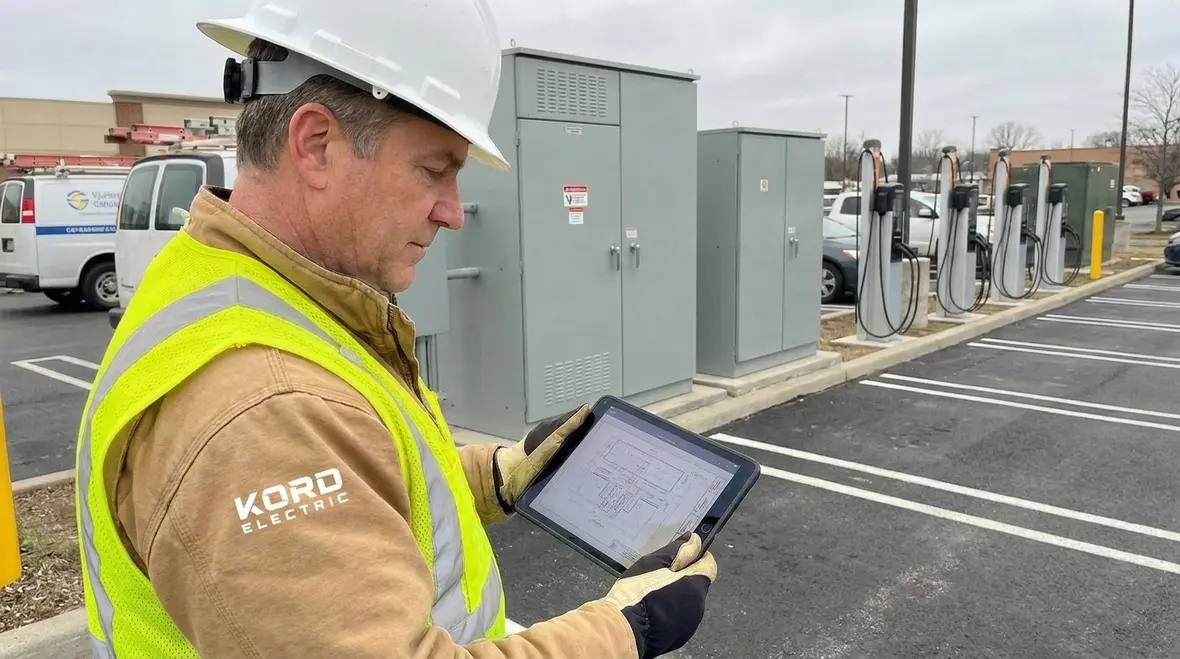
To secure a smooth path for commercial ev charging station permit california projects, the electrical design must match the real site. That means the load calculation needs to be accurate, and the wiring, conduit, and transformer or service upgrades must be documented. If the scope is vague, the permitting review slows down, and everyone pays for that with time. So we build a clear electrical story from day one.
Our process usually includes a site evaluation, a review of existing service capacity, and a plan for how charging will work with the rest of the building loads. Also, we check whether demand management, load sharing, or power balancing will help you meet capacity limits without overbuilding. Then we document the solution in a way that makes sense to reviewers.
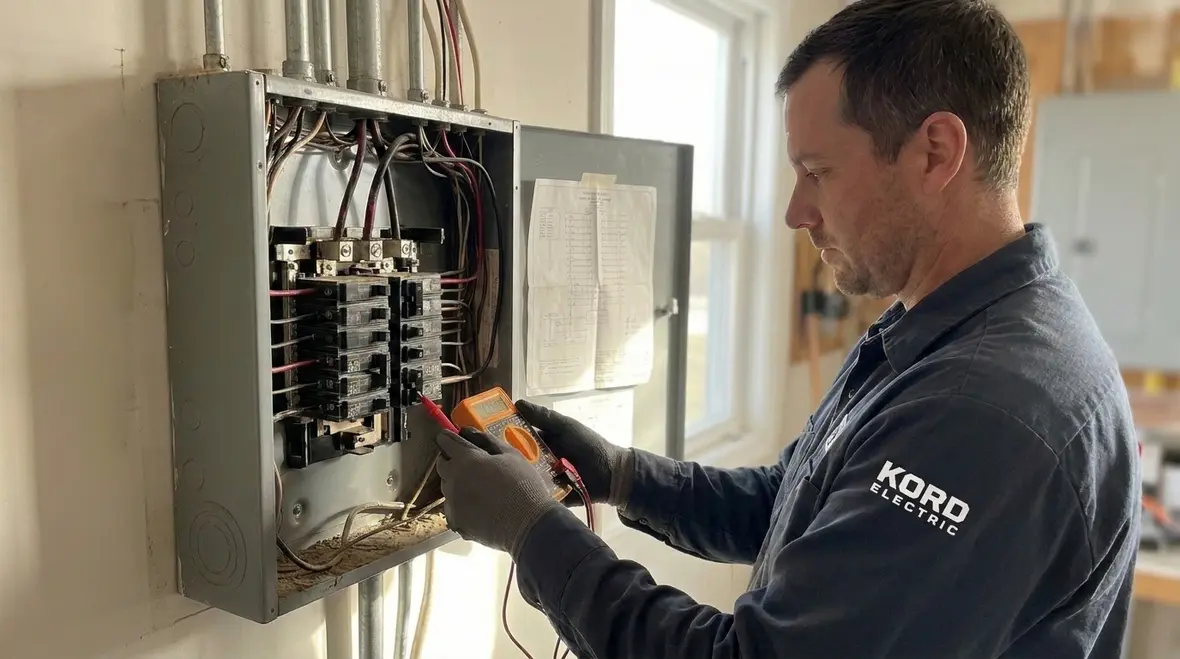
Now, here is where our technicians earn their keep. They do not just install. They verify. They check conduit routes, verify clearances, and confirm the power pathway matches the drawings. As a result, fewer corrections get sent back to the design team. And fewer corrections mean fewer delays. The only thing that should be delayed is a sitcom rerun, not your EV chargers.
Local codes, utility rules, and inspection checkpoints
Even though California sets broad expectations, local jurisdictions can require extra steps, and utility providers can impose conditions too. Consequently, we map the path ahead: electrical permitting, any building or fire review steps, and utility coordination when upgrades are needed. We also plan for inspections, since chargers often require multiple verification points after rough-in and before final sign-off.
At Kord Electric, our expert service staff helps teams understand the checkpoint sequence. Typically, the process includes review of plan sets, approval of electrical work, and inspection at key stages. If you skip any stage, inspectors might flag it. If you handle it well, the system gets installed with fewer interruptions.
When people think about permits, they picture forms. Yet in reality, permits are how agencies confirm safety and compliance. Therefore, we align design, install, and testing to the same goal. We do this for commercial and industrial facilities and major property buildings, where downtime and risk matter more than convenience.
Coordinating with EV charging infrastructure planning
Permitting fits best when it connects to a broader EV charging strategy instead of living as a separate chore. When Kord Electric develops EV charging infrastructure planning for commercial sites, we fold local code reviews, fire and building input, and utility capacity checks into one roadmap. That same mindset carries into commercial EV charging station permit California work: the more your permits align with long-term infrastructure, the less likely you are to rebuild later.
If you are mapping a larger rollout, it can help to pair this permit-focused guide with deeper planning resources from our EV charging infrastructure planning articles, so your team sees how electrical studies, panel capacity, and load management connect directly to the approvals inspectors and plan checkers expect to see.
What station layout and signage usually require
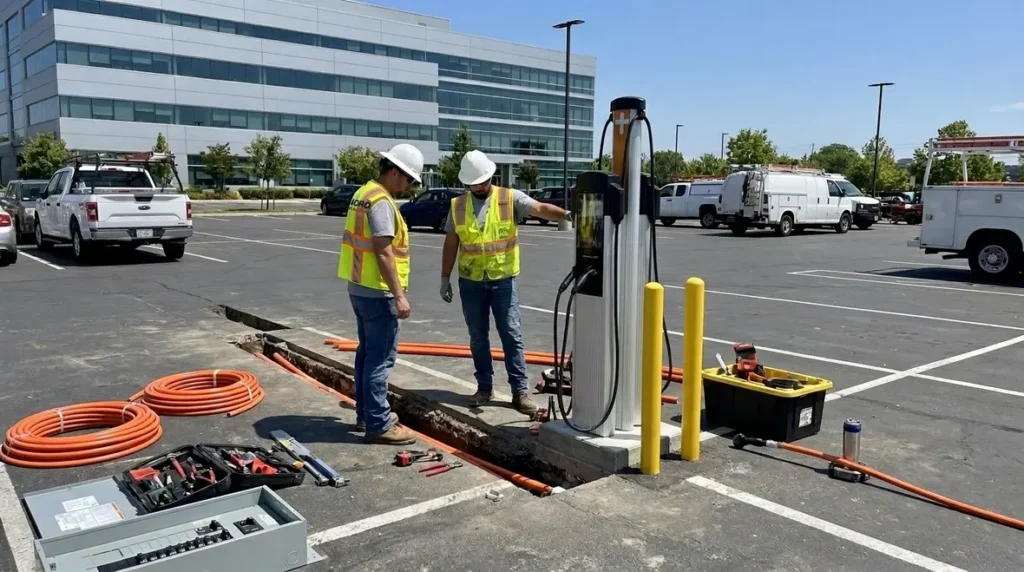
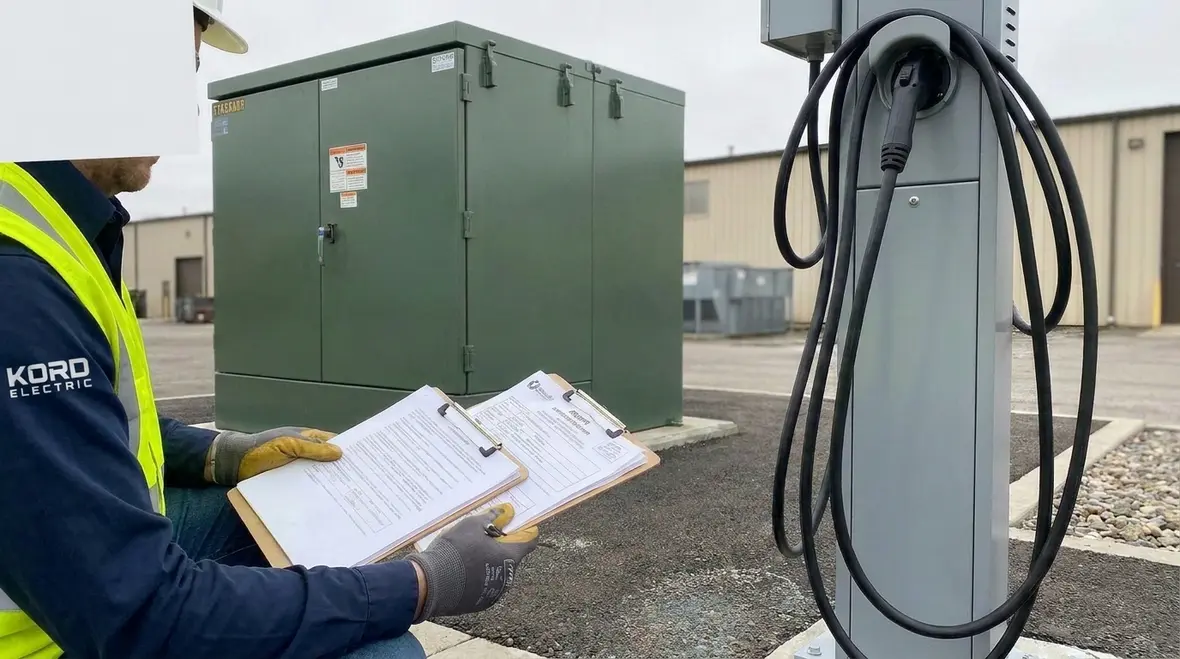
A permit review also cares about placement and clarity. The charger location affects safety, accessibility, and how vehicles maneuver. So we plan for more than a box on a pole. For example, we confirm parking layout, vehicle approach angles, and adequate clearance for installation and maintenance. Then we address conduit routing paths that do not create hazards or awkward construction constraints.
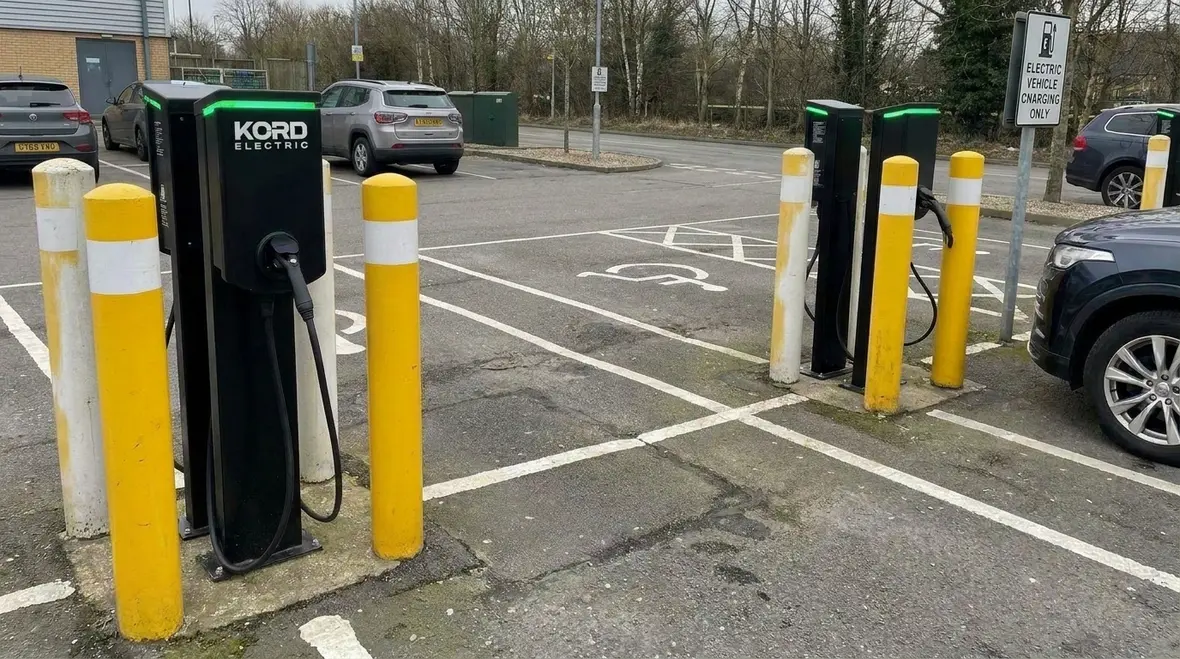
In many cases, signage and labeling matter too. That can include identification of equipment, general safety markings, and how the chargers relate to the parking rules for the site. While requirements differ by location, our approach stays consistent: we design for inspection readiness. We document what the charger area looks like and how it supports safe operation.
Our technicians also consider long-term service. If a charger sits where it becomes hard to access, maintenance becomes a headache. And headaches are not an acceptable part of a business plan. So we pick locations that support reliable service after the initial installation.
Designing layout with scalability in mind
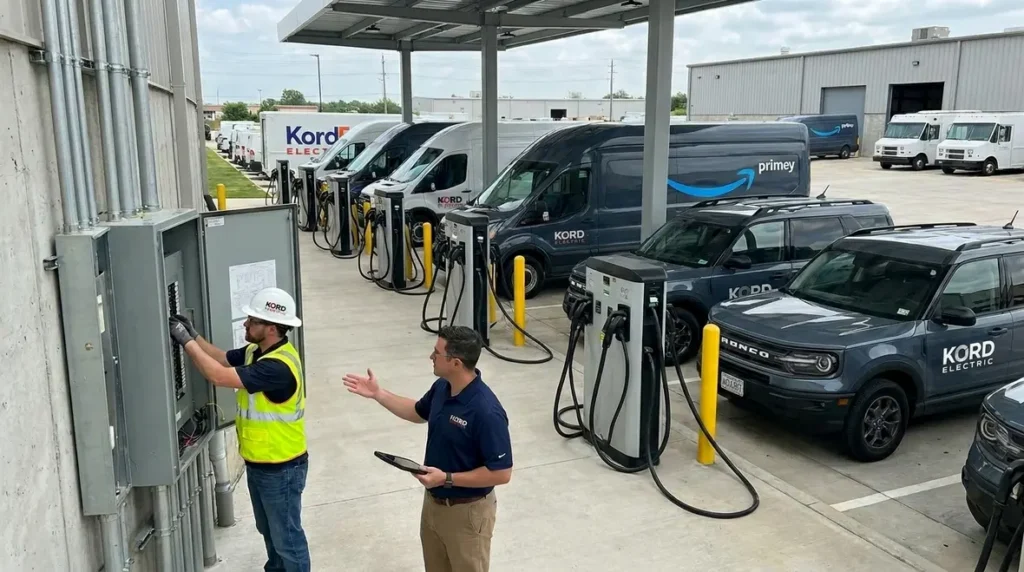
When your commercial site expects growth in EV use, we design station layouts that scale. That can include reserving space for additional pedestals, planning shared raceways that meet code, and aligning signage so future expansion does not confuse drivers. The same principles Kord Electric uses in commercial EV charging infrastructure planning and scalable network setups also support smoother permitting, because reviewers see how today’s design anticipates tomorrow’s use instead of improvising.
Permits meet reality: installation quality that passes review
Permits do not end the job. Installation quality decides whether the project passes inspection. That is why we keep the same discipline through the field work that we use during planning. First, we follow the permitted design. Second, we install with consistent workmanship that supports inspection needs. Third, we test and verify the electrical output so the system performs safely from day one.
We also coordinate with other trades when needed for commercial and industrial environments. For example, trenching or conduit work must align with civil scopes, while electrical routing must avoid conflicts with existing building systems. As a result, we reduce rework, and we keep crews moving efficiently.
To support this approach, our work aligns with the guidance we share on our blog about commercial EV charger installation for industry. In our experience, when teams plan electrical and site factors together, approvals move more smoothly, and the final result holds up under real use.
And yes, that means we treat your chargers like infrastructure, not like a hobby project. Because on a major property site, “good enough” is not enough.
Documentation that matches field conditions
For commercial ev charging station permit California projects, one of the fastest ways to earn inspector trust is to make sure field conditions and drawings agree. That includes as-built updates when routing shifts, panel schedules that match labeling, and test results that match the design intent. When documentation and installation stay synchronized, review conversations become faster, simpler, and more focused on confirmation than correction.
Common permit delays and how to avoid them
Delays often come from predictable issues. One frequent problem is mismatched information between the design documents and the actual site conditions. Another is electrical scope that looks reasonable on paper but cannot meet capacity in the real panel. Then there are the cases where teams order equipment too early and realize later that the selected configuration does not match the permitted plan. Finally, some projects stumble because the site layout did not leave room for proper routing, labeling, or inspection access.
To reduce these risks, we use a step-by-step approach. Our technicians confirm site conditions before we lock the design. Our expert service staff reviews documentation so it stays clear and complete. Then we coordinate installation details so field work stays aligned with the approved scope.
Even if a review takes longer than expected, you still control the outcome. When your plans show the system clearly and your installation matches the plan, the inspector can complete the process faster. In other words, you do not fight the permit office. You cooperate with how they evaluate safety and code compliance.
Lessons from commercial EV charging infrastructure planning
Many of the same habits that keep large-scale EV charging infrastructure projects on schedule also reduce permit delays. Early capacity reviews, realistic trenching and routing paths, and phase-by-phase rollout plans keep surprises out of the approval queue. When we apply those habits to each commercial ev charging station permit California application, the paperwork stops feeling like a barrier and starts functioning as a checklist for a safer, more predictable build.
Requesting a bid and staying clear on scope
For commercial and industrial clients, the goal is not just to get a charger. The goal is to deploy charging in a way that fits site operations, budget, and timelines. So when you request bids, ask for more than equipment pricing. Ask how the contractor handles site review, permitting support, and inspection readiness. Also ask how they treat electrical capacity and how they plan for utility coordination when upgrades are required.
At Kord Electric, we structure bids around the full project needs. We talk through design assumptions, document requirements, and how our technicians will verify the work before final approval. This reduces confusion and helps your internal team track progress. And if anyone says “it is simple,” we gently remind them that simple is what people say right before they step on a Lego. Permits rarely behave that way, so we help you stay grounded.
Because your facility runs every day, we also discuss how installation work fits your operational needs. We focus on staging, safety, and communication so the project does not disrupt normal business more than it must.
Connecting bids to long-term EV charging strategy
A strong bid tells you more than “what does it cost.” It shows how your contractor will integrate permitting, construction sequencing, and future phases into one plan. When we support commercial ev charging station permit California work, we align every proposal with the same thinking we use in our broader commercial EV charging planning guides, so your team can see how today’s permit set fits into a long-term network rather than a one-off project.
FAQ
Conclusion and call to action
If you manage a commercial or industrial facility, Kord Electric can guide the project from site evaluation through permitted installation with fewer surprises. Our technicians and expert service staff help you build a clear electrical scope, align it with local review expectations, and prepare for inspection checkpoints. Next, we help you move forward confidently with a practical plan for commercial ev charging station permit california needs. Contact Kord Electric today to schedule a consultation and get your charging rollout started the right way.
As you expand charging across Los Angeles County and surrounding areas, it also helps to connect your EV projects with a broader electrical roadmap. Kord Electric’s Los Angeles County electrical services support panel upgrades, maintenance, troubleshooting, and reliability work that keep your commercial EV charging and the rest of your power system aligned instead of competing for capacity.
When you are ready to take the next step, our dedicated commercial EV charger installation services can translate your permit-ready design into real infrastructure in the ground. From trenching and conduit routing to testing and commissioning, we turn carefully planned permit sets into safe, code-compliant stations that drivers can rely on every day.