Industrial Electrical Preventive Maintenance Plan
Industrial Electrical System Maintenance: The Calm Plan That Prevents Expensive Surprises
At Kord Electric, we follow industrial electrical maintenance best practices because downtime and damaged equipment do not politely wait their turn. In the first days of any maintenance season, others often start with a quick look and a hope, and we do not. Instead, our expert service staff uses a structured approach that balances safety, compliance, and performance. We inspect critical panels, verify protections, track insulation health, and confirm that controls behave the way the drawings say they should. Then, we document findings and schedule fixes before problems turn into full blown “stop the line” events. In other words, we help commercial and industrial facilities avoid the electrical equivalent of stepping on a LEGO in the dark.
What does “preventive” mean for commercial power systems?
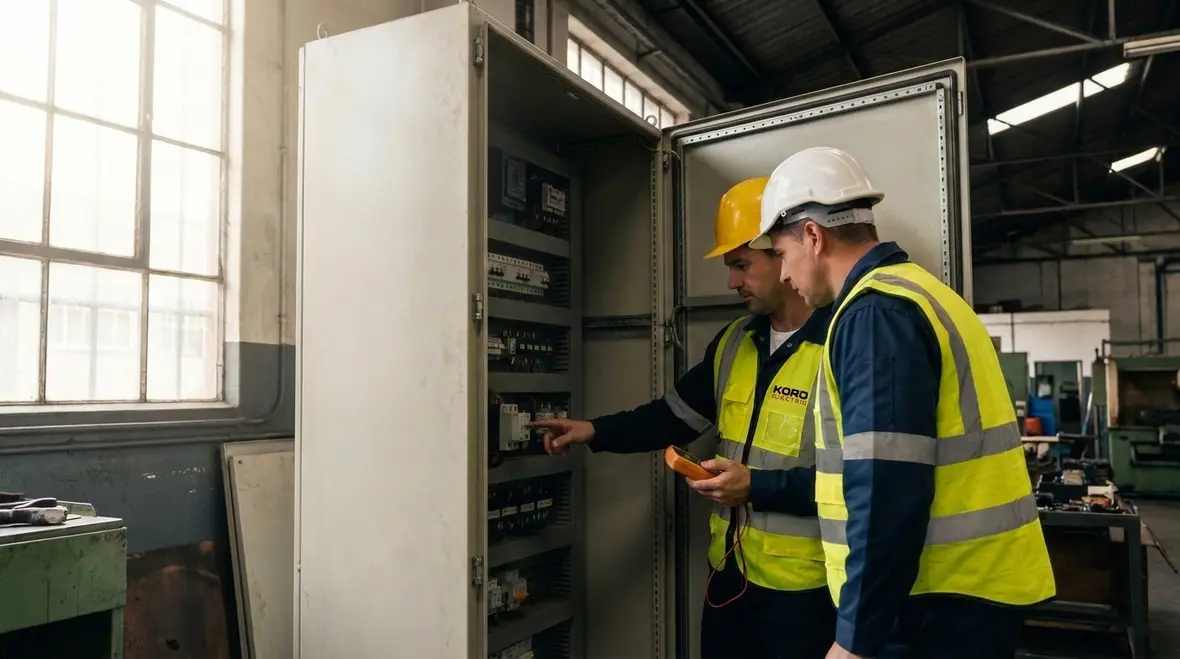
Preventive maintenance means we act before failure, and we do it with a repeatable method. When Kord Electric services a major property or industrial facility, we treat the electrical system like a living process, not a one time installation. First, we gather baseline data from the facility history and utility records. Next, we check equipment that typically ages quietly: switchgear, breakers, bus bars, transformers, motor control centers, and control wiring.
Meanwhile, our technicians explain what they see in plain language, because “loose connection” should not sound like a mystery novel. For example, we might find heat at a lug, drift in contact operation, or signs of moisture where none should exist. Even if the system still “works,” those conditions can reduce reliability. Additionally, preventive work supports stable loads, which matters for production, critical services, and tenant operations.
If you are building a broader strategy for your facility, pairing this kind of work with a structured electrical preventive maintenance program helps standardize what “good” looks like across every commercial and industrial property you operate.
How our technicians build an electrical maintenance schedule that sticks
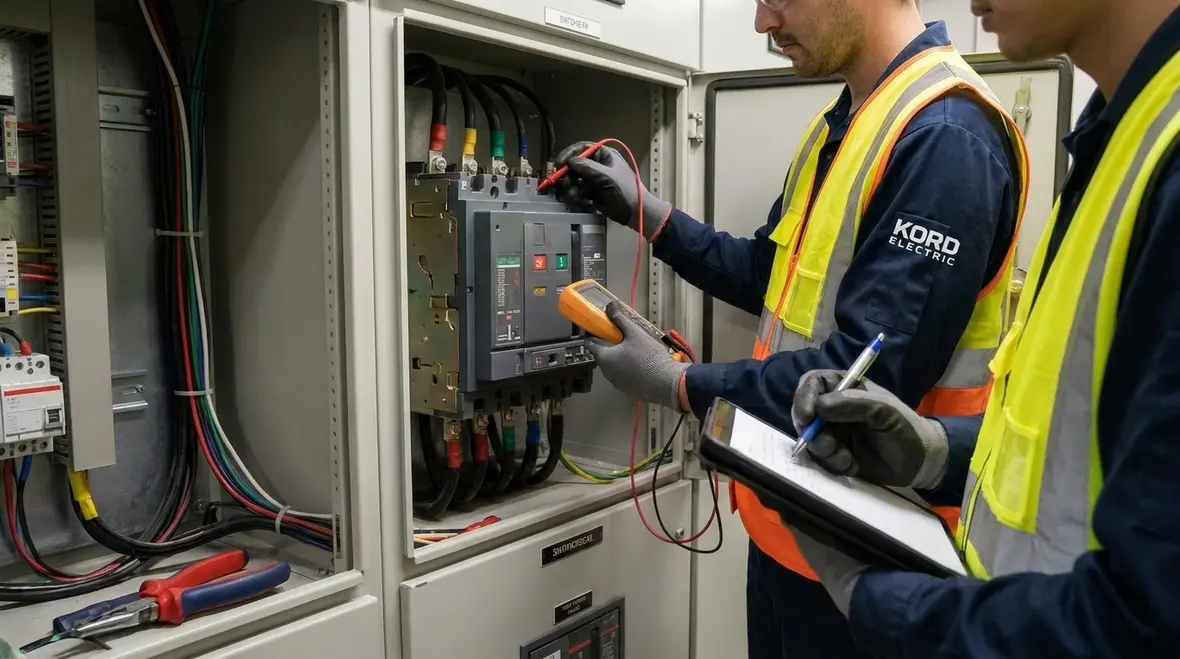
A good maintenance plan must survive real life: staffing limits, production calendars, and the reality that not every shutdown can happen whenever we would like. So, we build schedules using risk and impact. Our expert service staff reviews equipment criticality, failure patterns, and operating conditions. Then we select tasks that match the environment, such as vibration prone areas, high dust spaces, damp or corrosive zones, and places with frequent load swings.
From there, we set intervals that make sense. For example, we do not treat every panel and every breaker the same. Instead, we align work with actual usage, fault history, and manufacturer guidance. As a result, the facility gets the right work at the right time. And yes, we also coordinate with facility leadership so the maintenance windows do not interrupt operations any more than a pop quiz would. If you have ever been surprised by a shutdown schedule, you know why that matters.
For organizations that operate across multiple sites, a plan built around industrial electrical maintenance best practices keeps documentation, expectations, and reporting consistent so every property’s electrical system gets the same level of disciplined attention.
Which checks we run first for panels, breakers, and switchgear
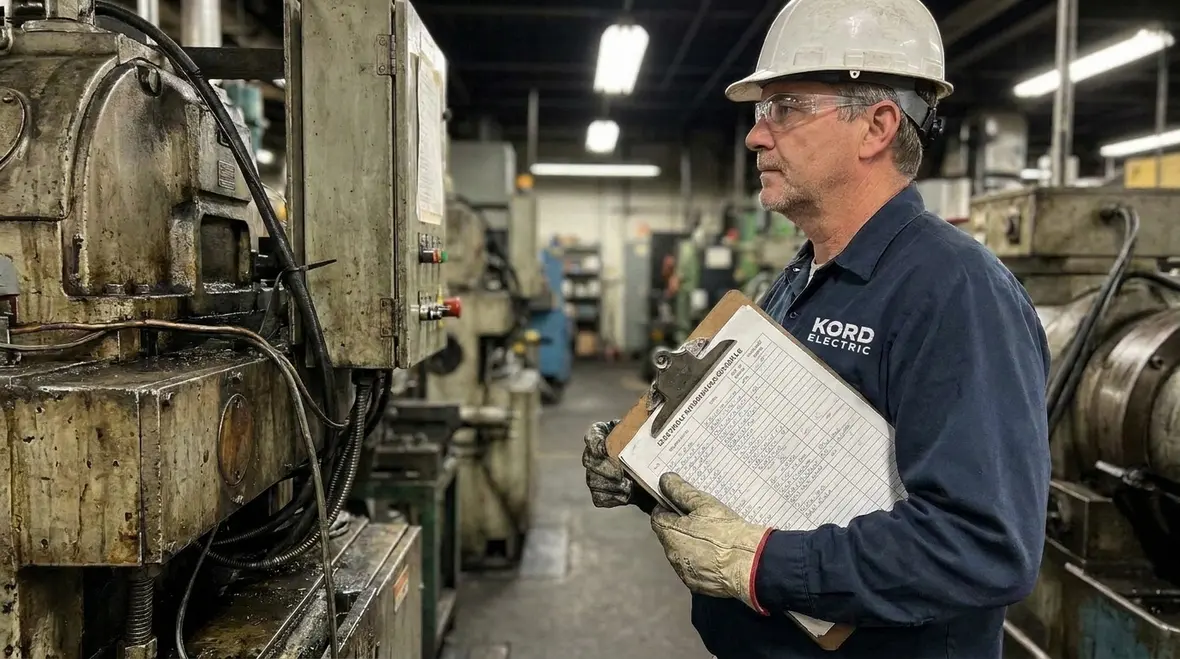
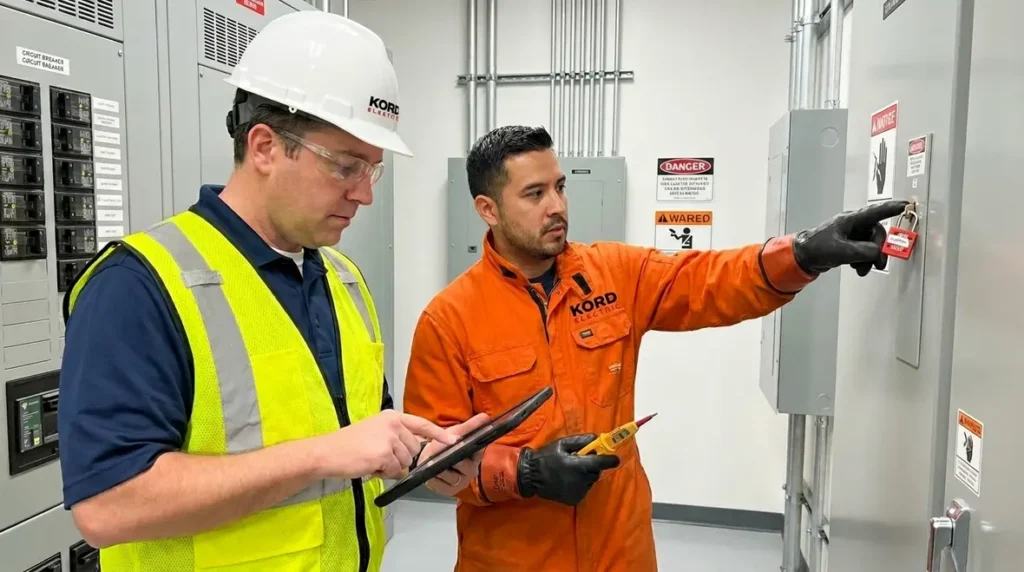
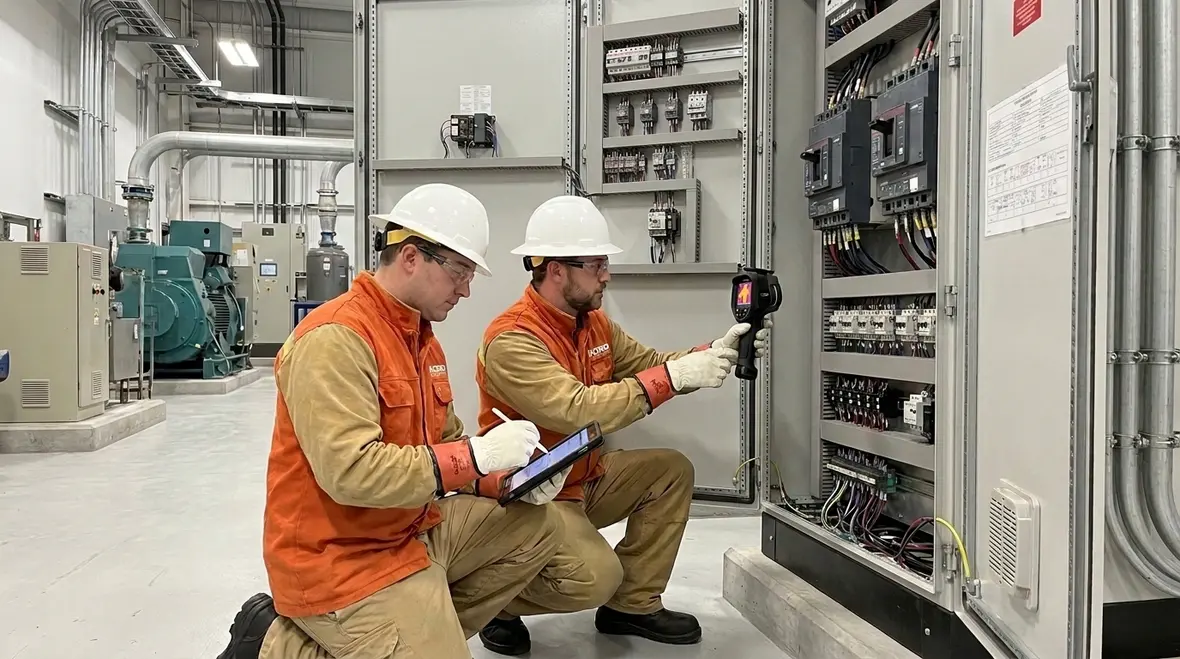
When Kord Electric arrives on site, we start with the foundation. Panels, switchgear, and breakers often show the earliest warning signs. First, we inspect for visible damage, dust buildup, corrosion, and improper labeling. Next, we verify connections, because a connection can look fine while still creating heat under load.
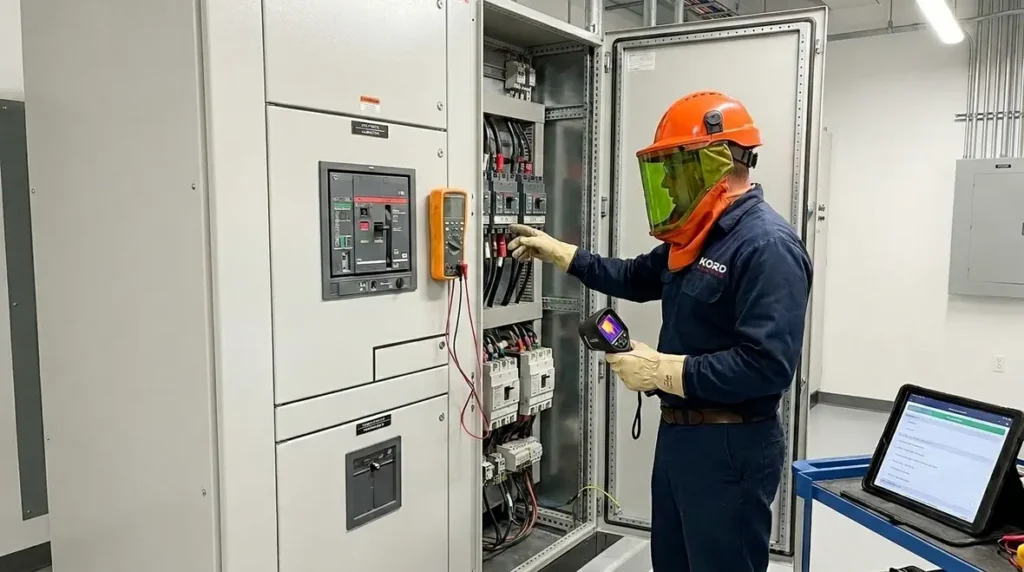
Then we move to measurements and testing that reveal hidden issues. Our team checks breaker operation and protection behavior where the system allows it. We also evaluate contact wear and look for signs that a device has been working harder than it should. In addition, we verify that control components and interlocks perform as designed, since control failures can create unsafe conditions even when power hardware seems healthy.
Throughout this process, our technicians explain the “why” behind each check. That way, facility managers understand how the industrial electrical maintenance best practices connect to real outcomes: fewer nuisance trips, safer fault response, and less wear on downstream equipment.
If your facility has struggled with repeated panel issues or unexplained breaker operations, combining this structured inspection with a broader commercial and industrial electrical maintenance plan helps convert scattered fixes into a calm, predictable strategy.
How we protect motors and controls from heat, overload, and drift
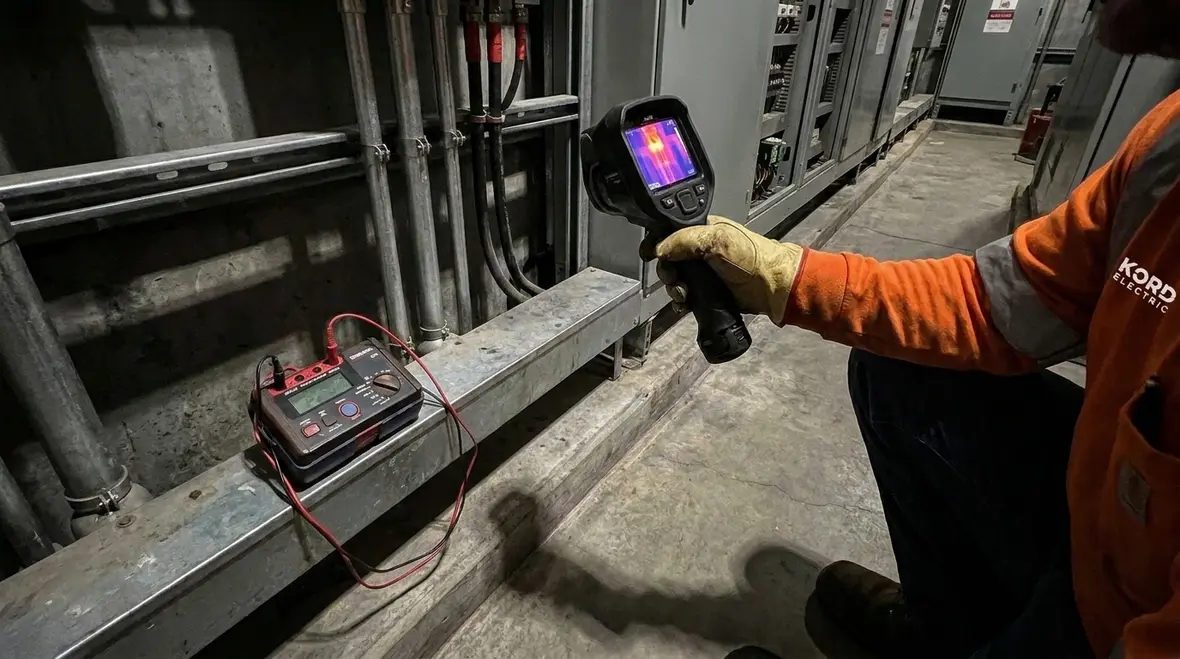
Many commercial and industrial facilities depend on motors and control systems every day, yet these components often receive the least structured attention. However, when our technicians follow preventive routines, they reduce heat stress and control instability before it becomes a shutdown reason.
For motor control centers and starters, we look at thermal condition indicators, contact condition, and wiring integrity. We also confirm that protective devices match the load and are not bypassed, misadjusted, or operating outside expected ranges. After that, we examine control circuits because control drift can cause delayed starts, poor speed response, or repeated resets.
Additionally, we confirm that the control logic and drawings align with how the equipment actually operates. This matters because field changes happen over time. And when those changes accumulate, the system can behave like a playlist that keeps changing songs without telling you. Our expert service staff helps facilities keep control behavior predictable, which supports stable production and smoother operations.
Why insulation testing and thermal imaging belong in the same toolbox
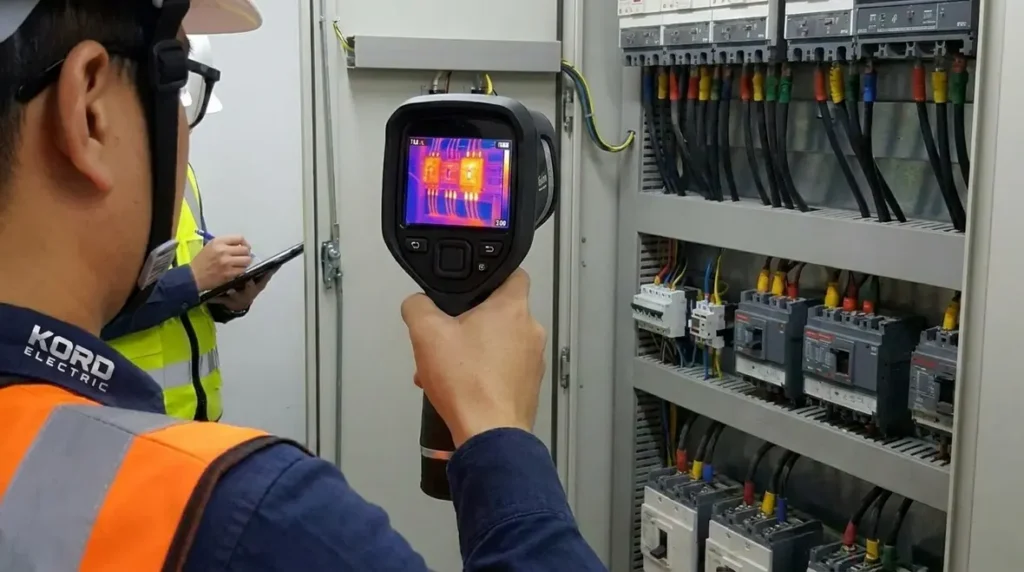
Insulation issues rarely announce themselves with a loud alarm at the start. Instead, they build up quietly through aging, moisture exposure, contamination, and heat cycles. That is why insulation testing matters in industrial electrical maintenance best practices. We also pair electrical tests with visual and thermal review so the facility sees both the numbers and the story.
For example, thermal imaging can show hot spots at connections or bus areas that do not show obvious wear. Insulation testing helps confirm whether the system can handle operating stress safely. Then, when we combine both findings, we can prioritize repairs. As a result, we avoid replacing parts that still have life, while we address the parts that truly need attention.
Now, let us be honest. No one likes test results because they can feel like homework. But these checks give others the advantage of knowing what comes next. Kord Electric helps facility teams turn that information into action, with clear recommendations and realistic timelines for commercial and industrial properties.
When a facility pairs this kind of condition testing with a load capacity review or broader system evaluation, it supports long term reliability instead of chasing symptoms each time something trips or overheats.
How Kord Electric documents findings and turns them into action
Documentation is where maintenance becomes more than a checklist. When Kord Electric supports a major property or industrial facility, we record observations, test results, and equipment condition in a way leadership can use. Instead of vague notes, we provide itemized findings, risk levels, and recommended next steps.
Then we translate those next steps into a practical plan. If a repair requires coordination with operations, we outline the timing considerations. If a component needs replacement, we recommend the approach that matches system downtime limits. Additionally, we suggest follow up verification so the fix performs as expected, not just “looks good” after the work is done.
Our expert service staff also explains recurring patterns, such as repeating wear in a specific area or conditions that increase moisture ingress. That kind of insight helps facilities reduce root causes, not just symptoms. In the long run, the best maintenance program saves money, protects people, and improves uptime. And uptime is the one thing every business truly understands without needing translation.
For facilities across the region, working with a team that already supports Los Angeles County electrical services brings the added benefit of local code familiarity and coordinated upgrades when the maintenance plan reveals capacity or distribution changes that should not wait.
FAQ about electrical preventive maintenance for industrial systems
Ready to improve reliability and protect your uptime?
If your facility runs on electrical systems that cannot afford surprises, Kord Electric is ready to build a preventive plan that fits your operations. Our expert service staff follows industrial electrical maintenance best practices, documents findings clearly, and helps your team act before small issues become major shutdowns. Reach out to us to discuss your equipment, risk areas, and maintenance windows. Let us help you protect people, reduce downtime, and keep major property systems operating with confidence.
When you are ready to move from “we should probably look at that panel” to a calm, structured industrial electrical preventive maintenance plan, our dedicated electrical preventive maintenance services give you a clear starting point and a long term partner for your critical systems.
Whether you operate a single manufacturing site or multiple commercial properties across the region, integrating preventive maintenance with your broader electrical projects, upgrades, and safety commitments keeps your system ready for the next load change, production run, or inspection instead of hoping everything holds together one more season.