California Title 24 Warehouse Lighting Compliance
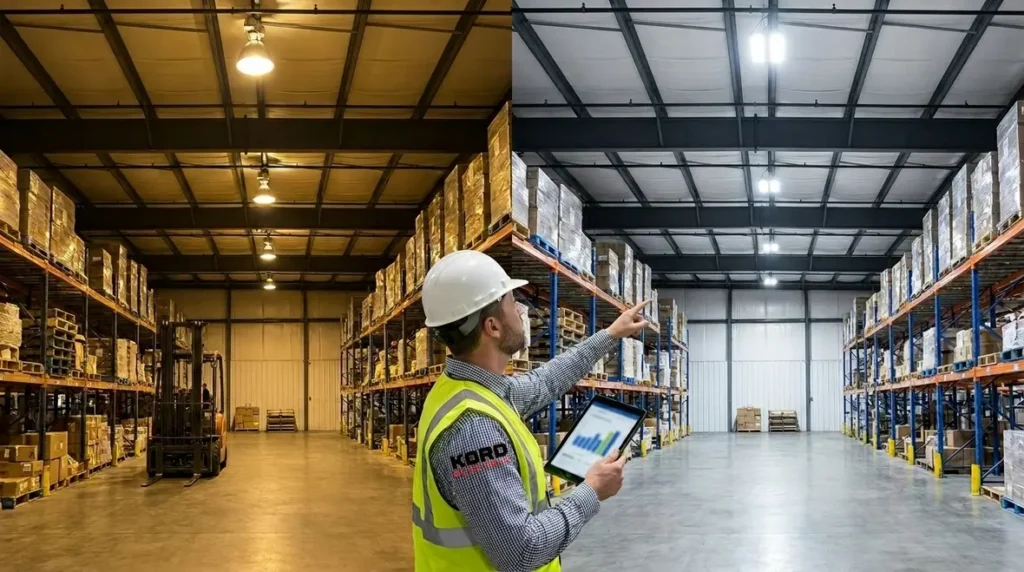
Calm, clear, and compliant lighting starts with California Title 24 warehouse lighting compliance. When warehouse teams plan a lighting upgrade, the code matters as much as the fixtures do. In California, we see projects stall when design teams chase cost savings but skip the details that inspectors and utilities expect. Therefore, Kord Electric helps commercial and industrial facilities navigate the rules without the usual drama. And yes, we have heard every version of, “The lights look fine to me.” Fine to the eye is not the same as compliant on paper. In this guide, our expert service staff and technicians explain how upgrades usually go right, what documentation tends to matter, and how to avoid surprises that cost time.
What California Title 24 expects for warehouse lighting in practice
Third person perspective or not, the reality is simple: the code cares about performance, not opinions. California Title 24 applies specific requirements for lighting systems in commercial buildings, including warehouses and other major property building types. Typically, the goals center on energy use, controls, and how the building’s lighting behaves throughout the day.
So, when a facility changes lighting, the upgrade must align with the applicable edition and compliance approach. In many cases, compliance teams evaluate lighting power, luminaire efficacy, and control strategies. Then they verify that the design meets the performance path and documentation expectations. In other words, compliance is not a single checkbox. It is a chain of choices, and each link has to hold under inspection.
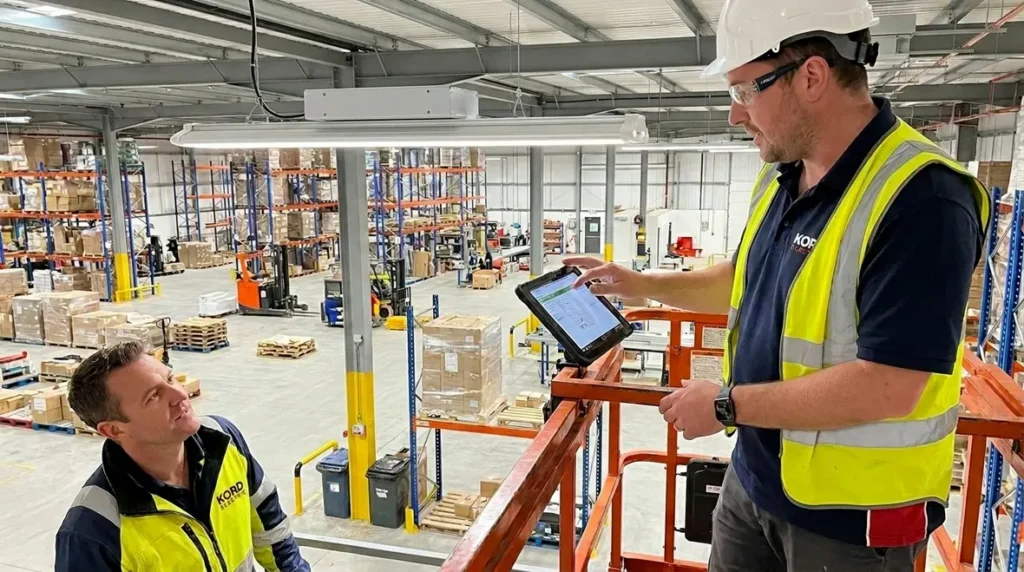
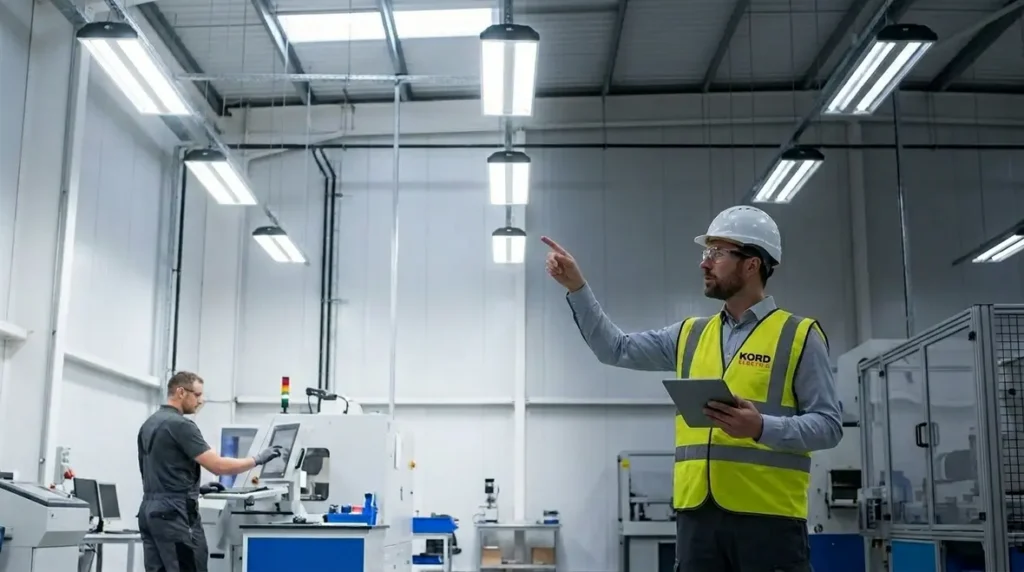
At Kord Electric, our technicians walk the project team through what they need to measure and document. We explain it slowly because lighting upgrades often involve multiple contractors, and everyone thinks they are the main character. They are not. The code is.
How lighting controls and sensors affect compliance
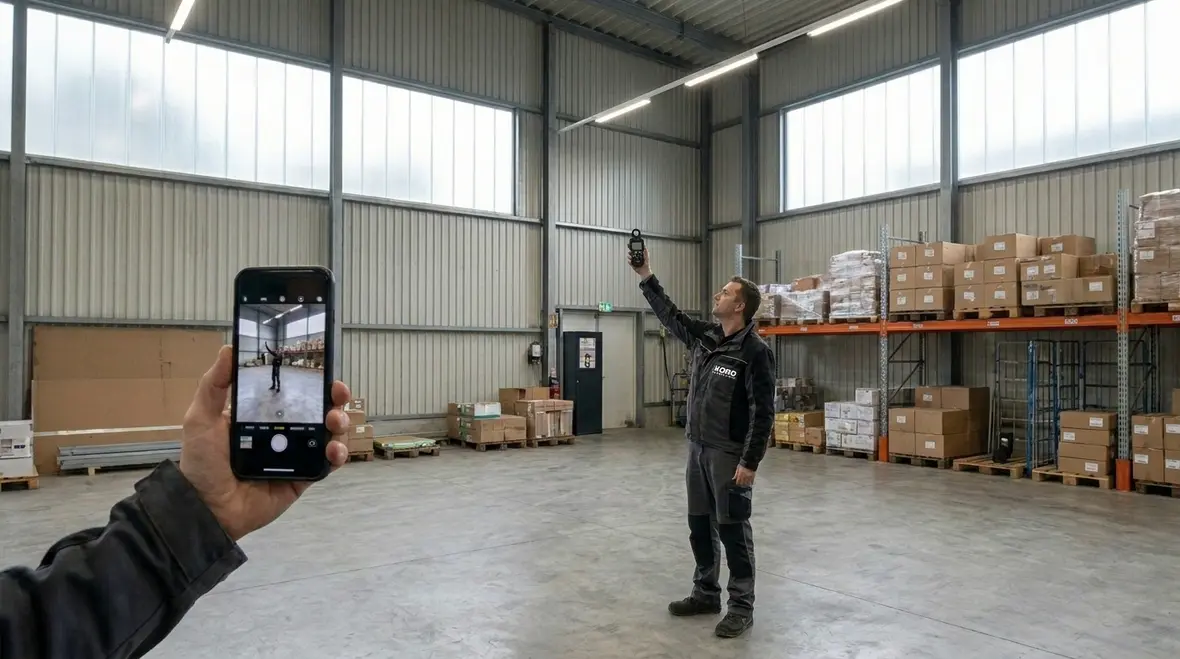
Even good fixtures can fail compliance if controls do not behave correctly. Therefore, warehouse upgrades usually require a controls plan that matches how the space operates. Warehouses do not light themselves at random, and neither should the system. Instead, occupancy sensors, scheduling, daylighting controls where applicable, and dimming strategies often play a key role.
For example, if a warehouse has dock activity that shifts by shift, the controls should handle that pattern. Additionally, if the site uses skylights or daylight influence in certain zones, the plan may need to account for how lights respond to daylight. And if the warehouse uses multiple bays or zones, the control layout needs to reflect those operational boundaries.
When our expert service staff reviews a scope, we help the team connect controls to actual use. We ask practical questions like how long the space stays occupied, how often crews enter during non peak hours, and where maintenance access happens. Then we translate those answers into a system that supports California Title 24 warehouse lighting compliance goals, rather than one that just looks modern.
Planning a compliant upgrade: a step by step approach

Here is the part where projects typically slow down. Teams collect fixture quotes, choose a design, and schedule installation, then later realize they need compliance documentation they do not have. However, a structured workflow prevents that problem. So we focus on planning before wiring.
First, we align on the facility type and the project intent. Is this a retrofit in place, a lighting replacement tied to energy goals, or a broader upgrade that may affect circuits and panel schedules? Second, we confirm the applicable requirements and the compliance method used by the design team. Next, we help verify field conditions that can impact the lighting plan: mounting heights, spacing, existing control devices, and any obstructions.
Then we support the installation with quality checks. Because if the field deviates, the model assumptions no longer match the real world. In many warehouses, the difference between “close enough” and “compliant” is a placement detail, a dimming setting, or a control boundary that got moved during construction.
To keep things organized, we also align with how we run commercial and industrial programs. Our approach connects directly with our maintenance plans framework, where we treat upgrades and ongoing performance as one continuous story rather than a one day event. You can see how Kord Electric structures commercial and industrial electrical maintenance plans here: commercial and industrial electrical maintenance plans.
Common mistakes that trigger rework during compliance reviews
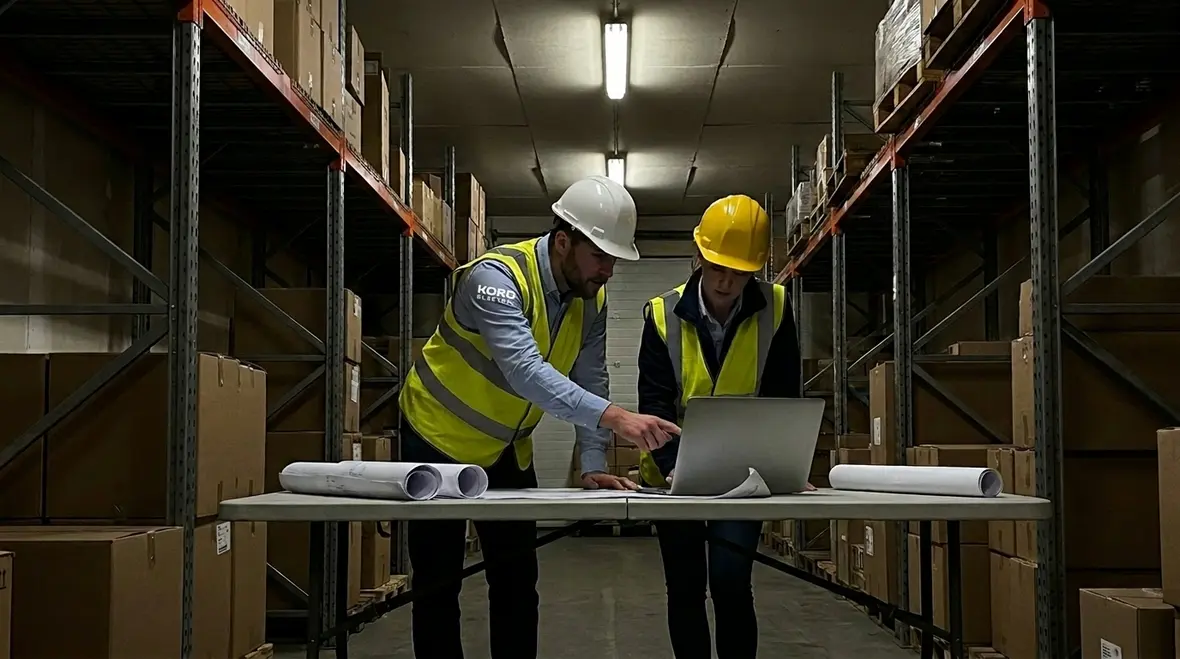
In every region, inspectors and reviewers see the same patterns. In warehouses, the most frequent issues come from mismatched assumptions. Therefore, we help teams avoid the kind of rework that feels like watching the same episode twice but with worse commercials.
One is missing or incomplete control documentation. If the spec sheet does not match what gets installed, reviewers can require updates. Two is inconsistent zoning. If the plan expects grouped control behavior but the field wiring does not, performance outcomes differ. Three is incorrect lumen and wattage data at the time of submittal. Fixtures sometimes change mid project, and the compliance basis can drift.
Four is ignoring the existing electrical system. Warehouses often have aging panels, older switching logic, or circuit constraints. When teams add loads without verifying available capacity, they rush to patch solutions. Those patches can cause compliance gaps if they change how the lighting operates. Five is assuming that installation quality never affects results. Yet loose connections, misaligned mounting, or incorrect aiming can change effective performance.
Our technicians prevent these issues by staying close to the design intent. We explain what to verify and what to document before power is turned on. Then we test and confirm the system behaves as planned.
Why ongoing service matters after the upgrade

Once the lights go in, people sometimes assume the compliance work is finished. Yet California Title 24 warehouse lighting compliance depends on the system continuing to operate as designed. That means settings, controls, and components must remain correct over time.
Warehouses change. Storage layouts shift, occupancy patterns evolve, and maintenance teams adjust schedules. Over time, a sensor can drift, a controller can be reprogrammed, or a zone boundary can get confusing. Therefore, ongoing electrical maintenance keeps the lighting system performing and reduces the chances of non compliance during future inspections.
At Kord Electric, our expert service staff supports commercial and industrial facilities with maintenance planning that fits real operations. We focus on checks that matter: control behavior, circuit integrity, component status, and troubleshooting that minimizes downtime. In other words, we treat compliance as a living thing, not a photo from the day the ribbon was cut.
And when something does fail, we respond with the same discipline. Nobody wants lights that flicker like a stressed out extra in a low budget horror movie. We aim for stable, reliable performance that protects both people and energy goals.
FAQ: California Title 24 warehouse lighting compliance
Ready for a compliant warehouse lighting upgrade?
If your team plans to upgrade warehouse lighting in California, we recommend acting early on California Title 24 warehouse lighting compliance so the project does not get stuck at the finish line. Kord Electric serves commercial and industrial facilities, and our technicians explain details in plain language while we install and verify systems that match the approved intent. Contact us to review your scope, discuss controls and documentation needs, and build a plan that stays compliant from design to commissioning.
For projects that combine lighting upgrades with broader electrical reliability goals, Kord Electric’s dedicated electrical preventive maintenance services help warehouses align Title 24 lighting strategies with long term system health. And when it is time to execute a full lighting scope from design through installation, their lighting installation services team supports commercial and industrial sites that need performance, safety, and compliance in the same package.
Whether you are refreshing a single warehouse or coordinating upgrades across a larger portfolio, treating California Title 24 warehouse lighting compliance as a design, installation, and maintenance story keeps everyone aligned. The result is simple: lighting that looks right, performs efficiently, and passes review without the last minute scramble.