Emergency Electrical Planning for Businesses
Emergency electrical infrastructure planning for businesses: the calm that comes before the storm
Kord Electric helps commercial and industrial leaders build resilience through Emergency electrical infrastructure planning for businesses. In plain terms, we plan for the moment when power does not behave, so the business keeps running, the safety systems stay alive, and decisions do not get made in a panic. Our technicians and expert service staff explain each step as they work, because nobody should feel lost while the building is silently counting on the electrical system. And yes, when the lights flicker like a bad movie scene, we handle it like professionals, not like someone hunting for batteries at midnight.
In the rest of this article, we focus on what resilience planning looks like for major property buildings, why voltage issues matter, and how we design a response that holds up under real conditions. Along the way, we connect planning to real-world services like resolving voltage fluctuations in commercial and industrial facilities, preventive maintenance, and emergency repairs so your plan is not just theoretical—it is actionable.
How voltage fluctuations turn small issues into big outages
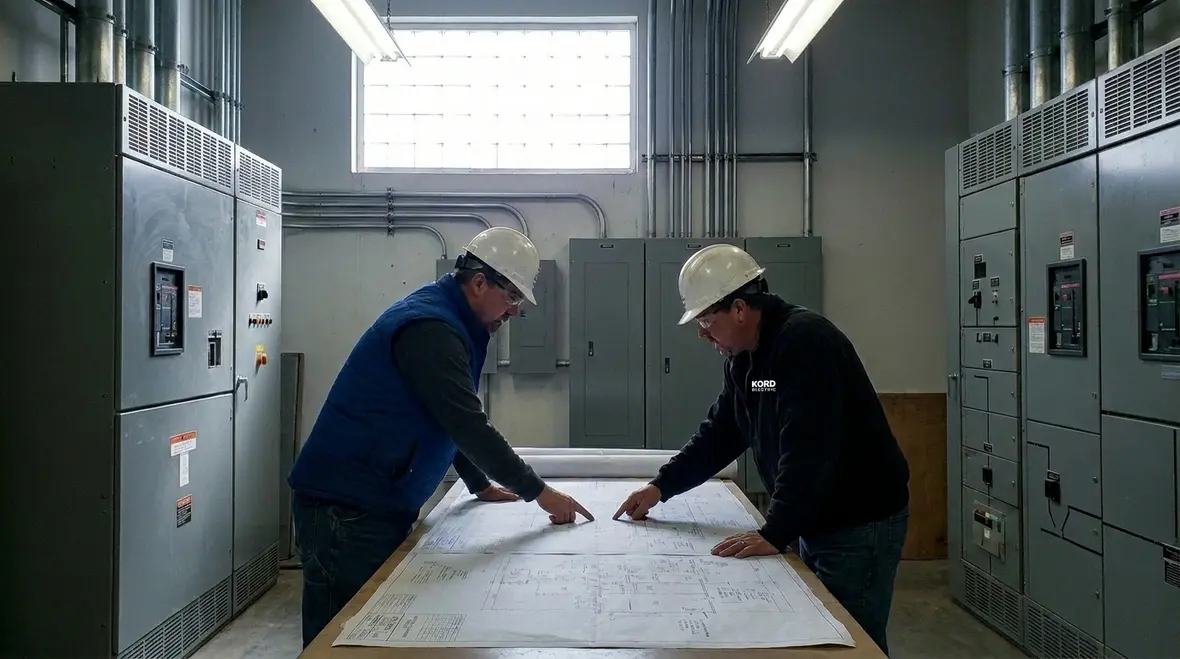
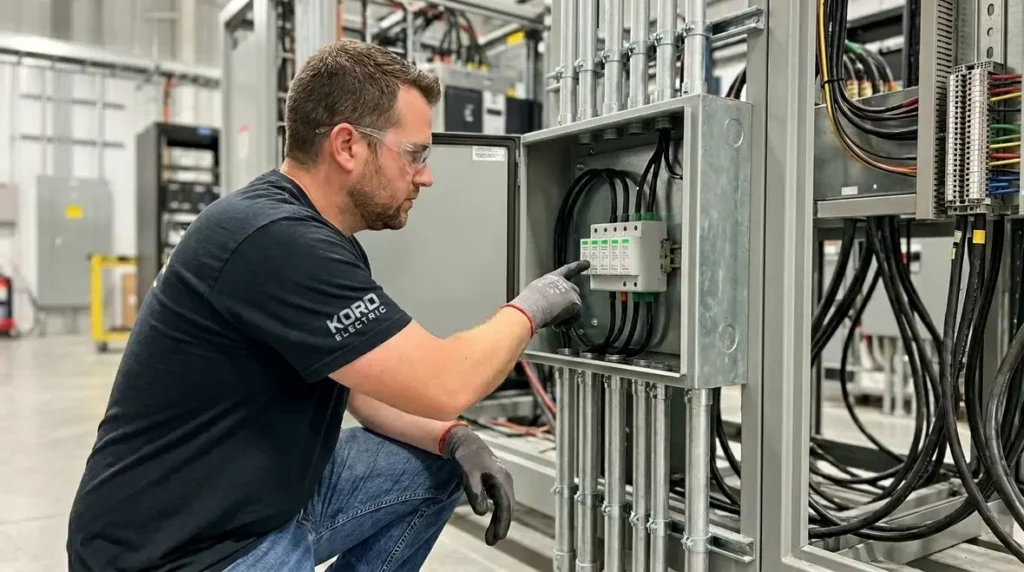
When a commercial or industrial facility experiences voltage fluctuations, it can quietly set off a chain reaction. A short dip may not trip a breaker, yet it can still stress motors, reduce performance in HVAC equipment, and upset controls that rely on stable power. Over time, those “almost failures” create wear that shortens equipment life. Then the next disturbance shows up and everything feels sudden, even though the building was already sending warning signals.
Kord Electric reviews the building’s electrical behavior during planning and we do not stop at a single measurement. First, we look at loading patterns across shifts and seasons. Next, we assess how power feeds distribute through panels, switchgear, transformers, and distribution systems. Then we connect the dots to equipment risk: drives, chillers, production tools, elevators, fire alarm systems, security systems, and life safety loads.
We also explain what voltage swings mean in the real world. For example, if voltage sags during a starting event, the equipment may run but at lower efficiency. If the voltage rises during lighter load periods, some devices respond with overheating or nuisance faults. Either way, the electrical system becomes a kind of weather system, and businesses do not get to choose the forecast.
That is why many of our planning conversations include a closer look at voltage fluctuations in commercial and industrial facilities. By pairing Emergency electrical infrastructure planning for businesses with targeted voltage diagnostics and correction, we reduce the odds that a “small” disturbance becomes the start of a much larger outage.
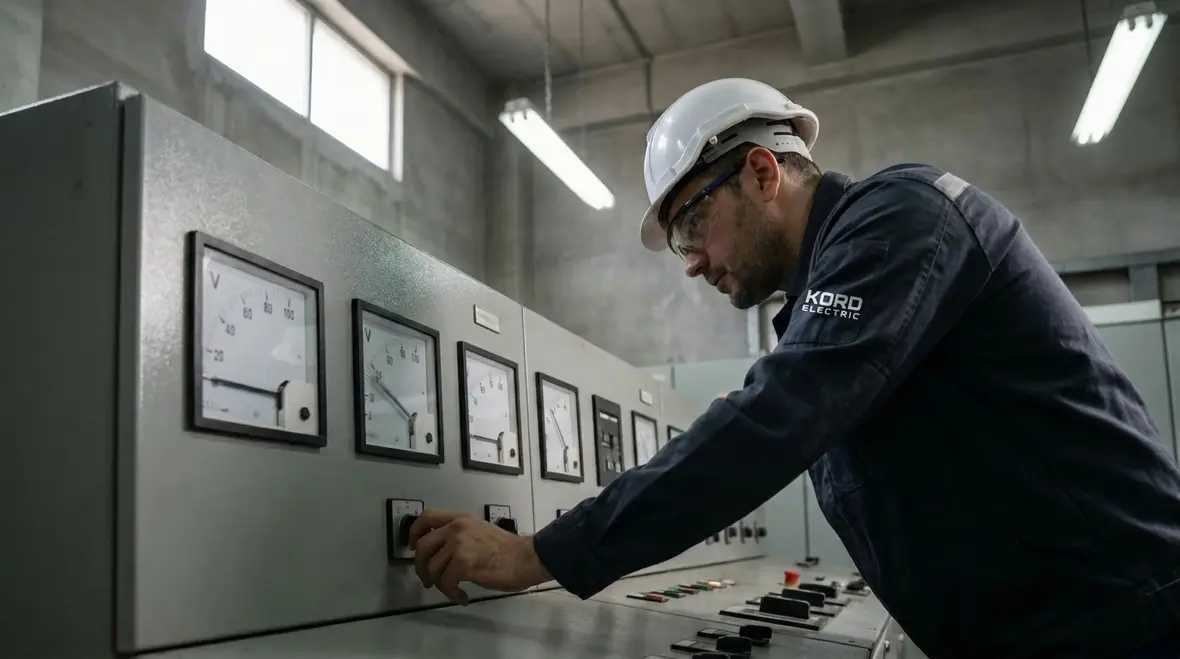
What “resilience” means in a commercial and industrial electrical plan
For major property buildings, resilience means more than having a generator. It means the facility can maintain power for the right loads, at the right time, with the right level of control and protection. Therefore, Emergency electrical infrastructure planning for businesses starts with critical load definition, then moves into coordination, then ends with testing that proves the plan works.
Our technicians and expert service staff guide clients through a practical workflow. They first identify the loads that must stay up during emergencies. Then we rank them by impact and compliance needs. After that, we evaluate transfer methods and switching timing. Finally, we document the plan so operators, maintenance teams, and facilities managers know exactly what to do.
That documentation matters. When the lights go out, you cannot rely on memory. Also, you cannot outsource your compliance to hope. Resilience planning creates a repeatable process, like a checklist that works even when the coffee is cold and the alarm panel is loud.
This is also where preventive strategies connect directly to day-to-day operations. A documented emergency plan works even better when it sits on top of a strong electrical preventive maintenance program. When panels, breakers, and protective devices stay in good health, the emergency plan has a much better chance of performing exactly the way it was designed.
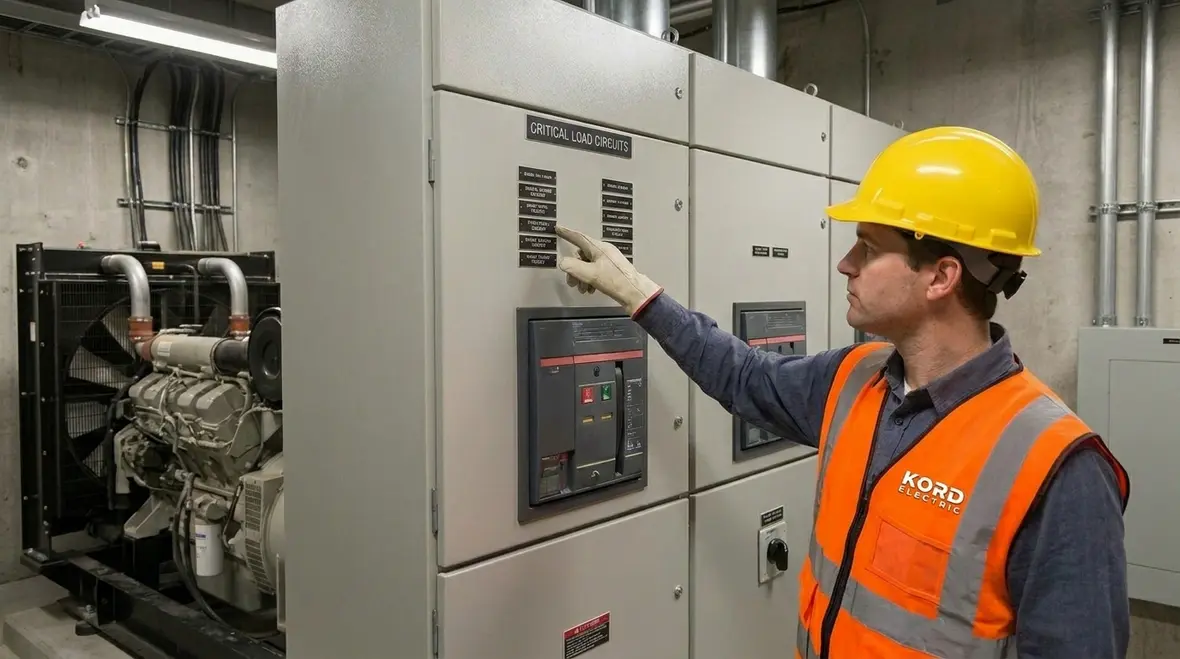
Designing redundancy that matches your risk, not your wish list
Some companies buy backup power and call it a day. Others ask for full redundancy everywhere, like they are trying to eliminate weather entirely. We recommend the middle path, because it is the one that keeps budgets sane and reliability high. Kord Electric focuses on the loads that carry the most risk and the systems that create the biggest operational and safety exposure.
We look at how power travels through the facility and where single points of failure can exist. For instance, a single upstream switchgear component can impact multiple departments. A misaligned protective setting may allow disturbances to spread. A transfer scheme that does not consider inrush current can delay startup or drop sensitive equipment at the worst moment.
Then we build the emergency electrical infrastructure around real scenarios. That means planning for generator startup time, transfer switching behavior, and any control circuits that depend on stable supply. In commercial and industrial environments, we also account for motor starting, variable frequency drive behavior, and the possibility of load shedding so essential equipment receives power first.
And because we like facts more than folklore, our team validates design choices against the building’s electrical characteristics and operating profile. That is how resilience becomes engineered, not just announced.
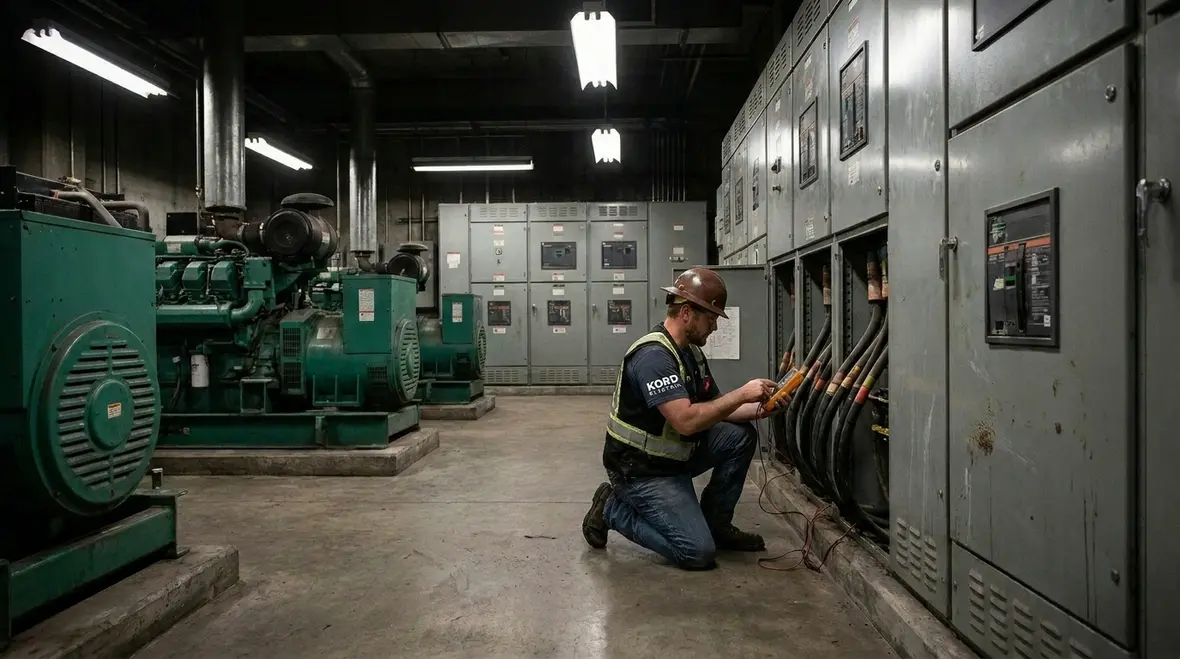
Transfer, monitoring, and protection: the unglamorous steps that save the day
Emergency electrical readiness lives in details that most people never watch until they need them. Transfer switching must happen cleanly. Monitoring needs to be accurate. Protection settings need to coordinate so faults get isolated instead of amplified.
During planning, we evaluate how the facility detects abnormal conditions and how it responds. That includes protective relays, breaker coordination, and the logic that decides when to operate on emergency power. If the detection thresholds are off, the system may transfer too early, too late, or repeatedly, which can stress equipment and create safety concerns.
We also set expectations for the facility staff. Our expert service staff explain the indicators and what actions they should take. When an operator understands the “language” of alarms and status lights, response time improves and mistakes drop.
Monitoring does not need to be complicated to be useful. We focus on clear visibility into power quality events, abnormal voltage patterns, and equipment health signals that influence emergency readiness. In short, the building should not be a mystery box during an outage.
For facilities that have already dealt with unexpected shutdowns or unstable power, pairing Emergency electrical infrastructure planning for businesses with services like emergency electrical services creates a complete safety net: one plan to respond in the moment, and one plan to prevent the same issue from returning.
Testing and maintenance that prove your plan actually works
Plans fail when they are not tested. Therefore, Kord Electric builds a maintenance and testing schedule that reflects how your site operates. We do not treat testing as a one-time checkbox. Instead, we align it with seasonal load changes, staffing cycles, and the realities of commercial and industrial schedules.
Our technicians run structured tests and document results. We verify startup and transfer timing. We check battery systems and controls. We inspect connections, verify protective settings, and confirm that emergency circuits deliver power where expected. Then we report findings in a way facilities teams can use quickly.
Just like that analogy about planning for a tornado, you do not wait until the sky turns green to learn how your shelter works. You test before the sky shows up. And if that sounds obvious, good. Businesses should not learn lessons the expensive way.
For major property buildings, we also recommend periodic reviews after upgrades. If someone adds production lines, new HVAC loads, or expanded data rooms, the risk profile changes. Our team helps update the electrical plan so resilience remains real, not nostalgic.
Those periodic reviews often overlap with broader commercial and industrial electrical maintenance plans. When testing, inspection, and documentation live under one umbrella, it is easier for facilities and maintenance leaders to stay ahead of both routine issues and true emergencies.
Integrating emergency power into real building operations
Even the best electrical design struggles if the building’s operations do not support it. That is why we integrate emergency readiness into how the facility actually runs. For example, we align emergency load priorities with critical workflows like security operations, fire alarm signaling, life safety systems, refrigeration for critical products, and core production processes.
We also coordinate communication. Our expert service staff help clients set clear ownership of actions during events. Who checks which panel first. Which systems should remain energized. When to initiate load shedding or switch management modes. When to notify leadership. Because in commercial and industrial environments, clarity reduces downtime and protects people.
Additionally, we work with property teams and maintenance groups to ensure training matches the site. We keep explanations direct, so your team understands what they are controlling. Then, when the next disturbance occurs, the response becomes a process, not a scramble.
Because the goal is simple: keep essential systems running, maintain safety, and reduce operational disruption. That is resilience with a heartbeat.
When we talk about Emergency electrical infrastructure planning for businesses, this integration step is where the plan stops being a binder and starts becoming culture. It influences how teams train, how leadership thinks about risk, and how the organization invests in upgrades like panel replacements, wiring improvements, or even new infrastructure to support EV chargers and future expansion.
FAQ
Next steps with Kord Electric
If your commercial or industrial facility needs stronger protection, we recommend starting with a resilience assessment and Emergency electrical infrastructure planning for businesses that fits your loads and your operating schedule. Kord Electric brings technicians and expert service staff who explain the plan clearly, then execute it with real testing and documentation. Contact us to schedule an onsite review, identify the risk points in your electrical system, and build an emergency response that holds up when power gets unpredictable. Let’s keep the lights on and the operation steady.
For facilities already confronting unstable power, integrating services that address voltage fluctuations in commercial and industrial facilities with a structured emergency plan closes the loop between everyday reliability and true crisis readiness. From there, pairing your plan with ongoing electrical preventive maintenance helps keep that readiness intact as your building, equipment, and occupancy change over time.
And when a serious issue does appear without warning—a failed panel, a sudden outage, or a critical system offline—having a partner already familiar with your infrastructure makes every minute count. Kord Electric’s dedicated emergency electrical services team responds quickly, stabilizes the situation, and uses your existing plan as a roadmap, not a guess.
If you are planning facility upgrades, preparing for expansion, or simply tired of wondering what will happen during the next major disturbance, now is the time to align your operations, infrastructure, and Emergency electrical infrastructure planning for businesses into one clear strategy.
Ready to turn “we hope the power stays on” into a tested plan you can trust? Start with an assessment, connect it to your maintenance and emergency service strategy, and let Kord Electric help you build electrical resilience that feels calm long before the next storm arrives.