Commercial Electrical Flicker and Surge Causes
In commercial settings, electrical problems rarely announce themselves with a polite warning. They show up as Commercial electrical flicker, quick dimming, or brief surges that make equipment behave like it just read a joke in a bad sitcom. In the first place, we often find the Causes of commercial electrical flicker and surges tied to loose connections, overloaded circuits, failing transformers, poor grounding, or utility voltage dips. In other cases, switching loads like HVAC, motors, or large pumps create sudden demand spikes that ripple through the building. And then there are power quality issues from aging switchgear, harmonic distortion, and incorrect protective device settings. We see these patterns often, and our job is to pinpoint which cause is driving the symptoms, not just guess. Our technicians take a methodical approach, because guessing costs more than time.
Commercial electrical flicker and surges start with a few common Causes
In commercial settings, electrical problems rarely announce themselves with a polite warning. They show up as Commercial electrical flicker, quick dimming, or brief surges that make equipment behave like it just read a joke in a bad sitcom. In the first place, we often find the Causes of commercial electrical flicker and surges tied to loose connections, overloaded circuits, failing transformers, poor grounding, or utility voltage dips. In other cases, switching loads like HVAC, motors, or large pumps create sudden demand spikes that ripple through the building. And then there are power quality issues from aging switchgear, harmonic distortion, and incorrect protective device settings. We see these patterns often, and our job is to pinpoint which cause is driving the symptoms, not just guess. Our technicians take a methodical approach, because guessing costs more than time.

Why the building reacts when power quality drops
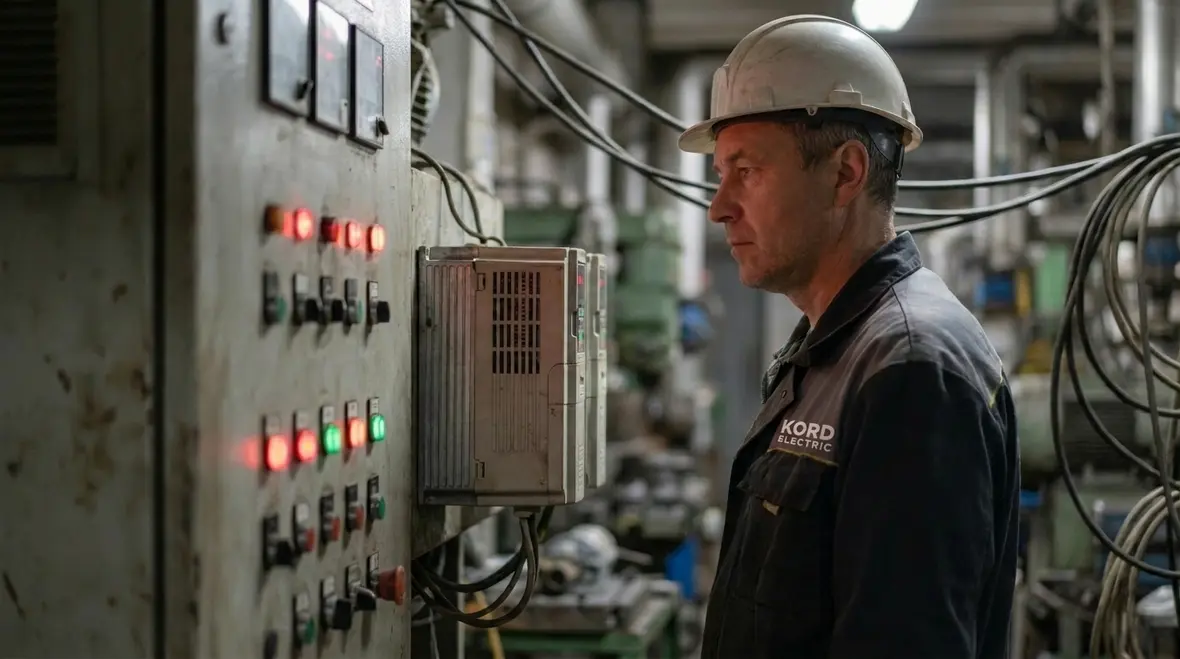
When a facility suffers voltage dips, spikes, or rapid swings, loads do not always “turn off and on” the way people expect. Instead, sensitive gear inside commercial and industrial facilities responds in smaller, costlier ways. For example, variable frequency drives may trip, building management systems may reboot, and lighting controls may hunt between states. Meanwhile, motors can run hotter and draw more current, which quietly stresses bearings and insulation. As a result, maintenance teams end up chasing symptoms while the real cause keeps returning.
So, even though the flicker looks like a lighting problem, it often connects back to upstream behavior. Switchgear health, feeder capacity, grounding quality, and the condition of major power components all play a role. Our expert service staff explains this clearly on site, because most facility managers want to know what is happening, not just what was done. And once they understand the mechanism, they can approve the right fixes with confidence.
Common Causes we troubleshoot first in commercial facilities
When our team arrives, we do not start by swapping parts like a TV mechanic. We follow a sequence that targets the most likely drivers of the Causes of commercial electrical flicker and surges. First, we check connection integrity. Loose lugs, corroded terminations, and damaged conductor insulation can create brief arcing events that show up as surges. Next, we examine loading patterns. A circuit that sits near capacity most of the day can dip when large loads kick on, especially during peak demand hours. Then we inspect power delivery equipment.
After that foundation work, we look for issues that often hide in plain sight. Below are the causes we most commonly find in commercial and industrial facilities.
Utility voltage dips: The utility may experience a disturbance, and the building rides through it poorly.
Transformer and feeder problems: Aging units, overheating, or uneven voltage regulation can cause unstable output.
Switching events: Large motors, HVAC compressors, pumps, and elevators can create momentary surges and dips.
Harmonics and non linear loads: Drives, rectifiers, and some UPS behavior distort wave shapes and increase heating.
Poor grounding or bonding: This can raise noise, affect protective device operation, and worsen flicker.
Overloaded panels or mis-sized devices: Incorrect breaker coordination or feeder sizing can amplify the problem.
Importantly, we treat each site like a system, not a set of random parts. If a building has a data center, a process floor, or a major control room, we pay extra attention to where critical power branches begin. And yes, our technicians will explain what they see in plain language, with no “trust me bro” energy.
Fast field checks our technicians use to find the real source
To keep downtime low and decisions accurate, we use practical field checks before recommending repairs. However, we also know that “quick checks” only help if they connect to the right measurements. So, we combine observation, load study, and power quality verification.
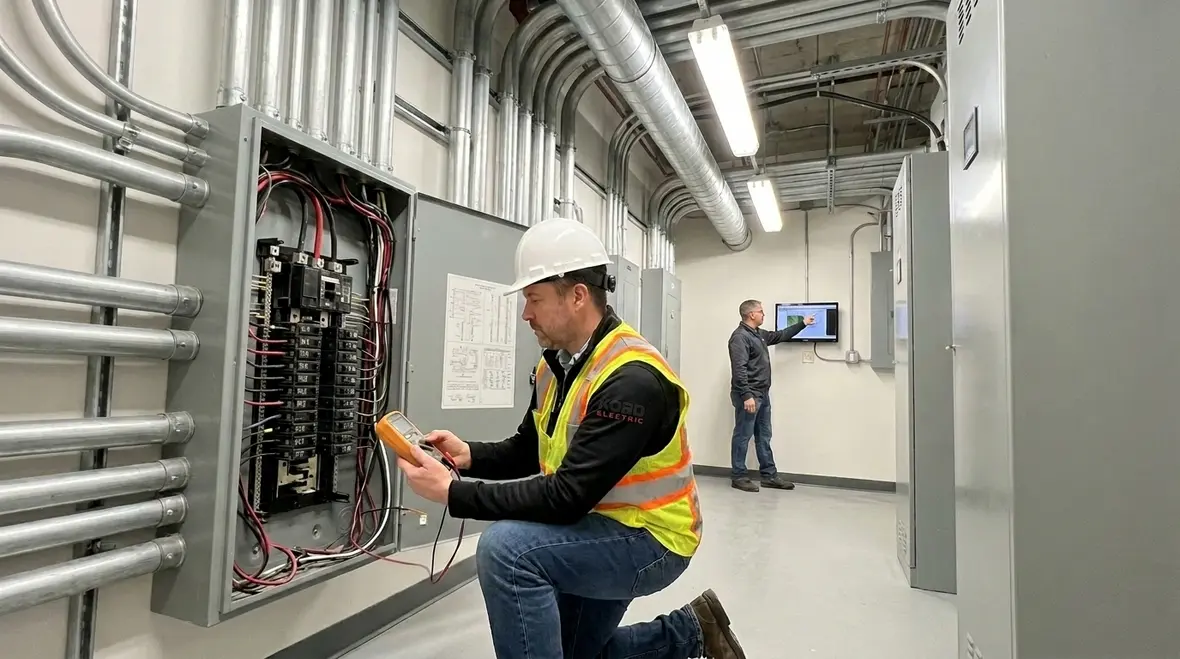
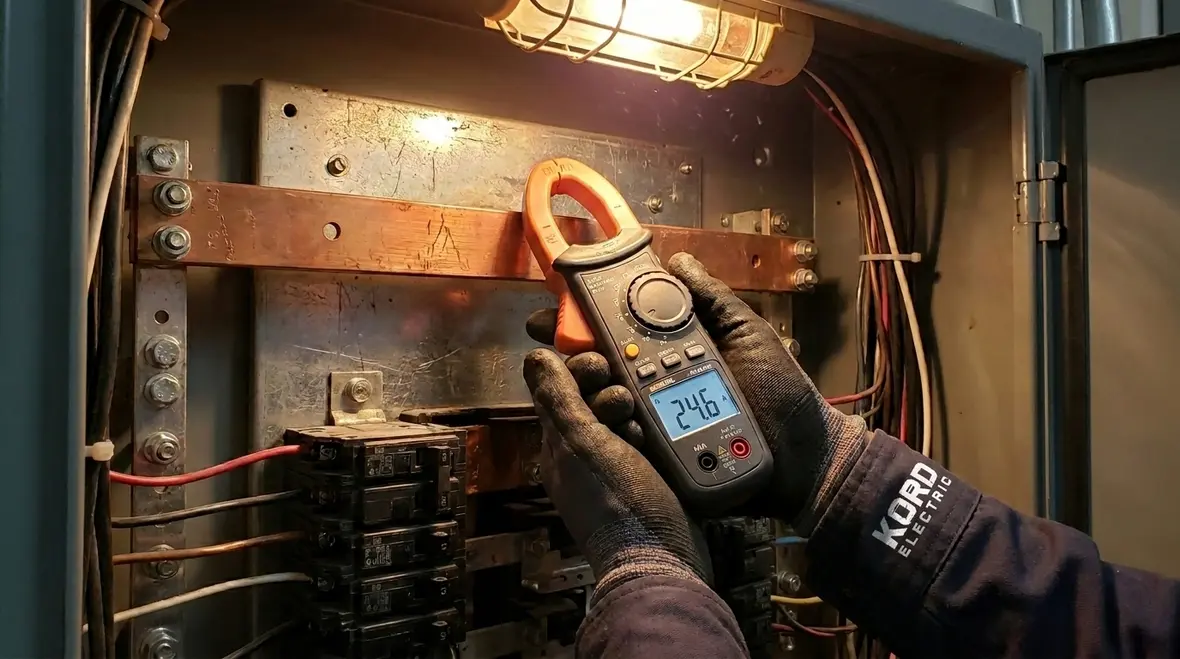
First, we examine the complaint timeline. We ask when flicker happens, which areas it affects, and what equipment starts just before it. Then we check the physical system. We verify torque on terminations, inspect bus bars for heat damage, and confirm the condition of main disconnects and switchgear doors. Next, we look at grounding and bonding points. If bonding is loose or improperly connected, it can trigger nuisance trips and unstable voltage references.
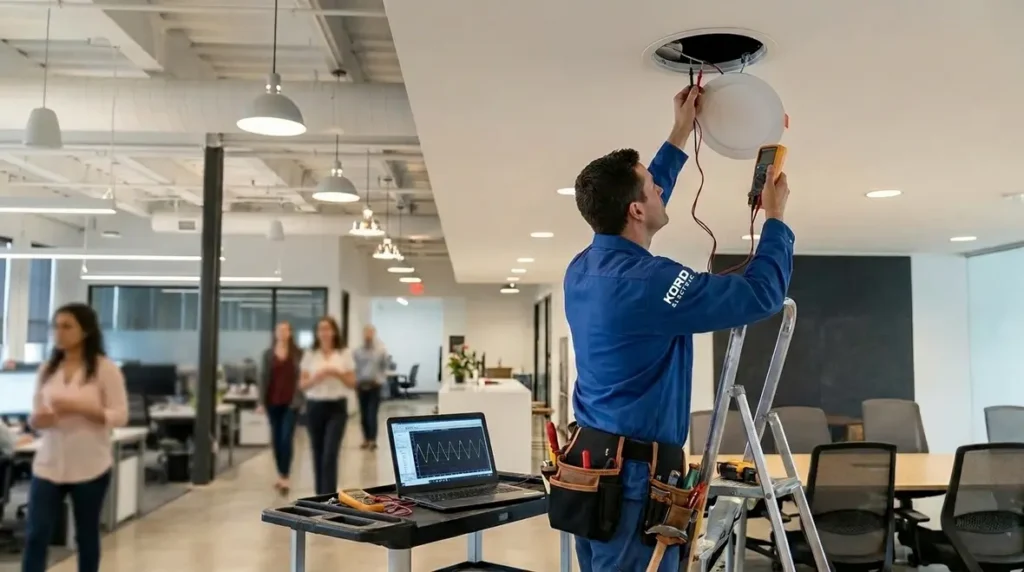
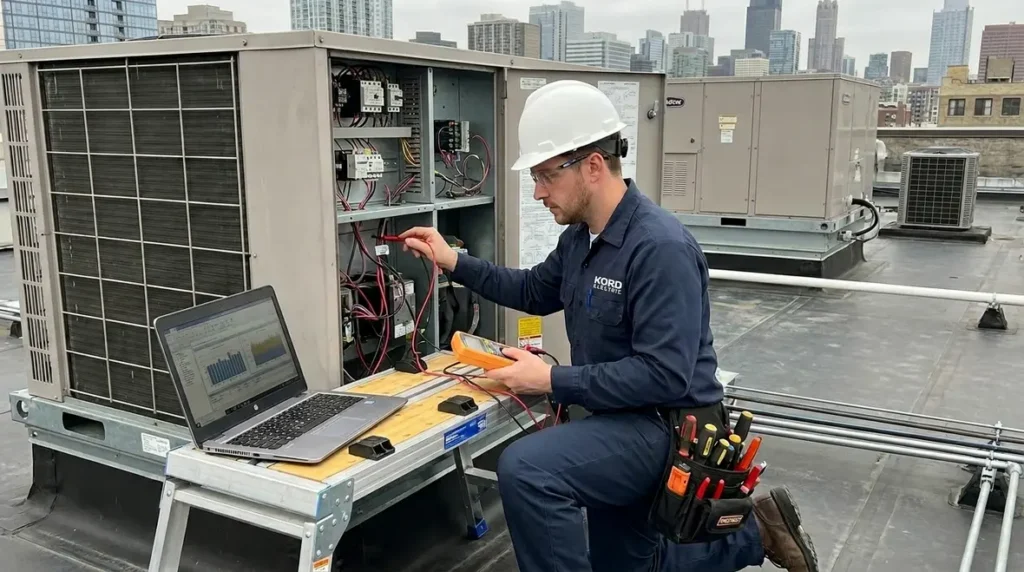
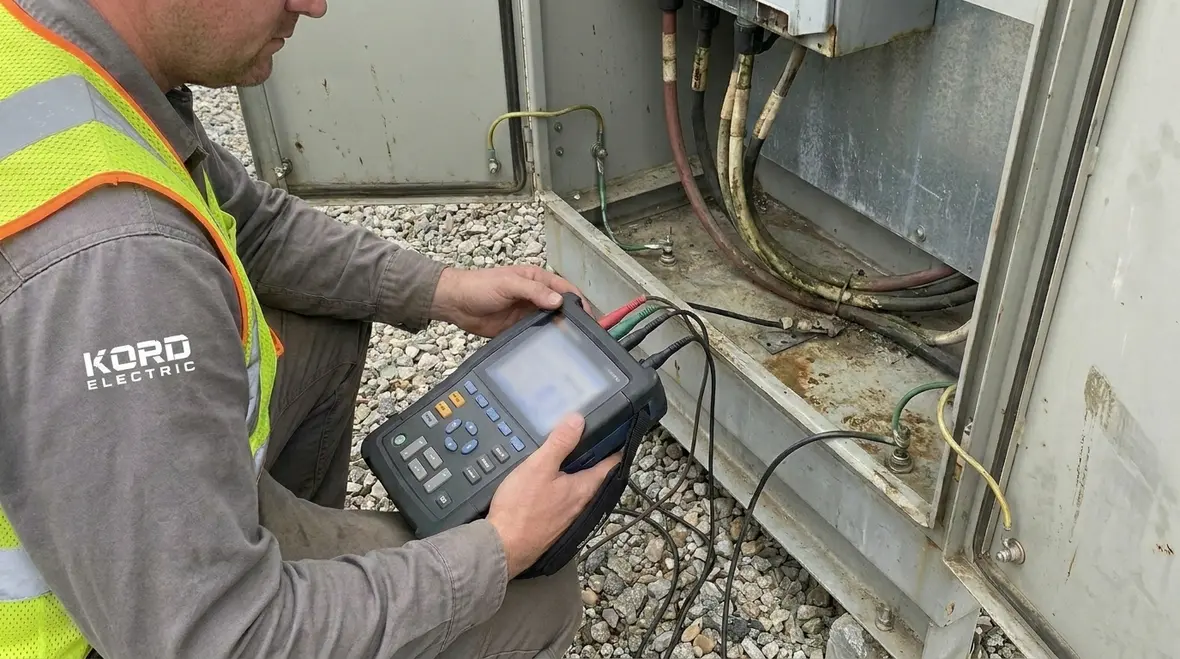
After the visual work, we measure actual behavior using power quality tools. We capture voltage sag events, surge patterns, frequency drift, and harmonic levels. Then we compare the findings against load schedules. For instance, if flicker aligns with chillers or boiler staging, it points toward switching transients, load inrush, or voltage regulation limits. If the events align with specific racks, lighting panels, or motor control centers, we narrow the search.
When we do this right, the cause stops being a mystery. It becomes a documented pattern. And that matters for commercial and industrial facilities, where maintenance budgets do not grow on trees.
Data center electrical infrastructure: how it affects flicker and surges
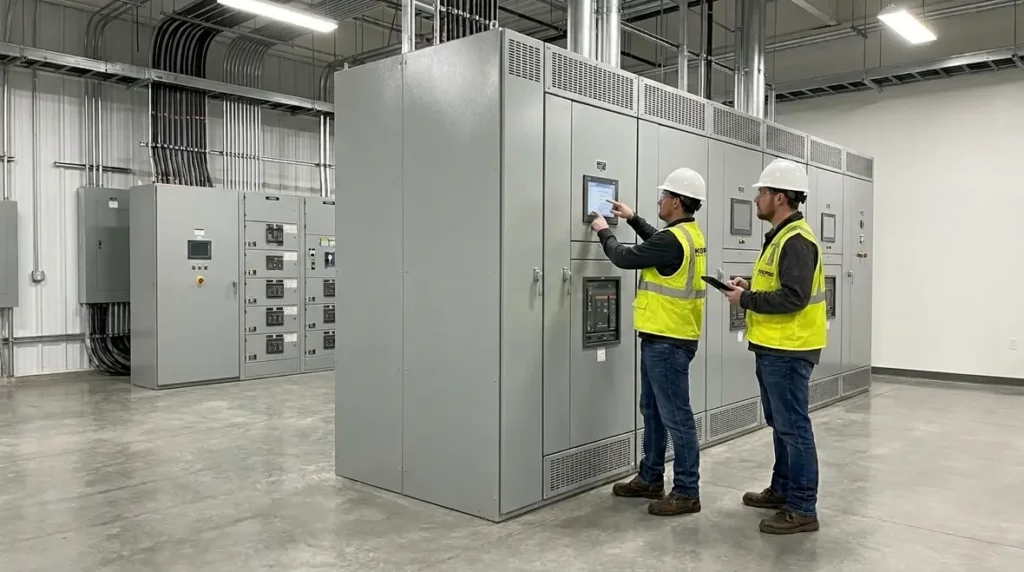
Major property buildings often include critical spaces such as data rooms, communications closets, and control centers. In these areas, power quality must stay stable because uptime is the business. Our teams often reference the principles in our article on Data Center Electrical Infrastructure Essentials, especially around distribution design, transfer paths, and the need to control power quality at the source and along the route. For example, poor coordination between upstream distribution and downstream sensitive loads can increase the impact of voltage deviations.
Also, critical branches need a consistent voltage reference and clean power delivery. Even if a building has UPS systems, poor upstream behavior can still stress rectifiers, increase heat, and reduce ride through margins. Therefore, we focus on distribution topology and the “path” power takes through the system.
In plain terms, we help facilities ensure that electrical infrastructure does not just deliver power, it delivers the right power in the right way. And if a data room exists, we treat it as a priority zone, because downtime is rarely a “quick fix” situation.
How we fix electrical flicker and surges without guessing
Once our team confirms the root cause, we choose fixes that match the system, the load profile, and the risk level. We avoid generic solutions because commercial and industrial facilities vary widely. A fast repair for one building can be a temporary patch in another.
If we find loose connections or damaged terminations, we correct them and document the condition. If loading drives voltage dips, we adjust feeder capacity, rebalance circuits, or revise staging strategies for motors and HVAC equipment. If harmonics drive overheating and erratic behavior, we recommend corrective actions such as filtering or equipment tuning, based on measurements. If grounding or bonding issues contribute to unstable references, we improve bonding points and verify continuity.
When the problem sits in distribution equipment, we evaluate switchgear health, transformer performance, and protective device settings. In some cases, the right fix includes targeted upgrades, not a full replacement. In other cases, we recommend replacement to protect critical loads. Either way, we explain the tradeoffs, timelines, and expected results.
Meanwhile, our expert service staff stays available to walk maintenance teams through the “why” behind each fix. That keeps future troubleshooting faster, because knowledge transfers on the job, not after the bill.
FAQ: commercial electrical flicker and surges
Clear next steps from Kord Electric
When electrical flicker and surges show up in a commercial or industrial facility, we treat it as a system issue, not a nuisance. Kord Electric can help identify the real drivers through field inspections, power quality measurements, and practical fixes that protect critical loads. If you want fewer shutdown surprises and more stable operations, reach out for a site assessment. We will explain findings in plain language, then map a plan your team can trust. Call us today and let’s bring your power back to steady.
If your building is already seeing voltage swings, nuisance trips, or unexplained equipment resets, it may be time to look beyond quick fixes. Our team frequently supports clients facing recurring instability by combining power quality analysis with structured follow-up service. For facilities that want to get ahead of failures, pairing corrective work with an ongoing electrical preventive maintenance program helps keep those small warning signs from turning into costly shutdowns.
For sites experiencing repeated voltage fluctuations or unexplained surges, our dedicated voltage fluctuation and stability services give facility teams a focused path to restore stable power and protect sensitive systems without guesswork.