

Commercial Backup Power Systems for Business Uptime
Commercial Backup Power Systems Keep Business Moving When the Lights Go Out
When utility power drops, Kord Electric relies on our commercial backup power systems to protect what commercial and industrial facilities cannot afford to lose. In the first minutes of an outage, every second matters, from life safety signals to cash registers and data platforms. Therefore, we plan for the real world, not the “perfect test” world. Our technicians and expert service staff explain the setup in plain language, so building leaders know what will happen, when it will happen, and why it matters. And yes, we promise the process is calmer than a late season finale where nobody survives the power cut.
In this article, we explain how backup power systems safeguard business continuity during outages, how uptime targets get built into electrical design, and how Kord Electric supports major properties with service you can trust.
Why power outages damage commercial uptime
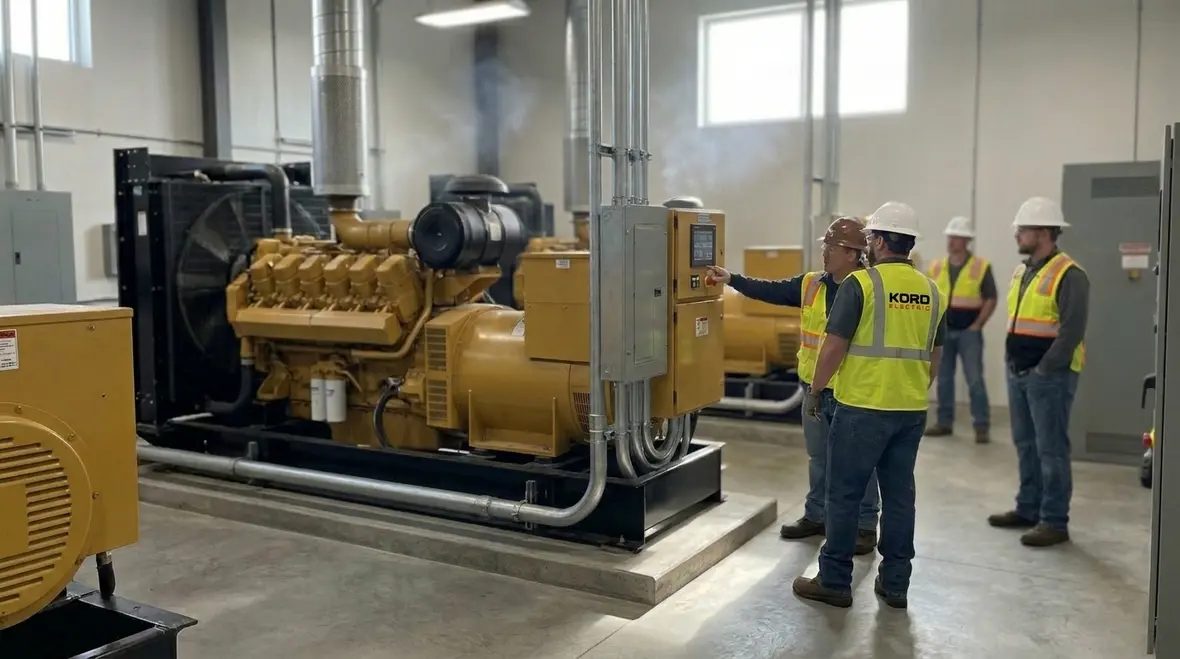
Commercial and industrial operations depend on steady voltage, stable frequency, and fast transfer from utility supply to onsite generation. However, many facilities think about outages as a single event. In reality, outages create a chain reaction. First, process equipment shuts down or runs out of safe parameters. Next, HVAC systems struggle to control temperature and humidity. Then, controls logic resets, which can lead to reboots, alarms, and lost production time.
Furthermore, downtime often spreads beyond operations. Vendors cannot ship. Customers cannot access services. Compliance teams scramble. Accounting systems lose background processes, and data services may degrade even if they do not fully stop. Meanwhile, a facility’s ability to recover can depend on how quickly power returns and how safely loads get reconnected.
That is where our approach helps. We do not treat backup power as a “nice to have.” Instead, we design and maintain it for the timing, load type, and risk profile that major property buildings face.
How backup power systems prevent downtime and protect critical loads
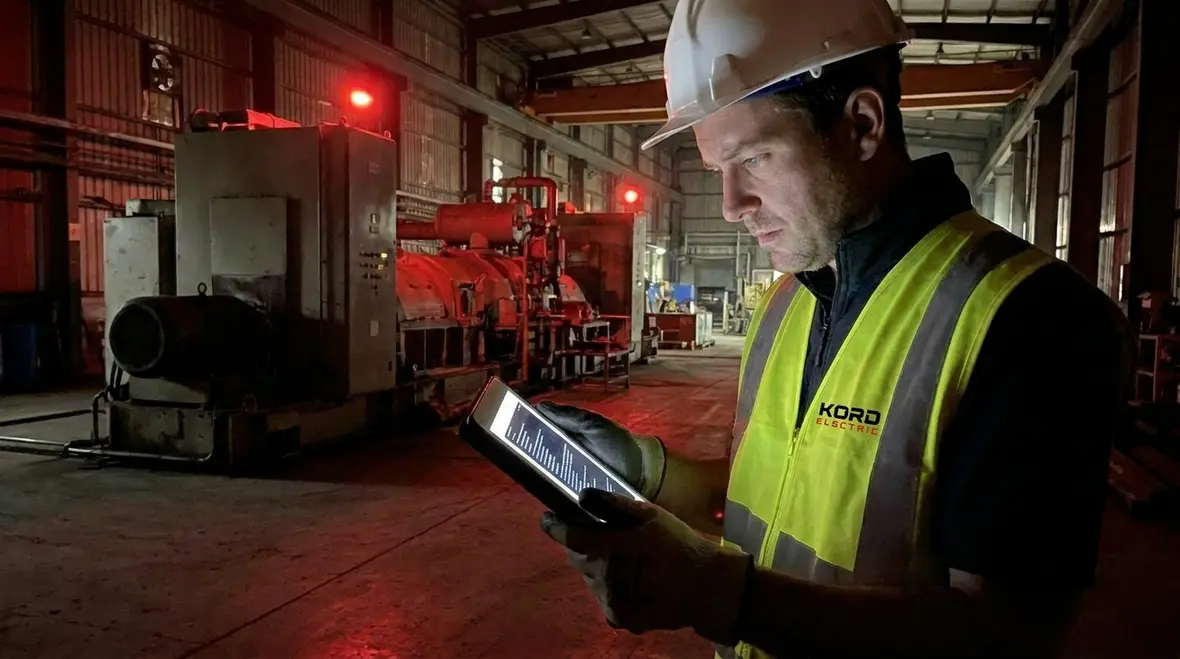
Backup power solutions safeguard business continuity by doing three jobs at once: supplying power, keeping power quality stable, and managing transfer without chaos. When utility power fails, the system detects the event, starts the generator, and then transfers selected loads. That matters because not every load needs to run during an outage.
Therefore, good standby design separates critical loads from nonessential ones. Critical loads can include emergency lighting, fire alarm systems, life safety equipment, security systems, network and data cabinets, elevators with required operation modes, and essential mechanical controls. By contrast, nonessential loads can wait, which reduces the generator size needed and helps preserve runtime.
In addition, transfer switches and load banks help keep the changeover smooth. Our technicians walk our clients through the logic, so teams understand what transfers immediately, what transfers after a time delay, and what stays off by design. Then, operations leaders get a clear view of risk: which systems keep running, and which ones shut down safely.
If you ever wondered how a facility stays online like a calm hero while the rest of the building “melts,” it is mostly this careful load planning and transfer sequencing.
Transfer time, load shedding, and the difference between “on” and “ready”
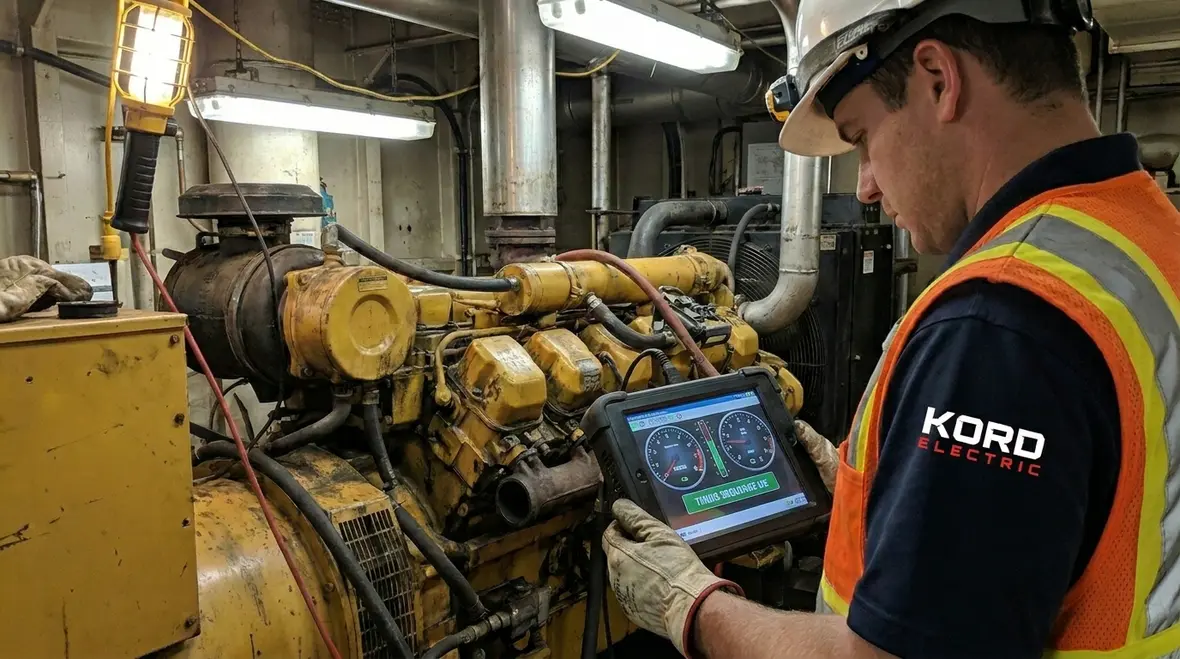
One reason some facilities struggle during outages is simple: power arrives, but critical equipment is not ready. In other words, they have electricity, but not the right power at the right moment. That is why timing, ramp-up behavior, and load shedding matter.
First, the generator must reach stable output before sensitive systems connect. Next, the transfer switch ensures loads move with correct phase relationships and minimal stress. Then, load shedding can limit the demand during early moments, so the system does not overload at startup.
Kord Electric supports commercial and industrial sites with a focus on uptime, including the power distribution details that major property buildings require. For example, our blog on data center electrical requirements for uptime highlights how facilities structure electrical design to maintain continuity, especially for loads that require dependable power. That same thinking applies here: build redundancy, plan capacity, and ensure the system can carry real loads, not just nameplate values.
Finally, we help teams understand how “ready” looks in the field. A backup system that runs but cannot carry the right loads is like a backup phone with no battery. It will make you feel better for about five seconds.
Electrical design choices that support uptime goals
Major property buildings need backup power that works with their overall electrical one line, their grounding and bonding approach, and their distribution layout. Therefore, design choices affect performance long before an outage occurs.
Our technicians typically focus on these core areas.
- Selective load coverage: we align standby loads with business needs so the generator is sized and controlled correctly
- Utility coordination: we integrate the transfer system with upstream protection so fault events do not create wider issues
- Power quality control: we consider voltage regulation and system stability for sensitive equipment
- Start and transfer sequence logic: we reduce nuisance trips and prevent sudden demand spikes
- Scalability: we plan for future expansions at commercial and industrial facilities
Also, the more complex the building, the more important labeling and documentation become. Kord Electric emphasizes clear circuit identification, tested sequences, and routine checks. That way, when a facility leadership team asks what happens next, our expert service staff can answer with facts, not guesses.
Maintenance, testing, and training that keep systems dependable
Backup power is not a “set it and forget it” item. It is a critical asset that must perform when it matters most. That means scheduled maintenance, fuel management, battery health checks, and generator inspection. It also means testing under controlled conditions that match real operating scenarios.
To keep commercial uptime goals on track, our service team follows practical rhythms. First, we verify that sensors, controls, and switches respond as designed. Next, we check that connections and protective devices remain in safe condition. Then we confirm that alarms and status signals reach facility staff so they can take action without delay.
We also train our clients. When operations teams understand the system’s normal operating states and expected behaviors during a transfer, they stop panicking and start responding. In our experience, calm teams improve outcomes. And honestly, calm is cheaper than emergency troubleshooting.
Finally, we make sure documentation matches the field. If the electrical design changed and records did not update, reliability drops. Therefore, our technicians treat documentation as part of uptime, not as paperwork that slows everyone down.
What a continuity plan looks like for a major property building
Even the best backup system cannot replace a solid continuity plan. That plan connects electrical performance to real business decisions. In practice, Kord Electric helps clients align backup power operation with facility response steps.
Here is what that plan typically includes.
- Critical load list: building leaders and engineering teams agree on what must stay on
- Operational roles: who monitors alarms, who confirms transfer, who authorizes next steps
- Runtime expectations: fuel strategy and estimated operating duration for the specific site
- Response timelines: when teams switch to outage mode and when they assess recovery steps
- Communication method: clear ways to notify internal teams and key external partners
As outages happen, teams should avoid guesswork. Transition words like therefore, meanwhile, and as a result matter because they describe a sequence that actually guides decisions. Our technicians and expert service staff help set that sequence before an outage ever starts, so business continuity does not depend on heroics.
FAQ
Commercial backup power system planning with Kord Electric
Outages do not ask permission. So we at Kord Electric plan for the moment your utility power fails and your commercial or industrial operation must stay steady. Our technicians and expert service staff help define critical loads, manage transfer and load behavior, and keep backup equipment dependable through service and testing. If you are responsible for uptime on a major property, reach out to Kord Electric to review your current electrical backup strategy and build a continuity plan that performs when it counts.
Facilities that want to strengthen their outage response can also align backup generation with structured preventive maintenance. Kord Electric’s electrical preventive maintenance services help keep switchgear, transfer switches, and distribution equipment ready for the real-world conditions that commercial backup power systems must handle.
For organizations across Southern California, having a partner that understands both uptime goals and local facility realities matters. That is why many major property teams rely on Kord Electric for Los Angeles County commercial electrical services that integrate backup power, distribution design, and long-term reliability planning into one coordinated approach.
When you connect thoughtful planning, commercial backup power systems, tested transfer logic, and disciplined maintenance, outages turn from headline events into manageable moments. Your teams stay calmer, your systems stay steadier, and your business keeps moving while the grid sorts itself out.


