Commercial EV Fleet Planning for Scalable Charging
Strategic commercial ev fleet planning that scales charging without chaos
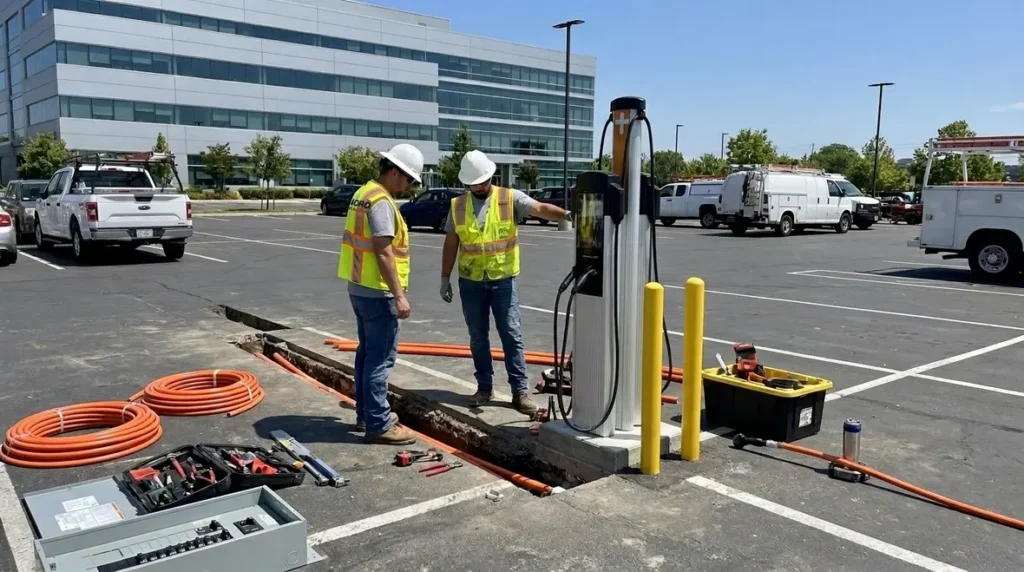
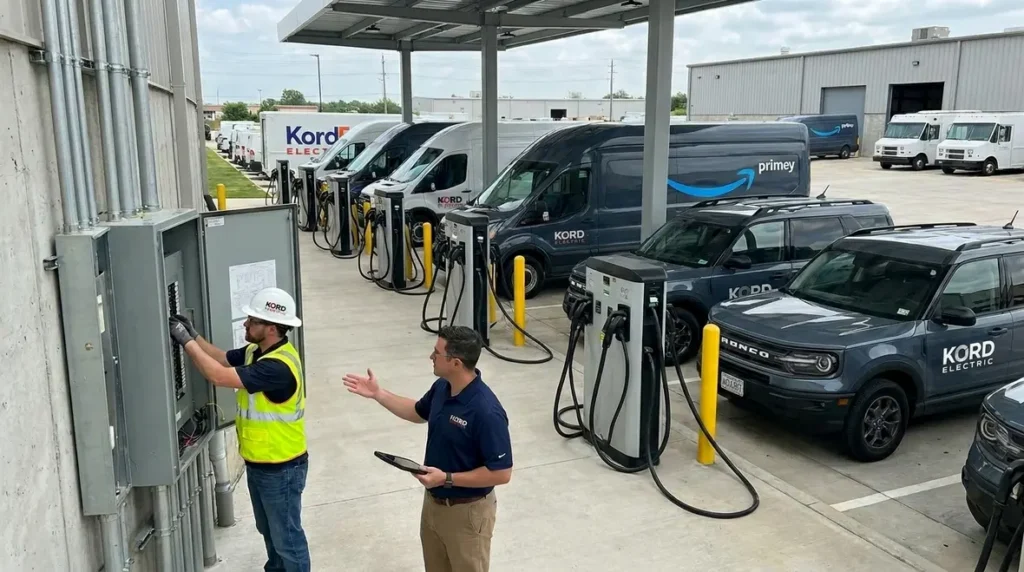
When a business plans for more electric vehicles, commercial ev fleet planning cannot be an afterthought. At Kord Electric, we help commercial and industrial facilities move from “we should add chargers” to a clear, staged rollout that supports real demand. In the first phase, we map power availability, site layout, and operating schedules. Then we plan for growth, maintenance, and uptime so the system stays useful as fleets expand. And yes, we also plan for the human side, because nobody wants a driver waiting while the site team plays detective. Our technicians and expert service staff explain what we find and what we recommend, step by step, in plain language.
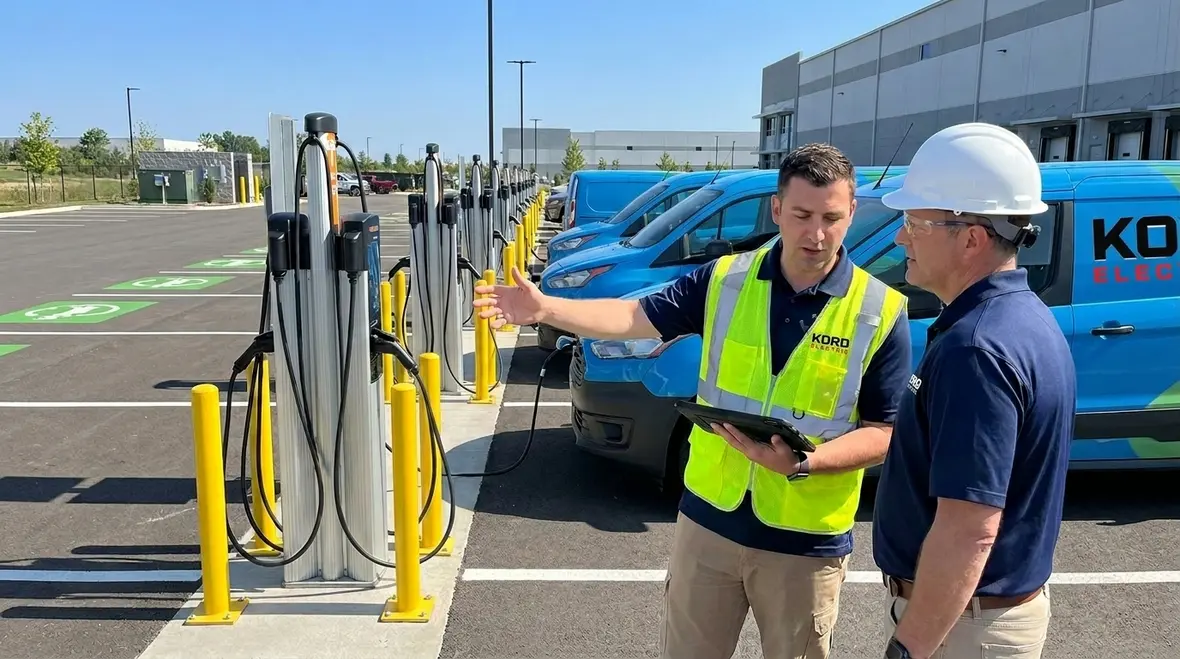
How we build a growth plan for fleet charging stations

Scaling never happens in a straight line. First, vehicle counts rise in waves, routes change, and billing needs evolve. Therefore, we start with a practical demand picture rather than guessing. We ask about current drivers, anticipated fleet expansion, charging behavior, and the hours when vehicles can plug in. Next, we translate that into electrical load planning that accounts for diversity, not just peak numbers. In other words, we avoid designing for the absolute worst moment and then watching the chargers sit idle like a punchline with no audience.
Then we design the rollout in phases. For example, we might install core infrastructure that supports future expansion, while placing chargers in a way that matches near term usage. As a result, the facility avoids major rework later. Finally, our approach aligns the charging build with the electrical systems already in place, so the site stays stable as demand grows.
Where power bottlenecks usually show up and how we prevent them
Most charging delays trace back to power bottlenecks. Utility capacity limits, transformer sizing, panel constraints, and distribution losses can all slow the project. In addition, facilities often have electrical loads that shift across seasons or shift schedules, which can raise stress on circuits without warning. So we conduct an electrical review that focuses on capacity, protection, and safe routing.
At Kord Electric, our technicians examine the site like it is a system, not a set of parts. We check service entrance capacity, evaluate existing feeders, and confirm whether the load profile supports the charging plan. Furthermore, we look at how the chargers will interact with HVAC, lighting, and any process equipment typical to commercial and industrial environments. After that, we recommend upgrades only when they truly matter for performance and safety.

Our maintenance plans keep uptime steady
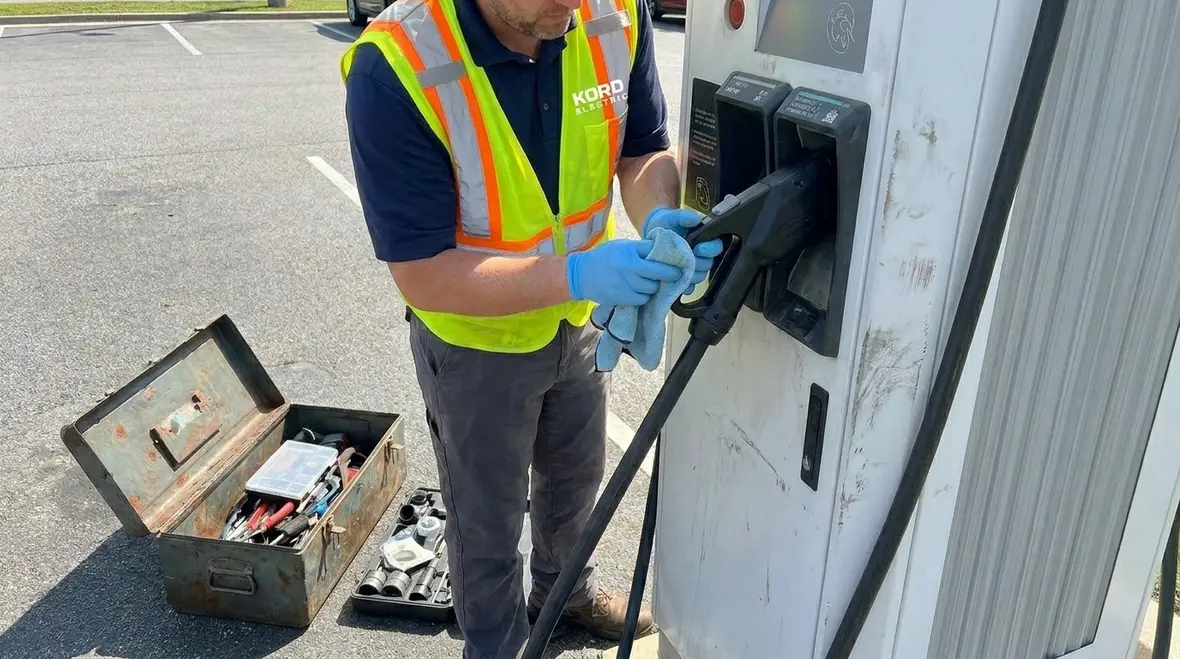
Charging equipment lives a busy life. It handles outdoor weather, heavy foot traffic, and daily use that can wear out components over time. That is why we lean on structured maintenance. If the facility waits until a charger fails, the downtime becomes a business cost, not a quick repair.
We reference the same thinking behind our commercial and industrial electrical maintenance plans to keep systems reliable. Instead of vague checkups, we schedule work based on risk and operating needs. And we document findings so the facility team can track trends.
Here is how our approach supports steady uptime
- Preventive checks that catch loose connections, component wear, and water intrusion risk before they become faults
- Load and performance review to ensure the charging behavior matches expectations, not only the device label
- Cleaning and inspection focused on outdoor units and site power cabinets
- Spare parts readiness so the team does not wait weeks for a basic component
- Clear reporting explained by our expert service staff, so managers understand what matters and what can wait
So, while others treat maintenance like an “if it breaks” hobby, we treat it like a business process. And that difference shows up in uptime, driver confidence, and fewer emergency calls at inconvenient hours.
Smart site design: access, signage, and charging behavior
Even a well powered system can underperform if drivers cannot use it smoothly. Therefore, we plan site flow for how vehicles enter, park, and connect. We also consider how the charging area fits into everyday operations, including pedestrian safety, truck movement, and normal loading schedules typical to major property buildings and commercial campuses.
Next, we align charger placement with driver needs. For example, fleet vehicles may charge overnight, while some drivers need short sessions during off peak periods. When we understand that, we can plan the number of outlets and the intended charging windows. As a result, we reduce bottlenecks where too many vehicles compete for too few ports during the same narrow time window.
Finally, we support clear communication. We recommend signage and layout that guides drivers without confusion. And if managers ask whether a driver can handle the interface, our technicians explain the user steps and maintenance basics, so training stays simple.
How we handle compliance, safety, and documentation
Commercial and industrial facilities need more than hardware that turns on. They need safety, compliant installation, and documentation that holds up during inspections and audits. So we plan for electrical protection, safe conduit and routing practices, and proper labeling across the system. We also review how the chargers connect to existing equipment and how the site will manage fault conditions.
In addition, we help facilities maintain records that matter. That includes commissioning reports, maintenance logs, and service documentation. Therefore, if an issue appears, others may guess. We trace the history and move quickly. And that is not just good for peace of mind. It supports faster repairs, better decision making, and a cleaner path for future upgrades.
One more thing: when your site team has questions, our expert service staff gives clear answers. We avoid jargon dumps. We explain what we did, why it matters, and what to watch next.
Budgeting for expansion without wasting money
Charging infrastructure can feel like a large spend, and it is. However, commercial and industrial sites rarely need a full rebuild to scale. They need smart phasing and the right level of capacity so the facility does not pay twice.
Our strategic planning helps leadership budget with fewer surprises. We build a staged plan that prioritizes what supports immediate operations while leaving room for future chargers. For example, we may add infrastructure that enables additional outlets without major rework. Then we align charger procurement with forecasted growth, which reduces the risk of buying more equipment than the fleet needs right now.
As part of this, we also consider ongoing costs like service intervals, component wear, and the effect of higher usage on power distribution. Consequently, the facility can predict operating impact rather than reacting to it.
For facilities that want to connect their commercial ev fleet planning directly to implementation, it helps to coordinate early with dedicated services such as commercial and industrial EV charger installation and maintenance, so the long term roadmap matches the actual equipment in the ground.
Linking fleet charging to broader electrical reliability
Commercial EV fleets do not operate in isolation. The same panels, switchgear, and feeders that support charging also carry power for lighting, HVAC, production lines, data systems, and life safety equipment. That is why many facilities pair their fleet charging roadmap with a broader reliability program. By tying your scaling plan to structured maintenance and troubleshooting checklists, you avoid treating charging as a side project and instead make it part of a unified electrical strategy.
For example, when a facility already follows a disciplined program like the one outlined in Kord Electric’s commercial and industrial electrical maintenance plans, it becomes easier to schedule inspections, verify capacity, and document upgrades that affect both fleet charging and core operations. That same mindset shows up in related guides on topics such as hidden electrical risks, emergency power failures, and electrical system troubleshooting for factories—all of which connect back to one idea: reliable power should support everyday work, not surprise it.
And because many fleets operate in and around Los Angeles County, it can be especially helpful to coordinate EV projects with broader Los Angeles County commercial electrical services. That way, panel upgrades, lighting work, and fleet charging all move under a single, calm plan instead of scattered one off projects.
FAQ
Get a scaling plan that keeps your chargers ready
If your facility wants dependable charging as fleets grow, Kord Electric can build the roadmap and support it with service. We help commercial and industrial sites plan power capacity, site layout, phased expansion, and maintenance so uptime stays steady. Now is the moment to avoid rushed installs and avoidable downtime. Contact us to review your current setup and map a practical scale plan for your commercial operations. We will explain the options, outline next steps, and keep the project calm, like a well timed sitcom pause.
When you are ready to move from planning to installation, you can also align your roadmap with Kord Electric’s dedicated commercial electrical services across Los Angeles County, ensuring that fleet charging, core power systems, and future upgrades all share the same clear, scalable plan.