Commercial Building Electrical Inspection Guide
Buying a commercial property is exciting, until you remember the building has been doing electrical stuff for years, whether anyone asked it to or not. That is why a commercial building electrical inspection before buying matters early, not after the keys are already in someone else’s hand. At Kord Electric, we help owners and buyers take a calm, clear look at a building’s electrical health before they commit. And yes, we know, most people do not think about breakers the way they think about location. Still, electrical problems can turn a good deal into a surprise expense with a late fee.
In this guide, we explain how our team approaches electrical inspection for commercial and industrial facilities and major propertie buildings, what we check, what we document, and how that information helps you make a smarter purchase decision.
Why a pre purchase electrical check protects commercial buyers
When others focus on paint, parking, or lease terms, we zoom in on the hidden risks that drive real costs: unsafe wiring, overloaded panels, poor grounding, and outdated protection. Therefore, our commercial building electrical inspection before buying helps you spot issues while you still have time to negotiate repairs, set a budget, or walk away.
Because commercial sites often serve many loads at once, small electrical flaws can become big operational problems. For example, a tenant may complain about lights flickering, HVAC cycles may act strange, and production equipment may trip. Even worse, outdated electrical systems can increase fire risk. So, we treat the electrical side as a business risk, not a minor maintenance task.
Our expert service staff does not just point at problems. Instead, they explain what the issue means, where it shows up, and what it typically costs to fix in a commercial setting. That way, buyers and lenders get information they can use, not a mystery report that reads like a curse.
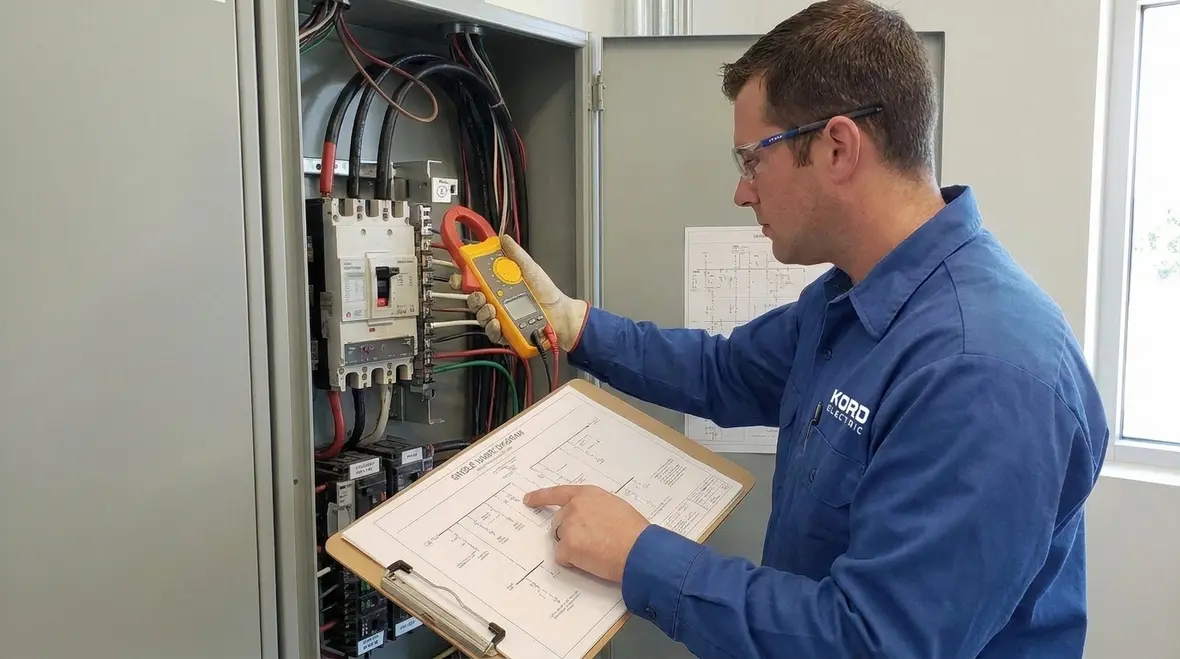
What Kord Electric technicians check during an electrical inspection
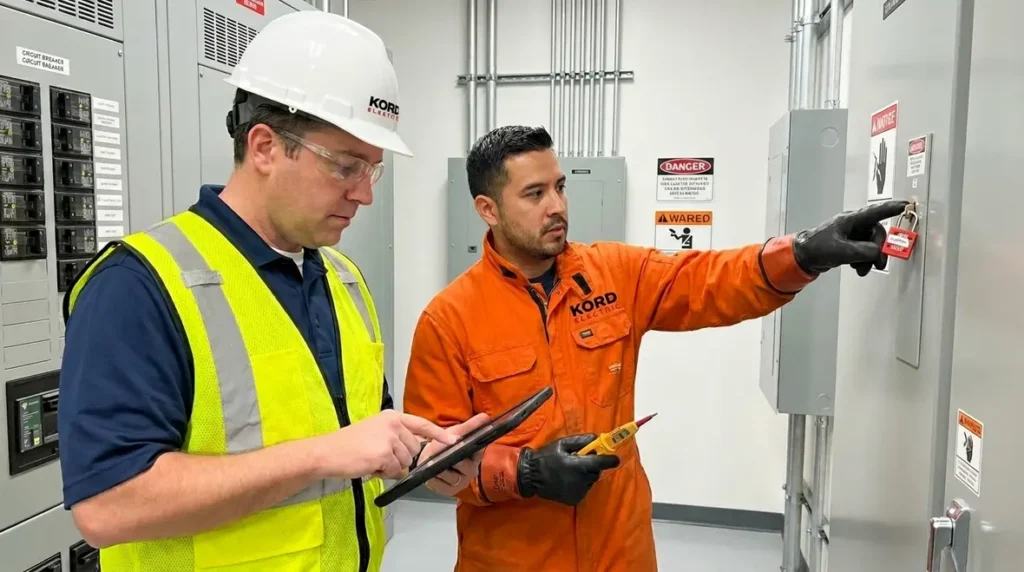
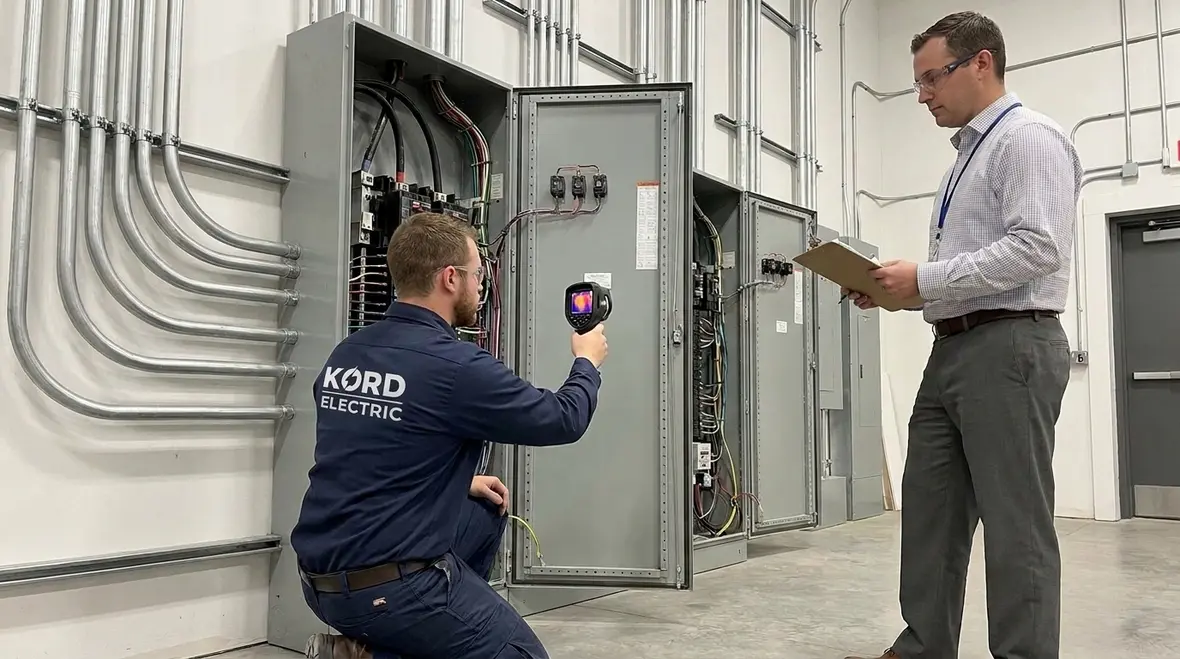
We start with a structured plan, because random checking feels like searching for a missing remote in a couch. Then we move through the building in a logical order so nothing important gets skipped.
Our technicians typically evaluate:
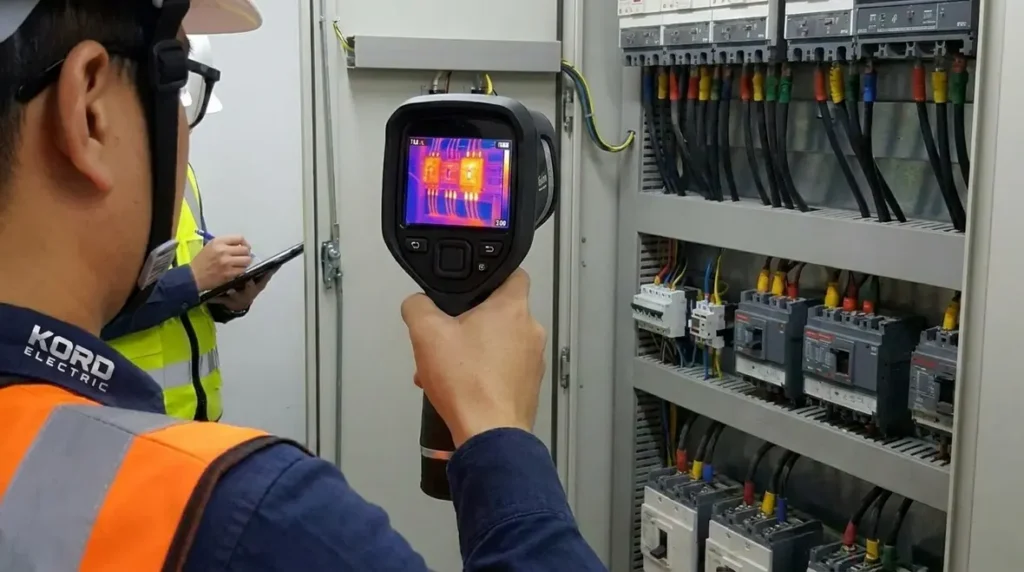
- Service entrance and main panels: load history, rating match, signs of overheating, and proper labeling
- Distribution equipment: breakers, bus bars, panel condition, and evidence of moisture or dust intrusion
- Grounding and bonding: continuity, connections, and compliance with current safety needs
- Branch circuits and wiring: insulation condition, unsupported runs, aging issues, and visible damage
- Protective devices: correct type, trip behavior, and whether protection matches the wiring and expected loads
- Safety features: GFCI or AFCI presence where required, door interlocks, and clear access
- Lighting and power layout: emergency lighting readiness, lighting controls, and any unsafe modifications
- Document review: existing single line diagrams, panel schedules, and any available test records
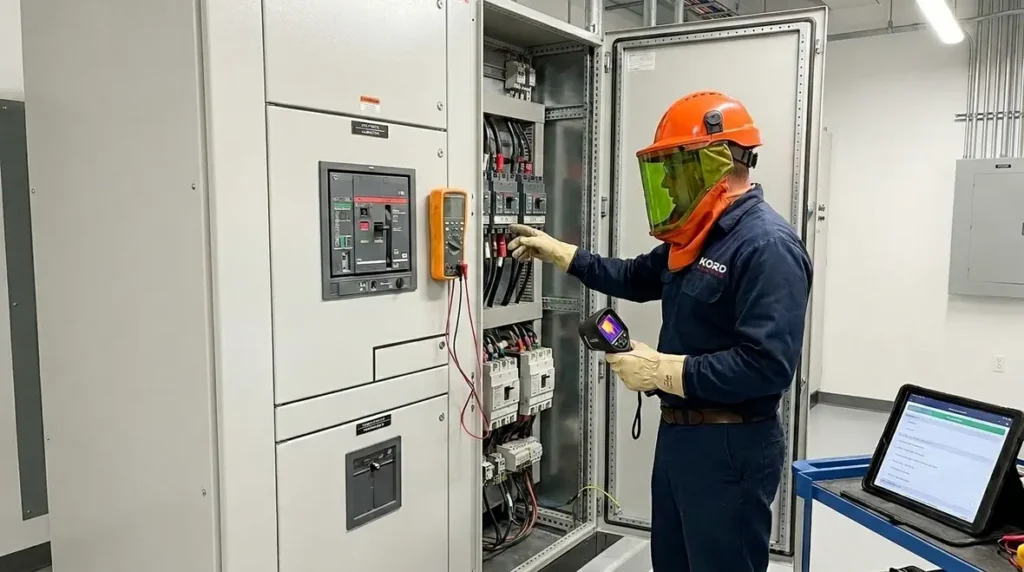
Next, we test where testing adds value. We do not test just to feel busy. Instead, we test in a way that confirms performance and reveals hidden risk. When we find a mismatch, we explain the gap in plain language, and we connect it to real outcomes like reliability, safety, and future upgrade cost.
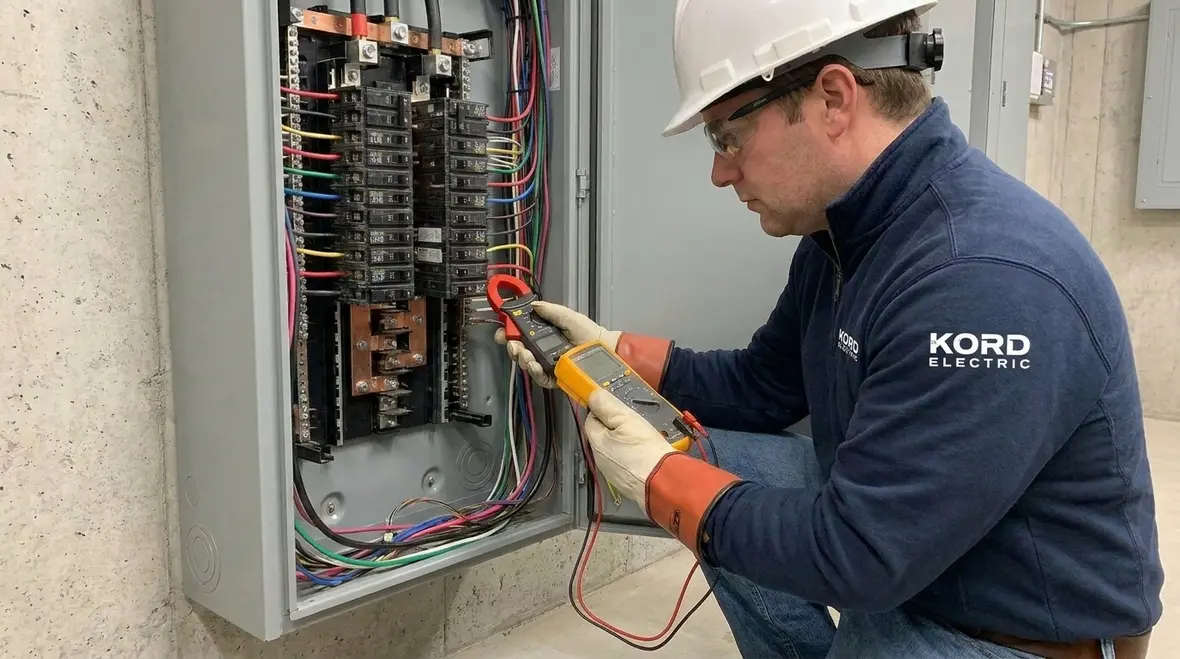
How we assess electrical load risk and future upgrades
A commercial building is rarely static. Tenants change, production equipment grows, and offices shift from one use to another. Therefore, our inspection approach looks beyond what is working today. We also estimate what the system can handle in the next few years, based on typical business loads.
To do that, our technicians review panel capacity, conductor sizes, and equipment ratings. Then we compare that to known or likely loads. As a result, we can identify issues like:
- Panels that run near limits and will struggle when new tenants move in
- Branch circuits that support more load than they were meant to carry
- Protection devices that do not match the wiring or load type
- Overcrowded panels that increase heat and maintenance risk
At this stage, we often discuss options. For instance, some buildings need panel upgrades. Others need targeted circuit rewiring. Still others need better labeling, grounding fixes, or tighter maintenance routines. And if you want to treat the building like it is a long term business asset, we help you choose a plan that matches your timeline.
Think of it like buying a commercial vehicle. Sure, it looks great in the showroom. But you still check the engine, fluids, and tires. We simply do that work for the power system, without the awkward sales patter.
Using preventive maintenance insights to find what is hidden
Electrical failures often do not start as failures. They start as small issues that people ignore because the lights still turn on. Then they grow. For that reason, we connect our inspection to electrical preventive maintenance thinking.
Preventive maintenance builds a record, and records tell the truth. For example, when a building has a routine maintenance program, we can see trends like recurring panel hot spots or frequent breaker trips. Meanwhile, when maintenance records are missing, the electrical system may still look fine, but it carries unknown risk.
Our expert team often recommends a practical maintenance path after the inspection. We help you set a schedule for visual checks, safety verification, and targeted testing. That way, future buyers or tenants inherit a system that has been cared for, not one that is held together by hope and duct tape.
And if you are wondering whether this matters to closing documents, it does. Buyers who understand maintenance gaps can negotiate better terms and reduce future disputes. Nobody wants to argue about who “should have known” that the electrical system was already stressed.
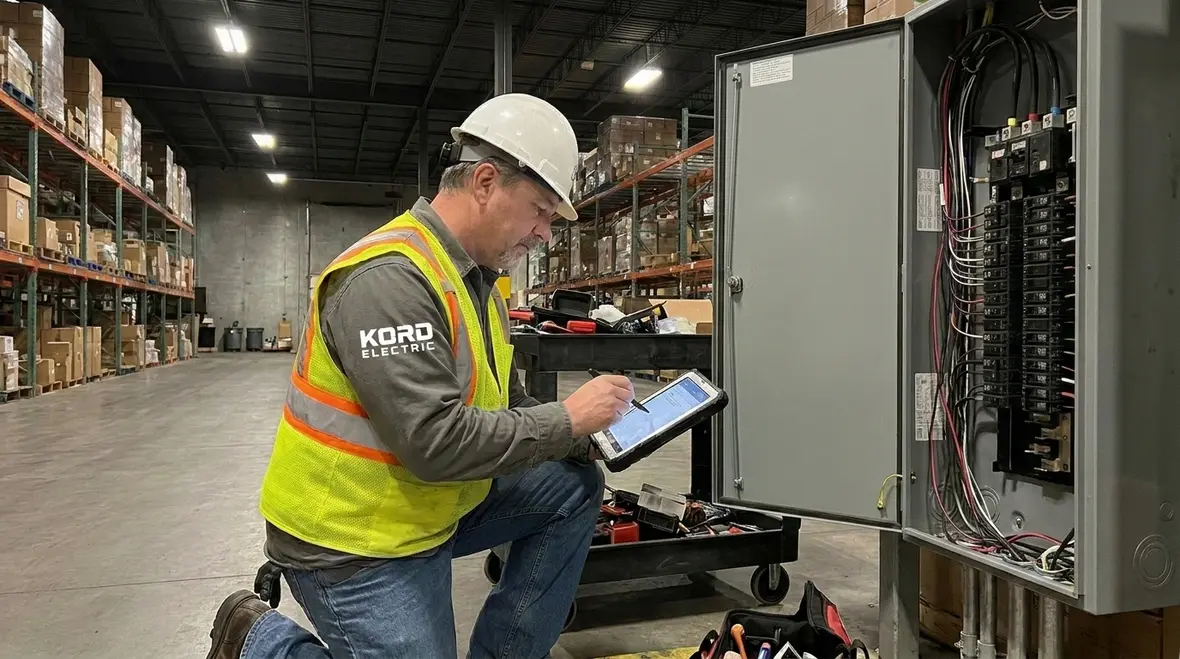
Documentation buyers need for negotiations and financing
After we complete the inspection steps, we provide clear, usable findings. We know buyers do not just want data. They want a decision tool. Therefore, we organize results in a way that supports negotiation, budgeting, and risk review.
Typically, our report or summary includes:
- Observed conditions and safety concerns with clear descriptions
- Risk level and urgency, so decision makers can prioritize
- What we recommend to correct issues, including typical scope
- Any evidence of code or safety gaps based on what we see
- Notes that explain system impacts, like reliability and service interruptions
Next, we help your team connect findings to building goals. If you plan to keep the current tenants, we focus on minimizing downtime. If you plan major tenant turnover, we focus on upgrade readiness. If you plan expansion, we focus on load capacity and panel growth.
Because we work with commercial and industrial facilities and major propertie buildings, we understand how electrical systems affect operations. We do not treat this as a one time snapshot. Instead, we turn the inspection into a roadmap.

Common issues we see in commercial and industrial buildings
Even high occupancy buildings can hide problems. Over time, we see patterns repeat, especially where renovations happened without full electrical review. Here are common findings that often show up during a thorough pre purchase electrical review.
- Overheated connections: signs at terminations, damaged insulation, or poor torque practices
- Outdated protection: breakers that do not protect circuits as expected
- Poor labeling and missing diagrams: anyone can open a panel, but not everyone can safely understand it
- Grounding and bonding gaps: higher risk for shock and equipment faults
- Wet or dusty environments: corrosion, worn seals, and deteriorating enclosures
- Improper additions: circuits added without a full capacity or safety review
- Emergency power readiness gaps: issues with lighting circuits or monitoring
Here is the practical part. When we identify an issue, we explain what likely caused it and how to prevent it from returning. That is how we keep the conversation grounded in real work, not theory.
How to choose the right inspection team before closing
Not every electrical service provider approaches inspections the same way. Therefore, you should choose a team that understands commercial and industrial realities, including higher loads, complex distribution, and operational downtime risk.
At Kord Electric, we bring expert service staff and a structured inspection process built for major propertie buildings. We make sure our approach covers safety, capacity, and system documentation. And if you want a clear next step, we can also discuss how preventive maintenance supports the long term health of the electrical system.
Before you schedule, ask how they handle testing, how they document findings, and how they explain results to non electricians. You should also ask how they prioritize issues so you can make confident decisions. If the answers feel vague, that is your cue to keep looking. Electrical risks are not a place for guesswork, even if your favorite character on TV improvises everything and somehow it works out.
As you compare options, it can also help to review how full-service contractors like Kord Electric support broader Los Angeles County electrical services for commercial properties, from inspections and troubleshooting to upgrades and long term maintenance alignment.
FAQ
Conclusion: schedule your inspection and protect your deal
If you are buying or evaluating a commercial or industrial facility, you deserve electrical clarity, not guesswork. Kord Electric can perform a detailed commercial electrical review that highlights safety risks, load concerns, and repair priorities before you commit. Then we help you understand what the findings mean in real business terms. Contact us now to schedule an inspection and build a smarter plan for your property purchase. Let’s keep your deal strong, your tenants happy, and your breakers working like they mean it.
If you want to extend that clarity beyond closing, you can also align your inspection results with structured services like electrical preventive maintenance and broader commercial support across Los Angeles County, so the system you buy today keeps performing the way you expect tomorrow.