Electrical Infrastructure for EV Charging Expansion
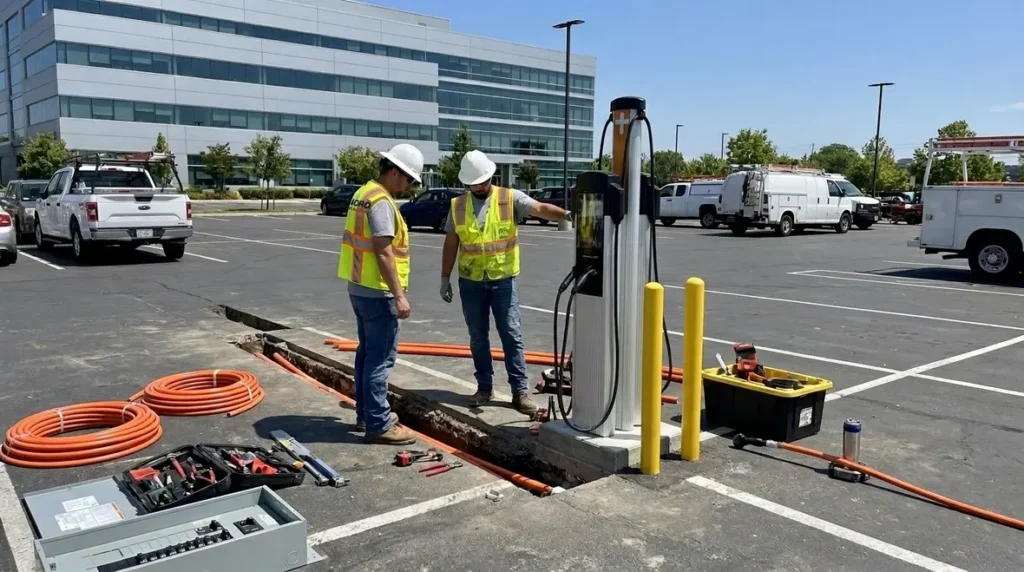
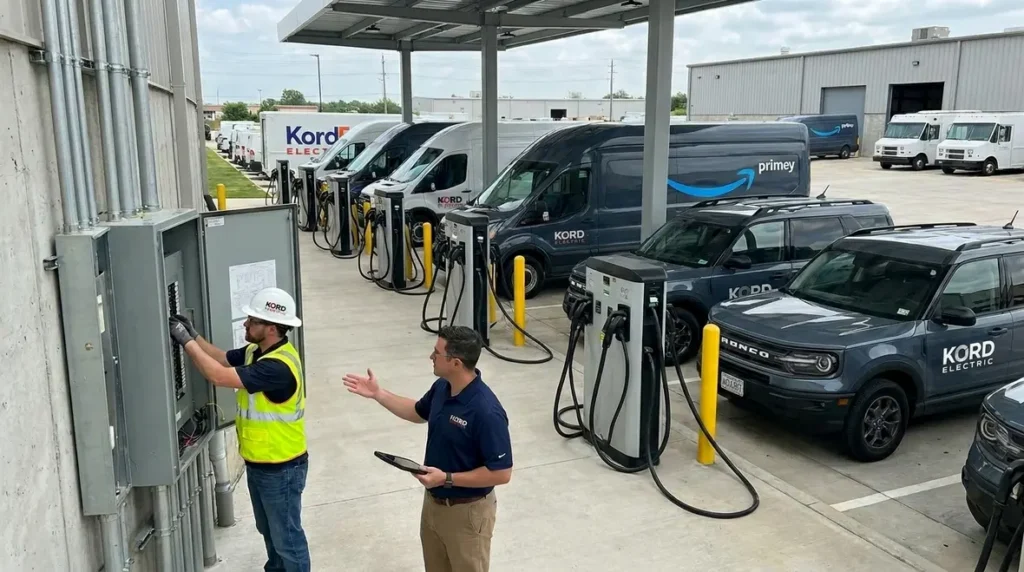
Commercial sites do not just “add chargers.” They build the electrical infrastructure ev charging expansion that makes future growth feel boring in the best way: predictable, safe, and ready. At Kord Electric, we help owners and facility teams prepare for EV adoption across parking garages, campuses, warehouses, retail centers, and other large commercial and industrial buildings. And yes, we explain things in plain language, because our technicians and expert service staff have seen what happens when a plan gets treated like a casual side project. If the power design is rushed, the chargers do not fail quietly. They fail loudly, like a pop song that starts playing at the wrong time in the grocery store.
In the guide work that Kord Electric shares through our commercial planning resources, we emphasize scaling infrastructure the right way from day one. Now we will walk through how our teams prepare electrical systems for the next wave of EV charging, while keeping your operations stable and your budget in the control room.
1) Start with power reality, not hope
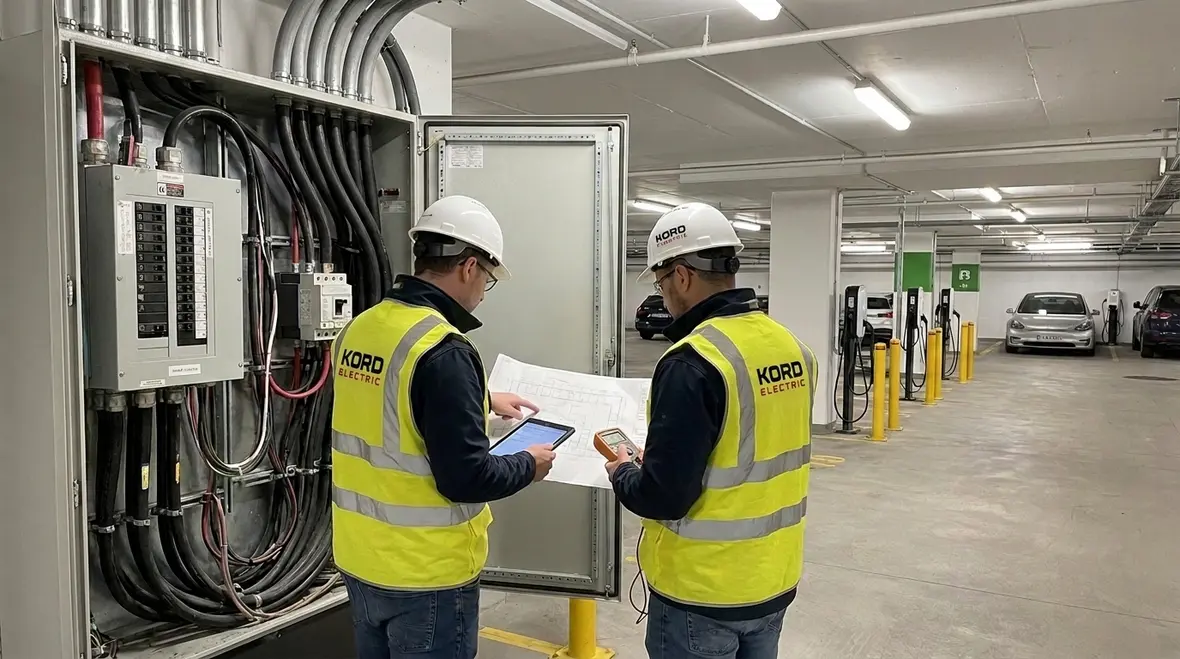
When our experts begin a project, they do not start with charger counts. They start with what the site can actually deliver today, and what it can deliver after upgrades. That means we review the utility feed, existing switchgear, main service size, load history, and demand patterns across seasons and shift schedules.
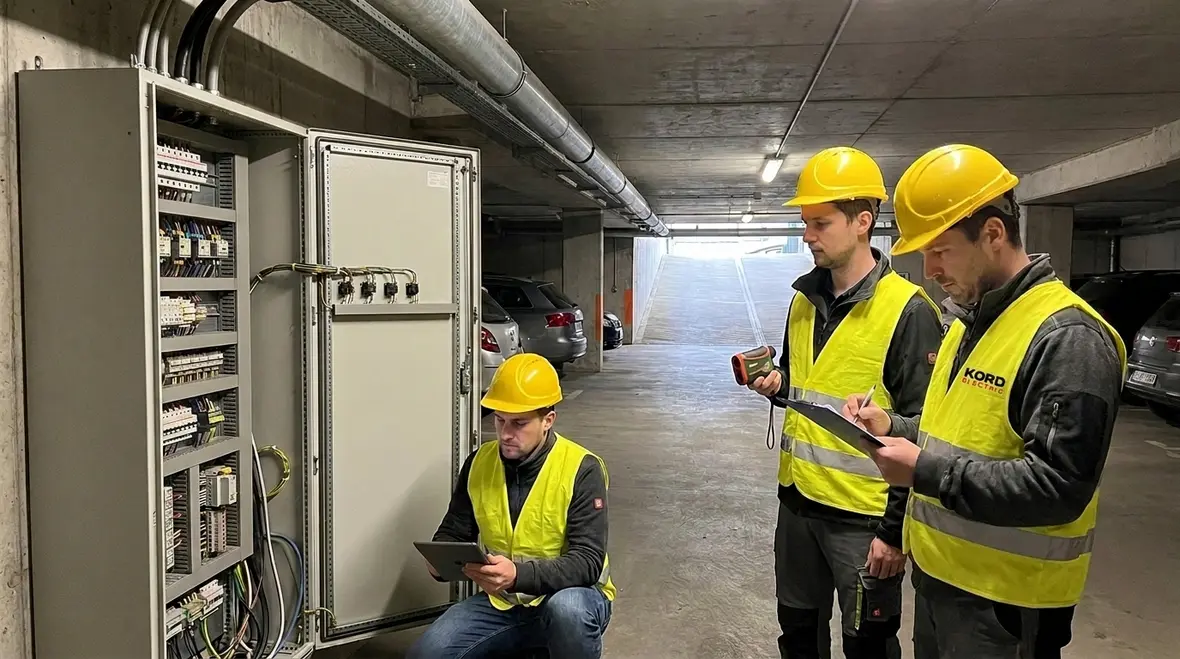
Because EV charging behaves like a high power appliance, electrical planning must be grounded in electrical reality. A busy lot on a Friday night can look calm on paper and then spike in the field. So, we build a load model that matches your operation. Then we verify it with site measurements and documentation reviews. In other words, we turn “maybe later” into a plan that holds up.
Our technicians also confirm safety and code requirements early, so the design does not end up in a late stage redesign loop. You can’t outsmart physics, and the electrical inspector is not the type to laugh it off.
In many commercial and industrial projects, this first stage also connects directly to a formal load capacity review. Facility teams who want to see how that looks in practice often pair this planning work with Kord Electric’s detailed guidance in resources like the Commercial EV Charging Planning Guide: Scaling Infrastructure With Confidence, where we walk through how power studies, demand modeling, and phased growth strategies line up for large properties.
Translating capacity checks into a practical roadmap
Once the real limits of the service, switchgear, and feeders are clear, our teams translate that data into an electrical infrastructure roadmap. That roadmap outlines where upgrades may be required, how much headroom exists for new chargers, and how the plan fits with other building priorities like process loads, HVAC, and life safety systems. The goal is simple: no one should be surprised when the first wave of chargers goes live, and everyone should know exactly what happens as the second and third waves arrive.
2) Map expansion like a system, not a patchwork
Many commercial EV installations begin with a few chargers and an optimistic promise that more will come later. However, scaling usually means power distribution, conduit paths, and breaker capacity must grow in sync. Therefore, Kord Electric prepares electrical infrastructure so you can add chargers without tearing up your site every time.
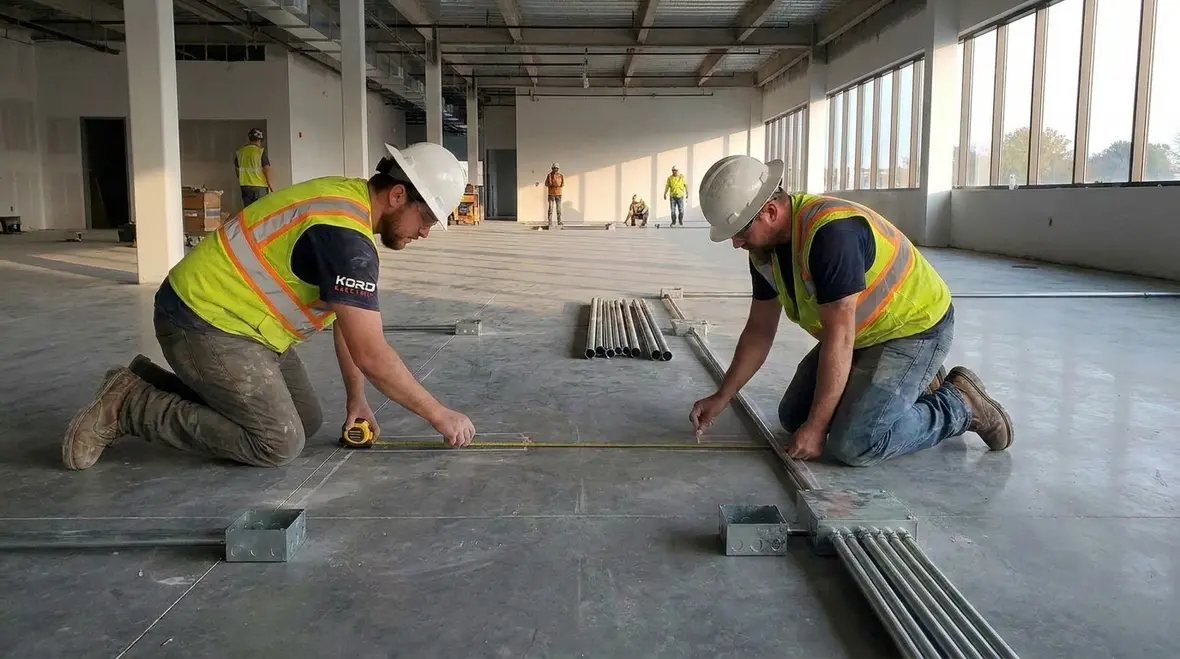
We design the pathway first, including conduit routing, cable management, pull boxes, and space for future components. Next, we address distribution. That includes load balancing methods and panel or bus bar planning so multiple charging stations share capacity in a controlled way. If we miss this step, adding new chargers can force costly rework, like replacing the whole floor because you mismeasured a rug.
To support long term growth, we also consider the charging network architecture, such as how controllers communicate and how sites manage charging profiles. When the system scales, the software and electrical design must agree. Our service staff explains these dependencies clearly so teams do not make confident decisions with incomplete information.
Designing pathways that match real sites
Real world parking lots and garages rarely match the neat lines on a single-line diagram. That is why our engineers and field electricians coordinate closely on conduit routes, trenching limits, and structural constraints. We think through how future pulls will work, how maintenance teams will access key points, and how new circuits will tie into panels without turning every expansion into a construction festival. When Kord Electric maps your expansion, the result feels more like a calm series of building blocks and less like a game of Tetris played on a deadline.
3) Choose the right site approach for demand control
Commercial and industrial facilities often face demand charges, transformer constraints, and utility limits. Because of that, Kord Electric commonly recommends demand management strategies that help prevent service overloads while still supporting high uptime.

Demand control can include scheduled charging windows, dynamic load management, and allocation rules that match driver behavior and business needs. For example, fleets and employees often arrive in waves, while customer charging patterns follow different timelines. Thus, the charging approach should reflect how vehicles actually park and plug in.
Our technicians explain these ideas in a calm, practical way, not as a sales pitch. We show what the site needs today, then we outline how the same plan can stretch as new chargers come online. That way, the infrastructure stays aligned with your goals instead of drifting into chaos.
Using managed charging as an infrastructure multiplier
Managed charging systems act like an extra layer of intelligence on top of your electrical infrastructure ev charging expansion strategy. Rather than treating every charger as a fixed, unchanging load, Kord Electric uses control platforms that can ramp sessions up or down, stagger start times, and prioritize critical vehicles when capacity is tight. For many properties, this lets them serve more drivers from the same backbone, defer some service upgrades, and keep demand charges under control while still delivering consistent charging performance.
4) Prepare power distribution for growth and reliability
After power availability and expansion logic are clear, we focus on distribution hardware and reliability. Switchgear selection, bus sizing, protective devices, and grounding all matter. Yet many facilities only notice these items when something trips or maintenance becomes painful.
So, we plan distribution with future layers in mind. That means budgeting for spare capacity where it makes sense, selecting equipment with appropriate ratings, and designing a layout that supports service access. We also coordinate labeling and documentation standards so maintenance teams can work efficiently.
Reliability also depends on thermal and mechanical considerations. Therefore, we evaluate cable sizing and installation details, including installation environment and load currents over time. In addition, we confirm that protective settings match the charging loads to reduce nuisance trips.
And if you are wondering whether technicians worry about the “small stuff,” the answer is yes. Small issues compound. A loose connection today can become a repeat outage later. We keep the fundamentals tight, because commercial operations deserve fewer surprises.
Distribution planning that supports whole-facility stability
EV charging may be the new project on the block, but it has to coexist with everything else already running in the building. Kord Electric’s planning connects charging distribution to overall facility priorities: production lines, data rooms, refrigeration, life safety circuits, and more. That whole-system view is also reflected in Kord resources like the Los Angeles County electrical services overview, where we outline how core electrical reliability decisions support lighting, mechanical systems, and new EV loads together rather than as separate worlds.
5) Coordinate utility work, timelines, and operational impact
Even the best electrical design can run into delays when utility upgrades are not planned early. Kord Electric coordinates the path between site electrical needs and utility requirements. That includes understanding interconnection steps, transformer upgrades, meter considerations, and any lead time that affects service.
Because utilities often require documentation and review, we help facilities prepare the right details for the first submission. Then, we track the schedule so construction sequencing does not disrupt normal business operations. This is where planning prevents downtime and protects tenant or customer experience.
We also manage construction impacts. Parking lots, loading areas, and service corridors often need active access. Therefore, our project approach sequences work to reduce interruption. Our technicians communicate clearly with facility managers, and they explain what work is happening and why it matters. That keeps stakeholders informed instead of guessing.
Think of it like a movie soundtrack. Everyone wants the right song at the right time, and the production team does not want to scramble for the last minute cue. Utility coordination is that cue.
Aligning EV timelines with real business calendars
For commercial and industrial facilities, major upgrades compete with peak seasons, tenant move-ins, scheduled shutdowns, and capital planning cycles. Our project managers and engineers line up EV charging milestones with those realities so you are not cutting trenches in your busiest quarter or taking an outage during a critical production run. By aligning EV charging work with broader electrical maintenance and upgrade windows, we help property teams stretch every outage and every dollar further.
6) Integrate charging equipment with the facility electrical system
Electrical infrastructure preparation extends beyond conduits and panels. It also includes integration of charging equipment with facility systems. That means verifying electrical compatibility, selecting installation locations that support safe operation, and planning cable runs that match both electrical and site constraints.
Kord Electric focuses on safe installation practices and clean system architecture. We make sure charging stations connect to the designed distribution approach, and we validate that protective devices align with equipment requirements. Then, we plan for monitoring, troubleshooting access, and maintenance workflow.
Our expert service staff also helps clients plan for long term service operations. They review how faults will be handled, what data to track for performance, and how the charging system behaves during utility events or partial site load conditions.
In the end, integration should feel seamless to operations. Drivers should plug in and charge. Facility staff should not spend their evenings playing “figure out why it stopped.”
Connecting infrastructure plans to real EV project playbooks
Because EV programs typically unfold in stages, many owners also review Kord Electric content such as the commercial EV charging scaling guides while they plan integration. These resources mirror the same steps our field teams use: starting with site power, layering on managed charging, mapping equipment layout, and then tying everything together with monitoring and documentation so expansion never feels like guesswork.
7) Testing, commissioning, and documentation that teams can use
After installation, Kord Electric follows through with testing and commissioning that validates both electrical safety and charging functionality. This is not a box to check. It is how we ensure the system performs under real conditions and stays stable as loads change.
We verify wiring and protective operation, test power quality considerations where needed, and confirm that charging stations communicate as designed. Then we document the installation clearly for the teams who will live with the system day to day.
Documentation matters for commercial and industrial facilities because maintenance teams need fast answers. Therefore, we provide labeling, system schematics, and commissioning notes that support future expansions and troubleshooting. When the next wave arrives, your staff will not have to rebuild the knowledge from memory.
Keeping future change-outs and expansions predictable
Over the life of an EV project, equipment models change, software platforms evolve, and driver demand grows. By investing in thorough commissioning records and electrical documentation up front, Kord Electric makes each future change more predictable. When you add ports, upgrade chargers, or adjust managed charging rules, your team has a clear reference set instead of a mystery novel taped inside a panel door.
Right now is the time to design for what comes next
Kord Electric helps commercial and industrial property owners prepare for electrical infrastructure ev charging expansion with designs that scale, test results that hold, and documentation your team can actually use. Our technicians and expert service staff explain each step so stakeholders understand the plan before work starts. If you want chargers today and flexibility tomorrow, reach out to Kord Electric for a site review and a practical roadmap built for your load, your schedule, and your budget. Let’s make the next expansion feel smoother than the last one.
For teams ready to connect this planning approach to formal project work, Kord Electric’s commercial EV resources, including the commercial EV charging planning guide on scaling infrastructure, help tie field lessons, electrical studies, and construction sequencing into one coherent playbook. Paired with regional offerings like our Los Angeles County electrical services portfolio, these tools show how your EV project can fit inside a broader reliability and capital plan instead of standing alone as a one-off experiment.