Level 2 vs DC Fast Charging for Commercial Property
Level 2 vs DC Fast Charging for a Commercial Property: Choosing What Fits
At Kord Electric, we help commercial teams decide between level 2 vs dc fast charging commercial property options with real world planning, not guesswork. In the first pass, we typically see one side of the building staff asking for predictable charging for daily use, while another side wants rapid turnaround for fleet vehicles, visitor traffic, and on site operations. And yes, that debate can feel like choosing between a slow cooker and a microwave, except both claim to be “essential.”
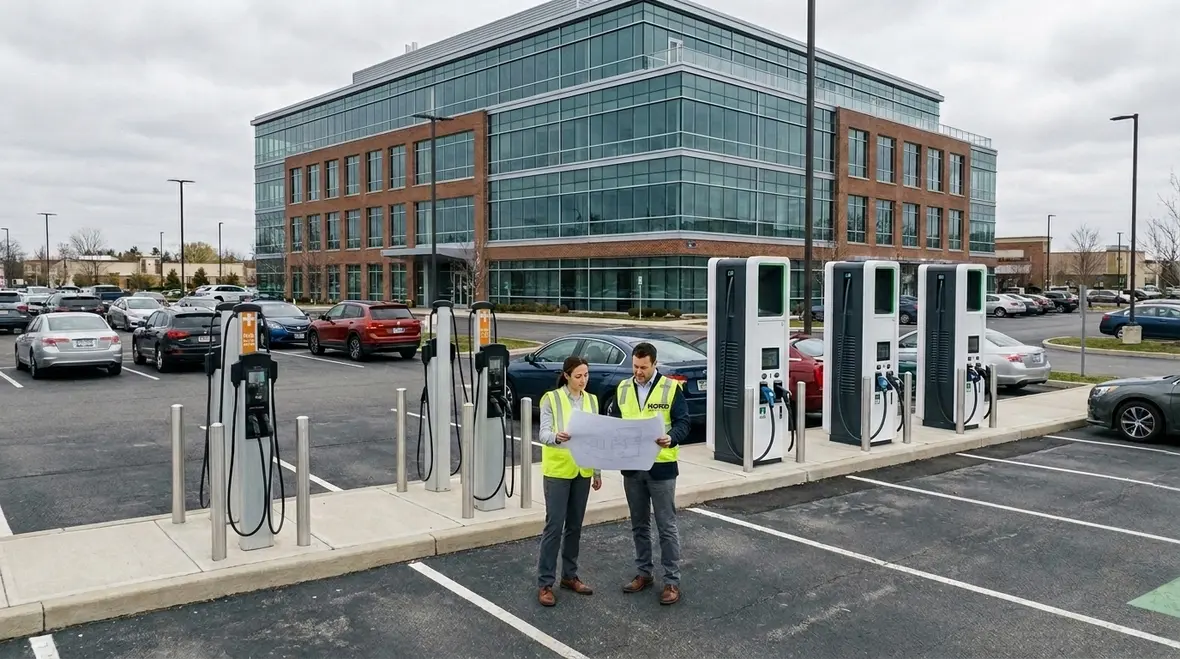
So, we break it down clearly. We look at your electrical service, your site layout, your usage patterns, and how you scale later. Then our technicians, along with our expert service staff, explain the plan in plain language so the decision moves forward with confidence.
Understand the roles: what Level 2 and DC Fast actually do
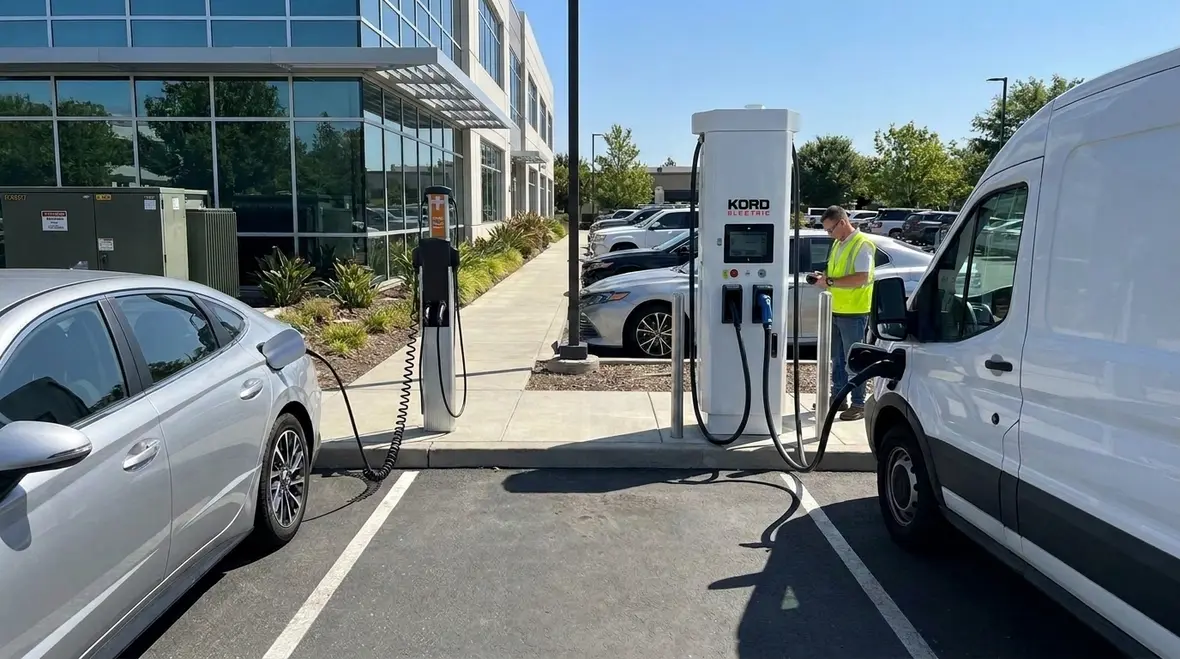
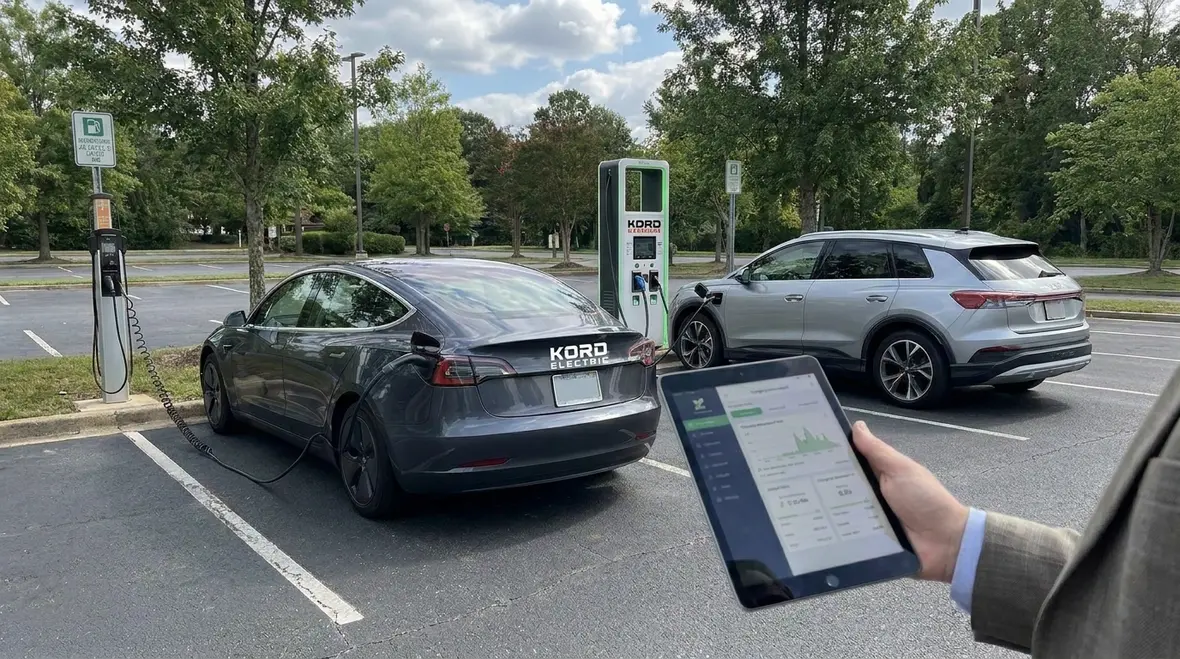
To make the right decision, we first separate the job each charger performs. Level 2 charging is best for longer dwell times. In other words, vehicles can plug in while drivers work, customers shop, or equipment rests on site. Because the charging power is moderate, level 2 installations often fit naturally into commercial schedules like overnight parking, day shift operations, and multi hour customer visits.
DC fast charging, on the other hand, aims to reduce turnaround time. It supports short session charging for vehicles that need to get back on the road, and it works well where drivers do not stay parked for long. However, fast charging asks more from the building electrical system, so the planning needs to be more careful and more deliberate.
Furthermore, our team does not just compare “faster equals better.” We help others map the vehicle behavior. If vehicles stay for hours, level 2 can deliver steady value. If vehicles stop briefly but need a quick top up, DC fast becomes the strategic choice.
Commercial planning factors that decide the charger mix
Once a team understands the roles, we shift to the real planning work. For commercial and industrial facilities, the charger selection often comes down to how the site functions day to day. We typically evaluate the following:
Expected session length: We ask how long most vehicles remain on property before departure.
Vehicle mix: We consider passenger cars, company fleets, service vehicles, and any heavy duty partners that may visit.
Peak demand risk: We look at whether charging overlaps with other high load equipment.
Parking layout: We verify cable runs, parking stall count, and placement for safe access and good driver flow.
Future growth: We plan for the next phase, because “just one more charger” often shows up sooner than anyone admits.
At this stage, our technicians and expert service staff explain tradeoffs directly. They show how the same site can support different outcomes depending on electrical capacity, load management options, and whether the building can accept upgrades without major disruption.
Electrical capacity and demand: the bottleneck nobody wants to ignore
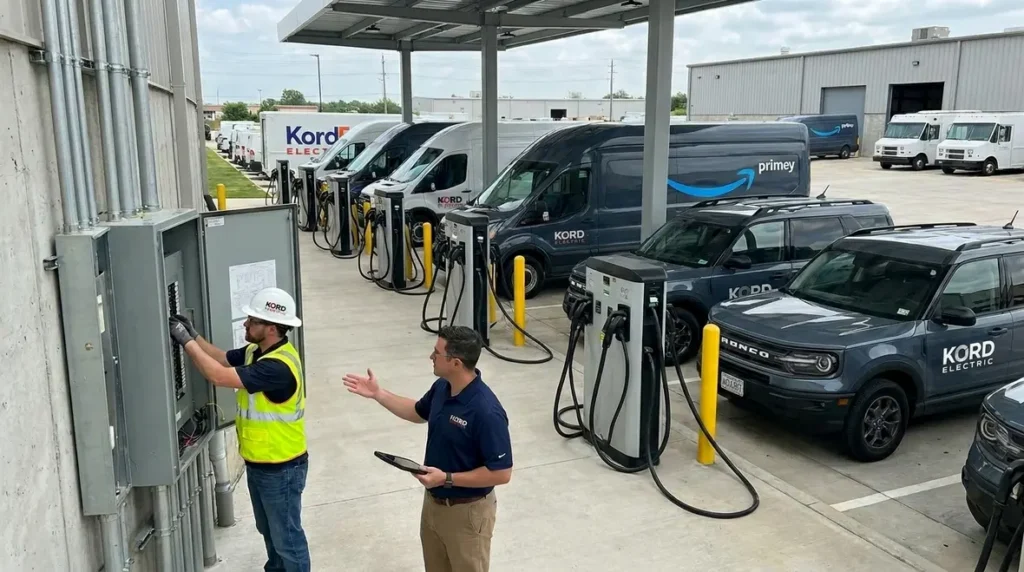
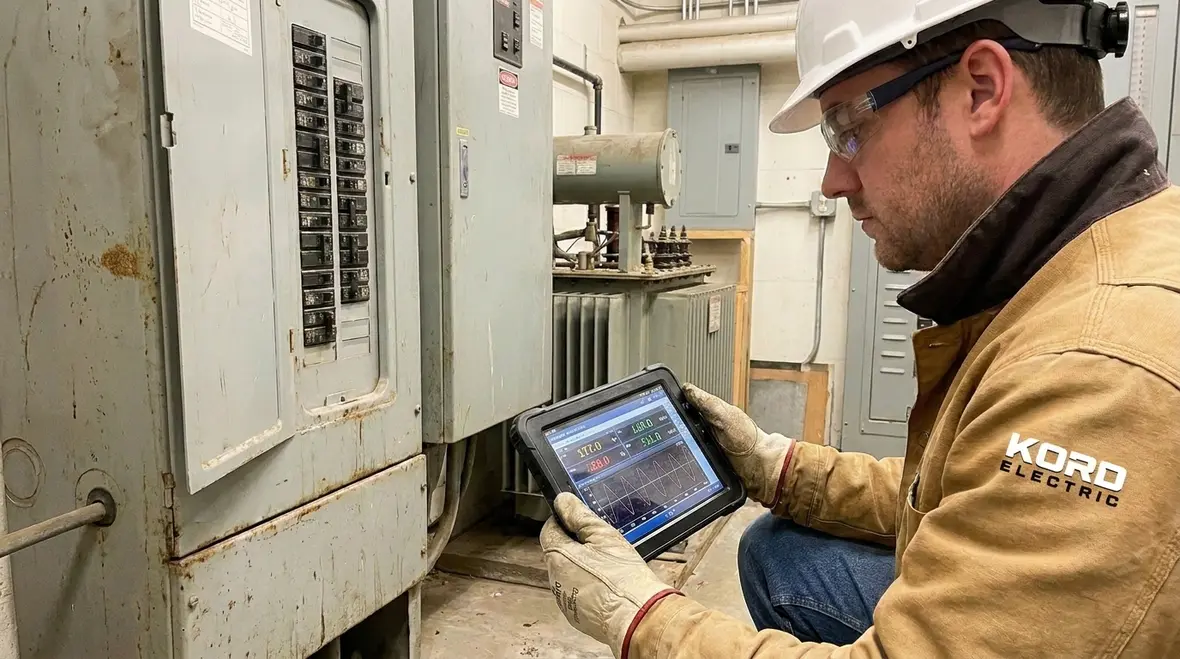
In commercial sites, the electrical system usually becomes the deciding factor long before the chargers do. First, we evaluate the available service size, transformer capacity, panel limits, and how existing loads behave across the day. Then we estimate charging demand under realistic scenarios, not worst case fantasies that never occur.
For example, a level 2 vs dc fast charging commercial property decision often reveals that the building can support more level 2 ports than it can support fast charging capacity, at least without upgrades. Meanwhile, DC fast may still work, but it usually triggers one or more actions like service upgrade planning, transformer replacement, or advanced load sharing.
Additionally, we consider how your site handles demand charges. Many commercial operations pay attention to billing structures, and charging can influence peaks. Therefore, we recommend planning that coordinates charging with other equipment cycles when possible, and we support load management approaches when they make business sense.
And yes, this is where planning can save you from the classic scenario: installing chargers that look great on day one and then “mysteriously” underperform when the building hits peak load. We prefer boring accuracy over dramatic surprises, even if drama sells tickets.
If you also want to think ahead about how these decisions affect long term scalability, Kord Electric’s Commercial EV Charging Planning Guide: Scaling Infrastructure With Confidence walks through how to stage upgrades, align charger mix with power, and keep your infrastructure flexible as usage grows.

Installation realities: civil work, accessibility, and safe power routing
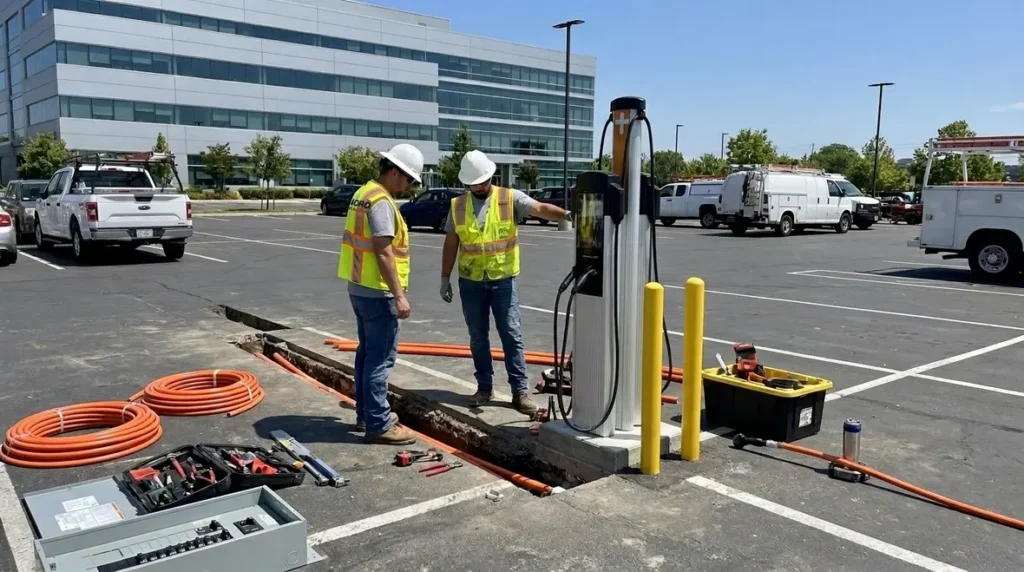
Even when electrical capacity is adequate, installation details determine whether the project runs smoothly. We focus on commercial and industrial environments, which often means tight schedules, active facilities, and infrastructure that already exists below the surface.
We typically address the following during design and build:
Site access for equipment: We confirm staging areas, crane needs, and safe routes for construction.
Conduit and cable routing: We plan runs that support reliability, future expansion, and code compliant protection.
Weather and durability needs: We account for outdoor conditions, enclosure requirements, and vandal resistant concerns.
Driver experience: We ensure ports are placed so drivers can charge without blocking traffic flow.
At Kord Electric, our technicians coordinate installation details so stakeholders understand what is happening and why. Our expert service staff also walks others through commissioning steps so the system performs as expected from the first day, not from the second troubleshooting call that someone definitely did not schedule.
How to scale for growth without rebuilding everything
Most commercial owners do not install chargers once and call it done. Instead, they start with a baseline plan, then they expand based on adoption and vehicle behavior. That is where scaling strategy matters.
In our planning guide for commercial EV charging infrastructure, we emphasize choosing an approach that supports growth. We look at how electrical upgrades can be staged, how additional circuits can be added, and how software enabled load management can help you avoid oversizing the system early. In other words, we help others build a path forward rather than locking the site into a single fixed design.
Here is how we think about scaling in practical terms:
Start with measured demand: We right size initial charging to current needs while keeping expansion options open.
Plan conduit and capacity for later: We avoid the “dig again” problem by preparing where future lines may go.
Use smart control where it fits: We support load sharing so multiple chargers can operate within electrical limits.
Coordinate with operations: We schedule install windows and commissioning so business continues with minimal disruption.
That way, the project evolves like a good company policy: clear today, flexible tomorrow, and less likely to explode during a busy season.
For properties that want to dig even deeper into long term growth, Kord Electric’s guide on EV charging infrastructure scalability for commercial sites connects phase by phase planning with real world load management, electrical upgrades, and operations.
What our customers should expect from service and support
Commercial charging projects work best when service expectations are set early. We treat the charging system as critical infrastructure for your site, because for many businesses it supports operations, staff convenience, and customer experience. Therefore, we build projects with ongoing reliability in mind.
Our expert service staff focuses on maintenance planning, troubleshooting workflows, and documentation that makes future service easier for the next team that steps in. We also communicate installation and commissioning details in a straightforward way, so others understand how to operate the system and what normal behavior looks like.
And if issues appear, we do not hide behind tech speak. We respond with clear next steps, practical repair options, and guidance on how to reduce downtime. In short, we keep charging dependable because nothing tanks a business day like a “temporary” charger failure that lasts long enough to become permanent in everyone’s memory.
Because these systems connect directly to your electrical backbone, it often helps to align them with broader facility upgrades. Kord Electric’s Los Angeles County electrical services support commercial and industrial properties that want EV charging, power reliability, and future upgrades to move in the same direction instead of pulling against each other.
FAQ: Level 2 vs DC Fast Charging for Commercial Properties
Conclusion: Talk to Kord Electric before you size the system
If your business plans EV charging for staff, fleets, tenants, or customers, start with a design that matches how vehicles actually behave. Kord Electric helps commercial and industrial facilities choose the right mix of level 2 and DC fast charging, and we plan electrical capacity, installation, and scaling so the system performs reliably. Reach out to us today to schedule a planning consult. Our technicians and expert service staff will walk your team through options with clarity, then build the right solution for your property.
For owners who want to connect charging decisions with a larger infrastructure roadmap, Kord Electric’s EV charging and electrical planning resources can help you align charger mix, power capacity, and long term growth so you do not have to rebuild the system every time demand increases.
When you are ready to move from planning to installation, Kord Electric’s commercial EV charging planning guide pairs well with a tailored design for your building, whether you are adding a handful of ports or building a full network across multiple properties.