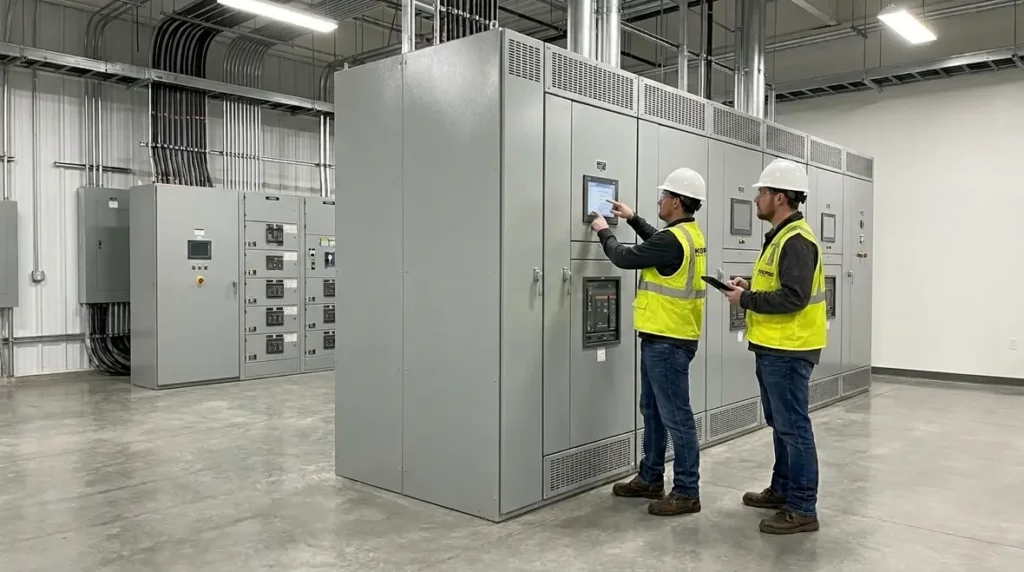
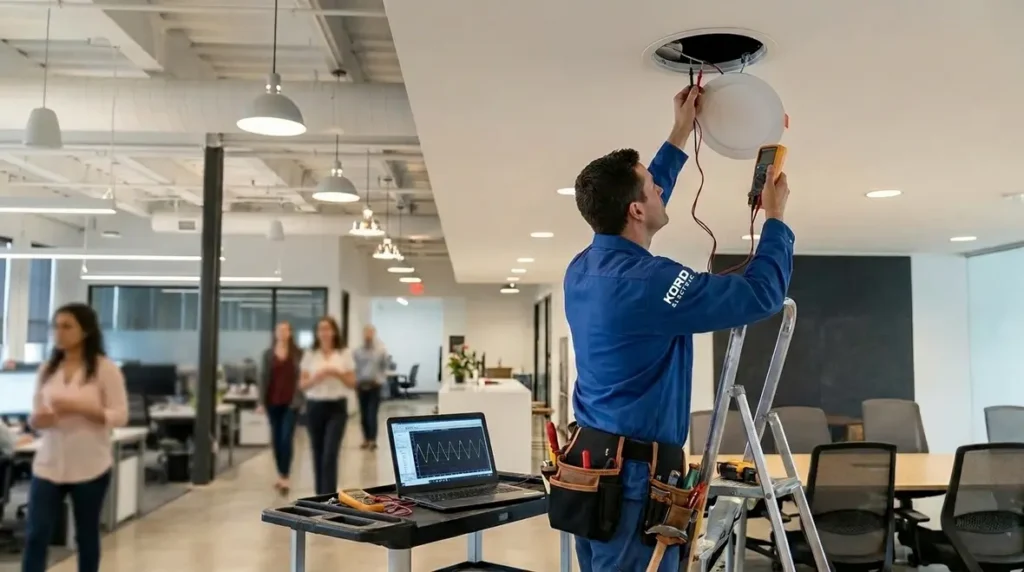
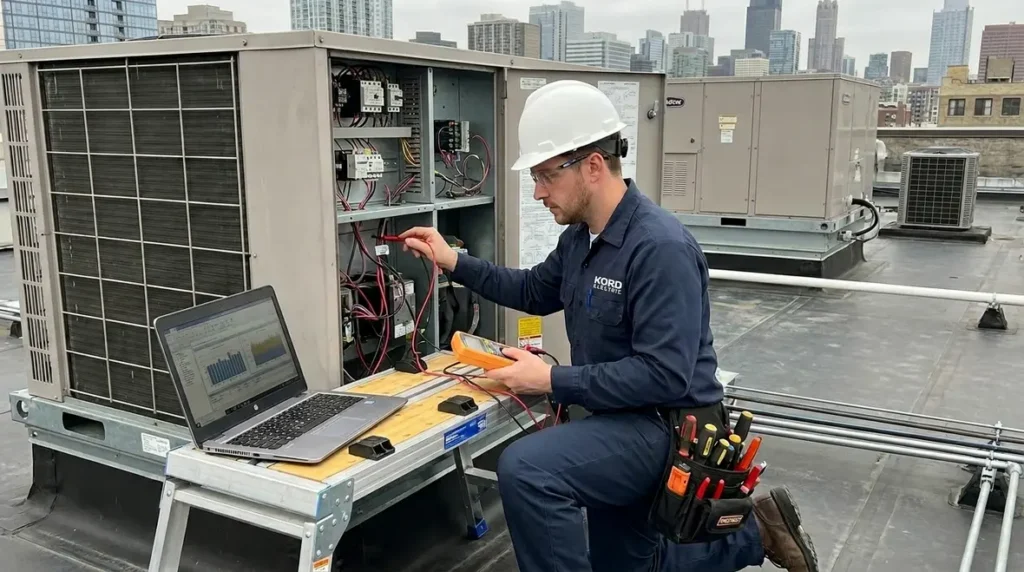
Commercial Circuit Breaker Troubleshooting Guide
Commercial circuit breaker troubleshooting starts with the basics, not panic
In our experience at Kord Electric, most commercial panel problems do not start as “mysteries.” They start as symptoms: a breaker that trips too fast, a neutral that looks suspicious, a loose lug that warms up like it is trying to audition for a movie role, and a busbar that quietly drifts out of spec. So when our team performs commercial circuit breaker troubleshooting, we begin with a careful look at what the panel is doing, when it does it, and what loads were running right before the issue showed up. Then we verify the evidence with safe tests, clear labeling, and logic, not guesswork.
And yes, we have heard every version of the same story. “It just started doing that.” Sure it did. Panels rarely wake up and choose chaos. They usually have a reason, and we help our clients find it.
Common commercial panel issues we see in major property buildings
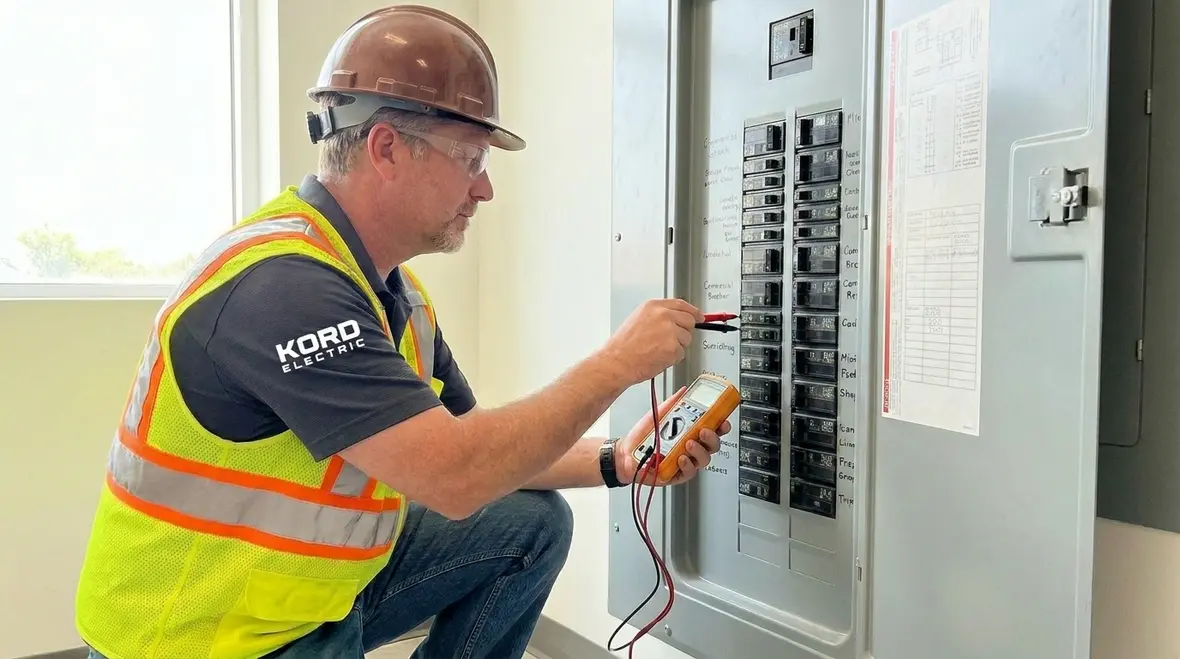
Commercial and industrial facilities tend to run long hours, switch loads quickly, and add equipment over time. As a result, certain panel issues show up again and again. Our technicians and expert service staff often explain the same pattern to property managers: when the electrical system changes, the panel becomes the scoreboard. If the score is wrong, the panel alerts us.
Here are the most common issues we troubleshoot:
- Nuisance tripping: Breakers trip even when loads seem normal.
- Hot spots: Signs of heat at terminations, breaker faces, or cable connections.
- Loose connections: Often caused by vibration, torque loss, or past work that was rushed.
- Overloaded circuits: “Temporary” equipment that stays, then grows.
- Grounding and bonding problems: Symptoms include erratic operation, odd voltages, or repeated faults.
We also see problems linked to poor labeling, mixed conductor sizes, and panels that were originally built for one demand profile but now serve a different one. In major property buildings, this mismatch can quietly build risk for months before someone notices.
How we troubleshoot breaker trips without guesswork
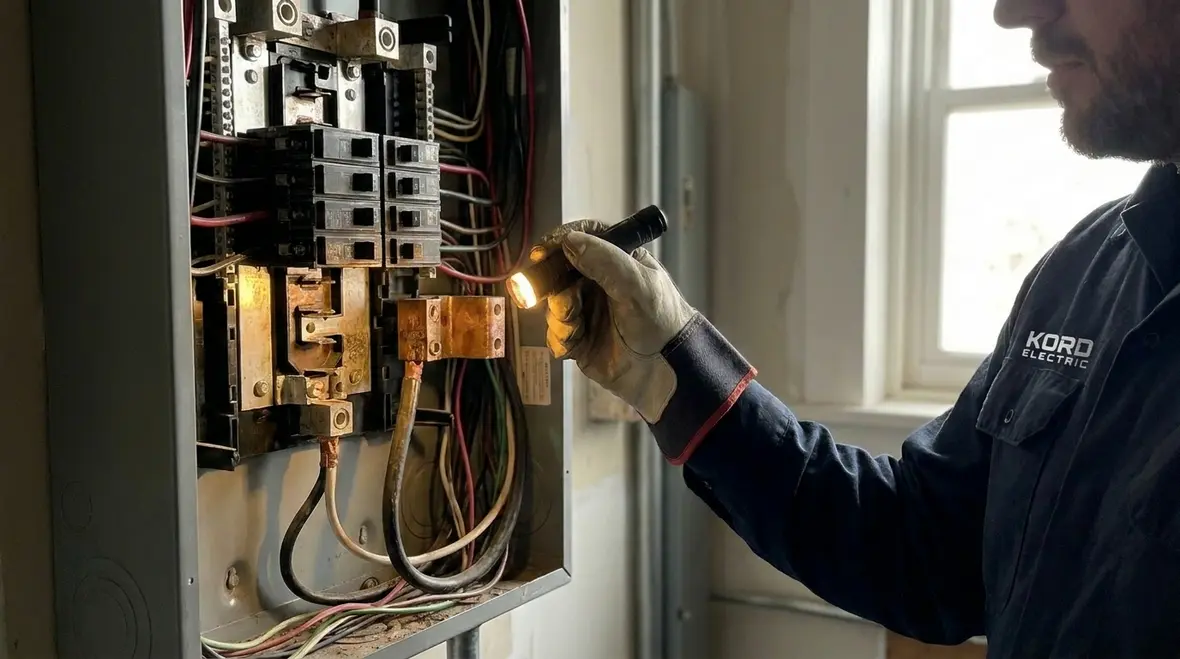
When a breaker trips, our approach stays methodical. First, we confirm whether the trip is thermal, magnetic, or a fault condition. Next, we check the operating history and any alarms or power management records tied to the site. Then we narrow down the suspect area before we touch anything. This matters because guessing is how you end up paying for a new problem you did not have.
Our technicians typically follow a process like this:
- Verify the trip type: We look for indicators, time delay behavior, and repeat patterns.
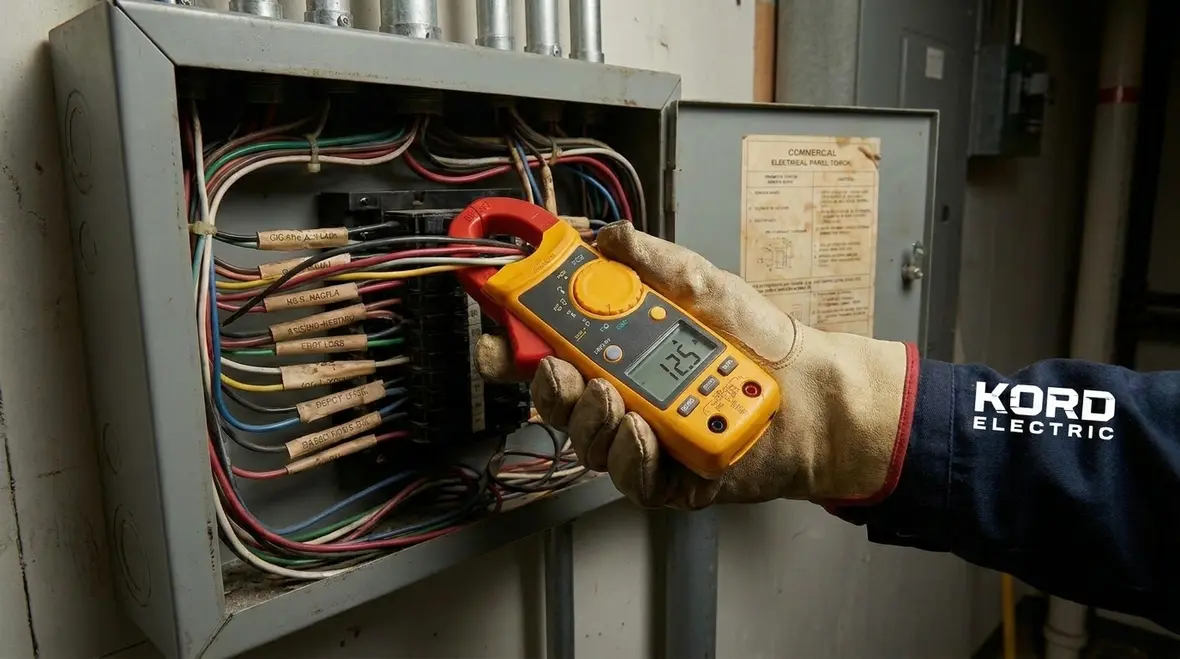
- Measure line and load conditions: We check voltage, frequency, and load current where safe.
- Inspect for evidence: We look for scorch marks, discoloration, and damaged insulation.
- Check connections: We evaluate torque at terminations and look for signs of looseness.
- Test associated loads: We isolate circuits to see which equipment triggers the trip.
Meanwhile, we keep the explanation clear for the facilities team. If we find that a single piece of equipment drives the trip, we tell them plainly and we show them how. If we find a broader issue, we explain the likely chain reaction. Either way, our expert service staff does not leave you with mystery labels like “it might be the breaker.” Panels deserve better than that.
Neutral, grounding, and harmonics: the hidden culprits
Many commercial panel troubles look like breaker issues, but the root cause often hides upstream. For example, neutral problems can create weird symptoms that confuse even experienced people. In modern commercial spaces, you also see high electronic loads such as servers, chargers, variable speed drives, and LED drivers. These loads can add harmonics and distort the waveform, which can cause overheating and nuisance protective operation.
When we inspect grounding and bonding, we focus on continuity, connection integrity, and system alignment to the design. Then we evaluate neutral paths and shared loads, because neutral currents can spike under non linear load. If a neutral connection loosens or a parallel path changes, the panel may show heat, voltage drop, or unexpected breaker behavior.
Our team often explains it like this: the panel does not “hate” the equipment. Instead, it reflects the electrical reality. If the neutral is under pressure, it will show signs. If grounding is inconsistent, faults can become harder to detect and easier to repeat.
As a side note, we sometimes hear people say, “Ground is ground.” That phrase makes us smile, because in real installations, grounding is a system, not a slogan.
Loose connections and overheating: what we check first
Overheating does not usually arrive politely. It shows up as discoloration, a burning smell, buzzing sounds, or breakers that feel unusually warm. In industrial and major property buildings, panels can also be exposed to dust, vibration, and temperature swings, all of which can loosen connections over time.
When our technicians address overheating concerns, we do not rely on touch alone. We inspect terminations, check breaker contacts, and verify that cable sizes match the protective device rating. We also look at busbar condition and examine whether moisture or contamination is present. Then we compare what we see with load behavior during typical operations.
For troubleshooting, we also confirm whether the issue is localized or system wide. A single hot lug points toward a connection problem. Broader heating can suggest imbalance, harmonic effects, or an overload scenario. And when heat comes from the breaker interface, we evaluate whether the breaker is seated correctly and whether the panel hardware stayed within proper torque specs.
Most importantly, we correct the cause, not just the symptom. If we tighten a connection but ignore the load imbalance, the heat returns. That is like tightening a screw on a wobbly chair and calling it “fixed.” It feels better for a minute, then the chair reminds you it has opinions.
Preventive steps we recommend after repairs
Once we correct the issue, we focus on keeping it corrected. Our expert service staff understands that commercial and industrial facilities need reliability, not repeated callouts. Therefore, we help clients build a practical plan that fits their operating schedule.
Here are preventive measures we often recommend and install when appropriate:
- Torque verification and connection checks after major work and during service cycles
- Load review to confirm circuits match the current equipment list
- Label updates so maintenance teams find the right circuit fast
- Thermal imaging checks to spot early hotspots before they become failures
- Harmonic awareness for facilities with heavy electronic loads
We also advise clients on how to document breaker trip events and what details to capture. For example, what equipment ran, what time it happened, and whether weather or start up cycles changed. These details give our technicians a head start during future service and support faster commercial circuit breaker troubleshooting when the next signal shows up. For facilities building a broader reliability plan across panels and switchgear, these same habits align naturally with structured electrical preventive maintenance programs such as those outlined in Kord Electric’s dedicated electrical preventive maintenance services.
FAQ
Call Kord Electric for calm, correct repairs on commercial panels
When a commercial panel starts acting up, you need more than a reset and a shrug. At Kord Electric, our technicians and expert service staff troubleshoot with clear steps, safe testing, and practical fixes built for commercial and industrial facilities and major property buildings. If you want fewer trips, cooler terminations, and a panel you can trust, contact us today. Tell us what you are seeing, and we will help you restore stable power without turning your maintenance schedule into a weekly drama.
If your facility is already dealing with panel trouble, nuisance trips, or voltage instability, our team can integrate that response into a broader reliability plan. From ongoing electrical preventive maintenance to rapid emergency electrical services, we help commercial and industrial properties protect critical circuits, manage risk, and keep operations on schedule.
When you are ready to turn today’s panel concern into a long term plan for safety and uptime, Kord Electric is ready to help with commercial circuit breaker troubleshooting, preventive programs, and repair services tailored to your building.