Commercial Lighting Lifecycles and Efficiency
Commercial Lighting Lifecycles: what we manage with lighting efficiency facility management
At Kord Electric, we focus on commercial and industrial facilities and major property buildings, because those sites do not get the luxury of “we will fix it later.” In the first place, our team treats lighting like a system with a life, not a one time purchase. That is where lighting efficiency facility management comes in. We coordinate audits, fixture performance checks, controls review, and replacement planning so the lighting keeps working well as the building changes. Then, we document what we find and guide your team through the next steps, using our technicians and expert service staff who explain the “why,” not just the “do.”
Yes, lights eventually wear out. No, we do not ignore it and hope the next budget cycle arrives on a broomstick. We plan instead, so your tenants feel the difference, your operations stay stable, and your costs stop quietly multiplying like office snacks in a conference room.
How we map the lighting lifecycle in commercial buildings
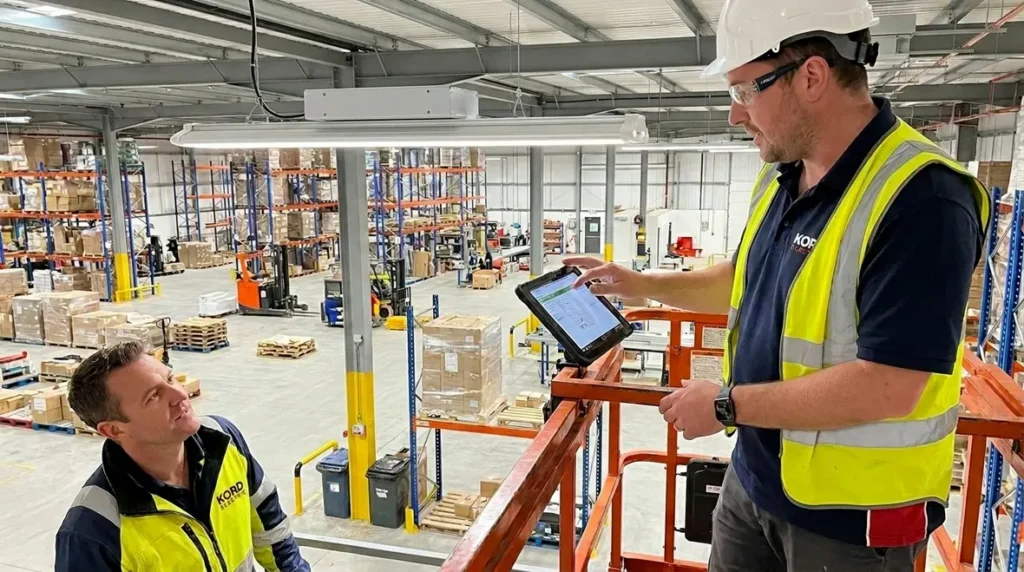
To manage lighting over time, we start by mapping the lifecycle stages. First, we evaluate the current state: fixture type, luminaire condition, driver or ballast status, lamp life where relevant, and control system behavior. After that, we connect performance to real usage patterns, including occupancy schedules, shift hours, and daylight impact. This prevents random replacements that waste money and disturb operations.
Next, we build a timeline based on risk. For example, high use areas like parking structures, loading docks, and warehouse aisles usually fail in groups because heat and cycling stress the components. In contrast, conference spaces may degrade slower, yet still lose output and color quality over time.
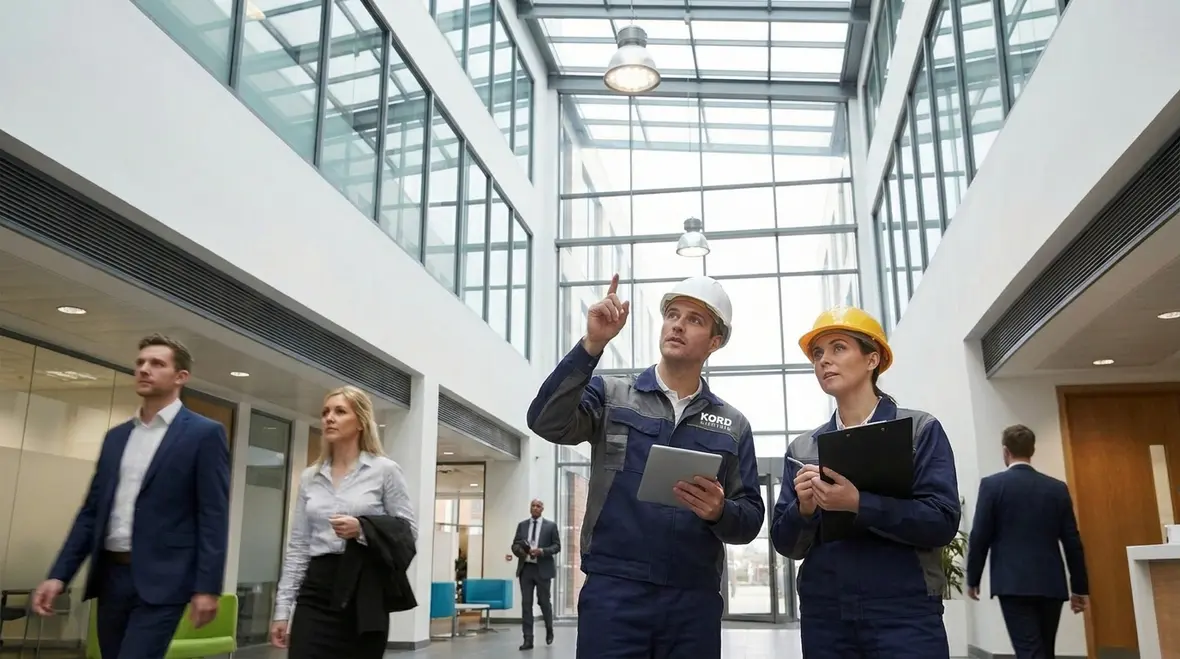
Then our technicians and expert service staff translate the data into plain guidance. We do not overwhelm building managers with jargon. We show the likely failure windows, highlight the fixtures that affect safety first, and explain how a staged upgrade plan can reduce downtime. In other words, we turn guesswork into a schedule you can actually run.
When lifecycle planning reveals that entire systems would benefit from redesign, we connect those insights with project based upgrades. For facilities scheduling capital improvements, we often align recommendations with structured services like dedicated lighting installation services, so that long term reliability and lighting quality move forward together instead of in isolated patches.
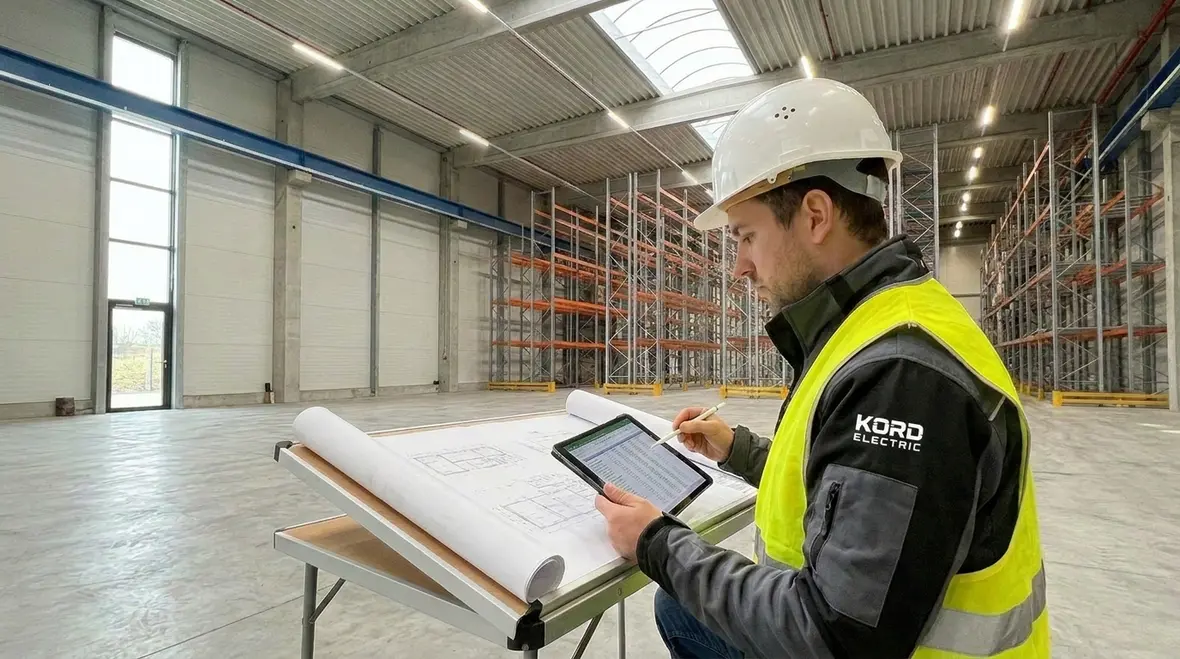
What best practices keep lighting performance stable over time
Next, we apply best practices that keep performance from drifting downward. First, we track light output and uniformity, not just whether a fixture still turns on. Over time, dirt accumulation, lens aging, and component wear reduce usable illumination. As a result, areas may look “fine” until the day someone files a complaint, and everyone suddenly becomes an amateur lighting scientist.
Then we implement disciplined maintenance routines. We include cleaning schedules where they matter, check for failed drivers, inspect connections, and confirm that controls operate as intended. Additionally, we verify that dimming levels match the design intent and do not “creep” because of sensor drift or programming changes.
Finally, we standardize where we can. Using consistent fixture platforms reduces stocking complexity and speeds up service response. If a facility uses multiple styles across wings, we help build a practical path to reduce variety without breaking the appearance and code requirements.
- We measure and document performance, not just operational status
- We maintain controls so they stay calibrated to occupancy and daylight
- We plan cleaning and inspections around the building’s actual traffic
- We standardize fixture choices to simplify repairs and shorten lead times
Because lighting rarely exists in isolation from the rest of the electrical backbone, we often align these routines with broader electrical preventive maintenance. That means inspections, testing, and documentation can dovetail with structured programs like electrical preventive maintenance, so lighting reliability strengthens overall system resilience instead of living on its own island.

Inspection and testing routines that catch failures early
When we manage lighting lifecycles, we treat inspections like early warnings. Instead of waiting for the dramatic moment a bank of lights goes out, we look for early signals. For instance, flicker, uneven brightness, repeated outages on a circuit, or abnormal control behavior often point to failing drivers, damaged wiring, or communication issues in smart systems.
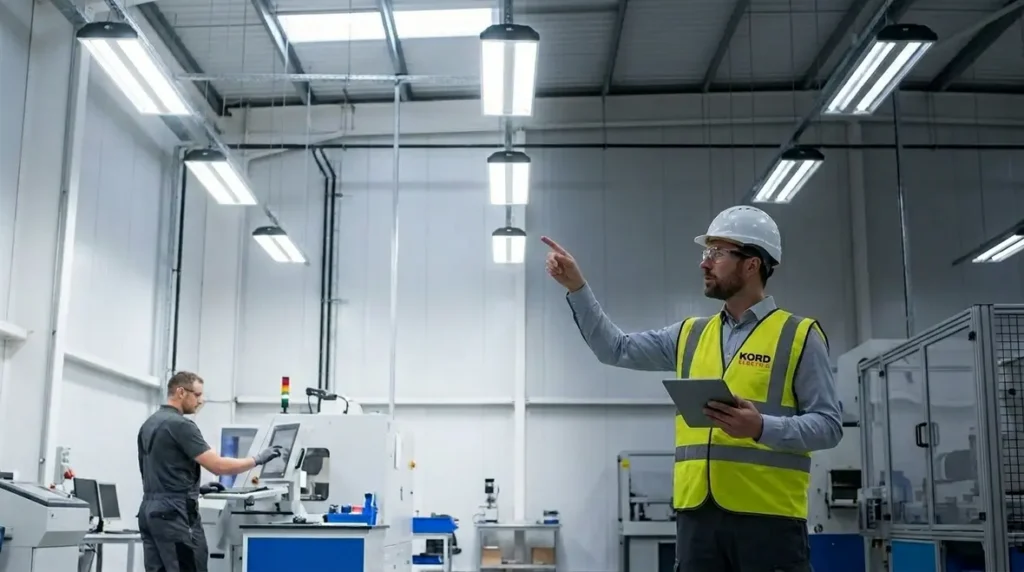
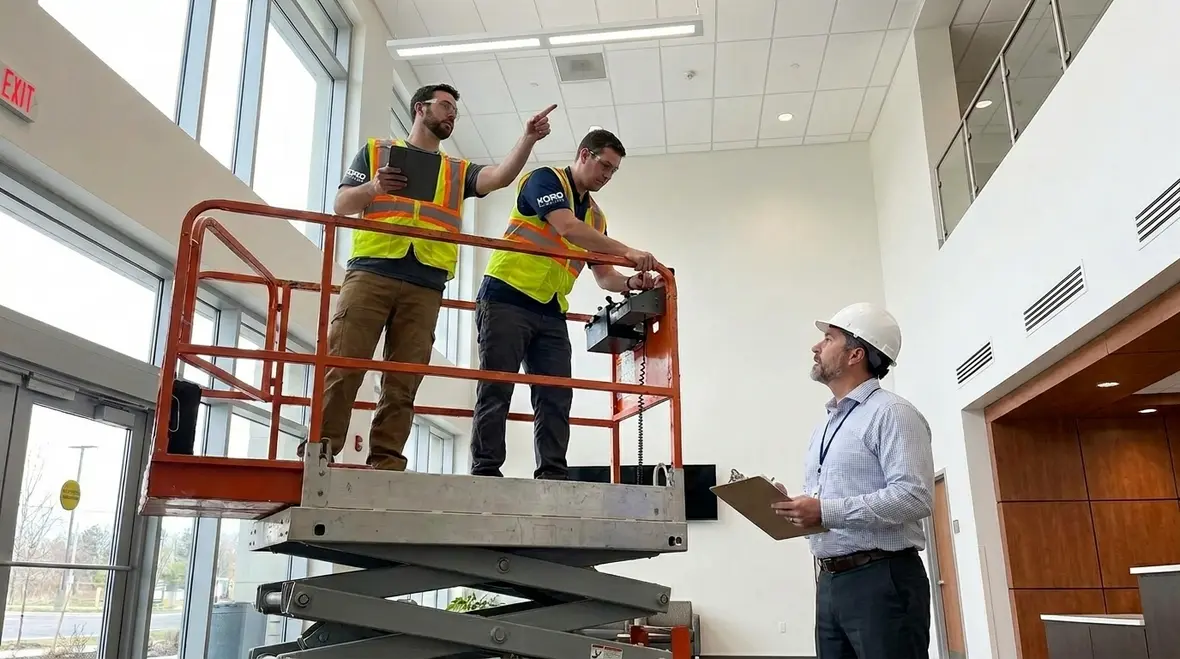
To catch these issues early, our technicians use a structured approach. We inspect luminaires, verify wiring integrity where applicable, and test controls responses in zones. Then we compare results against the expectations for each space type, so we can spot abnormal drift.
After we identify patterns, we help customers prioritize actions. Some facilities need quick fixes for safety and access. Others need a planned batch replacement to prevent future downtime. Either way, we keep the work aligned with production schedules and tenant needs, because nobody wants their operations treated like an experiment. If you want a pop culture reference, think of it as proactive “maintenance before the season finale disaster,” except we handle the details so you do not have to.
For sites that operate around the clock or support critical environments, we may fold lighting checks into wider reliability reviews that also examine panels, feeders, and emergency circuits. That way, the same visit that spots dim aisles can also uncover hidden electrical risks before they surface as outages or nuisance shutdowns.

Replacement planning for cost control and operational continuity
Replacement is where many facilities lose money. They either replace too early and pay for unused life, or they replace too late and deal with disruptions, emergency labor, and higher electrical impact. So we manage replacement planning with a decision framework that balances performance, risk, and business timing.
First, we group fixtures by condition and operating history. Then we align replacement stages with facility downtime windows. For major property buildings, we coordinate with property teams so common areas, parking, and corridors remain safe and serviceable. We also consider how replacement affects lighting quality, so we avoid uneven appearance or mismatched color temperatures.
Next, we evaluate efficiency targets tied to the building’s load profile. That is where lighting efficiency facility management connects strongly with lifecycle planning. If your facility uses controls well and maintains design output, you can often reduce energy waste without sacrificing comfort. Our expert service staff explain these trade offs clearly, so your team can approve decisions with confidence.
- We stage replacements to reduce downtime and avoid emergency rollouts
- We group fixtures to optimize parts, labor, and project pacing
- We protect lighting quality during upgrades and swaps
- We connect efficiency goals to controls, not just fixture choice
In many cases, that framework extends naturally into larger design driven projects, from LED retrofit packages to full commercial lighting redesign. When timelines and budgets call for more than one for one swaps, our team coordinates with dedicated services like commercial and industrial lighting installation, so lifecycle data directly informs new system layouts, control zones, and code compliance.
Controls, dimming, and smart systems: keeping them reliable
Modern lighting systems do not only involve fixtures. They involve controls, sensors, and sometimes networked platforms. And just like any tool, controls need attention. Even well designed systems can drift if settings change, sensors age, or communication paths degrade.
To manage this, we review control sequences and verify sensor placement assumptions. Then we validate dimming curves and ensure occupancy logic supports how people actually move through the building. For example, a loading dock may need different behavior than a lobby corridor. Similarly, a warehouse may require consistent output during shifts, not random comfort dimming that surprises operators.
After that, we document the settings and provide recommendations for stable operation. Our technicians explain the control behavior in human terms, so your staff understands what the system does during occupied and unoccupied states, and what changes would improve outcomes. If you have ever watched a smart system act like it has mood swings, you know the pain. We prevent that by treating controls as a maintainable part of the lighting lifecycle.
For properties adopting advanced scheduling, daylight harvesting, or integration with building automation, this approach also protects your investment in smart features. Instead of a set and forget installation that quietly drifts off course, ongoing checks keep lighting efficiency facility management grounded in how the building truly operates from season to season.
How we track performance improvements through lifecycle reporting
Finally, best practices hold up only when someone can see results. That is why we deliver lifecycle reporting that connects actions to outcomes. First, we collect baseline data and note fixture conditions, controls settings, and operational patterns. Then, after upgrades or maintenance, we verify improvements. This keeps the work grounded and helps building teams justify decisions.
We also emphasize transparency. Our expert service staff explain what changed, what improved, and what we recommend next. Additionally, we help customers plan future work using the same structure, so each project builds on the last rather than starting from scratch.
In a way, this is the difference between “lights installed” and “lighting managed.” One gets you a result today. The other helps you keep the result tomorrow, and the next year after that. For commercial and industrial facilities, that consistency is how you protect both safety and budget.
When reporting reveals that lighting now supports safer paths, clearer wayfinding, or reduced trip incidents outdoors, we may also connect those improvements to focused topics like the guidance in Kord Electric’s commercial landscape lighting safety guide, so facility teams can see how lifecycle thinking extends from interior aisles to exterior walkways and parking areas.
FAQ
Short answers for featured snippets
- What is the best first step for lighting lifecycle management? Start with a condition and controls assessment tied to real building usage.
- How do we prevent wasted early replacements? We group fixtures by condition and operating history, then plan staged replacements by risk.
- Do we support major property buildings? Yes. We focus on commercial and industrial facilities and major property buildings, with coordination for operational continuity.
- Who explains the findings? Our technicians and expert service staff explain results clearly and recommend next steps in plain language.
Request a lifecycle plan from Kord Electric
If you manage a commercial or industrial facility, you deserve a lighting strategy that stays reliable, safe, and efficient as your building evolves. Kord Electric helps you plan inspections, maintenance, replacements, and controls with clear documentation and expert guidance from our technicians and service staff. Contact us to schedule an assessment and get a practical lifecycle roadmap tailored to your spaces, schedules, and budget. Let us remove the guesswork before your lights do it for you.
When your lifecycle plan calls for new equipment, upgrades, or full redesign, you can pair that roadmap with dedicated project support through Kord Electric’s Lighting Installation Services, built specifically for commercial and industrial facilities that need reliable, efficient systems installed with minimal disruption.
If your building also needs broader electrical reliability support beyond lighting, explore Kord Electric’s structured Electrical Preventive Maintenance programs to align lighting efficiency facility management with a full electrical maintenance strategy that keeps critical systems ready every day.