Commercial Electrical Distribution Troubleshooting
In commercial electrical distribution, downtime rarely announces itself with a polite email. It usually arrives as flickers, odd breaker behavior, or a faint smell that does not belong in a “normal Tuesday.” That is why Kord Electric approaches commercial electrical distribution system troubleshooting like a calm investigator: we watch the patterns, we test the circuits, and we confirm what is failing before it turns into an outage. Our technicians and expert service staff explain what they find in plain language, so facility managers can make fast, confident decisions. And yes, we still take electrical problems personally. Not because we are dramatic, but because the lights do not pay rent when they go out.
How failing distribution reveals itself in commercial sites
Every commercial and industrial facility runs on a distribution system that balances load, protects equipment, and keeps power steady. However, when the system starts to degrade, it often shows early signs that a careful team can spot. First, breakers may trip more often, or they may trip in ways that do not match the original fault. Second, facilities can see voltage drops during normal demand, and then the equipment seems to “behave” until it suddenly does not. Third, panels may warm up beyond expected levels, especially at bus bars, connections, and terminations.
Furthermore, small clues stack up. An operator might notice lights dimming when motors start. Maintenance may report that contactors chatter. IT closets may experience unexpected resets because power quality takes a hit. To keep things grounded, our technicians at Kord Electric will treat these symptoms as a timeline, not random events.
And if someone says, “It worked fine last month,” we respond with professionalism and a tiny joke. Last month is not a warranty.
Signs to watch before the outage arrives
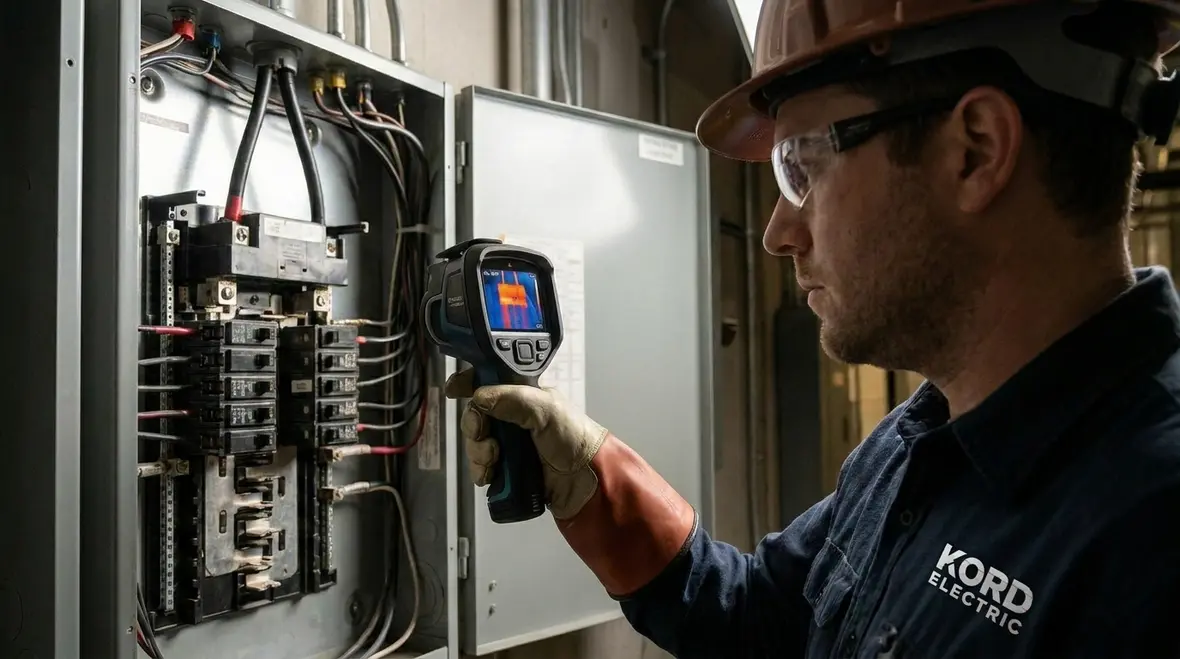
When Kord Electric performs commercial electrical distribution system troubleshooting, we look for patterns that suggest wear, loose connections, failing components, or insulation breakdown. These warning signs matter because distribution failures can start quietly, then accelerate under heat and load.
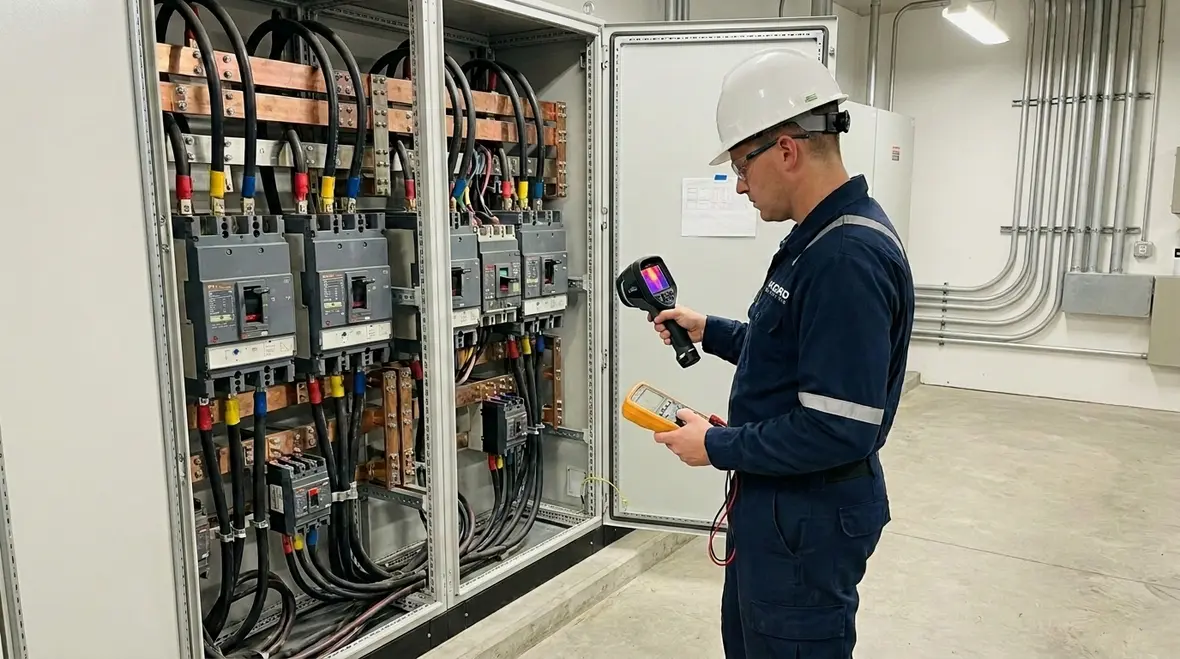
- Overheating at panels, switchgear, or distribution blocks, often found through infrared checks or abnormal cabinet temperatures.
- Frequent breaker trips, especially if the same feeder fails repeatedly or trips without a clear process change.
- Burning odor or visible discoloration near terminals, lugs, or bus connections.
- Loose or vibrating hardware indicated by noise, recurring alarms, or physical inspection findings.
- Voltage imbalance across phases that stresses motors, transformers, and sensitive loads.
- Arc flash risk indicators like dust buildup, corroded contacts, or signs of previous arcing.
- Power quality problems such as harmonics, spikes, or frequent brownouts.
As a result, our expert service staff explains what each sign usually points to. For instance, overheating often connects to resistance at a connection. Voltage imbalance can come from uneven loading or degraded distribution components. And power quality issues may reflect a deeper problem like failing upstream equipment or poor conductor condition.

What causes commercial distribution to fail
Failures in power distribution usually follow a simple rule: heat, stress, and time. Over time, components expand and contract. Connections loosen. Insulation ages. That is why our team focuses on root causes instead of just resetting breakers and moving on. We want the facility to stay up, not just look stable for the rest of the week.
Common causes include:
- Loose terminations that increase resistance and create hot spots.
- Corrosion from moisture, humidity, or condensation cycles.
- Overloading that pushes conductors and devices past their design limits.
- Insulation breakdown from thermal stress, contamination, or aging.
- Broken or failing protective components such as sensing elements, trip units, or contact wear.
- Improper upgrades where modifications change load patterns without updating protection or checks.
Then there is the human side. Teams sometimes delay maintenance until the system “shows a big sign.” Meanwhile, the system keeps collecting wear like a coffee cup that nobody labels. Kord Electric helps facilities avoid that trap by building troubleshooting around evidence and by translating technical findings into clear next steps.
Using smarter troubleshooting to pinpoint the fault
Good troubleshooting moves in steps. It reduces guesswork. It keeps the facility safe. And it prevents the classic scenario where someone swaps a part, the problem returns, and everyone pretends the last test never happened.
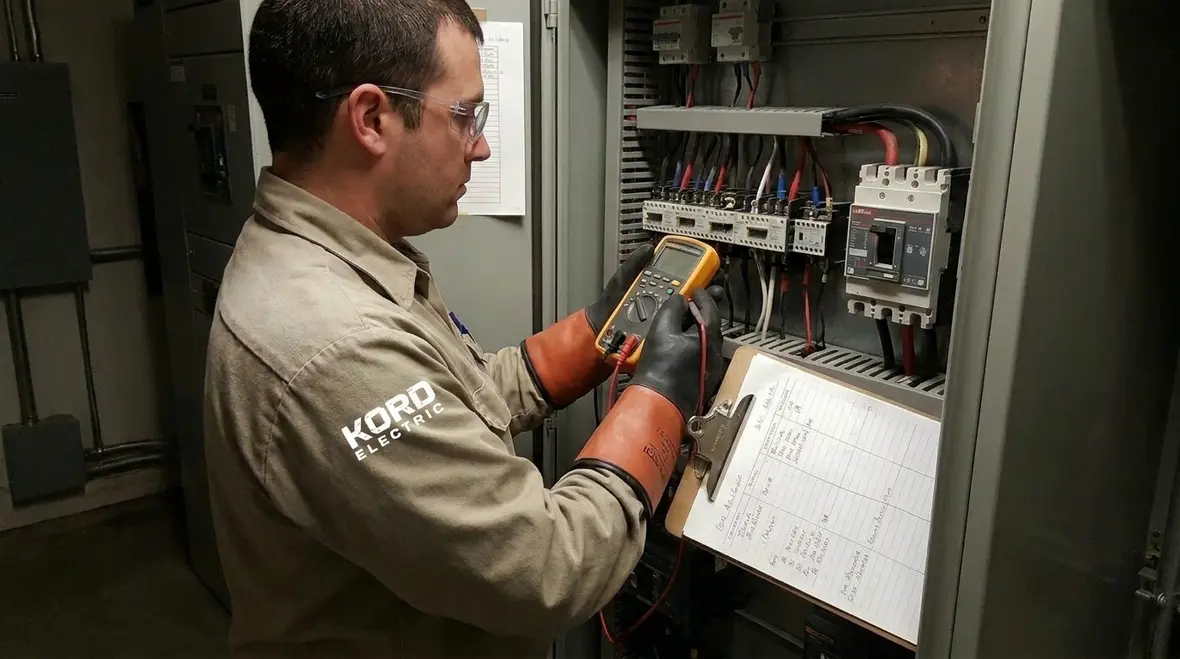
Our technicians use a practical approach to commercial electrical distribution system troubleshooting and related analysis. That means:
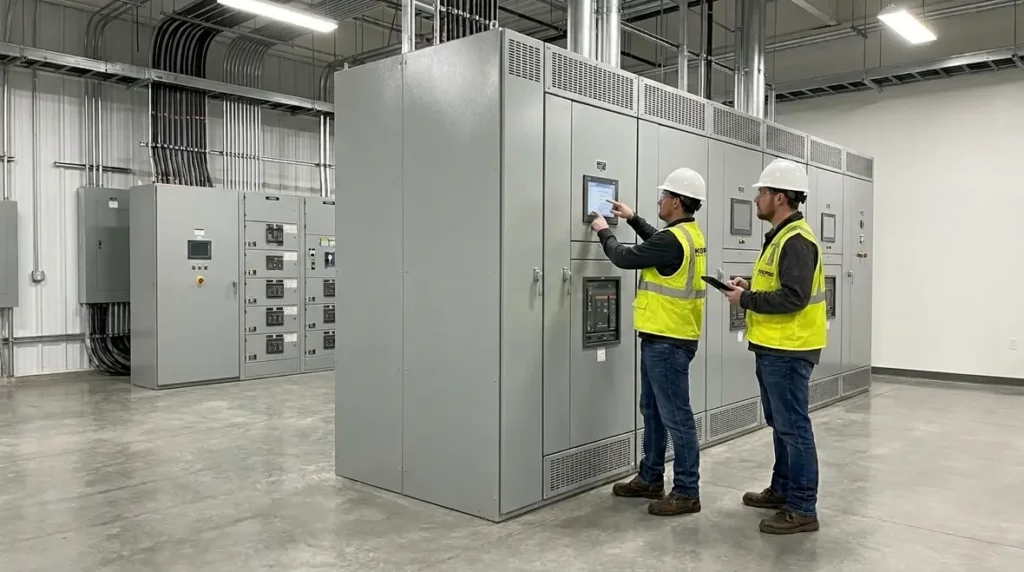
- Visual and mechanical inspection of panels, switchgear, terminations, and bus connections.
- Targeted thermal checks to find abnormal heat patterns under real or simulated load.
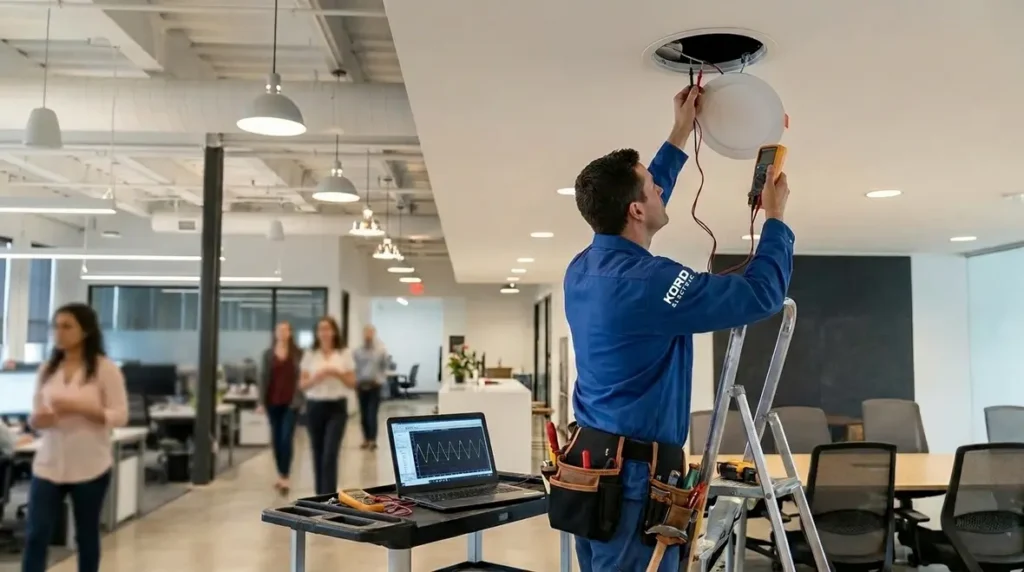
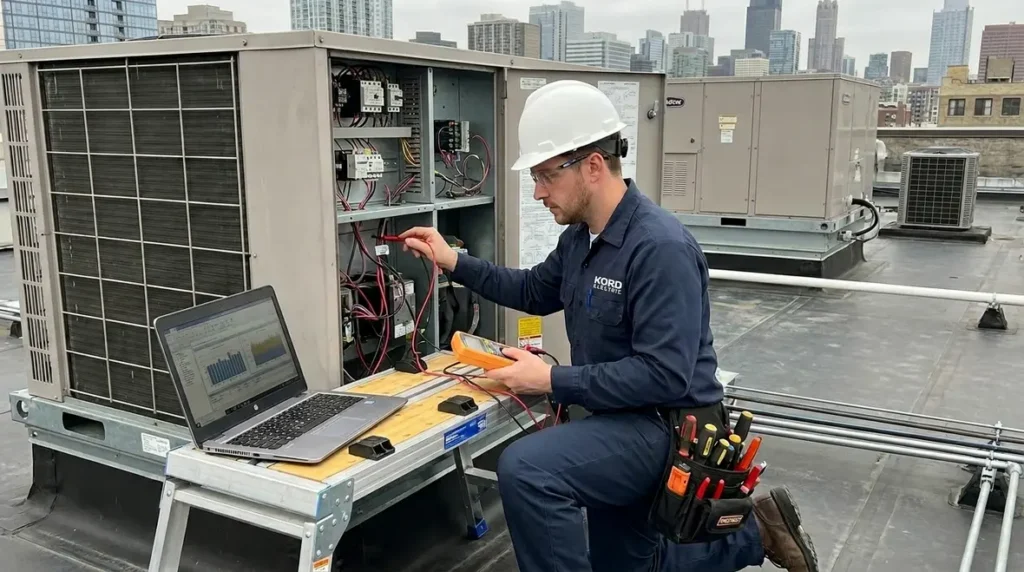
- Electrical testing such as load measurements, phase checks, and confirmation of protective device behavior.
- Condition review of protective settings, equipment history, and any recent changes.
- Root cause verification using repeatable checks, not one-off conclusions.
Importantly, we also coordinate with facility operations. We schedule checks to avoid unnecessary interruptions, and we explain what we will do before we do it. So, the team does not feel surprised. They feel informed. And honestly, surprises are great for birthdays, not for distribution gear.

Why rewiring and upgrades cost more when delays compound
When equipment fails, repairs often become more complex because damage spreads. That is why prevention usually costs less than recovery. If a distribution issue progresses from a loose connection to a burned termination, or from a weak component to repeated tripping, the eventual repair work can expand.
Our Kord Electric blog on a rewiring cost guide for commercial electrical systems highlights how the cost picture changes with labor scope, system layout, equipment condition, and the level of disruption required. In many commercial environments, delays push the system into a state where partial fixes no longer hold. Then the project shifts from targeted repair to broader work, including safer replacement, additional testing, and more detailed coordination.
In other words, when teams wait too long, the bill does not just grow. It multiplies. And it does not care that everyone is busy.
To avoid that, Kord Electric emphasizes earlier checks and practical maintenance. We help managers plan for upgrades that match actual load needs and equipment health, so the facility does not get stuck in a loop of emergency calls.
Minimizing downtime with prevention and maintenance
Downtime prevention is not a single task. It is a plan that uses testing, inspection, and smart scheduling. Our expert service staff supports commercial and industrial facilities and major property buildings by building maintenance habits around real risks, not generic calendars.
Here is how we help keep power reliable:
- Establish inspection rhythms based on equipment type, loading, and operating conditions.
- Track changes in load and process, then reassess protection settings and distribution capacity.
- Use evidence over assumptions when diagnosing trips, alarms, or performance shifts.
- Plan maintenance windows to reduce disruption and allow safe testing and repairs.
- Document findings in a way that operations teams can act on quickly.
Because commercial sites face real deadlines, we also focus on clear communication. Our technicians explain the “what” and “why” first, then we outline the “what next.” That reduces friction between facilities, contractors, and building stakeholders.
Dual focus: safety, reliability, and business continuity
Many facilities think about electrical distribution only when something fails. However, Kord Electric treats distribution reliability as a business continuity issue. When power distribution degrades, the risk is not just equipment damage. The risk includes production delays, safety exposure, and costly cleanup afterward.
| Reliability goals Keep systems stable under daily load. Reduce nuisance trips and voltage swings. Prevent cascading failures across feeders. |
Safety goals Limit overheating and arcing risk. Ensure terminations remain secure. Confirm protective devices respond correctly. |
FAQ: commercial distribution troubleshooting and downtime prevention
Call Kord Electric before the next outage
If your commercial or industrial facility shows early warning signs, do not wait for the full failure story. Kord Electric sends technicians and expert service staff to perform thorough inspections and commercial electrical distribution system troubleshooting, so you get clear findings and practical next steps. We focus on safety, reliability, and fast recovery. Contact us today to schedule an assessment and build a prevention plan that keeps your lights on, your operations moving, and your team out of emergency mode.
For facilities that want to stay ahead of problems, pairing distribution troubleshooting with an ongoing electrical preventive maintenance program helps catch issues earlier, extend equipment life, and minimize unplanned downtime.
If your building is already experiencing unstable power, Kord Electric can also investigate voltage fluctuations in commercial and industrial facilities so your sensitive equipment and operations stay protected while we stabilize your distribution system.