Commercial Electrical Emergency Response Plan Guide
Commercial electrical emergency response plan: what we build and why it matters
When electrical failures hit a commercial site, seconds feel like minutes and minutes feel like court. That is why Kord Electric develops a Commercial electrical emergency response plan that teams can follow under stress, with clear roles, fast checks, and safe restoration steps. We put our focus where it belongs: commercial, industrial, and major property buildings, because the stakes are higher and the downtime costs are real.
Our technicians and expert service staff explain the process in plain language, then test it, because a plan that only looks good on paper is basically a fire drill for paper. Next, we walk through how we build the plan, how we prepare for different failure types, and how we make sure your building stays in control while the unexpected tries to take the wheel.
Designing an emergency plan that works on day one and week one
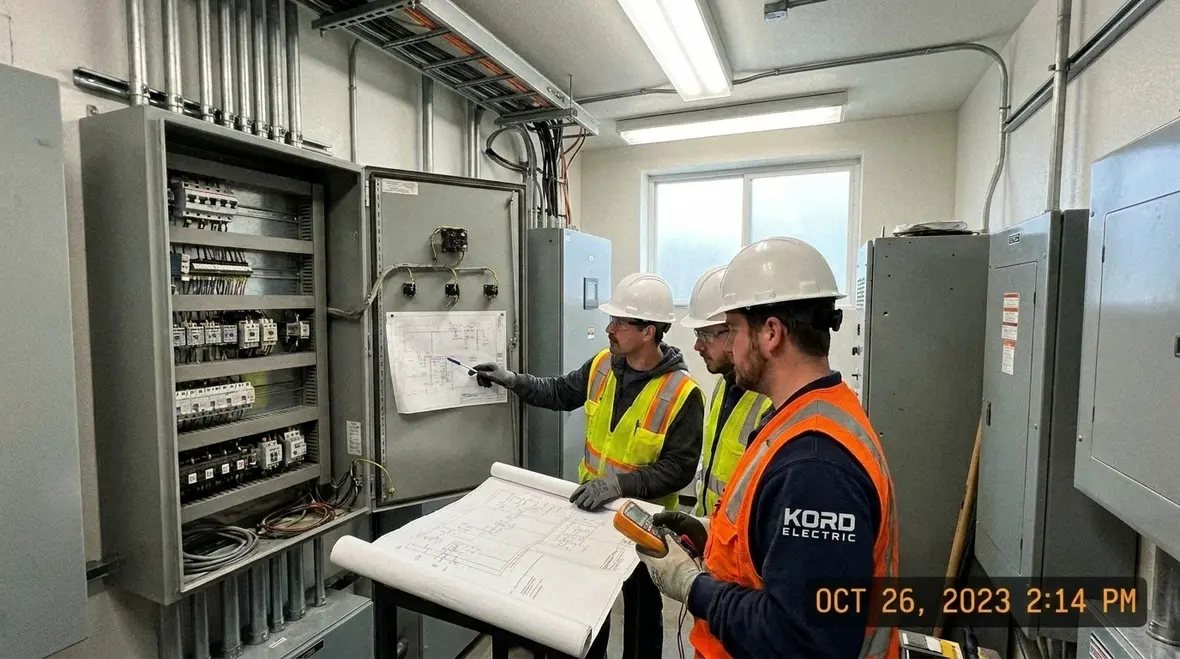
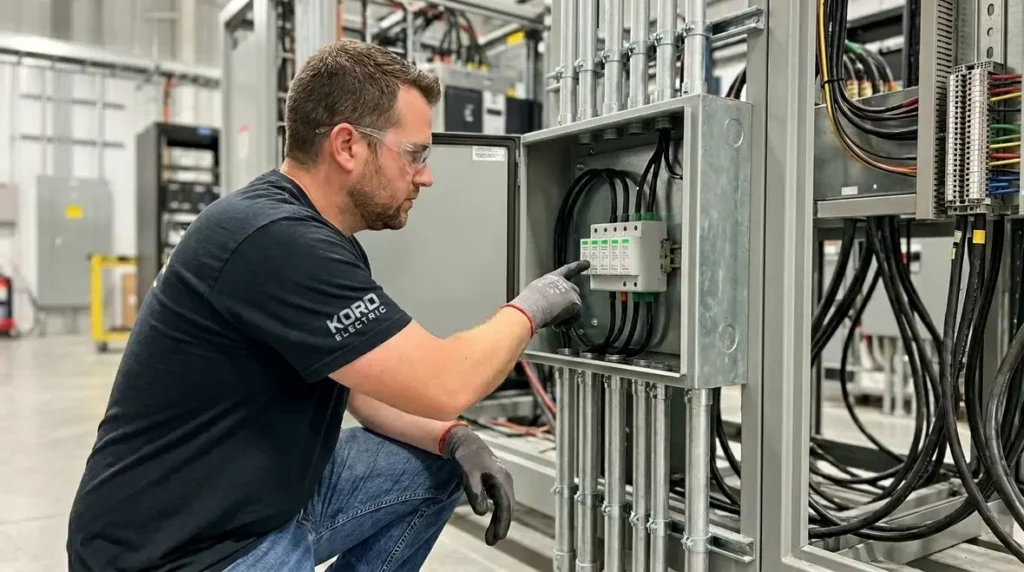
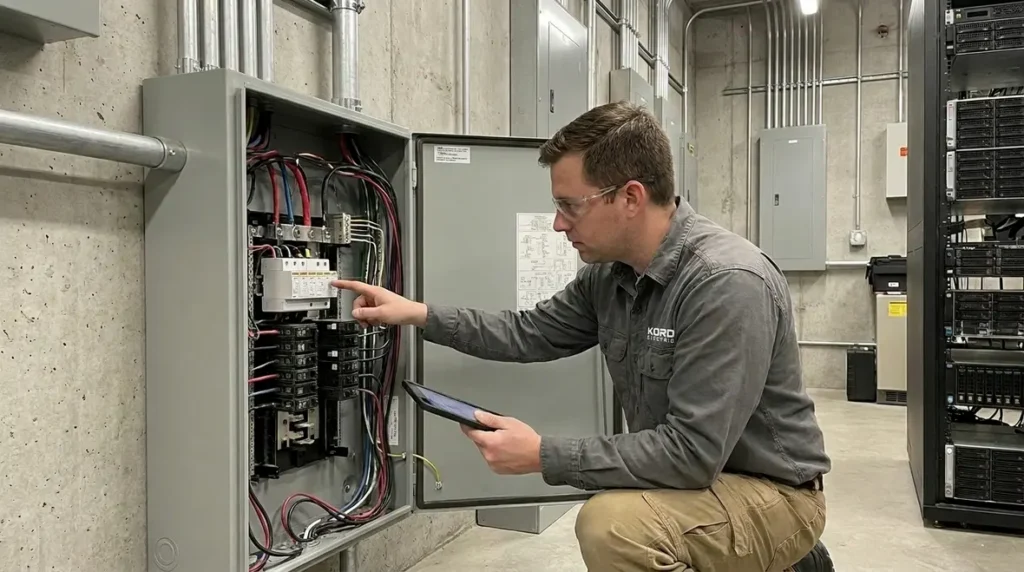
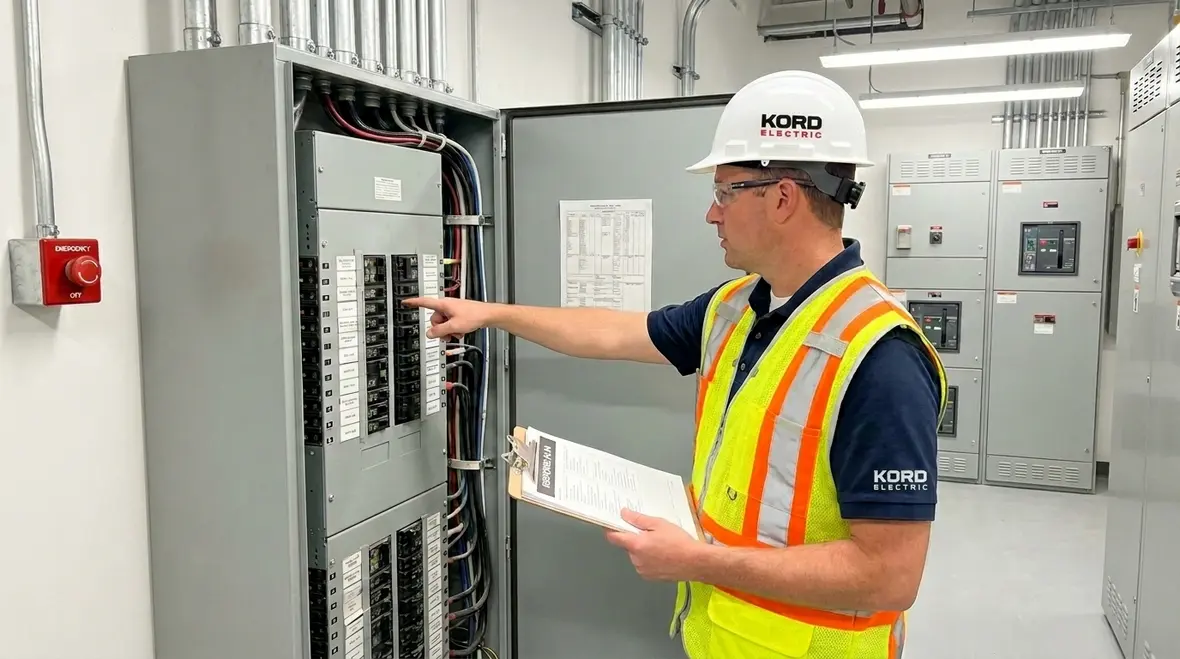
We start by treating the emergency response plan like a live system, not a document that collects dust. First, our team maps the electrical one line design to the actual field conditions, including panels, switchgear rooms, ATS units, transformers, and critical branch circuits. Then we align the plan with building operations, so facilities leaders, security, and maintenance teams know what to do before they ever hear the alarms.
Next, we define responsibilities with simple authority and backup coverage. For example, one person confirms the reported symptom, another verifies remote monitoring status, and a third manages the site safety perimeter. Also, our technicians create step by step checklists that match how a real failure unfolds, not how a textbook imagines it. In this way, the Commercial electrical emergency response plan stays consistent even when stress rises.
Finally, we test and refine. We review after every drill and every real event. As a result, the plan improves over time, and the next response feels less like chaos and more like a practiced routine. Honestly, it beats standing around guessing like you are in a detective show where everyone forgets the basics.

Electrical failure scenarios and the safest first moves
Different electrical failures behave differently, and your response should reflect that. At Kord Electric, we plan around likely events in commercial and industrial environments, such as utility power loss, switchgear faults, busbar damage indicators, breaker trip patterns, ground faults, and issues in UPS or generator transfer sequences.
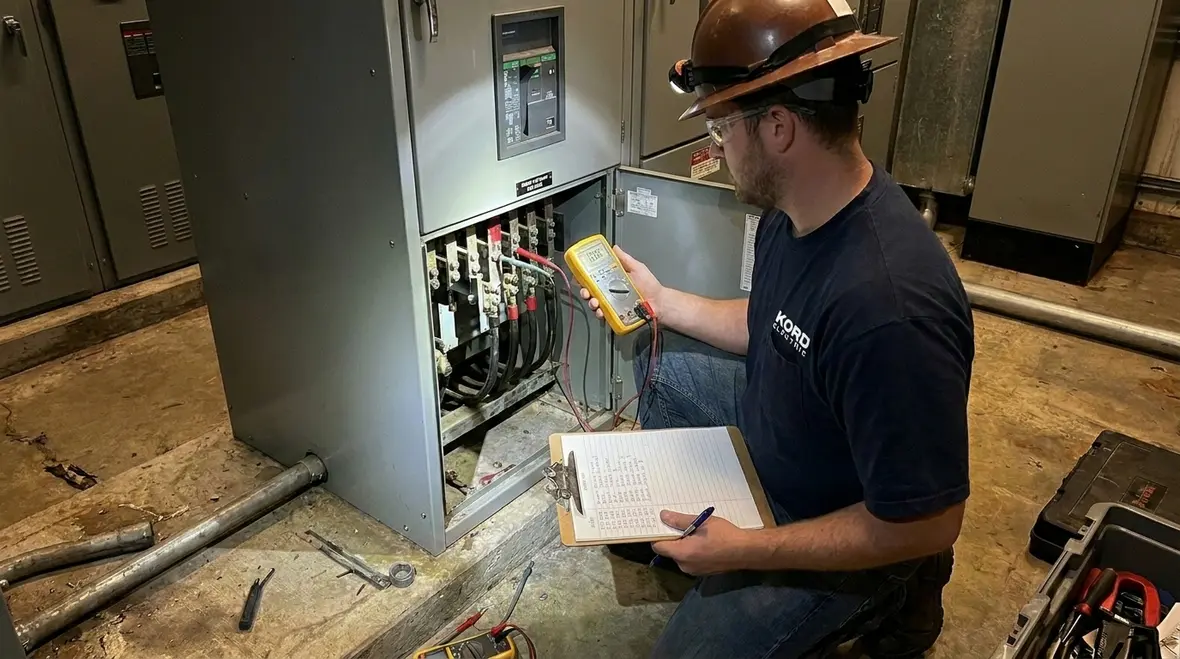
For an initial response, we insist on a calm sequence. First, we prevent well meaning but unsafe actions, such as opening doors to energized rooms without confirmation or resetting breakers without identifying the reason for the trip. Then we confirm the scope using alarms, metering data, and status lights, when available. Additionally, we document time stamps because the cause often hides in the timeline.
In many cases, the safest first move is isolation, not full restoration. Therefore, our teams identify which circuits serve life safety loads, communications, refrigeration for process needs, and critical controls. After that, we coordinate restoration in stages so the building does not slam into a load that it cannot support.
Meanwhile, our experts explain the “why” to onsite leadership during training. They talk through what to look for, how to interpret common signals, and what not to touch until qualified staff confirm conditions. When people understand the logic, response quality rises, and the site stays safer.
Communication and command: making sure the right people act
In a real emergency, the loudest voice does not always solve the problem. So we build communication into the plan with a clear chain of command and defined contact points. Our staff aligns with your building managers and security team so they can notify occupants, manage access, and coordinate with emergency services if needed.
To keep communication effective, we create call lists and escalation levels. For example, a minor disturbance might involve maintenance and remote support, while a switchgear fault with fire risk triggers an immediate escalation. Then we standardize status updates so everyone hears the same facts, not a rumor that evolved like a bad game of telephone.
We also prepare scripts for key moments. When occupants need reassurance, leaders should share what is happening and what actions the site will take next. At the same time, we guide communications for critical system downtime, so tenants, contractors, and operations teams do not jump to conclusions.
Our technicians share these workflows during site walkthroughs, then again during drills. As a result, your team does not just “hear” the plan. They understand it, and they can execute it without waiting for someone to explain in the middle of the emergency.
Using infrastructure knowledge to protect data centers and critical loads
Large commercial and industrial buildings often house sensitive systems that do not fail gracefully. In fact, when power disturbances hit, they can ripple into cooling controls, network gear, and process equipment. This is where electrical infrastructure planning becomes more than a checklist. It becomes a method.
Kord Electric takes cues from how we approach data center electrical infrastructure essentials, such as reliability planning, redundancy, monitoring, and safe transfer thinking, then applies those principles to broader commercial and major property settings. If you want to see how those ideas come together in more depth, you can explore our companion article, Data Center Electrical Infrastructure Essentials, and use it alongside your Commercial electrical emergency response plan to strengthen upstream design decisions.
We focus on how power flows through the facility, where redundancy exists, and how controls behave during abnormal conditions.
For critical loads, we plan restoration in a way that avoids unstable power states. We also account for equipment that has its own restart behavior. In other words, we do not just bring power back. We bring it back in a controlled sequence that respects the building’s electrical logic.
Additionally, we verify that protective devices coordinate correctly, including breaker settings and feeder protections. When coordination works, faults clear faster and damage stays smaller. When it does not, the electrical failure spreads like a pop song stuck in your head, except the cost is not “annoying,” it is “expensive.”
Our experts help facilities teams understand these realities in practical terms. They walk through how monitoring indicators and protective actions guide decisions, and they translate engineering details into actions operators can follow quickly.
Training, drills, and maintenance so the plan stays sharp
A robust response plan must stay current, which means training and maintenance run in parallel. We train onsite teams using realistic fault narratives and roles that match day to day work. Then we run drills that test not just the electrical steps, but also the communication timing and decision making.
During training, our technicians explain how to recognize warning signs and how to respond to alarms without creating new risks. We also show how to document observations clearly, so the next action does not start from confusion. Because if the first report is unclear, the whole response loses time.
After drills, we review results and tighten weak points. Maybe the escalation path took too long. Maybe the perimeter control was unclear. Maybe the restoration sequence lacked detail for a specific critical feeder. We fix those gaps with updates that reflect the building as it truly operates.
Finally, we align the plan with ongoing electrical upkeep. Switchgear inspections, thermal checks, breaker maintenance, UPS health reviews, and generator transfer tests all support the emergency readiness goal. Therefore, when an emergency arrives, the plan does not need heroics. It needs readiness.
For facilities across the region, especially those coordinating complex systems and tenants, it can also help to connect readiness planning with broader service support. Many of our clients in Southern California review their emergency playbook alongside regional service options such as our Los Angeles County electrical services to be sure they have both an internal plan and an external partner ready when the unexpected shows up.
FAQ: fast answers for commercial electrical emergencies
Ready to strengthen your emergency readiness?
Electrical failures do not wait for office hours, and your building cannot afford guesswork. Kord Electric builds and supports a Commercial electrical emergency response plan that your teams can execute calmly, safely, and quickly. Our technicians and expert service staff train your personnel, test your process, and refine it as your facility changes. If your commercial or industrial operation needs a sharper plan, reach out to us now for a site review and next step recommendations. Let us help you turn “panic” into a procedure.
If your facility includes high-value data rooms or even full data centers, you can also pair your emergency response planning with infrastructure-focused resources such as our guide on Data Center Electrical Infrastructure Essentials. By combining an on-the-ground playbook with thoughtful design and maintenance, you give your building the best chance to stay in control when the unexpected knocks on the door.
Whether you manage a major property, a multi-tenant commercial complex, or an industrial site that cannot afford downtime, Kord Electric is ready to help you turn your Commercial electrical emergency response plan into a living system. From mapping your one line and critical loads to aligning drills with your operational reality, we support your team so they can respond with confidence instead of guesswork.
To see how our field experience and services connect to your building’s day-to-day needs, explore our related service offerings near the end of your planning process and make sure your internal procedures line up with the external help you may need during a real event. When those pieces line up, your facility is not just compliant. It is ready.