Commercial Electrical Panel Upgrade Warning Signs
At Kord Electric, we see the moment a building’s power system stops behaving and starts demanding attention. In many cases, a commercial electrical panel upgrade becomes the difference between smooth operations and surprise downtime. To keep things safe and steady, we pay close attention to the signals that show up in real facilities: flickering lighting, breakers that trip too often, and equipment that seems to “act weird” right before lunch rush, like a malfunctioning coworker with no sense of time.
This article explains what our team looks for and why. You will also learn what our expert service staff explains to managers and facility leaders during inspections. And yes, we will keep it clear. Because in commercial and industrial work, unclear turns into expensive.
What a failing panel looks like in real commercial buildings
When people hear “electrical panel,” they often imagine a static metal box that just sits there. However, panels work like the building’s control center. They route power, manage load, and protect wiring and equipment. Over time, components age, connections loosen, and capacity becomes mismatched to new energy demands.
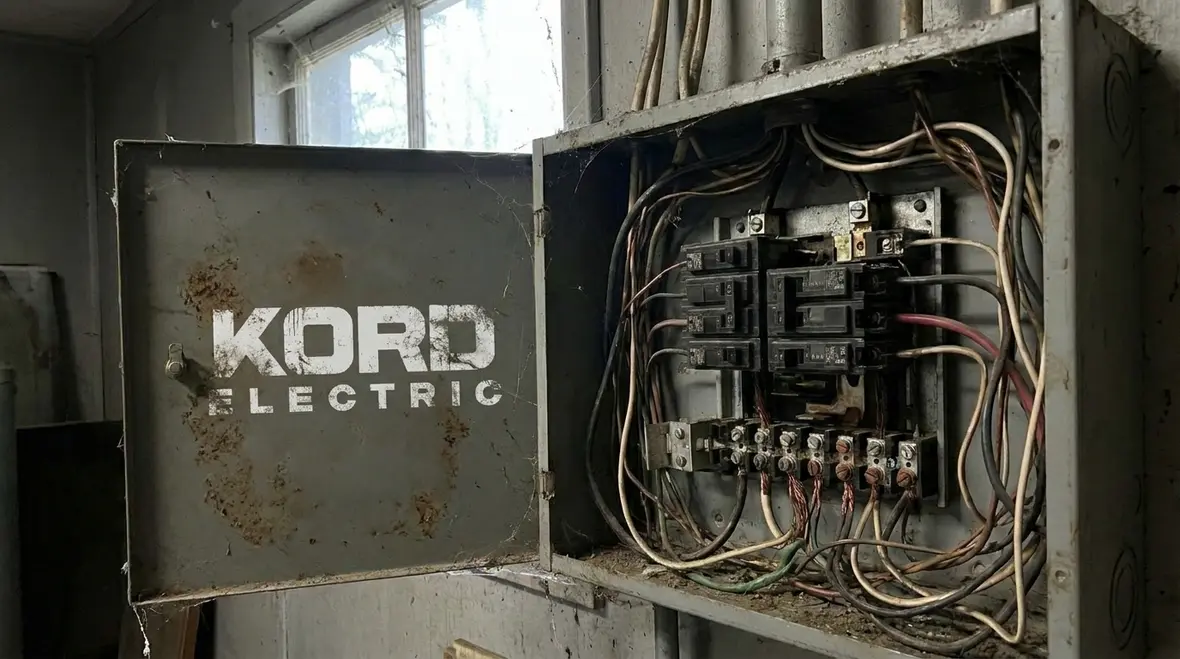
Our technicians frequently find issues that do not show up in spreadsheets, but they show up in daily operations. For example, you might notice that maintenance calls spike right after tenants add equipment, renovations increase demand, or seasonal loads shift. Then, the panel starts to feel the strain like a phone overheating during a big video meeting.
In other words, signs become noticeable before the actual failure. We encourage facility teams to treat those signs as early warnings, not as “we will deal with it later.” Later often arrives with lights out, and that is never a fun meeting.
If you are already wondering what else might be hiding behind the panel door, Kord Electric covers a broader look at hidden electrical problems in their article on hidden electrical risks in commercial buildings, which pairs naturally with the warning signs described here.
Warning signals that call for immediate action
Some symptoms mean you schedule maintenance. Others mean you upgrade now. Our expert service staff helps others spot the difference, because timing matters when you manage commercial and industrial facilities or major property buildings.
Here are common red flags we see during onsite evaluations:
- Frequent breaker trips that happen under normal operating loads, not just during obvious surges
- Burning smell, discoloration, or scorching marks around the panel cover or nearby wiring
- Warm or hot panel doors when the building is running, which suggests poor contact or overheating parts
- Crackling, buzzing, or popping sounds, especially when equipment cycles on
- Flickering lights across multiple areas, not limited to one fixture or circuit
- Rust, corrosion, or moisture inside the enclosure that can weaken connections and reduce safe performance
- Outdated components that no longer match modern load needs for current tenants and systems
- Panels that feel “fully loaded” even though you did not add anything new recently
To be clear, some building teams delay because the business still “works.” However, if a panel is overheating or making noise, it is already spending its safety margin. And when that margin disappears, the panel does not negotiate.
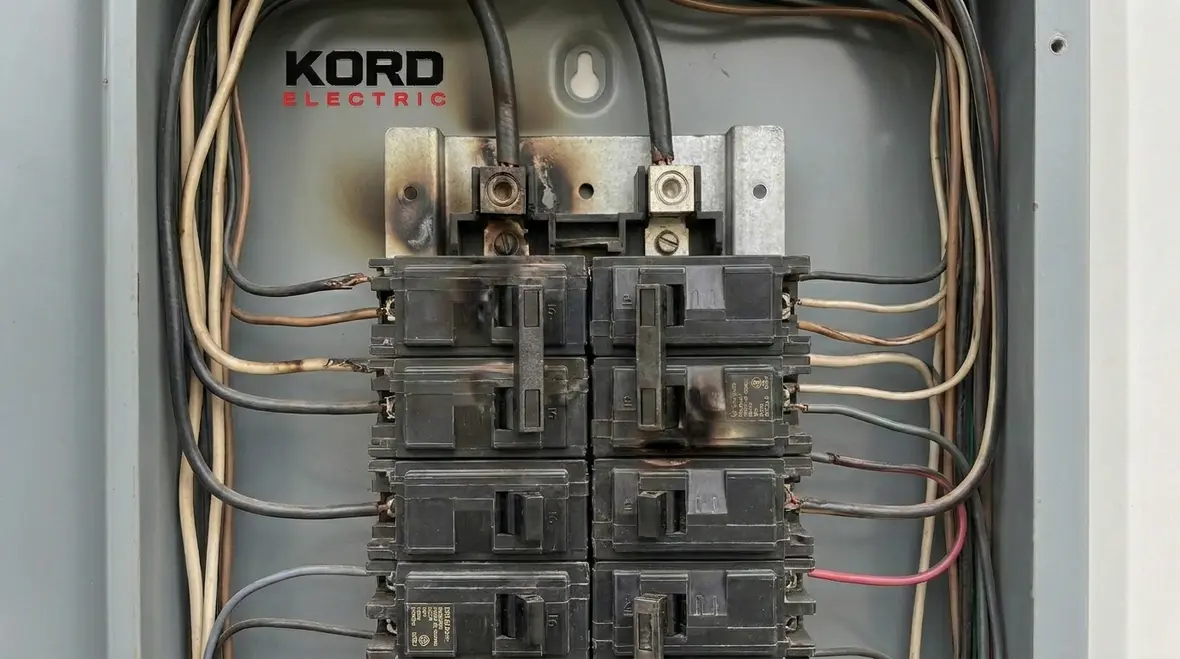
When a warning sign is really an emergency
Some of the symptoms above cross the line from “keep an eye on it” to “call for help now.” Burning smells, visible scorching, or hot metal at the panel door should trigger immediate action. In those moments, the safest move is to bring in licensed professionals who understand how to stabilize a system under stress before it fails in a more dramatic way.
If a breaker refuses to reset, trips immediately under normal load, or the panel starts to sound like a frying pan, the building is quietly asking for emergency electrical support. That is where a dedicated team, like Kord Electric’s emergency electrical services, becomes part of the risk management plan instead of an afterthought.
Capacity problems: when the electrical load outgrows the design
One of the most common reasons we recommend a commercial electrical panel upgrade is capacity mismatch. In many major property buildings, energy demand changes quietly. Then, it hits the panel all at once.
We often see this during these scenarios:
- New tenants move in and bring added HVAC units, cooking equipment, charging stations, or industrial plug loads
- Renovations replace lighting with brighter options or add displays, signage, and communications gear
- Facilities add backup systems, network closets, security systems, or data equipment
- Operations expand into multiple shifts, raising daily power usage
As load rises, panels that were once appropriate start operating closer to their limits. Moreover, aging breakers and bus bars can struggle under sustained current. If a panel keeps tripping, it may not just be “a bad breaker.” It may be the entire system reaching its ceiling.
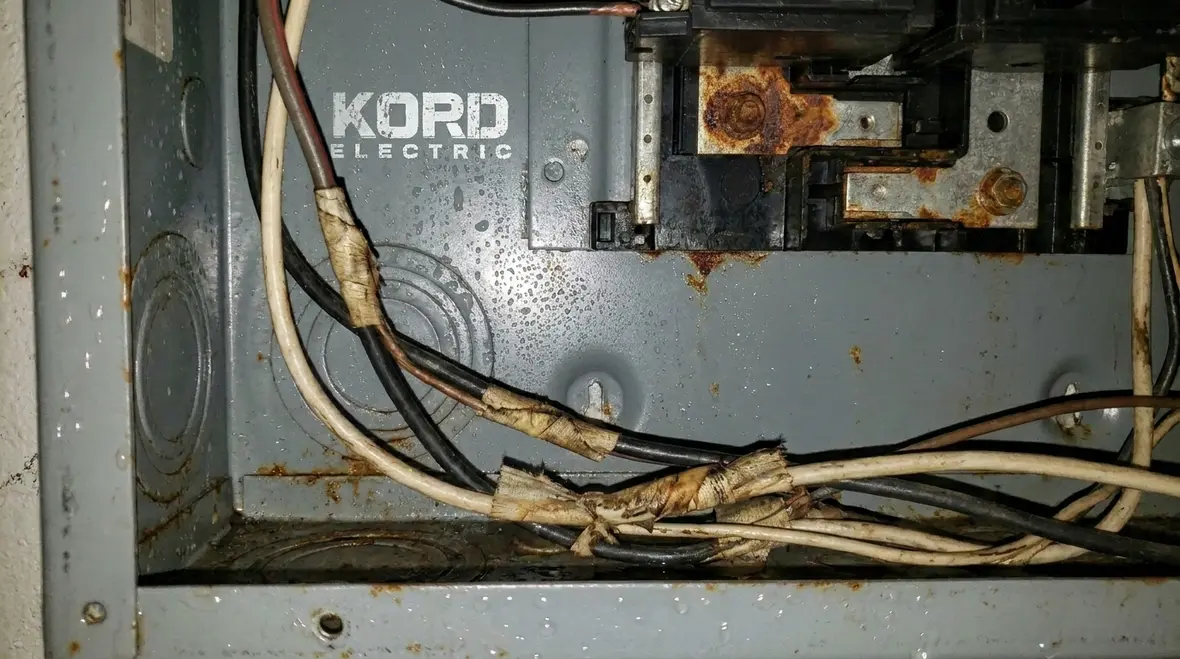
Our technicians explain the load story in plain terms. They translate panel ratings, circuit distribution, and real measurements into a plan that protects equipment. Then, they help others choose a path that supports reliable operations instead of constant resets.
Planning for future load, not just today’s demand
Commercial properties rarely sit still. Tenants bring new technology, operations add automation, and building systems keep evolving. A well designed commercial electrical panel upgrade should anticipate that reality instead of chasing it. That means evaluating not only present demand but also the realistic growth curve over the next several years.
Kord Electric covers this forward looking approach in their guidance on rewiring cost for commercial electrical systems, where panels, distribution, and long term capacity all connect into a single planning conversation.
Safety hazards we treat as non negotiable
When you run a business or manage a large building, safety cannot be a “later” item. Electrical faults inside a panel can escalate fast. And because commercial facilities carry valuable assets and frequent occupancy, the risk profile is higher than it is in a quiet home.
We see several hazards that trigger urgent upgrade recommendations:
- Loose connections that increase resistance and cause heat buildup
- Moisture intrusion that leads to corrosion and uneven performance
- Damaged insulation around conductors that can weaken over time
- Improper labeling or missing circuit identification, which slows response and increases the chance of errors during repairs
- Evidence of previous repairs done without long term alignment to current electrical standards
At Kord Electric, our expert service staff also pays attention to what facility managers need to hear during these moments. They ask questions, then they confirm findings on site. After that, we outline what the upgrade changes and why it lowers risk.

Think of it like replacing worn tires before a blowout. Sure, the car might still move today. However, when it fails, it fails at highway speed.
Labeling, documentation, and safer response
One quiet but important part of panel safety is documentation. When circuits are labeled clearly and accurately, teams respond faster and make fewer mistakes under pressure. Kord Electric explores this in depth in their guide to electrical panel labeling best practices, where they treat labels as part of the safety system, not just stickers on steel.
How we evaluate panels before recommending a commercial electrical panel upgrade
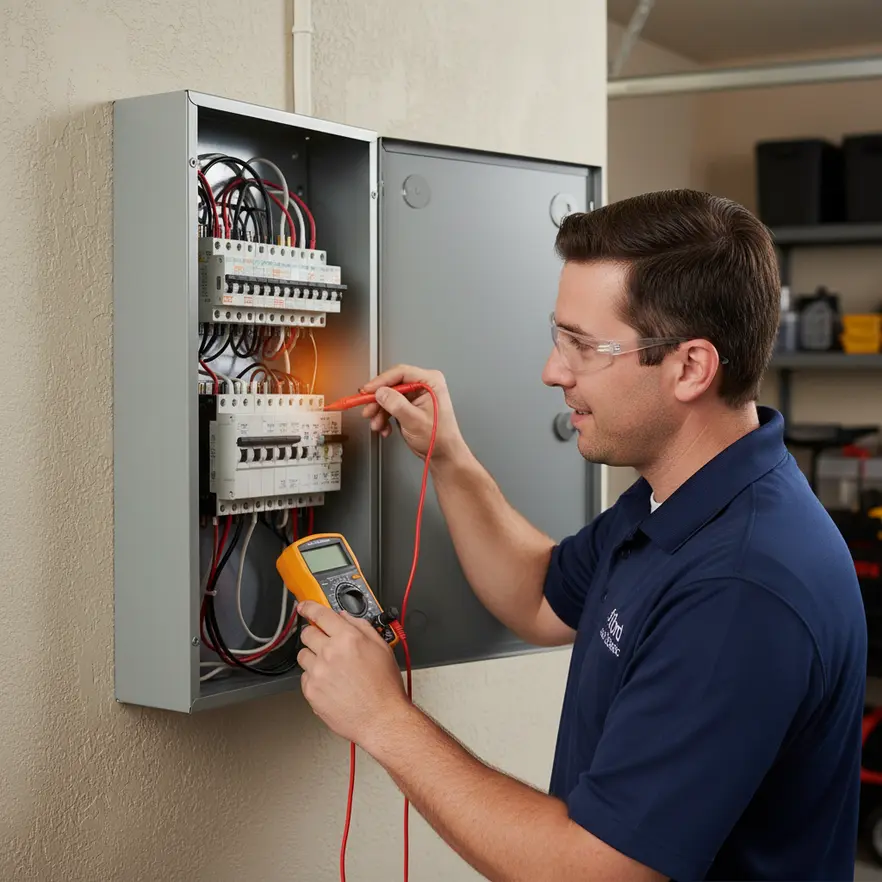
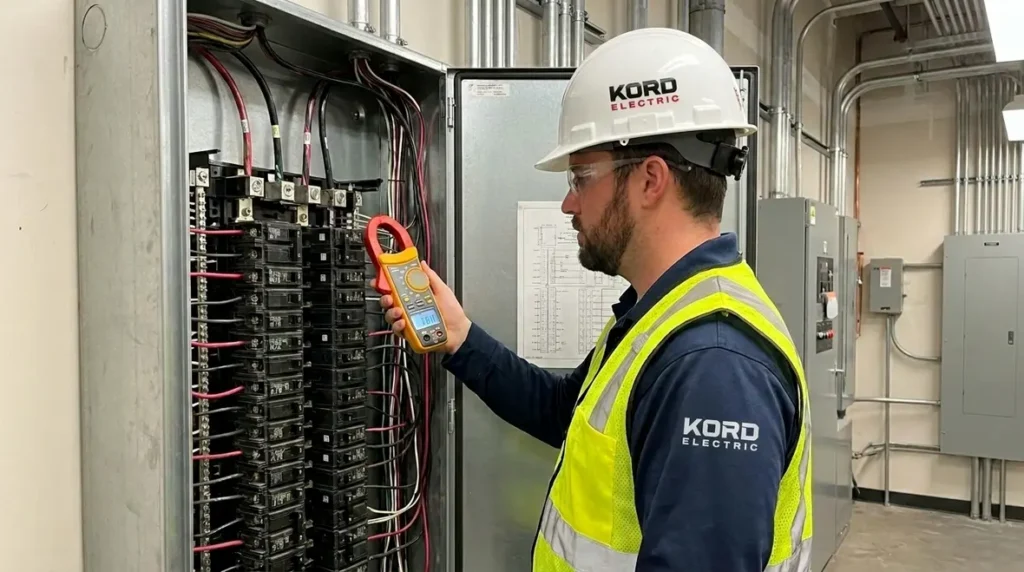
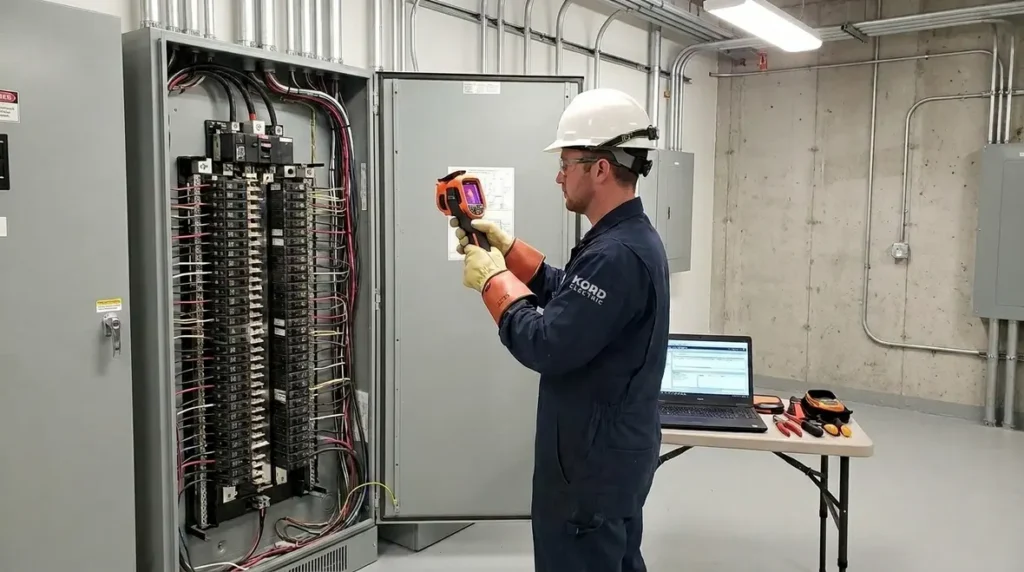
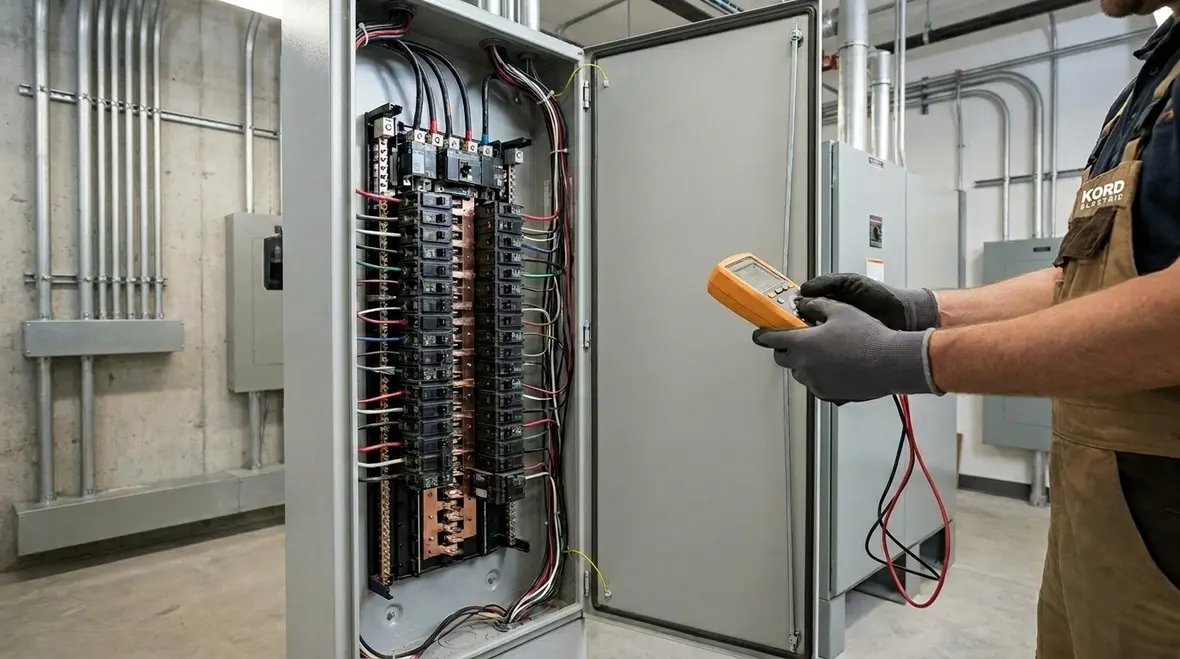
We do not guess. We inspect. First, our technicians review the building’s electrical history. Then, they check the panel condition, enclosure integrity, and signs of heat or contamination. After that, we examine breakers, bus bars, grounding connections, and the way circuits distribute power across the site.
Next, we verify capacity using actual operating conditions. Because a panel can look fine at rest, but struggle during peak usage. Consequently, we look for patterns around equipment cycles, load growth, and recurring incidents.
To keep communication smooth, we explain results in business friendly language. And yes, we keep the explanations calm. Nobody wants a thirty minute lecture while they are trying to run their day.
When a commercial electrical panel upgrade makes sense, we also consider how it impacts continuity of power. That includes sequencing, coordination with building operations, and ensuring the system supports expected load needs. In large facilities, planning matters as much as the hardware.
Connecting upgrades to broader maintenance plans
Panels do not live alone. They sit inside larger maintenance strategies that protect the entire electrical ecosystem. For some facilities, a single panel upgrade turns into the starting point for a more structured maintenance program. Kord Electric outlines this bigger picture in their overview of commercial and industrial electrical maintenance plans, where inspections, testing, and scheduled work all support safer panel performance.
Planning an upgrade that keeps operations running
A panel upgrade in a commercial or industrial building cannot act like a weekend DIY project. We coordinate installation so the facility stays safe and functional. Moreover, we plan around schedules, critical equipment, and how downtime affects operations.
Our team typically prepares for these practical concerns:
- Timing the work to reduce disruption during low demand windows
- Confirming circuit mapping so maintenance teams understand what changes
- Ensuring the upgraded panel aligns with current loads and future needs
- Verifying grounding and bonding for stable fault protection
- Performing system checks after installation so everything functions as expected
Because large buildings rarely stay the same, we also help others plan beyond the immediate fix. We focus on creating a system that can handle realistic growth. In other words, we help your power infrastructure stop acting like it is one more email away from crashing.
Coordinating upgrades with broader electrical services
For facility leaders in Southern California, it helps to know that panel upgrades can be integrated into a larger service relationship. Kord Electric provides a full range of commercial support across the region, and their dedicated page for Los Angeles County electrical services shows how emergency repairs, maintenance, and upgrades can all align under one trusted provider instead of a patchwork of vendors.
FAQ
Call Kord Electric when you need dependable power protection
If your commercial building shows warning signs, do not wait for a bigger problem to introduce itself. Kord Electric sends expert technicians to inspect, explain findings clearly, and recommend the right path to keep power stable and safe. We handle upgrades with planning that supports facility operations, not random surprises. Reach out today to schedule an evaluation and get a calm, confident plan for your electrical panel system.
Whether you are tracking down nuisance trips, planning a commercial electrical panel upgrade, or coordinating larger projects across multiple sites, the goal stays the same: dependable power that does its job quietly in the background while your business does the work everyone actually sees.