Commercial Electrical Load Balancing to Prevent Overloads
How Kord Electric sets up commercial electrical load balancing to prevent overloads
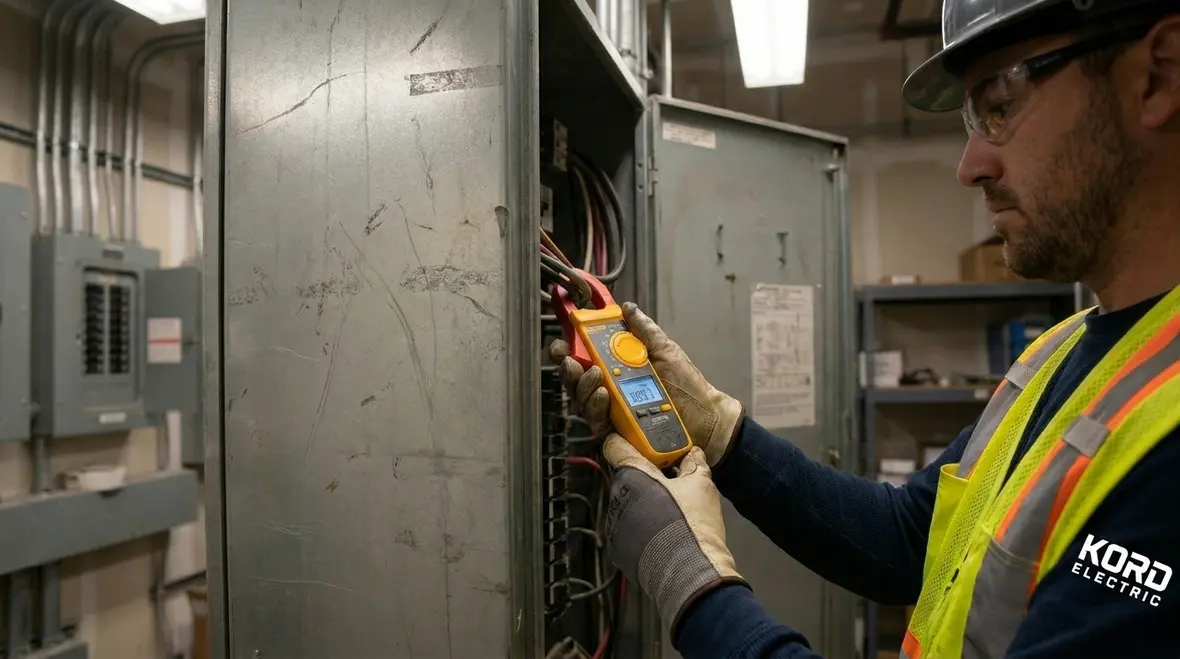
In commercial spaces, overloads rarely arrive with a dramatic drumroll. Instead, they creep in through small choices, aging equipment, and uneven demand that shifts hour by hour. At Kord Electric, we start by setting up commercial electrical load balancing early, so the facility shares power more evenly across circuits and phases. Then we verify performance with testing, load studies, and controls that help keep sensitive equipment safe. Our technicians explain the “why” in plain language, and they do it patiently, because a facility manager should not need an electrical engineering degree to make smart decisions.
And yes, we have heard the joke that “the breaker is just taking a nap.” Still, when a breaker trips repeatedly, that nap turns into downtime. Let us help you keep the lights on and the operations moving.
Spotting overload risk in commercial and industrial electrical systems
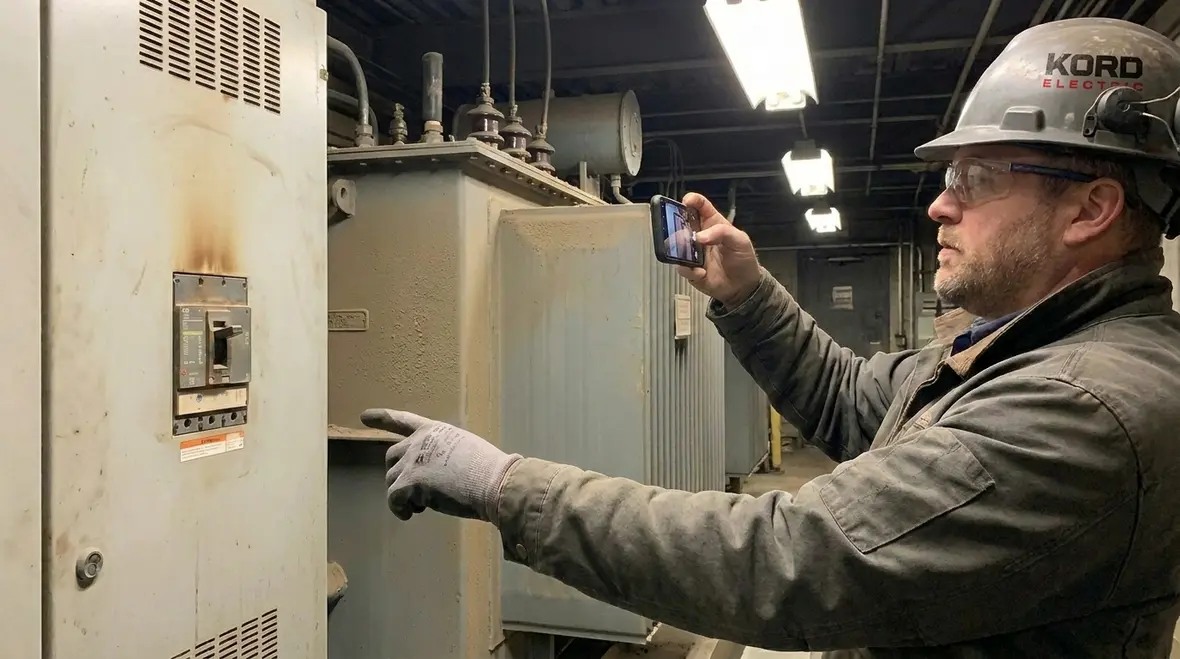
When we talk with facility teams, we usually hear about symptoms first. A few months of “minor” issues often hide the real problem: the electrical system carries more load than it should, or it carries it the wrong way. Therefore, we recommend starting with a focused review of operating patterns. For example, kitchen style peaks do not exist in every building, but there is always something that spikes demand. Warehouses peak when dock doors cycle and conveyor motors start. Offices peak when cooling ramps up and printers plus tenant build outs stack load. Hospitals peak for different reasons, but the idea stays the same: load changes fast.
Our expert service staff looks for warning signs like these:
- Breakers tripping more often, especially under normal operating schedules
- Hot panels, warm transformer areas, or odor that suggests insulation stress
- Flicker, dimming, or unstable performance in equipment that should run steady
- Uneven current on phases that drives heat and shortens component life
- Field reports of “it works fine until we add this load”
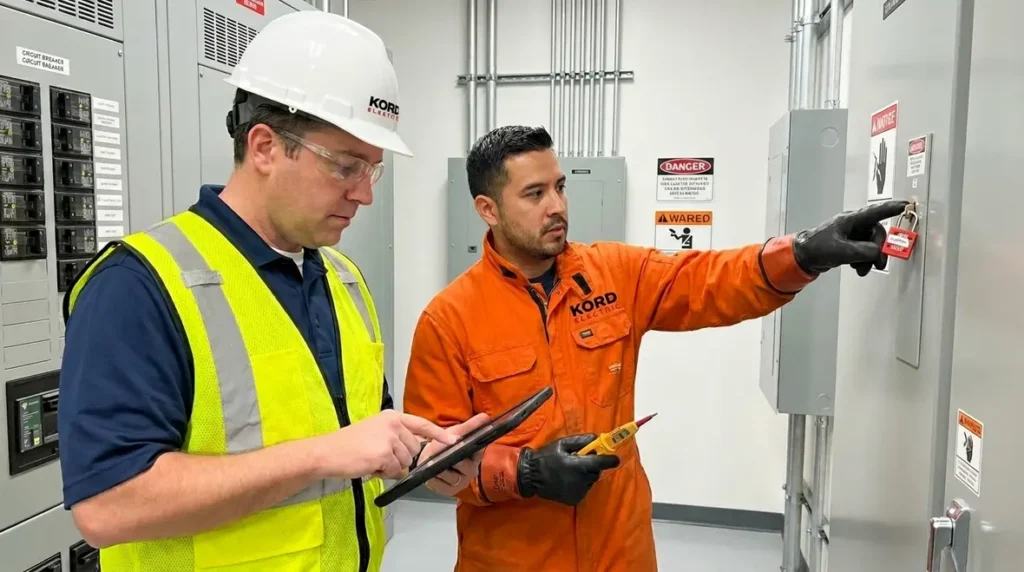
Next, we validate those observations with measurements. We do not guess. We test and compare what the system should do against what it actually does. In many cases, the root cause involves uneven phase loading, loose connections, or mis sized protective devices that never quite fit the real load profile.
Why phase imbalance and voltage changes trigger overloads
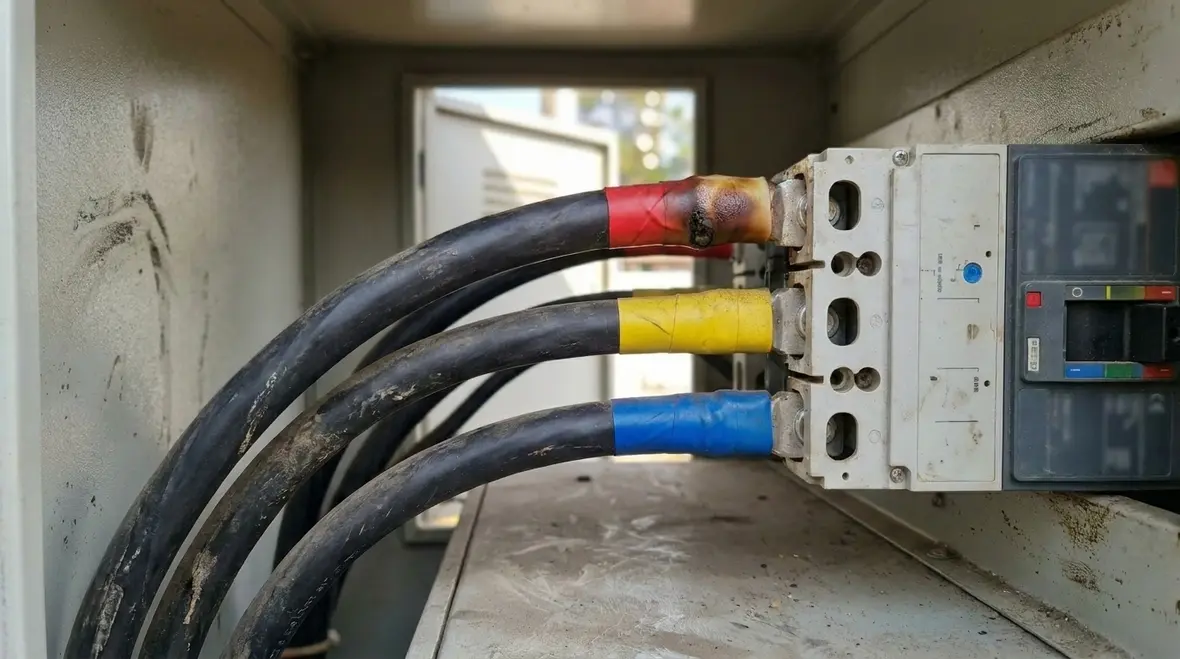
Many teams think overload means “too much power.” However, in commercial and industrial settings, overload often comes from imbalance. When one phase carries more current than the others, heat builds where it should not. Over time, this heat damages bus bars, lugs, and breaker contacts. Then the system compensates badly, and trips become more likely.
At the same time, voltage fluctuation can stress equipment and control systems. If a motor sees frequent dips, it draws more current to maintain torque. Similarly, sensitive electronics can behave poorly when voltage changes. That creates a chain reaction: equipment draws more, panels run hotter, and protective devices respond sooner. Our team covers this reality in detail in our guidance on voltage fluctuations in commercial and industrial environments, because the electrical story rarely stays in one chapter.
So, what causes the imbalance? Common drivers include:
- Single phase loads scattered across panels without a phase plan
- Tenant renovations that add equipment but do not rebalance downstream circuits
- Generators and transfer equipment that do not match the facility load profile
- Loose or aging connections that raise resistance and distort current flow
Once we identify the mechanism, we then align the solution to the building. That is where load balancing becomes practical, not theoretical.
Commercial load balancing techniques that reduce trips and heat
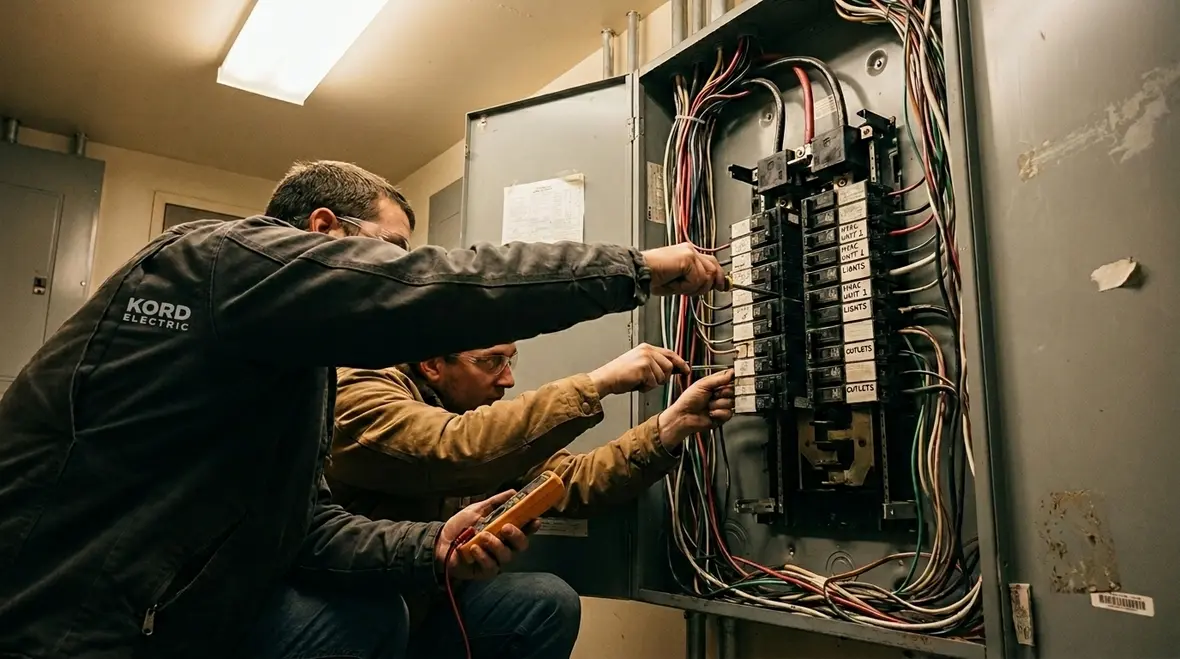
When we apply commercial electrical load balancing correctly, we spread demand across phases and pathways so no single component carries the burden alone. First, we perform a load analysis that maps connected devices to phases, panels, and major feeders. Next, we use that map to plan adjustments: circuit moves, panel tweaks, and sometimes targeted upgrades when the math proves the system needs more capacity.
Our technicians take a careful approach, because moving circuits without planning can create new problems. Therefore, we follow a sequence that protects operations:
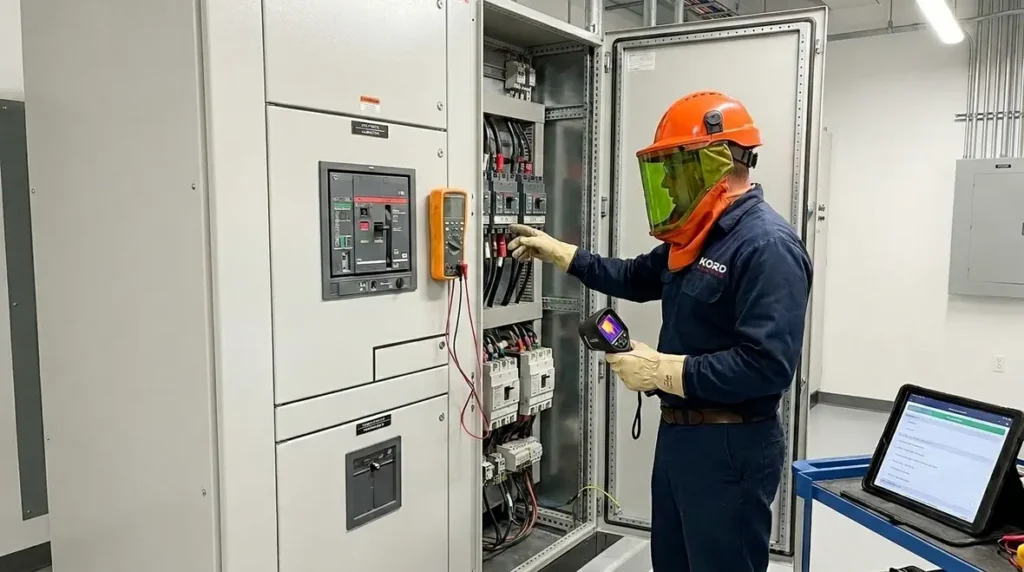
- Measure actual current per phase during representative operating windows
- Identify recurring peak loads and the panels that amplify imbalance
- Adjust distribution to equalize phase loading while respecting labeling and safety
- Review settings and coordination in protective devices so they trip when they should
- Test again after changes to confirm current balance and stable performance
Now, let us address the “popular belief” that load balancing is just a one time fix. That is like telling someone to reorganize a warehouse and then never touch it again. Warehouses grow, tenants change, and equipment ages. So we build balancing into a maintenance rhythm. For major property buildings, we also coordinate with operations teams so changes align with business hours. No one wants electrical work that feels like a surprise celebrity cameo, especially when it interrupts production.
Preventive inspection and electrical capacity planning that stays ahead
Overload prevention needs more than adjustments. It needs a plan. In commercial and industrial facilities, load patterns evolve, and the electrical system often follows behind. If we only respond to trips, the facility always pays the price in downtime, repairs, and shortened equipment life. Instead, we help teams shift to preventive inspection and capacity planning.
Our expert service staff typically focuses on these priorities:
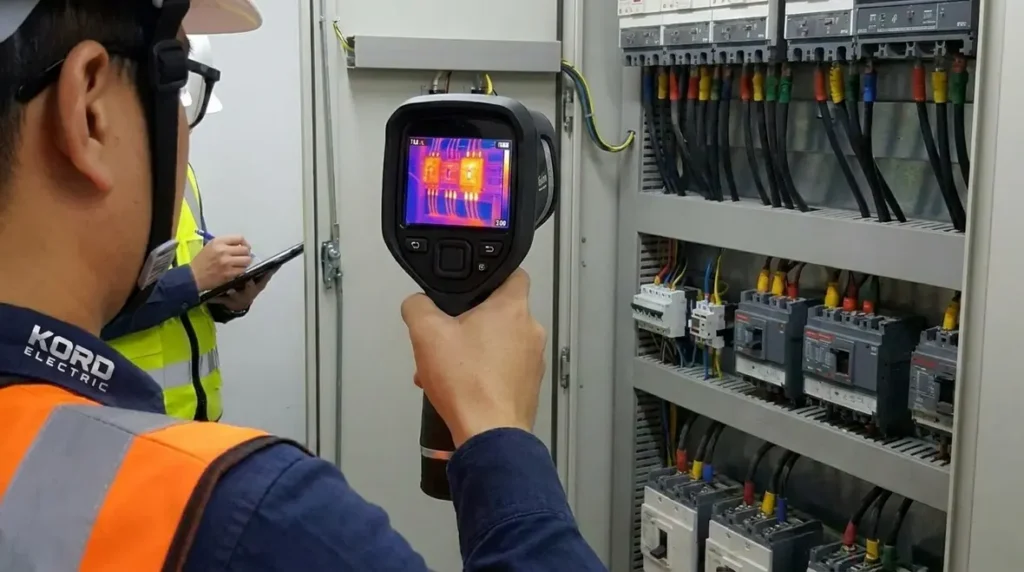
- Thermal and visual inspection for hotspots in panels, terminations, and switchgear
- Torque verification for connections that loosen with vibration and heat cycles
- Wiring and bus bar condition checks, especially in older infrastructure
- Coordination review for breakers and fuses to prevent nuisance trips and dangerous failures
- Scheduled updates after new equipment, renovations, or tenant improvements
Moreover, we treat voltage behavior as part of the overload story. When voltage swings, motors work harder, and controls react. Then the facility draws power it does not need, and heat rises in the places you do not see until it becomes expensive. We therefore connect our load balancing and inspection work to voltage stability planning, so protection targets the real conditions the building creates.
That is the calm, authoritative difference: we do not just “check the box.” We build an electrical approach that matches how commercial buildings actually run. For teams formalizing a broader strategy, this pairs naturally with a structured electrical preventive maintenance program that keeps inspections, testing, and documentation running on schedule.
How our technicians document results and keep leadership informed
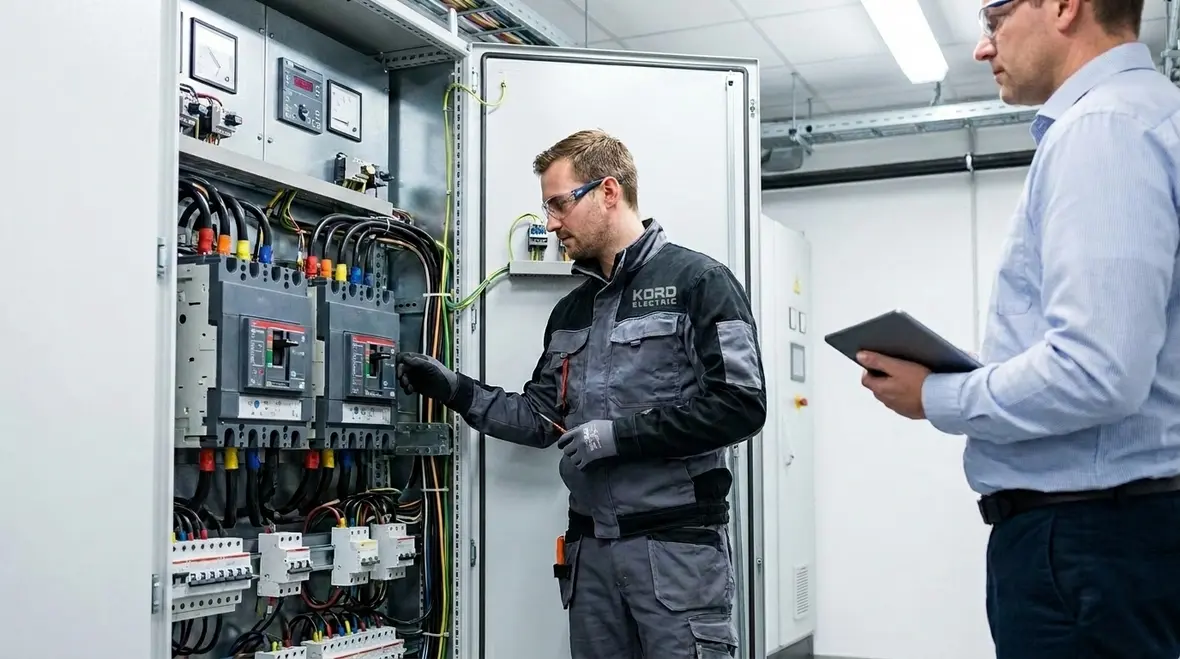
Facility leaders do not just need fixes. They need clarity. That is why our technicians document findings in a way that helps decision makers act. We explain what we measured, what it means, and what changes we recommend, in business friendly language. Then we provide a practical next step plan so leadership understands timeline, impact, and risk.
In our process, we commonly include:
- Before and after electrical readings that show phase current balance improvements
- Notes on where heat risk exists and which connections need attention
- Clear recommendations for upgrades, repair priorities, or future monitoring
- Operational guidance that reduces disruption during adjustments
- Support for planning around building growth, seasonal peaks, and tenant changes
And when we deliver explanations, we keep them calm and direct. If someone asks, “Can you just tell me the simplest answer,” we do not argue. We tell it. But if the simplest answer risks missing a hidden cause, we also explain why a deeper approach matters. That way, leaders make decisions with confidence instead of hope.
FAQ: Preventing overloads in commercial facilities
Final word: reduce risk now with Kord Electric
If your commercial or industrial facility faces recurring trips, hotspots, or unstable electrical behavior, do not wait for a bigger failure. Kord Electric helps major property buildings prevent electrical overloads with thorough inspections, commercial load distribution improvements, and clear reporting leadership can act on. Our technicians explain the plan step by step, then we verify results with testing. Call Kord Electric today and let us balance your electrical system before the next spike turns into downtime.
For facilities ready to move from reactive fixes to a long term strategy, pairing commercial electrical load balancing with a structured electrical preventive maintenance service plan gives your team a clear roadmap. Together, these programs help prevent overloads, stabilize voltage, and protect the electrical backbone that keeps your business running.
If your load challenges tie into frequent voltage swings, you can also explore Kord Electric’s focused support for voltage fluctuations in commercial and industrial facilities. Addressing both load balance and voltage stability creates a more complete defense against overloads, nuisance tripping, and equipment damage.