Commercial Electrical Load Testing for Safe Power
Why commercial electrical load testing keeps commercial power safe
At Kord Electric, we rely on commercial electrical load testing to protect commercial and industrial facilities before small problems grow into big outages. We test how electrical systems behave under real operating conditions, not just on paper or with a quick visual inspection. Then our expert technicians compare the results to safe performance targets and make practical recommendations that property managers and facility teams can act on immediately. In other words, we help others avoid the electrical version of finding out a smoke alarm is loud but useless after the fire starts. And yes, that is as funny as it sounds, except it is not funny when tenants are calling.
How load testing prevents hidden hazards in major properties
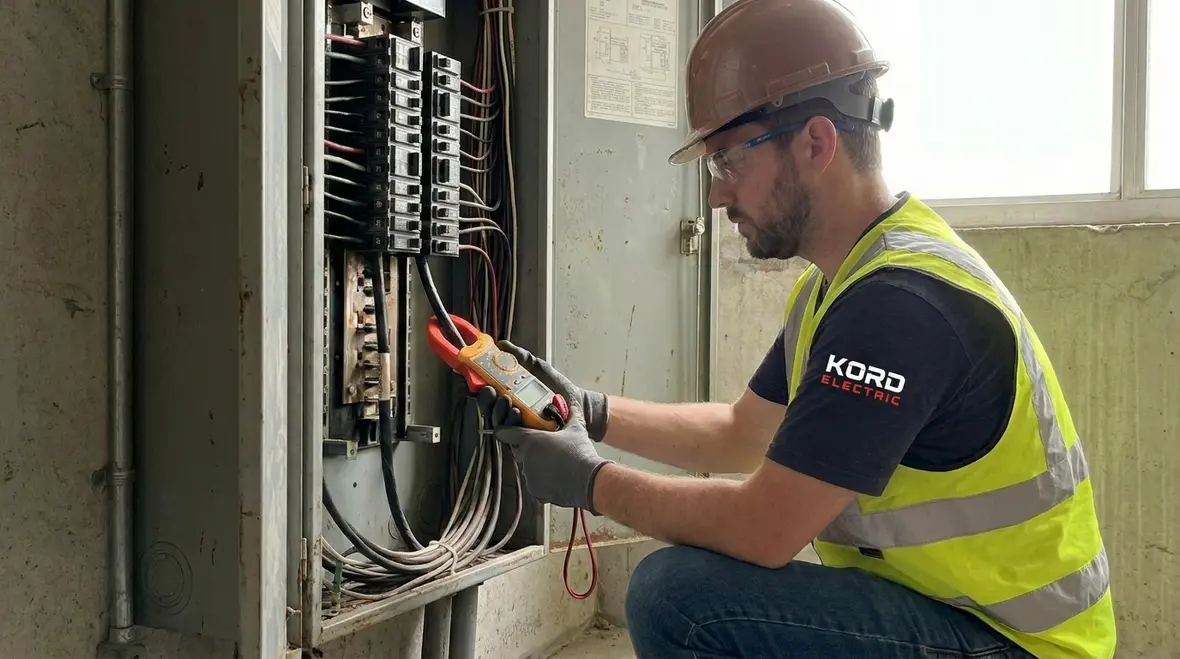
Electrical equipment can look fine while still running out of tolerance. For example, a panel may pass a basic check, yet components inside have higher resistance, worn connections, or overheating risk under load. Commercial electrical load testing helps uncover those hidden issues by applying and measuring the electrical stress the system actually experiences in daily work.
As a result, we can spot hazards early, including thermal risk at terminations, unstable voltage under varying demand, and overloaded feeders. Furthermore, we identify where current flow deviates from expected patterns, which often points to loose connections, aging conductors, or equipment that no longer performs as designed. When others ignore these signals, they usually discover the problem the hard way, during peak production hours or right when a building needs the most reliable power.
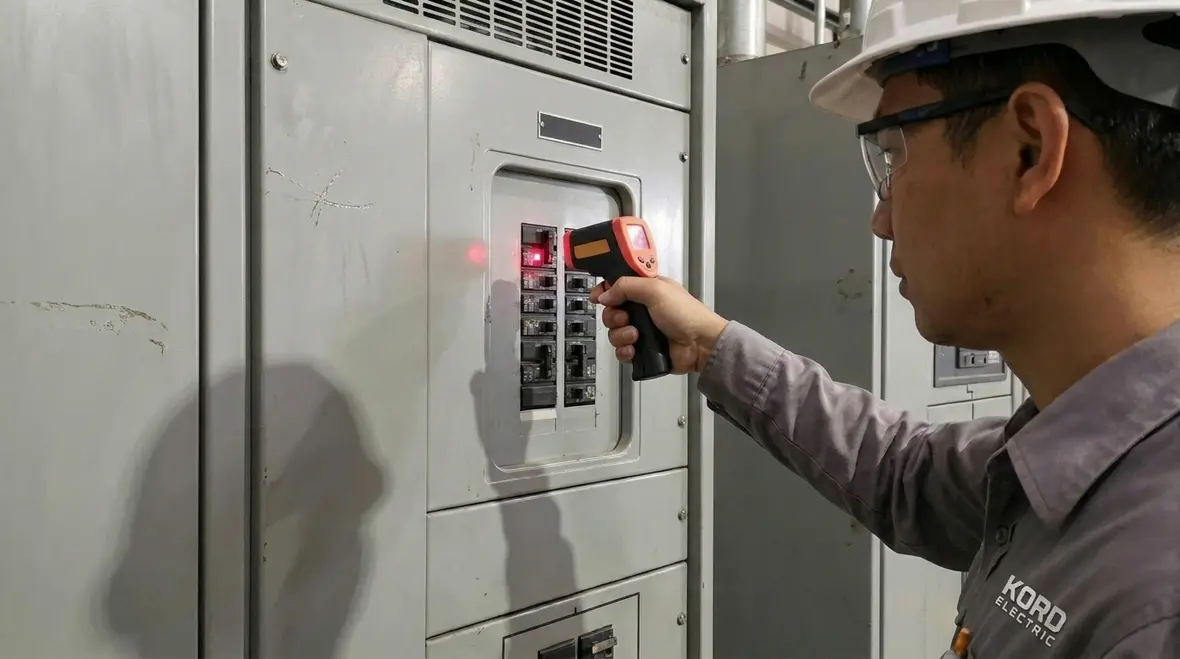
What our technicians measure during real-world power stress
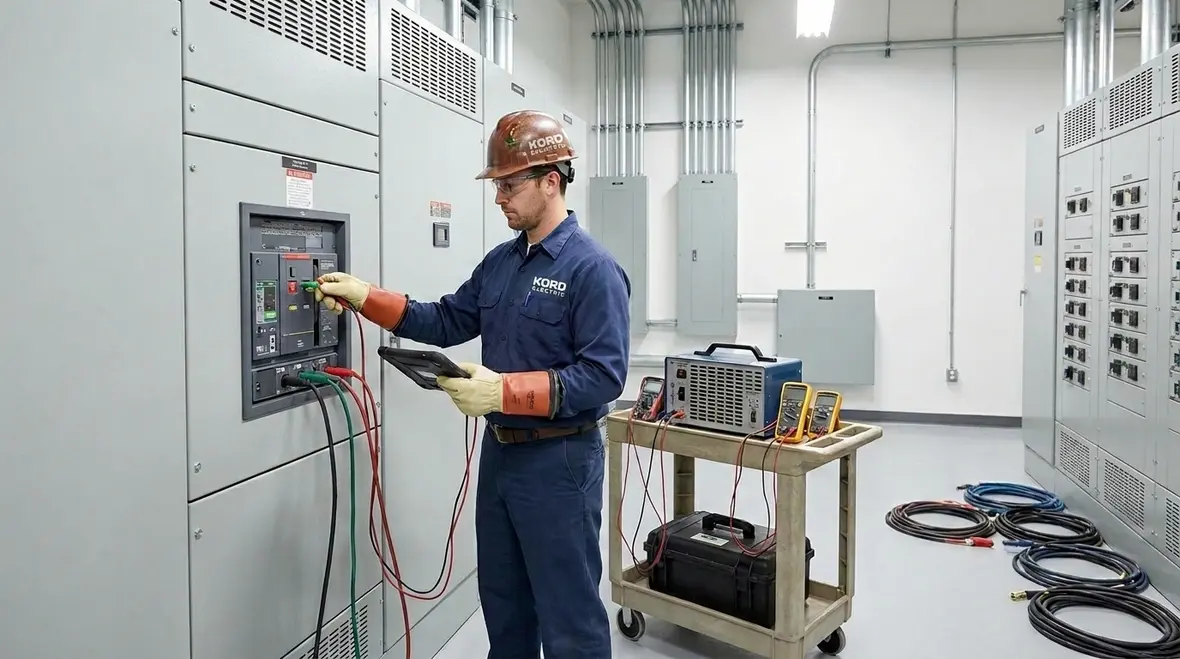
We send our experienced service staff to commercial and industrial sites prepared to measure like the system is on a performance stage, because it is. First, they evaluate load levels and operating conditions so testing reflects true usage. Then they verify key electrical parameters that tie directly to safety.
Depending on the site and the equipment involved, our technicians may focus on voltage performance, current draw, conductor behavior, and temperature indicators where applicable. They also look at power quality concerns, because poor power quality can accelerate equipment aging. Moreover, we review results in context, not isolation, so our team connects findings to how the facility operates and why the building might see nuisance trips, equipment derating, or premature wear.
Just like a mechanic does not judge an engine by how it looks in the driveway, we do not judge electrical systems by how they appear. We judge them by how they behave.
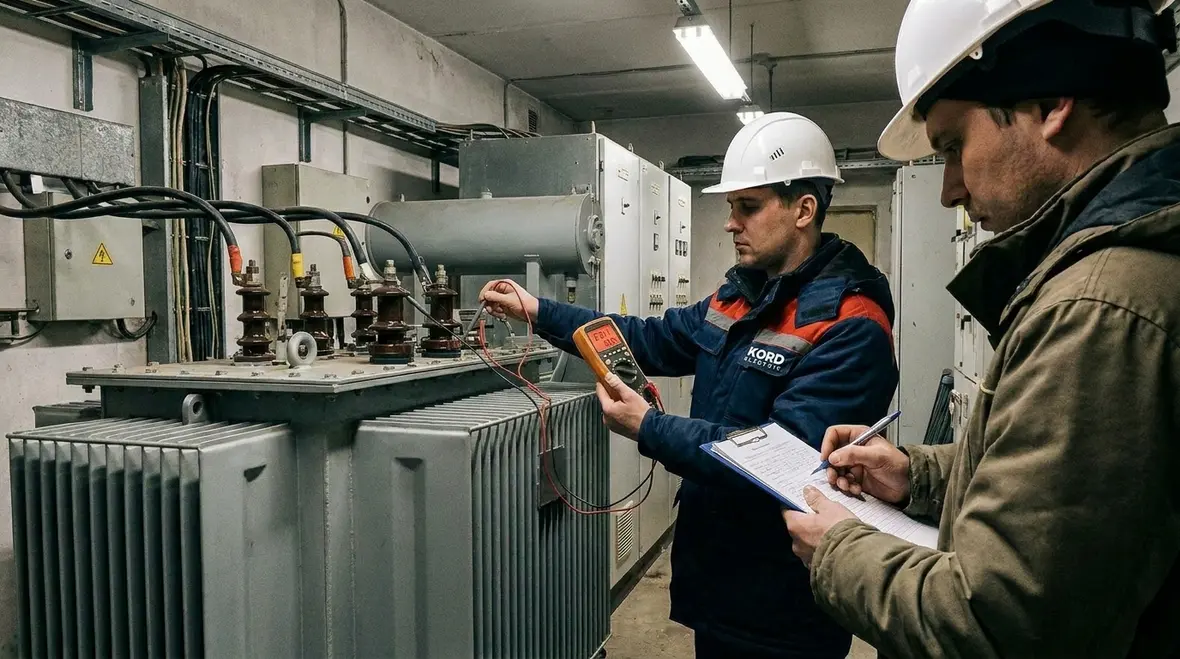
Voltage fluctuations and why they matter for safety
Commercial environments often include motors, HVAC systems, elevators, production machinery, and large lighting loads that change throughout the day. Therefore, voltage can rise and fall, sometimes enough to stress sensitive equipment. If the swings become severe, they can lead to overheating, insulation breakdown, and poor performance in drives, controls, and power supplies.
Kord Electric helps facilities address these risks by looking at the same kind of issues discussed in our article on voltage fluctuations in commercial and industrial settings. When voltage stability drops, the impacts tend to spread. For instance, motors may draw higher current, which can increase heat at connections and create a feedback loop of added stress. Additionally, electronic loads can experience errors, shutdowns, or shortened service life.
To keep things steady, we evaluate where the fluctuations come from and how the electrical system responds under load. Then we recommend targeted actions such as load balancing improvements, equipment adjustments, or corrective work that restores stability.
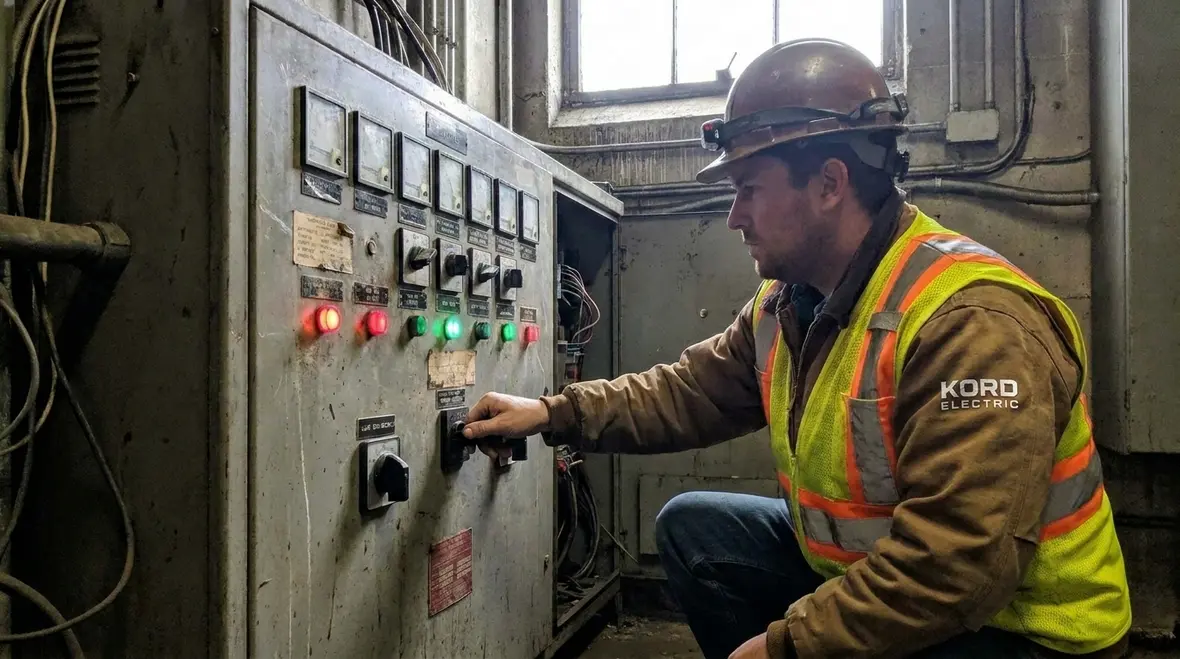
How testing supports compliance and reduces downtime risk
Safety is the goal, but operational reality matters. Major property buildings and industrial sites often cannot schedule long shutdown windows without serious cost. So we structure our process to deliver clear data with minimal disruption to operations. As we test, we document conditions so teams can understand what changed, what performed well, and what needs attention next.
Beyond immediate safety, load testing supports risk management. It gives owners and facility leaders evidence that electrical components meet expected performance and that protective systems function as intended. Meanwhile, if someone tries to fix a problem without test data, they often end up replacing parts that were not the root cause. That costs time, money, and patience.
We bring the calm approach: measure first, then act. And unlike movie detectives who guess based on vibes, our technicians rely on real readings, trend context, and engineering judgment.
Step-by-step approach we use for commercial and industrial sites
Every facility has different loads, equipment types, and operating schedules. Still, our process follows a disciplined path so results remain useful and repeatable.
- Discovery and planning: We review the site layout, equipment list, and operational timing. Then we coordinate with facility teams so the test matches real demand.
- Baseline checks: We confirm system readiness and identify any constraints that could affect safe testing.
- Load application and measurement: We apply appropriate test load conditions and measure how the system responds under stress.
- Analysis and reporting: Our team interprets the results and connects them to safety and performance risk. We also highlight recommended next steps.
- Action planning: We advise on corrective work, ongoing monitoring, or follow-up testing, based on what the system actually shows.
As a result, commercial and industrial customers do not get a vague report. Instead, they get actionable insights tied to their electrical reality. And if the building throws them a curveball, we handle it like professionals, not like someone trying to fix Wi-Fi by turning the router off and on while singing karaoke.
FAQ: Commercial electrical load testing and safety
Linking load testing with long-term electrical maintenance
Commercial electrical load testing works best when it is not a one-time event but part of a broader electrical maintenance strategy. Test data tells you how the system behaves today, while structured maintenance keeps those results from drifting in the wrong direction over time.
Many large properties pair load testing with dedicated electrical preventive maintenance services, so emerging issues are caught early, documented clearly, and corrected before they lead to outages or safety incidents. When commercial electrical load testing identifies stressed equipment or marginal performance, a preventive maintenance program provides the schedule, manpower, and follow-through to address those findings methodically instead of waiting for failure.
For commercial and industrial facilities that operate around the clock, this combination of real-world testing and disciplined maintenance becomes a quiet safety net. Teams gain better visibility into their infrastructure, capital plans become more predictable, and surprise shutdowns become far less likely.
When load testing uncovers urgent issues
Most commercial electrical load testing projects lead to planned upgrades and scheduled corrections, but every so often, the readings tell a different story. A breaker running far hotter than expected, a feeder that sags during peak demand, or a voltage profile that shows dangerous drops can all indicate conditions that need fast attention.
In those cases, having a trusted partner ready for rapid response matters. When test data reveals a serious safety concern or an imminent risk of outage, Kord Electric’s dedicated emergency electrical services team can step in to stabilize the system, perform urgent repairs, and bring the facility back into a safe operating range. Instead of hoping the problem holds off until the next slow season, property managers get a clear plan and a crew that knows both the building and its test history.
This is where commercial electrical load testing proves its real value. It does not just produce a stack of readings; it connects directly to practical steps that protect people, equipment, and operations when it matters most.
Clear safety starts with Kord Electric
Commercial and industrial facilities deserve power that performs, not power that merely survives. At Kord Electric, our expert technicians use commercial electrical load testing to uncover safety risks early, especially in major property buildings where uptime matters. If your facility faces voltage instability, nuisance trips, or aging electrical systems, we can plan a focused testing and reporting effort that supports confident decisions. Contact us today to schedule a consultation, and let us help you keep the lights steady, the equipment safe, and the headaches away.
If your team is also planning upgrades, expansions, or new equipment that will increase demand, now is the perfect time to combine commercial electrical load testing with a broader review of your electrical capacity. From voltage fluctuation analysis to structured preventive maintenance, Kord Electric’s commercial and industrial services are built to keep critical systems online, compliant, and ready for what comes next.
Whether you manage a single large facility or an entire portfolio, partnering with a commercial electrical contractor who understands both real-world load behavior and long-term maintenance can turn power from a constant worry into a quiet, reliable asset.
Ready to put your electrical system to the test—in the best possible way? Start with commercial electrical load testing, then connect the results to targeted services like preventive maintenance and emergency electrical support so your building stays ready for whatever the next shift, season, or expansion brings.