Commercial Electrical Load Testing for Safety
When a commercial or industrial facility depends on steady power, commercial electrical load testing is not a “nice to have.” It is the kind of safety step that keeps failures from turning into headlines. At Kord Electric, we use load testing to check how electrical systems perform under real operating demand, not just under ideal lab conditions. As a result, we help facility managers spot overheating, hidden weakness, and unstable voltage before it creates risk for people, equipment, and production. And yes, we know “electrical testing” can sound about as exciting as watching paint dry. However, in the field, it is the calm, methodical work that prevents the moment when the building lights flicker like a horror movie.
Why commercial electrical load testing matters for safety
In commercial and industrial buildings, electrical load changes throughout the day. For example, HVAC cycling, process equipment, lighting, and dock operations can shift demand fast. Therefore, the electrical system must handle those swings while staying within safe limits. Commercial electrical load testing helps verify that the wiring, panels, transformers, and connections can carry current without excessive heat or voltage drop.
Heat is the silent troublemaker. Over time, loose terminations, worn bus bars, or degraded insulation can raise resistance. Then, as load increases, temperature can rise quickly, which can damage components and, in worst cases, create fire hazards. Furthermore, unstable power can stress motors and drives, which increases the chance of trips and failures. In other words, load testing does not just look for problems. It helps keep the system in a safe operating zone.
Our experienced technicians at Kord Electric explain what they see, step by step. They do not talk in riddles. They show facility teams what readings mean and where the risk comes from. So instead of guessing, others get a clear, grounded view of system health.
What the testing actually checks inside your electrical system
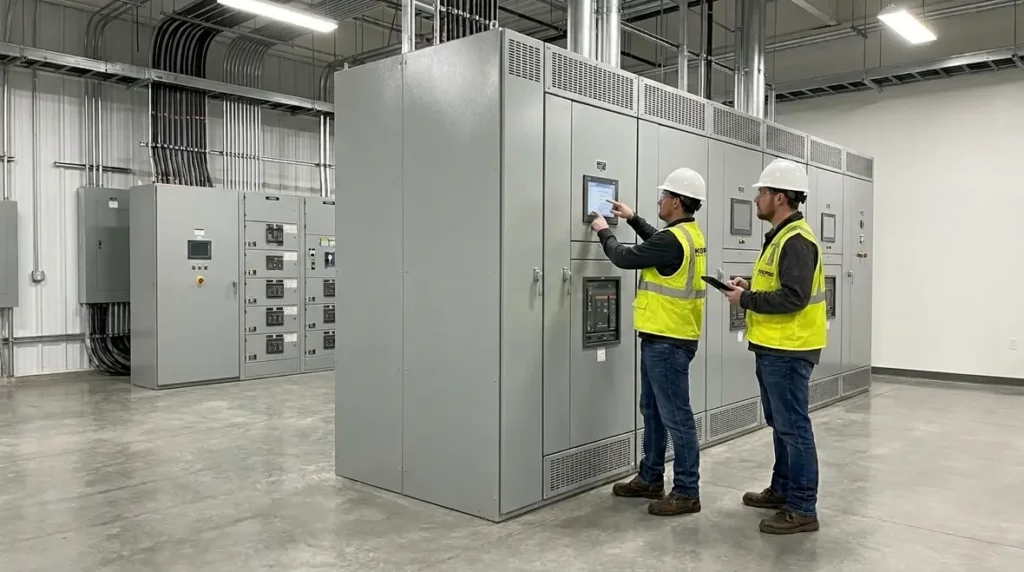
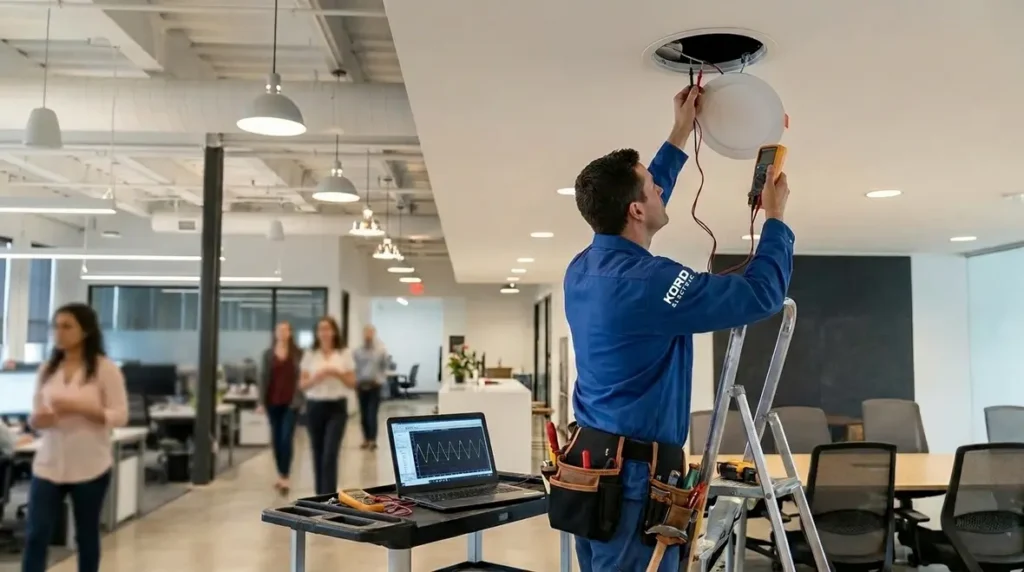
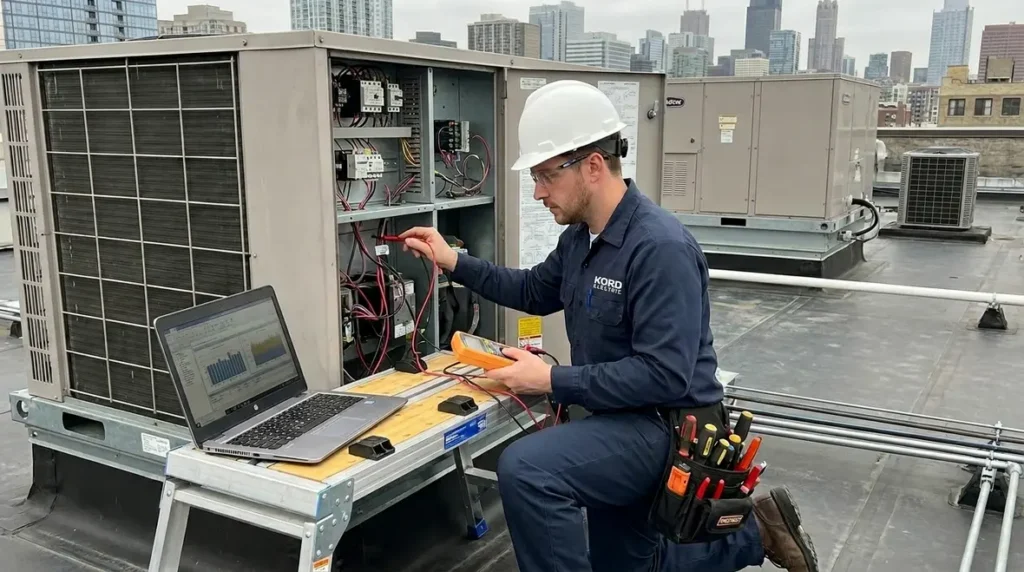
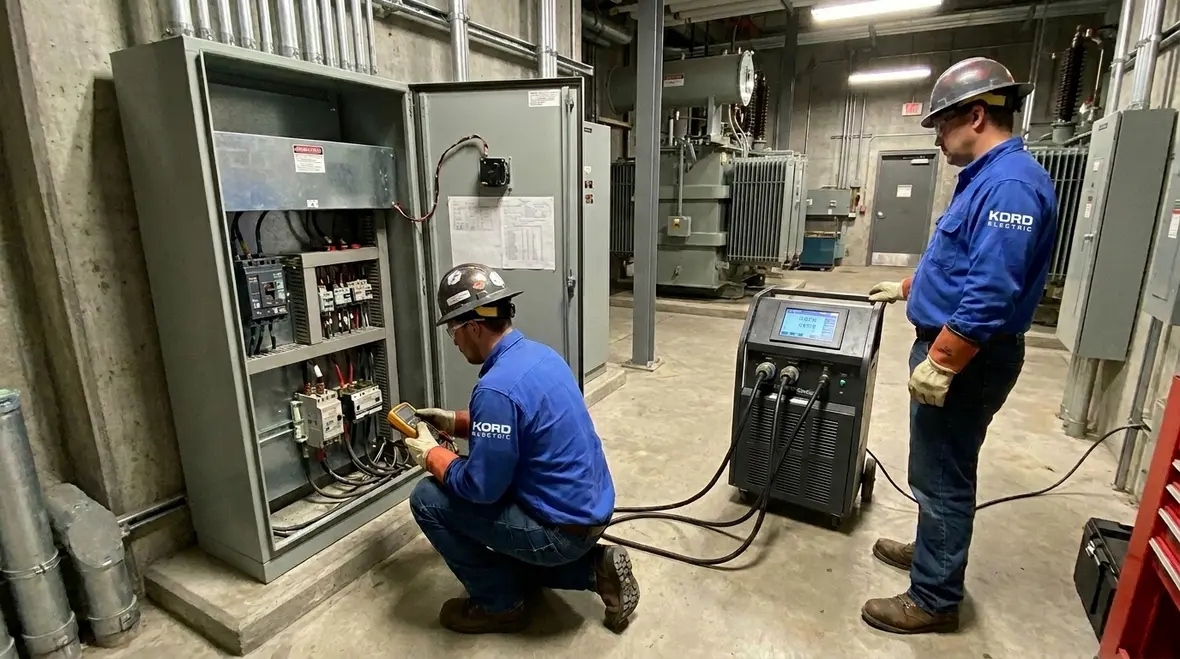
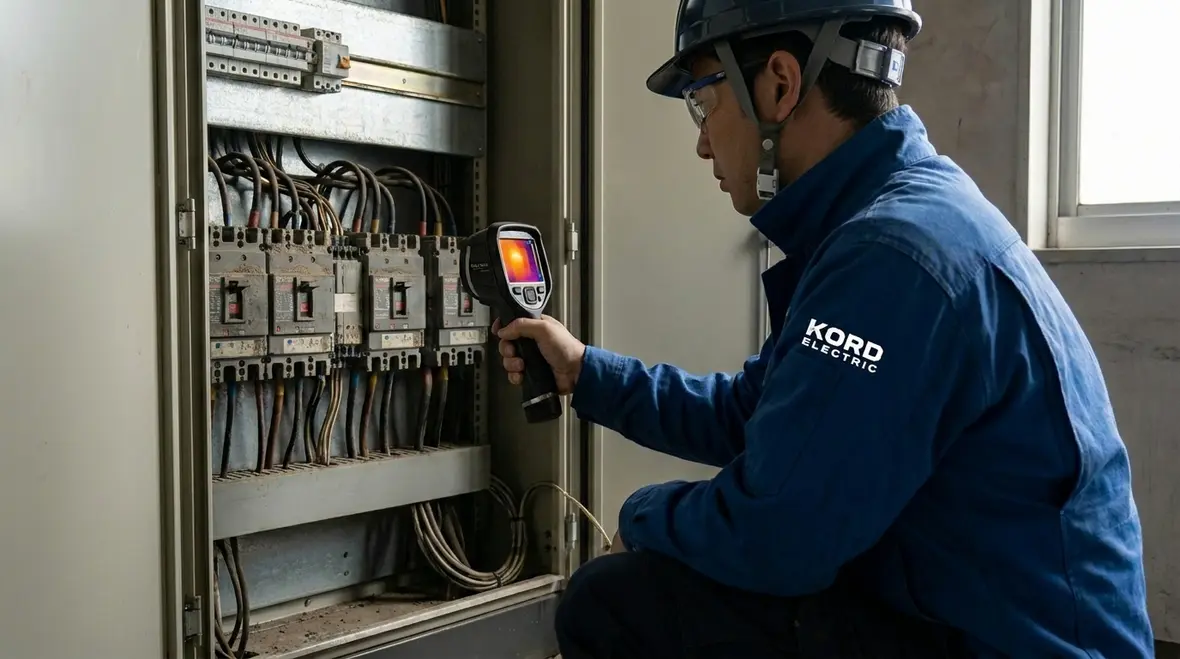
A proper test does not mean turning everything on and hoping for the best. Instead, we evaluate performance while the system carries meaningful demand. That includes checking current balance across phases, measuring voltage under load, and verifying how equipment responds during operation. Because the real world includes both stable and stressed periods, we plan testing to reflect how the facility actually runs.
During load testing, we focus on the points that usually hold the most risk in major property buildings. That can include:
- Panel and bus connections to detect loose or aging terminations
- Transformers to confirm consistent voltage and efficient operation
- Motor and feeder circuits to verify current draw matches expected behavior
- Grounding and bonding paths to support safe fault clearing
- Voltage regulation by observing changes as load increases
Then, we document the results clearly, so others can track trends over time. In addition, when we see anomalies, we explain likely causes and recommend the next steps. Think of it like a health check for an electrical grid inside a building. Nobody waits for a full breakdown before seeing the doctor. We just apply that logic to power.
How load testing helps prevent outages and overheating
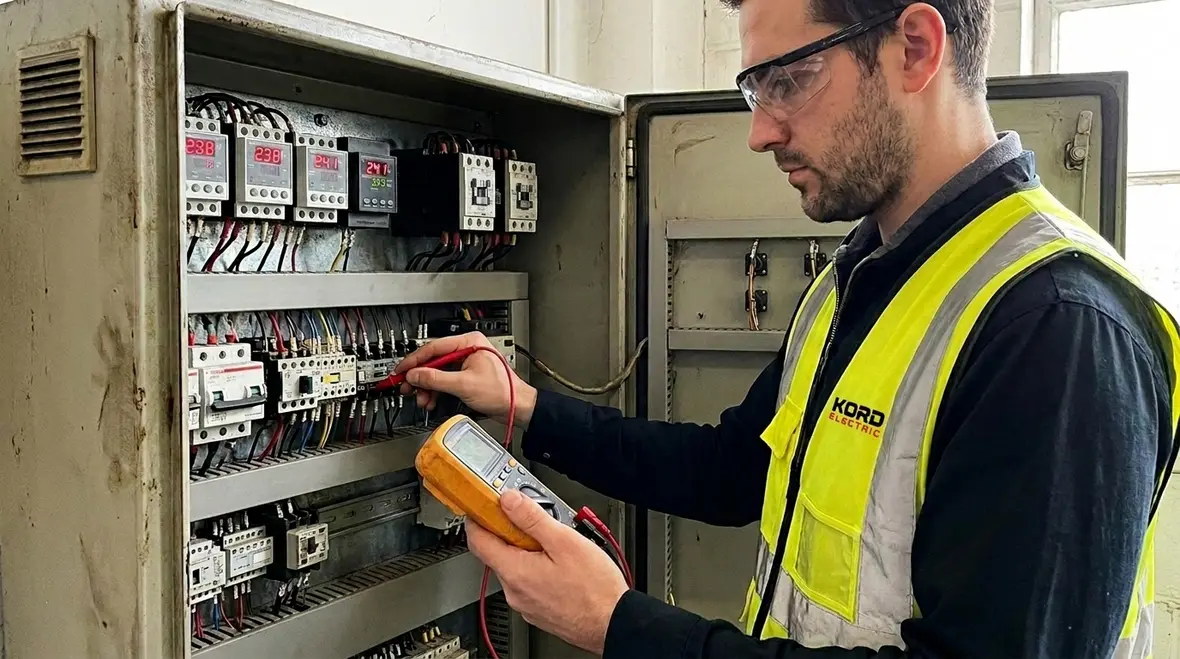
Outages rarely come with a warning label. Typically, they appear after a slow decline: connections loosen, insulation dries out, or components age beyond their original design margins. As demand rises, the weak spot heats more than the rest, and that heat accelerates the decline. Consequently, failures can snowball, taking down key systems and shutting down operations.
Load testing helps break that cycle. First, it identifies voltage drop patterns that can indicate high resistance in conductors or connections. Next, it highlights current imbalance between phases, which can point to uneven loads or failing components. When electrical systems run out of balance, motors draw more current and can overheat. Then, protective devices work harder, trips become more frequent, and the facility starts losing production time.
Moreover, overheating inside panels or near terminations can happen even when a building “still works.” That is the tricky part. A system can keep running until it cannot. We prefer catching issues while they still allow safe corrections, not after the damage already traveled through the hardware.
At Kord Electric, our expert service staff guides facility owners on what matters most. They also share practical steps for maintenance planning, because a one time test is helpful, yet a smart program is what reduces risk over the long run.
Voltage fluctuations in commercial settings and why you should care
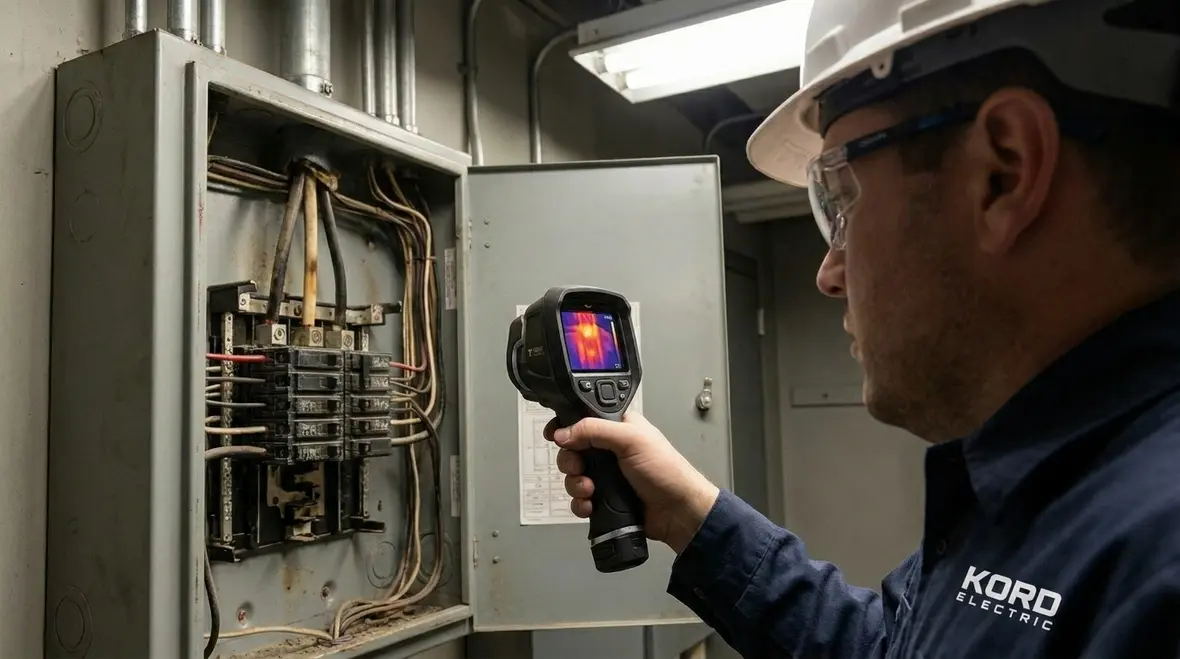
Voltage quality affects equipment life and safety. When voltage fluctuates, sensitive electronics can experience stress, and motor performance can shift. Even if the building stays online, repeated fluctuations can increase wear on components. This is especially true in commercial and industrial facilities where large motors, variable frequency drives, and process loads move in and out of operation.
We also address how fluctuations show up in real buildings. If you want a deeper look at how these issues relate to commercial and industrial conditions, our guidance on voltage fluctuations covers what they can do and why timely checks matter. You can review the details here: https://kordelectric.com/voltage-fluctuations-commercial-industrial/.
Importantly, load testing helps connect voltage behavior to system condition. When we measure voltage while loads run, we can see how the system responds under actual demand. Then we can distinguish between utility supply issues and internal building problems such as poor connections, undersized feeders, or aging transformers. That distinction matters, because it determines which repairs prevent repeat failures.
And just to keep it real, nobody wants to blame the power company for an internal connection that looks fine from far away and acts terrible up close. We handle the truth with measurements, not guessing.
How Kord Electric schedules testing for major property buildings
Commercial and industrial sites often cannot shut down for a long time. Therefore, we plan load testing with minimal disruption and clear communication. We coordinate with facility managers, review equipment operation, and select a testing approach that matches the building’s normal run patterns. Because every facility differs, we do not use a one size method.
Our technicians also explain the plan before we start. They walk others through what we will measure, when we will run loads, and what results will mean for safety and reliability. Then, after the test, we discuss findings in plain language.
We keep our work focused on the kinds of customers that others expect from a specialized team. At Kord Electric, we only target commercial and industrial facilities and major property buildings. That focus helps us stay sharp on the requirements, risk profiles, and operational realities those sites face.
To illustrate, if a facility runs multiple shifts, we may plan testing to capture demand changes. If the building relies on critical systems, we design the testing window to protect uptime while still creating meaningful load conditions. In addition, we help clients decide whether they need follow up work such as connection inspection, thermal checks, torque verification, or targeted corrective maintenance.
Common load testing findings and what comes next
After a commercial electrical load assessment, we often see a short list of issues that keep repeating across sites. While every building has its own story, the patterns can be familiar.
- Voltage drop higher than expected, often tied to conductor or connection resistance
- Phase imbalance, which can lead to motor stress and uneven heating
- Overheating indicators around panels or terminations during load
- Transformer regulation concerns based on how voltage behaves under demand
- Protection device nuisance tripping due to abnormal operating conditions
Next, we help others interpret whether a finding is a safety risk today or a condition likely to worsen. Then we recommend next steps that fit the facility’s operational needs. That might include tightening and inspecting connections, cleaning and checking bus interfaces, correcting load distribution, or scheduling additional targeted inspection.
We also support a continuous approach. Electrical safety does not live in a single report. It lives in how the facility responds to risk, how maintenance stays consistent, and how the system stays within safe operating margins.
So yes, load testing can feel like extra work in the short term. Yet in the long term, it behaves like a seatbelt. You do not celebrate it every day. But when you need it, you are grateful it existed.
FAQ about commercial electrical load testing
Why we recommend testing now instead of “later”
Later is where problems grow legs and wander into your downtime calendar. Electrical systems drift out of spec due to aging, vibration, moisture, installation history, and shifting usage. Then, when demand peaks, the weak parts show up first. If others wait too long, the facility might still operate until the day it suddenly does not.
We encourage our clients to treat load testing as a safety and reliability milestone, not a reaction. When you test at the right intervals, you reduce uncertainty. You also reduce the odds of surprise failures. And because we measure performance under load, our findings connect directly to how the building actually behaves.
Our service staff explains results clearly and helps plan next steps. That way, decisions do not depend on guesswork or vibes. We provide data, context, and a practical path forward.
If your facility is already seeing warning signs like unexplained breaker trips, hot spots on panels, or recurring voltage fluctuations, it may also be time to pair commercial electrical load testing with a structured program such as electrical preventive maintenance. Together, these approaches create a safer, more predictable electrical environment for commercial and industrial properties.
Call Kord Electric for load testing that keeps your building safe
If you run a commercial or industrial facility, you deserve electrical testing that reflects real operating conditions. Kord Electric provides commercial electrical load testing designed for major property buildings, with technicians who explain findings in clear language and recommend the right next steps. Contact us to schedule an evaluation, understand how your system performs under load, and reduce the risk of overheating, voltage issues, and unexpected downtime. When it comes to power, calm prevention beats dramatic repairs every time. Reach out today.
For facilities that need fast help with existing problems as well as long term prevention, Kord Electric also offers dedicated emergency electrical services to stabilize systems, protect people and property, and bring critical equipment back online safely.
Whether you are planning commercial electrical load testing as part of a proactive reliability strategy or responding to recent warning signs, our team is ready to help you move from uncertainty to clear, actionable insight.
When you are ready to move from “we think it’s fine” to “we know it’s safe,” Kord Electric is one call away.