Commercial Electrical Troubleshooting Checklist Guide
At a busy commercial site, electrical troubles do not politely wait for business hours. That is why a solid commercial electrical troubleshooting checklist belongs in every facility manager’s toolkit. In our experience, the best checklist starts with safe access, quick visual checks, and a simple plan for verification. Then it moves into how to isolate the issue, log findings, and decide whether the fault is routine or risky. Finally, it ends with next steps for repair, documentation, and prevention.
In this article, we walk through that same checklist approach in real time, so facility teams can choose when a DIY effort makes sense and when it is time to call Kord Electric. Because sure, some problems are like a loose cabinet latch. Others are like opening a door you should not touch. And we all know what happens when someone tries anyway.
Commercial electrical troubleshooting checklist: start with the facility’s reality
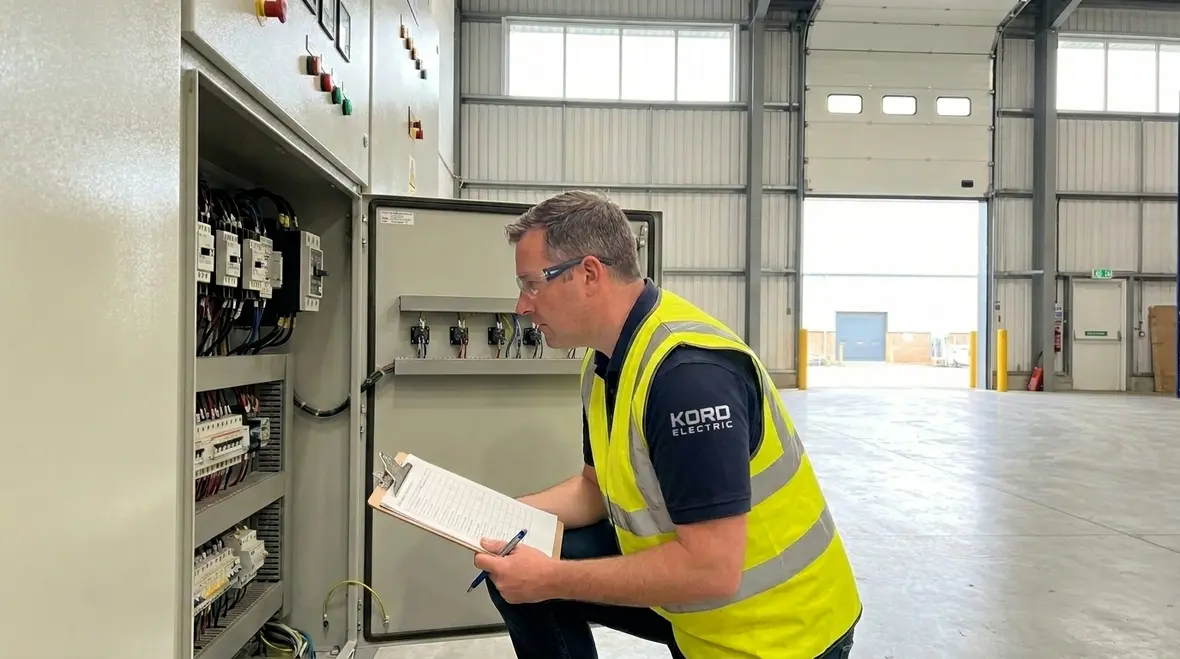
Facility managers face different electrical worlds across warehouses, offices, manufacturing spaces, and major property buildings. Therefore, we recommend treating troubleshooting like a controlled process, not a guessing game. First, confirm the complaint. Next, confirm the equipment. Then, confirm the conditions that existed before the failure. If a panel has been recently serviced, or if the building schedule changed, those details matter.
From there, our technicians typically guide teams through this sequence:
- Review the symptom and timeline, including when lights flickered, motors tripped, or alarms appeared
- Inspect for obvious issues like damaged conduit, moisture, burnt odor, or loose terminations
- Check indicators such as breaker position, lockout status, and relay lights
- Verify whether the problem is localized or spreading across floors, loads, or circuits
- Document findings immediately, because memory fades but logs do not
We also tell teams to think in layers. Even if it seems like one outlet or one room, commercial electrical systems act like neighborhoods. A problem in one “house” can affect everyone on the street.
Know when DIY is reasonable for commercial sites
We do not discourage hands on work. Instead, we encourage smart boundaries. DIY can be reasonable when the issue is low risk, the facility staff already understands the system, and the work does not require exposing energized components. In other words, if the task involves reset checks, reviewing operating schedules, or confirming mechanical conditions without opening electrical equipment, it often fits the “safe DIY” bucket.
Examples that commonly stay within safe DIY territory include:
- Replacing a failed plug in a non critical area only if it does not involve opening electrical panels
- Resetting a tripped breaker only after confirming the circuit load did not change unexpectedly
- Checking for simple causes such as tripped disconnects, faulty lamps that cause misleading circuit symptoms, or HVAC controls that trigger overload conditions
- Inspecting cable runs for physical damage from construction traffic or storage equipment
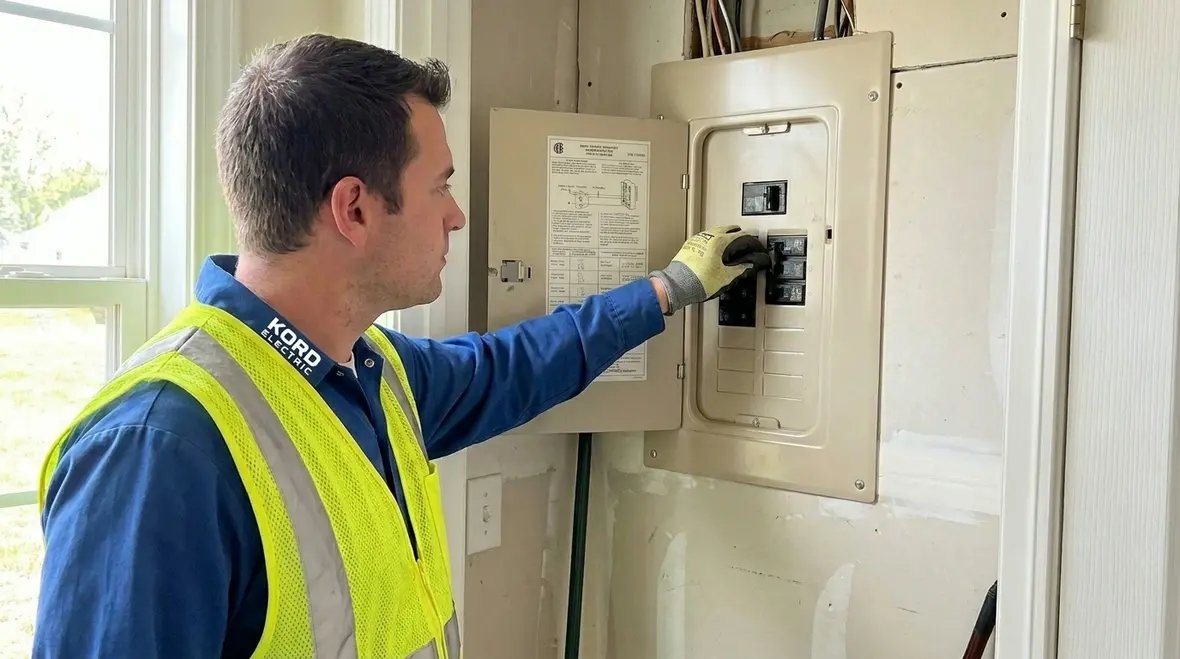
However, if anyone on site needs to remove covers on energized gear, bypass interlocks, or “just test it real quick,” DIY stops being a hobby and becomes a hazard. Also, shortcuts tend to come back later with interest rates and a polite invoice. Nobody likes that.
When a pro call prevents downtime and risk
Many facility managers feel pressure to restore power fast. Understandably, downtime costs money. Even so, some signs mean the risk outweighs the speed. When those conditions show up, calling Kord Electric is the most efficient move because our expert service staff can diagnose faster and prevent repeat failures.
We typically advise a professional response when the trouble involves any of the following:
- Repeated breaker trips with no clear load explanation
- Burning smell, smoke, discoloration, or hot spots on busbars or terminations
- Intermittent faults that appear with vibration, humidity, or after equipment cycles
- Faults connected to transformers, switchgear, ATS units, large motors, or emergency systems
- Any situation where the crew must open a panel, test high voltage equipment, or verify insulation conditions
And here is the calming part. When a trained team handles the work, the facility gains clarity. Instead of guessing, we test, verify, and document. That means the next time a similar issue appears, the team does not start over. They build on known results.
If your symptoms point to deeper voltage issues or repeated nuisance trips across equipment, it can also help to review specialized guides like our discussion of voltage fluctuations in commercial and industrial facilities. That way, your commercial electrical troubleshooting checklist connects to big picture power quality decisions, not just one-off resets.
How our technicians guide facility teams step by step
We work alongside facility managers and building operations teams, and we explain what we see in plain language. Our technicians do not just swap parts and move on. Instead, we bring a methodical approach that helps others learn the “why,” not just the “what.” Meanwhile, our expert service staff can help set up a troubleshooting process that matches the specific building.
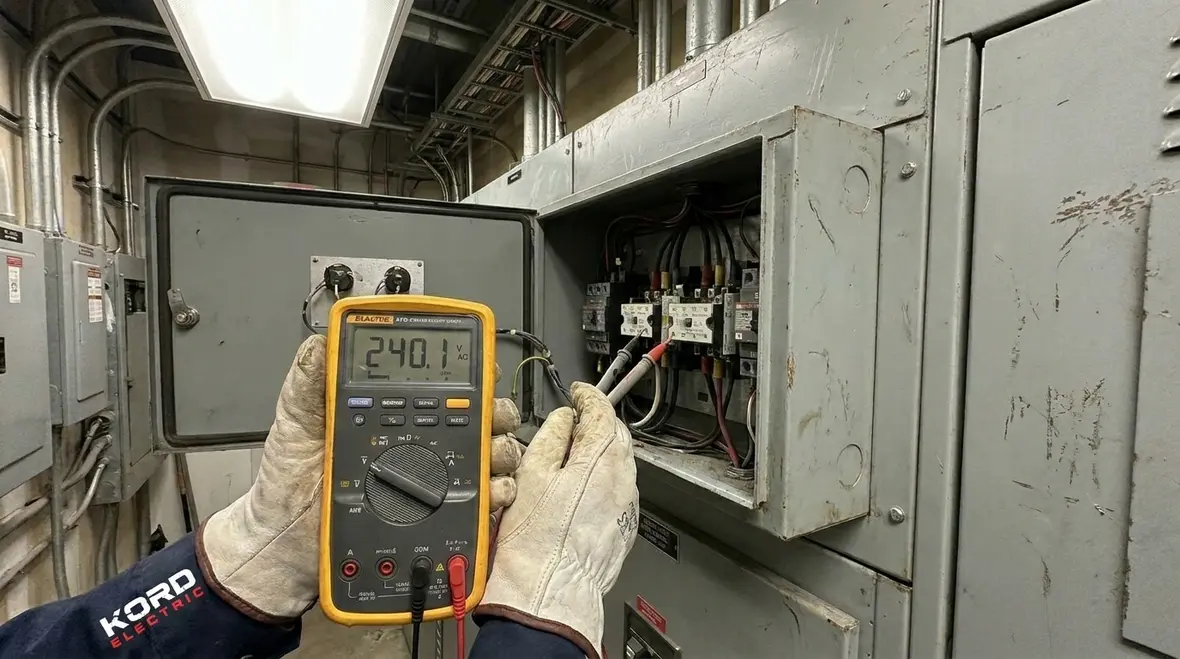
During a typical commercial response, we start by gathering information. Then we verify electrical data using safe, appropriate testing. After that, we connect the findings to system behavior. For example, we look for patterns that explain nuisance trips, load imbalance, or grounding issues. Then we propose a fix and a prevention plan.
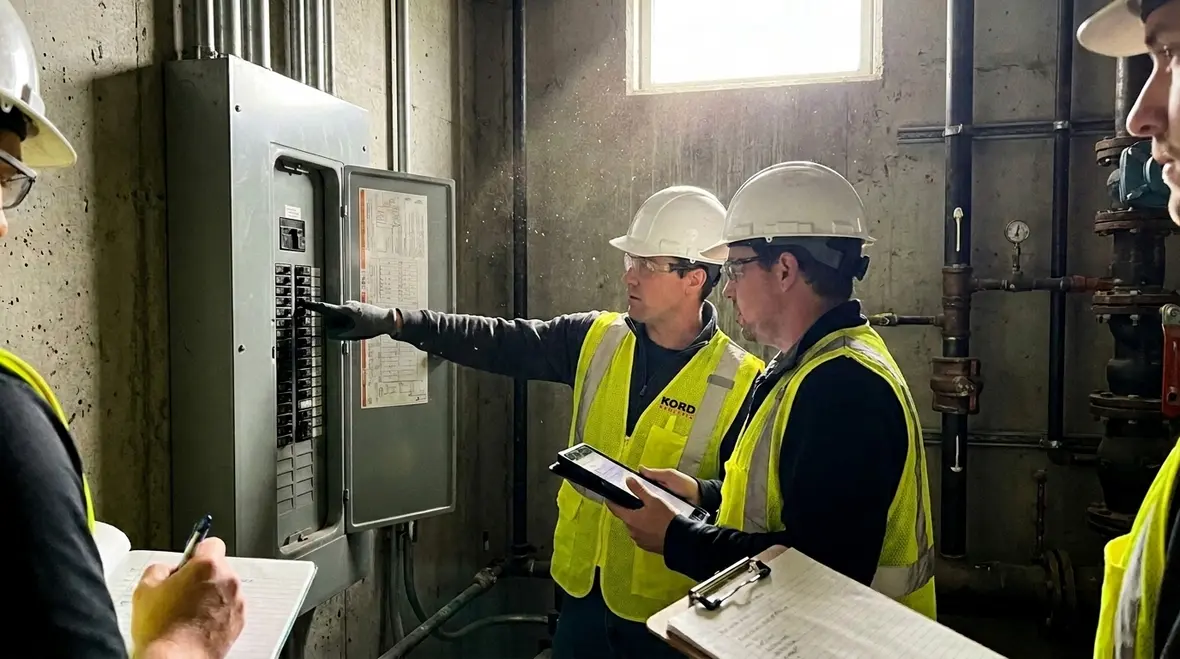
To make things even easier, we often do a short walkthrough with the facility lead. We explain what the symptoms likely meant, what tests confirmed it, and what to watch going forward. Because in the real world, troubleshooting is not one moment. It is a chain of events, and someone should own that chain.
Also, we keep the communication clear. If you call us, you should not feel like you are receiving a magic trick. You should feel like you are being helped.
Common failure patterns in industrial and major property buildings
Commercial and industrial facilities often share recurring electrical failure patterns. If facility teams recognize these trends early, they can reduce both downtime and emergency calls. However, they still should not “play detective” inside energized equipment. The goal is to narrow the suspect list, then bring the right level of expertise.
Here are patterns we see frequently:
Symptom
- Lights flicker or dim during motor start
- Breakers trip when equipment cycles
- Fuses or relays fail in the same location over time
What it can indicate
- Inrush or voltage drop that exceeds the system design
- Load imbalance, degraded connections, or insulation issues
- Loose terminations, overheating, or incorrect protection settings
Now, transition to action. If the symptom is tied to equipment cycles, our expert service staff can evaluate whether the system loads match the protection scheme. Then we identify whether the cause is electrical, mechanical, or both. For example, a motor that draws too much current can look like an electrical failure when the real issue is misalignment. And yes, that happens more often than people admit at inspection time.
For facility leaders who like planning ahead, pairing this pattern recognition with ongoing electrical preventive maintenance turns your commercial electrical troubleshooting checklist into a long term reliability strategy instead of an emergency-only tool.
Document, prevent, and keep operations moving
After troubleshooting, teams often rush to restore normal operations and forget the documentation. Yet documentation turns a one time repair into a long term improvement. Therefore, we recommend a record that includes what happened, what was checked, what tests were performed, what parts were replaced, and what conditions existed. Over time, that data helps you spot emerging failures.
Prevention matters, too. Many electrical problems start as small issues, like a connection that heats slightly under load. Then it worsens until it causes trips or alarms. We help facility teams plan prevention steps such as targeted inspections, cleaning where appropriate, torque verification for connections where allowed, and condition monitoring on critical equipment.
Also, do not forget communication. When the maintenance staff, operations team, and supervisors share a clear summary, it reduces repeated troubleshooting. It also makes scheduling fixes easier. In a major property building, where multiple tenants run different systems, that coordination saves hours.
If you are building your own commercial electrical troubleshooting checklist, consider adding a final “preventive follow-up” step that connects directly into your maintenance program or an outside partner’s service plan. That way, today’s outage becomes tomorrow’s improvement project instead of next quarter’s repeat incident.
FAQ: facility managers and electrical troubleshooting decisions
Book Kord Electric before the next interruption
Facility operations should not run on luck. When electrical symptoms appear, we help teams move from confusion to verified answers. If your staff can safely handle low risk checks, we support that too. And when the situation needs expert service, our technicians step in with testing, clear explanations, and practical prevention steps for commercial and industrial facilities. Call Kord Electric today and let us protect uptime, safety, and your maintenance time. You will feel the difference fast, and the building will thank you quietly.
If you are reviewing your systems after repeated problems or planning upgrades across multiple properties, this is also the right moment to explore structured support like our electrical preventive maintenance programs. Turning a one-time repair into a long-term plan is one of the most valuable outcomes of any commercial electrical troubleshooting checklist.
For facilities that are already thinking about broader modernization or expansion, pairing troubleshooting with targeted service work—such as new lighting, distribution upgrades, or power quality improvements—can prevent the same issues from reappearing. Our team regularly connects troubleshooting findings to services like lighting installation for commercial and industrial buildings, so your corrective work also supports efficiency and visibility across the site.
Whether you are refining your in-house commercial electrical troubleshooting checklist or handing the whole process to a trusted partner, Kord Electric is ready to help you move from reactive repairs to predictable, well-documented reliability.