Preventing Electrical Fires in Aging Warehouses
In commercial work, risk hides in places people stop looking. In aging commercial warehouses, dust, wear, and outdated wiring can quietly stack up problems until one small failure becomes a major event. Kord Electric focuses on preventing electrical fires in aging warehouses by finding hazards early, then fixing them with practical, code-minded work that keeps operations running. Our process is calm, thorough, and led by technicians who explain what we find in plain language. And yes, we do say things like “this shouldn’t be sparking,” because sometimes the best safety lesson starts with a basic truth. While the warehouse keeps moving, we help you move smarter—so your power system stays steady, not dramatic.
How aging warehouses create hidden electrical hazards
Third person teams often notice damage only after a problem shows up, but the real danger comes first. Over years of forklifts, foot traffic, humidity swings, and equipment upgrades, the electrical system takes a beating. Connections loosen, insulation ages, and moisture finds routes that were never meant for it. Then, as loads change, panels and feeders run closer to their limits. In other words, the system doesn’t “break” suddenly; it slowly loses margin. As a result, preventing electrical fires in aging warehouses starts with recognizing the patterns that make failures likely.
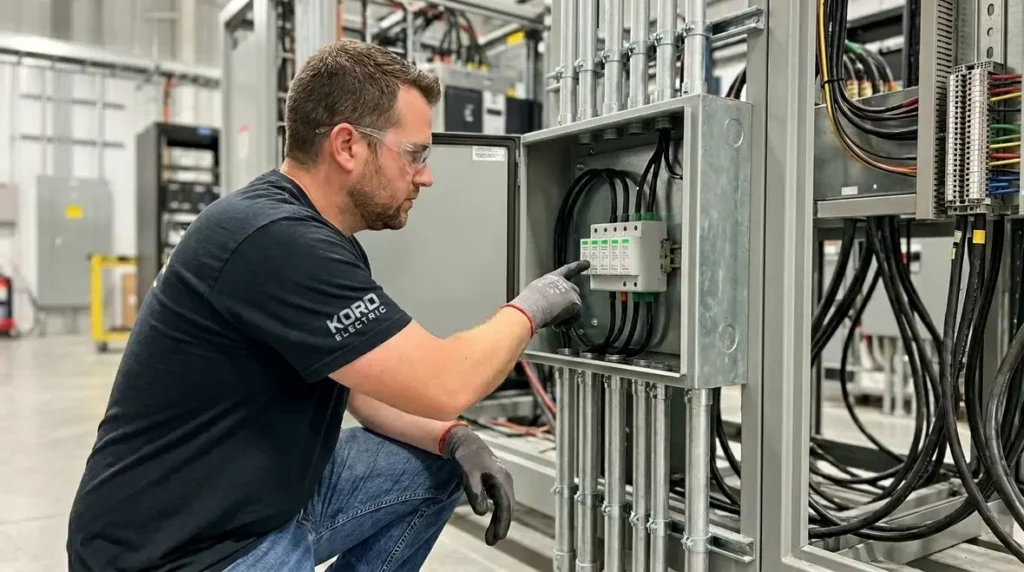
Common hidden hazards include overheated terminations inside panels, damaged cable jackets behind storage racks, and overloaded circuits that were never designed for current equipment. In warehouses, storage is dense and airflow is limited, which means heat does not escape easily. Furthermore, pest activity can chew on insulation, and vibration from material handling can loosen connections over time. Our technicians at Kord Electric often see the same theme: the facility runs “fine” until it doesn’t, and by then it is expensive.

Where electrical heat starts and why it grows
Electrical fires usually begin with heat. Heat starts when current passes through a problem point such as a loose connection, a failing breaker contact, or corroded conductors. Once heat rises, materials nearby dry out and degrade faster. Eventually, that heat can ignite insulation, dust, or even cardboard packaging. So, while people think about flames, we focus on the quiet step before flames: thermal stress.
In aging warehouses, the heat sources tend to cluster around bus bars, breaker lugs, and splices. Also, cable runs routed near hot surfaces or where water can collect create a slow problem that becomes a fire problem. If you have ever heard a faint buzzing from a panel or noticed repeated breaker trips, that is not “just how it is.” Those are clues. Transition after transition, the warning signs get ignored, and the system keeps taking damage.
Kord Electric takes a methodical approach. Our expert service staff measures, documents, and explains. We do not treat every warehouse like a cookie cutter job. Instead, we connect the dots between load history, physical conditions, and electrical performance, so preventing electrical fires in aging warehouses becomes a plan, not a hope.

What inspections should catch in commercial and industrial panels
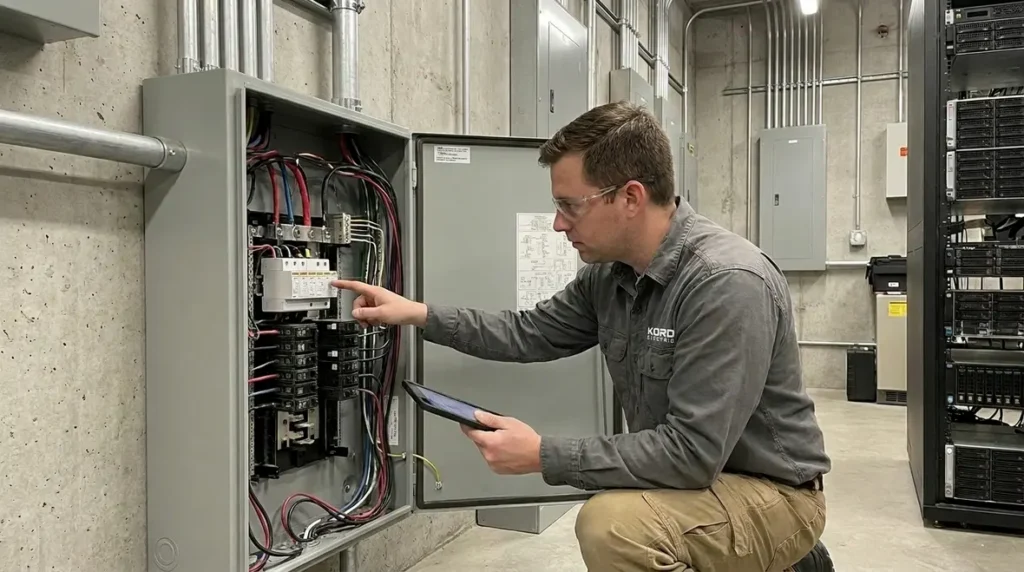
In major property buildings and industrial or commercial facilities, the inspection must go beyond a visual check. A surface look can miss internal issues, and it can miss the “just starting to fail” stage. We recommend inspections that review how power distributes across the site, how panels connect, and how protective devices behave during operation. Then, the team can identify weak spots that create heat and arcing potential.
Our technicians commonly focus on:
- Panel and breaker condition, including signs of overheating, discoloration, and worn components
- Termination quality, because poor tightening and corrosion can cause resistance and heat
- Load balance, since uneven loads can overload one phase while the others run cooler
- Splice areas, especially where conductors change or where cable jackets were exposed to moisture
- Grounding and bonding, because poor grounding can increase fault risk and equipment stress
- Arc fault and overcurrent protection, reviewed for coordination and fit for actual loads
We also verify labeling and documentation. When a panel is misidentified or circuits are “mystery meat,” maintenance teams waste time and may operate unsafely. Therefore, part of our job is to make the facility understandable for the people who keep it running. That is boring in the best way, like wearing a seatbelt instead of auditioning for a viral crash video.

Thermal testing and electrical troubleshooting that actually reduces risk
Inspections tell you where to look. Testing shows what is happening right now. That difference matters. Kord Electric applies testing methods designed to identify heat patterns and abnormal behavior before they turn into damage. When our expert service staff explains results, they translate technical data into decisions managers can act on.
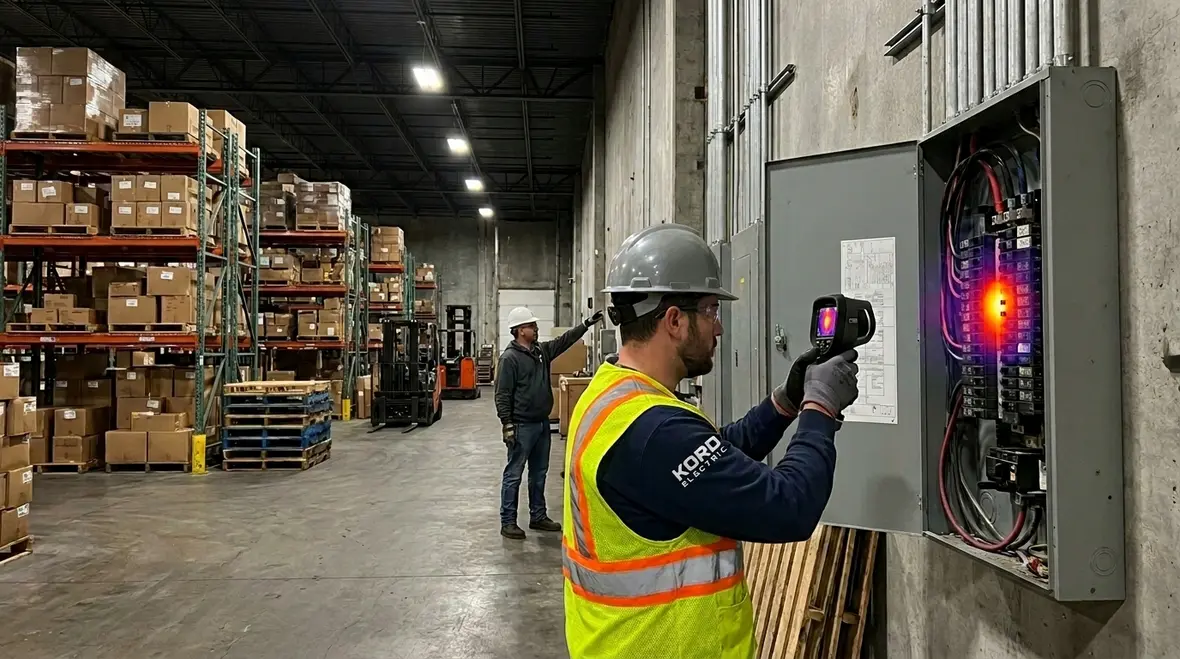
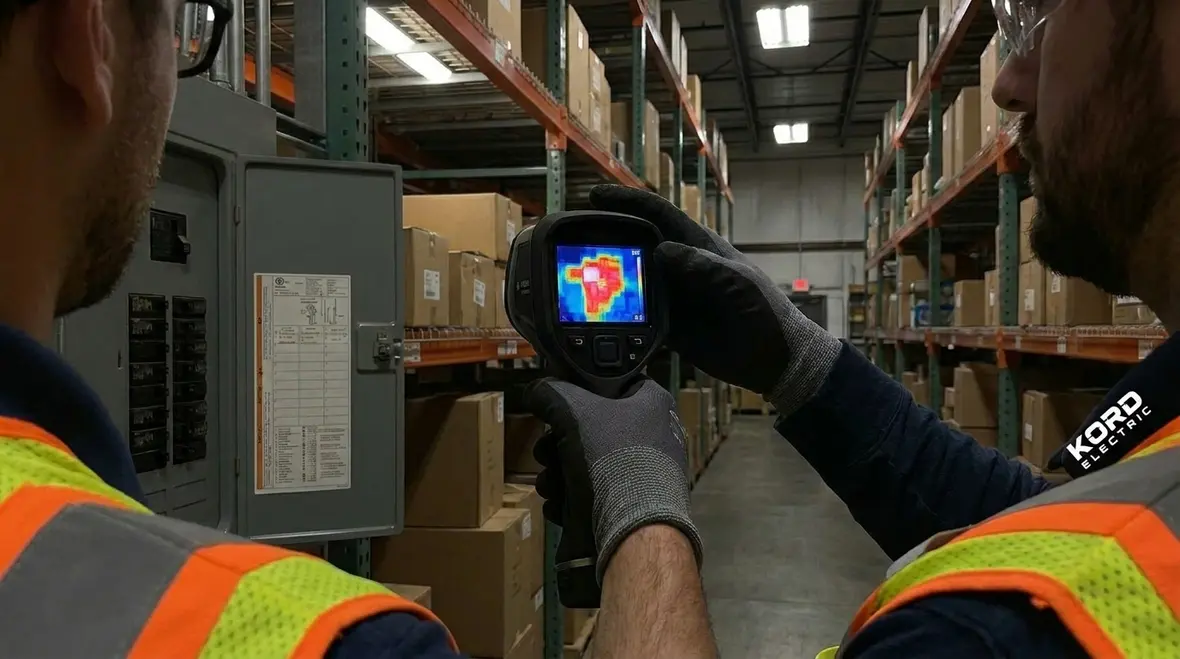
We often use approaches such as infrared thermal imaging to spot hot spots during normal operation, and we pair those results with electrical measurements to confirm the cause. In many aging warehouses, a hot spot can appear at a termination, a splice, or a breaker interface. Then we compare conditions across similar sections to find which locations are genuinely abnormal. After that, the fix becomes clear: tighten, replace, rework, or correct load and routing.
It is also important to test with respect to the facility’s operation. A shutdown can disrupt shipping, receiving, and safety schedules. So, we coordinate with facility leadership to minimize downtime. As a result, the warehouse keeps moving while we gather the information that supports real preventing electrical fires in aging warehouses.
Moisture, dust, and storage: the fuel package warehouses already have
Here is the part that makes fire prevention feel like a detective story. The electrical system provides the ignition source, but warehouses often provide the fuel. Dust accumulates on equipment and inside enclosures. Packaging materials sit close to electrical components. Moisture rises and condenses in cooler months, especially in large storage spaces where air movement is inconsistent.
Then add airflow restrictions. When racking blocks ventilation, heat stays trapped. When dust coats surfaces, heat transfer changes. When water intrusion damages cable jackets or wicks along conduits, the wiring insulation loses strength. All of that turns small electrical stress into bigger outcomes. Therefore, safety upgrades must address both electrical performance and the environment around it.
Kord Electric helps facilities reduce risk by improving enclosure condition, correcting water entry points, and guiding cleaning and maintenance practices that match how the warehouse actually operates. Our technicians also look for routing problems, where cable passes through areas that experience vibration, impacts, or water exposure. In warehouses, a “later” fix rarely stays later. It turns into “now” without asking permission.
Upgrades that fit real warehouse operations, not just theory
Some upgrades sound simple on paper, but warehouses need solutions that respect workflow. We prioritize changes that improve protection without causing major disruption. That includes panel work, protective device upgrades, and cable and termination replacements at identified weak points.
In a typical industrial or commercial setting, we may recommend:
- Re-terminating or replacing connections that show high resistance or heat patterns
- Correcting overloading by redistributing circuits or adding capacity where needed
- Improving protective device coordination so faults clear safely and quickly
- Upgrading arc-resistant and safety-focused components where the facility’s risk profile supports it
- Sealing conduits and enclosures to reduce moisture and dust entry
- Updating labeling and documentation so maintenance teams respond correctly
We also align upgrades with the facility’s future plans. If additional equipment is planned, then the electrical system should adapt before loads climb. Otherwise, preventing electrical fires in aging warehouses becomes a yearly scramble instead of a stable program. And if we sound determined, that is because we have seen what happens when “temporary” turns into “permanent.”
For facilities already thinking beyond basic repairs, pairing these upgrades with a structured electrical preventive maintenance program helps keep new work performing the way it should over the long term.
Clear action planning with Kord Electric
Good safety work needs a clear plan, not a pile of reports. Kord Electric organizes findings into practical steps. We explain what to do first, what to schedule next, and what actions are optional based on risk. Our expert service staff walks facility leaders through the “why,” using straightforward language and visible evidence.
To make decisions easier, we sometimes present options side by side during planning meetings, especially for property managers and operations leaders who want clarity fast. This helps everyone compare risk reduction, cost impact, and downtime needs without turning the conversation into a spreadsheet opera.
Immediate actions
|
Scheduled improvements
|
Then, we document the work and provide guidance for ongoing monitoring. That continuity matters because prevention is not a one-time event. It is a steady rhythm.
When aging infrastructure pushes beyond safe limits or when warehouse upgrades are on the horizon, some facilities also explore rewiring cost guides for commercial electrical systems to understand how deeper modernization could support long-term fire prevention and reliability.
FAQ
Conclusion: take prevention seriously, then act with Kord Electric
Aging warehouses do not have to wait for a costly event to learn a lesson. When we find hazards early, we help you prevent electrical fires in aging warehouses by targeting heat sources, moisture risks, and weak electrical connections before they spread. Our technicians and expert service staff explain results clearly and guide practical upgrades that fit real warehouse schedules. If your facility operates 24 7, you deserve safety plans that keep up. Call Kord Electric today for an electrical risk assessment and a focused action plan.
If your operation is already feeling the strain of unstable power, pairing fire prevention work with a dedicated voltage fluctuation assessment for commercial and industrial facilities can help protect sensitive equipment while you address underlying risks. And when issues cross the line from “concerning” to “urgent,” Kord Electric’s emergency electrical services are ready to respond, stabilize, and restore safe operation so your team is never left managing a crisis alone.