Commercial Electrical Troubleshooting Guide
When a commercial electrical system starts acting up, our clients do not need guesswork, they need a plan. That is why Kord Electric follows a commercial electrical troubleshooting guide that we build around safety, smart diagnosis, and fast fixes. In the introduction, we outline the exact flow our team uses: we verify power conditions, isolate the circuit, inspect key components like panels and feeders, and confirm the problem with readings, not vibes. Then we document what we find so the next maintenance visit does not feel like a mystery novel. And yes, we promise we do not solve issues by telling the building to “calm down,” even if that feels like a popular movie trope.
1) Start with safety and system context
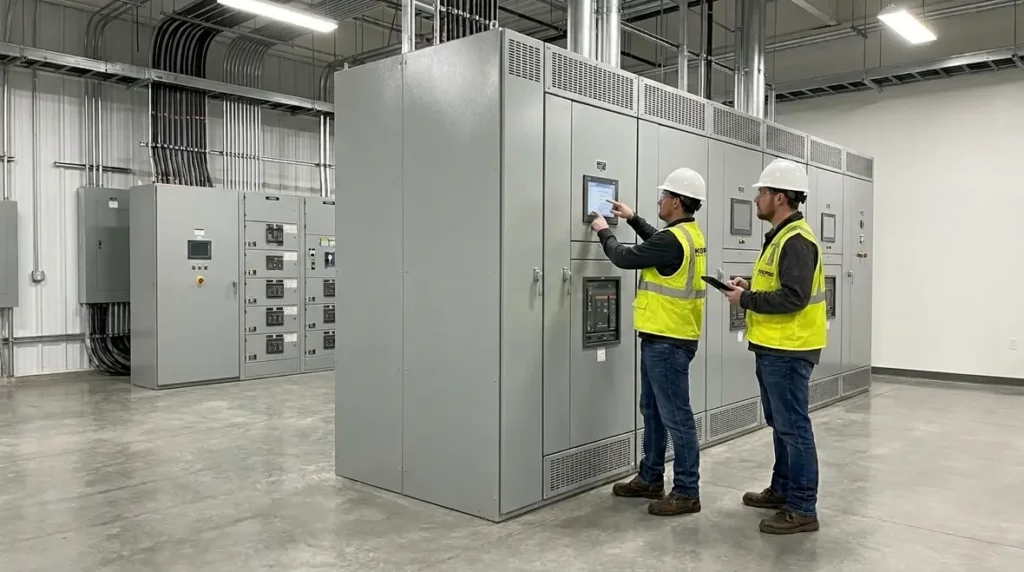
Before anyone pulls a panel cover, our technicians start by treating the site like it is live, because it is live. First, we check whether the facility has an active shutdown plan and whether the area can be safely de energized. Then we confirm the system type and load profile, because commercial and industrial buildings rarely share the same “symptoms” with the same “cause.”
Our expert service staff also asks questions that sound simple but save time: What changed since last week? Did a tenant remodel? Did a motor get replaced? Did anyone add a load, like EV chargers, new HVAC, or a production line upgrade? Those details guide how our commercial electrical troubleshooting guide gets applied on site. If you ever wondered why one breaker trips immediately and another trips after a delay, the answer usually hides in timing coordination and load behavior.
2) Confirm the complaint, then map the circuit
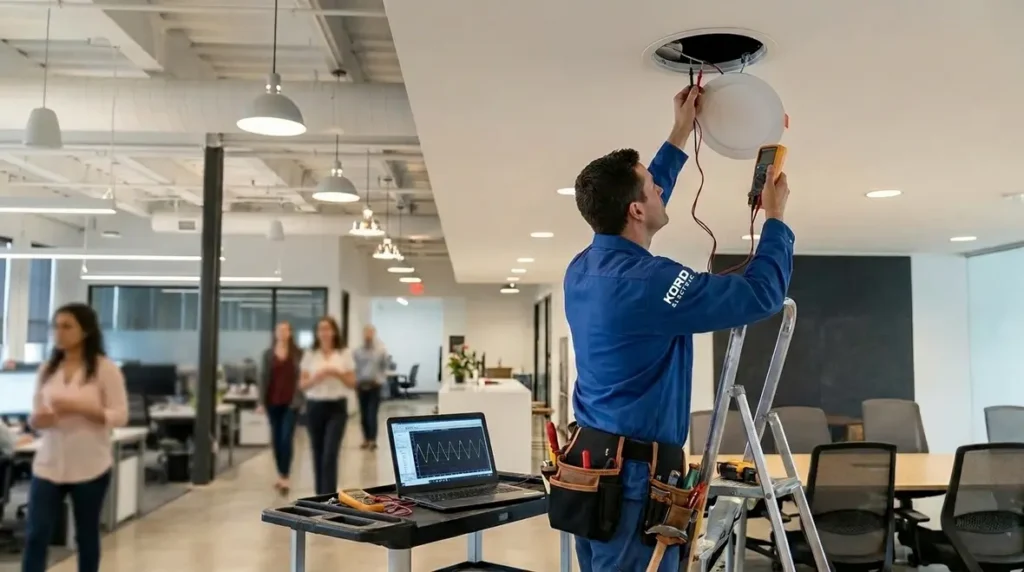
Next, our process moves from “something is wrong” to “we know exactly where.” We verify the reported issue by walking the system logically. For example, if lights flicker, we check which zones and which panels feed those loads. If outlets lose power, we identify the downstream distribution devices and trace back to the correct feeder.
Transitioning from observation to measurement matters. Therefore we compare what we see to the electrical one line diagram and the as built drawings. If the paperwork is outdated, our technicians still map the circuit, using test points and physical inspection. Then we record the findings in a clean, job ready format so others on the property can understand what happened without needing a decoder ring.

3) How we diagnose power quality issues
Power quality problems can feel like ghosts. One day the system runs fine, the next day motors act tired, drives complain, and computers reboot like they are trying to escape. So we measure what the building experiences, not what we hope it experiences.
In the field, our expert service staff commonly checks voltage stability, phase balance, harmonic distortion, and transient events. We also look for signs of loose terminations, failing contacts, and uneven loading. When phase balance drifts, motors run hotter and protective devices may respond sooner than expected. Then again, a “mysterious” shutdown sometimes traces back to a loose neutral or a panel landing that looks fine until you tighten it and suddenly everything behaves like it finally got enough sleep.
4) Essential tests for breakers, busbars, and panels
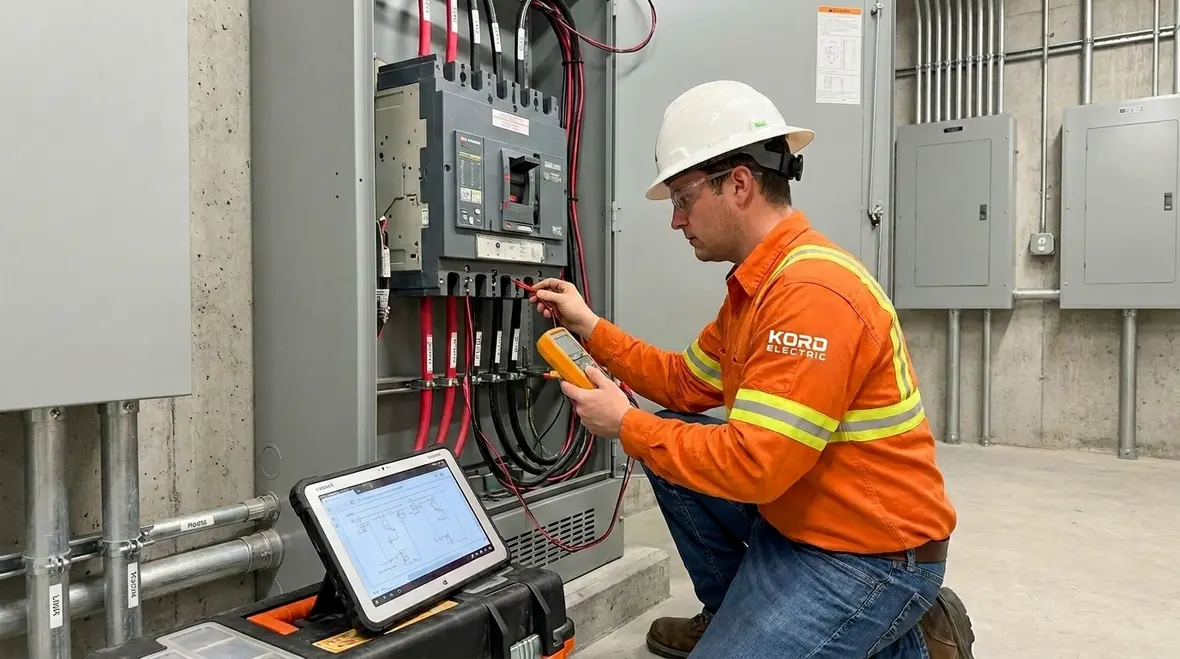
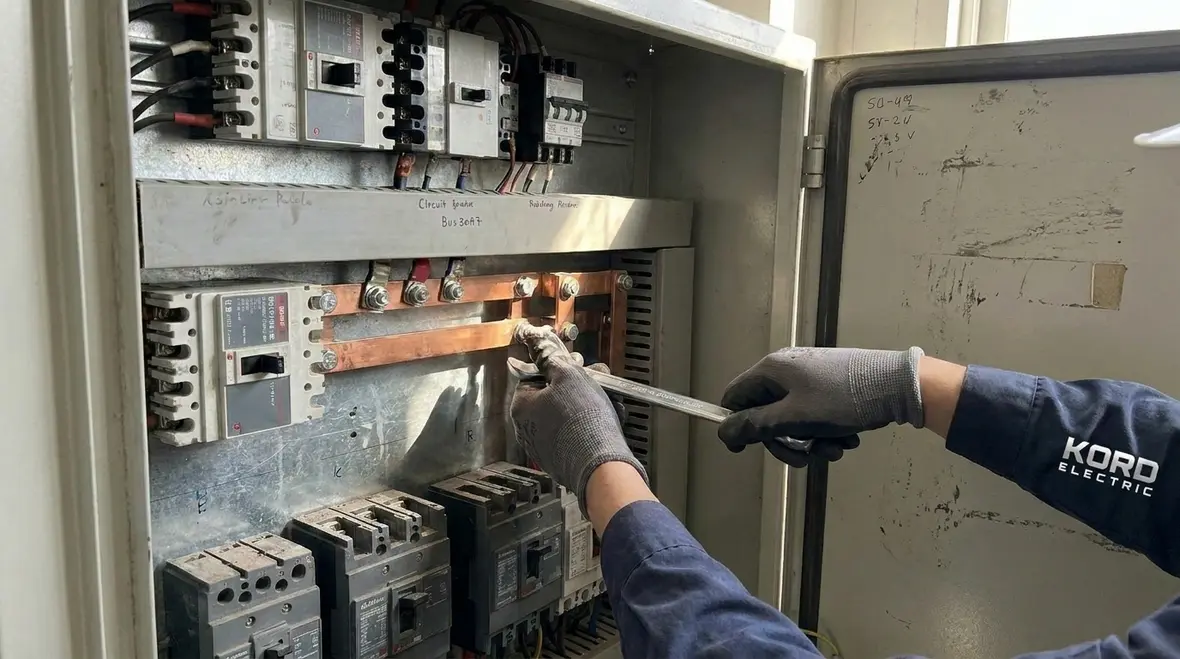
Once the complaint points toward distribution equipment, our commercial electrical troubleshooting guide pushes us to test, inspect, and verify in a consistent order. First, we inspect panel interiors and observe physical conditions: discoloration, scorching, corrosion, water marks, and evidence of prior overheating. Next, we check breaker condition and operating mechanism alignment. Then we confirm torque on critical terminations where access allows and where the site procedures permit.
We also use targeted electrical tests. For example, we verify insulation resistance where appropriate, check continuity on key conductors, and confirm ground bonding integrity. We do not just “swap parts and hope.” We validate the electrical condition so the next step is deliberate, not lucky.
To keep the facility running, our technicians also plan sequencing. After all, a major property building cannot afford a long outage just because we took the scenic route. If the issue impacts life safety loads, we prioritize those circuits first and coordinate with facility managers right away.
5) Motor and HVAC related troubleshooting, step by step
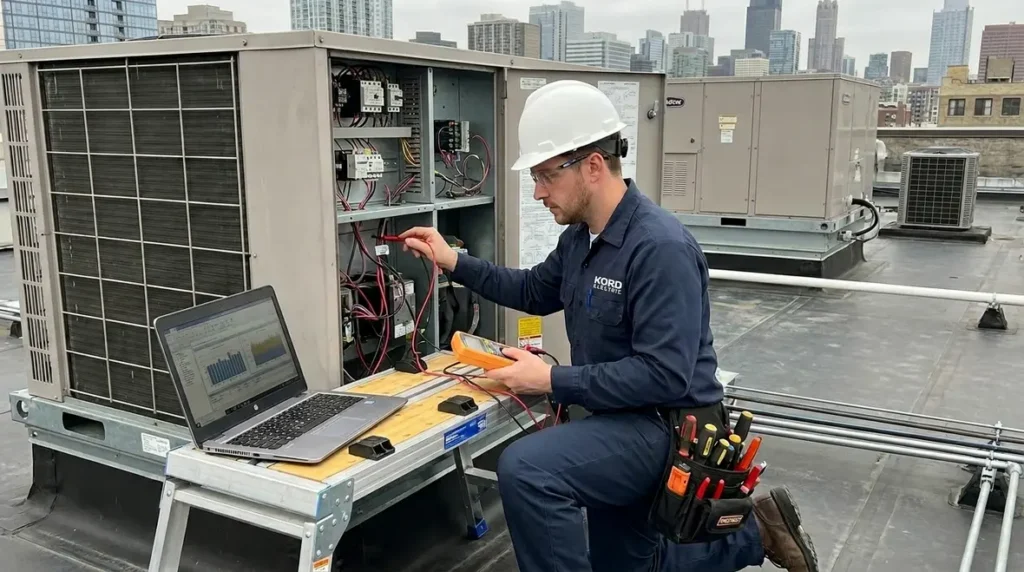
Commercial HVAC and motor loads often create the most dramatic symptoms. A rooftop unit might cycle on and off, a pump might lose output, or a starter might fault like it is frustrated with the universe. Therefore we begin by confirming the control and power chain, because a motor fault is not always a motor fault.
Our expert service staff checks control voltage, contactor operation, overload settings, and status feedback. Then we test motor supply and verify that each phase meets acceptable range. If a motor draws abnormal current, we investigate the mechanical side too, like blocked airflow or bearing wear, because electrical readings do not float alone. They reflect what the load asks the system to do.
And yes, sometimes the problem is as old as pop culture suggests. The building has been “running on faith” with a loose connection that only fails when the humidity spikes. We catch that by combining inspection with measurements and by asking what the facility experienced right before the failure.
6) Grounding, bonding, and protection coordination checks
Many troubleshooting cases come down to grounding and protection behavior. If grounding is weak or bonding paths are incomplete, fault current may not flow as expected, which changes how breakers detect and clear faults. In turn, nuisance trips can happen, or equipment can face higher stress than it should.
For industrial and major property buildings, our technicians verify grounding and bonding continuity and review protective device settings. We also check coordination between upstream and downstream devices so a small fault does not escalate into a larger shutdown. Then we confirm that labels, circuit IDs, and device documentation match the actual layout. Outdated labels are not harmless. They slow response and increase the chance of repeated mistakes.
To keep everything calm and professional, we explain our findings as we go. Our clients receive clear reasons, not technical fog. When we say “this connection overheated,” we also show what we measured and how it relates to the symptoms.
7) When we find the root cause, we verify and prevent repeats
Once we narrow the problem, our work does not stop at repair. First, we re test the corrected circuit under controlled conditions to confirm performance. Then we check for secondary impacts, like adjacent equipment temperature rise, nuisance trips, or continued power quality deviation.
Next, we document the root cause and the corrective actions. That includes what we found, what we changed, and what measurements confirm the issue is resolved. Finally, we recommend a prevention plan aligned to the building schedule and risk level. For example, some sites need tighter inspection intervals for terminations and bus connections, while others benefit more from load studies and coordination reviews.
That is how we keep fixes from becoming repeat problems. And that is also how we avoid the classic sitcom ending where the same breaker trips in the same scene next week.
8) FAQ about commercial electrical troubleshooting
Where this fits into a broader reliability strategy
A structured commercial electrical troubleshooting guide does more than solve today’s outage. It creates a record that supports future planning, upgrades, and maintenance decisions. Many facility teams pair this kind of troubleshooting with ongoing preventive maintenance and periodic system reviews so they can spot patterns early instead of reacting to surprises. For facilities that want to understand how hidden issues build up over time, resources like Kord Electric’s article on hidden electrical risks in commercial buildings can be a helpful companion read alongside this guide.
Likewise, when troubleshooting reveals aging infrastructure or mismatched equipment, it often becomes the starting point for larger projects, such as targeted electrical upgrades, lighting improvements, or dedicated programs to reduce downtime risk across a property portfolio.
When troubleshooting points toward upgrades
Over time, the findings from repeated service calls tell a story: overloaded panels, recurring voltage drops on long runs, breakers operating at the edge of their ratings, or equipment that never fully recovered from past modifications. When that happens, troubleshooting is not just about finding the latest fault. It is about deciding when to modernize parts of the system so the next failure does not happen at the worst possible moment.
That might mean planning targeted panel upgrades, redistributing loads, or pairing this commercial electrical troubleshooting guide with a lighting upgrade or other focused project that reduces strain on the electrical system. For example, many of the same facilities that lean on structured troubleshooting also explore lighting installation and upgrade services to cut energy use and reduce heat and loading on existing infrastructure.
When your team is ready to turn insights from troubleshooting into a long term improvement plan, Kord Electric’s service pages and project-specific offerings give you a clear path from diagnosis to upgrade, whether that means modernizing lighting, preparing for new mechanical loads, or getting the building ready for EV chargers and future expansion.
If your facility is already thinking ahead about capital projects, exploring dedicated services like Kord Electric’s recessed lighting installation can help align troubleshooting data with smarter upgrades, so every improvement supports both day to day reliability and long term efficiency.
Conclusion: call Kord Electric before the next shutdown
If your commercial electrical system shows signs of trouble, Kord Electric helps you move from confusion to confirmed cause. Our technicians follow a practical commercial electrical troubleshooting guide, and our expert service staff explains every step in plain business language. Then we repair, verify, and document so you get a real resolution, not a temporary bandage. If you want safer operations and fewer repeat failures, contact Kord Electric today and schedule a diagnostic visit for your facility.
And if your troubleshooting points toward a larger project—such as lighting improvements that lower load, or system upgrades that prepare your building for new equipment—our team can connect you directly with specialized services like recessed lighting installation so your next step is clear, coordinated, and fully code compliant.