

Smart Building Power Integration for Commercial Sites
At Kord Electric, we handle smart building power integration by connecting modern controls and automation to the power systems that already run your facility. We do this for commercial and industrial sites, along with major property buildings, where downtime costs real money and guesswork costs even more. Smart tech should feel like it belongs, not like it was bolted on last minute. And yes, sometimes our team has to fix the “it worked in the demo” problem that shows up the moment the building goes live.
Our expert service staff and technicians guide each step with a calm, deliberate process, because power systems are not a place for chaos. After all, the grid does not care that you upgraded your thermostat.
How we integrate smart building tech without breaking existing power
In most buildings, the power infrastructure already has a job: feed HVAC, lighting, elevators, process equipment, and backup systems. Therefore, when we add smart building tech, we start with how electricity actually flows today. Then we connect sensors, meters, controllers, and energy management tools in a way that supports the facility instead of fighting it.
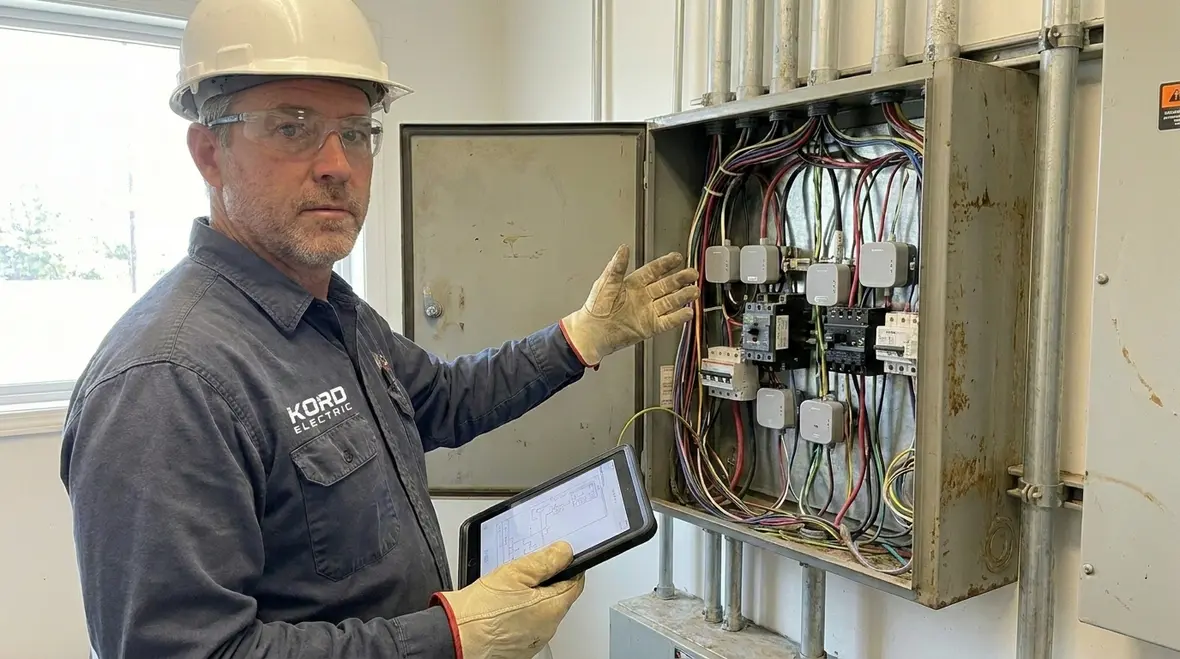
We begin with a disciplined field review. Our technicians verify the electrical one line, check protective device settings, confirm meter placement options, and map where data can be collected safely. Next, we align the new controls with the facility’s power logic. This includes harmonics awareness, load behavior, and how critical systems transition during outages.
Smart systems often talk in modern terms like demand response, real time monitoring, and automated scheduling. However, those ideas only work when the power layer delivers accurate signals and predictable performance. So we build a bridge: the smart building platform receives clean data, and your electrical system keeps its reliability.
What matters most in commercial and industrial power retrofits

When others approach this, they sometimes treat the retrofit like an electronics project. We treat it like a power engineering project with controls attached. That difference matters, especially for factories, warehouses, campuses, hospitals, high rise mixed use buildings, and large commercial facilities.
First, we focus on measurement accuracy. If your metering is wrong, your dashboards look confident and your decisions become… creative. Our team verifies CT and VT ratios, confirms wiring paths, and checks whether the data updates at the right rate for the control routines.
Second, we confirm how the facility handles load changes. Motors start and stop, equipment cycles, and HVAC ramps up with the weather. Consequently, smart building power integration must handle real transients. We help prevent nuisance alarms, control oscillation, and bad automation triggers by tuning how the data gets interpreted.
Third, we preserve safety and compliance. We coordinate integration around existing relays, breakers, and alarm circuits. In many upgrades, we also review how systems behave during maintenance windows. We cannot assume that “future tech” will always be present, so we plan for stable operations even when parts of the automation stack are temporarily offline.
For facilities that want this smart work to sit on a solid reliability foundation, many teams pair smart building power integration with structured electrical preventive maintenance programs that keep panels, switchgear, and distribution equipment in good health over time. Kord Electric’s electrical preventive maintenance services support that long term stability across commercial and industrial sites.
Electrical and controls: aligning data, protection, and control logic

Smart building tech is only as good as the signals it receives. Therefore, we align three layers during installation: power measurement, protective coordination, and control logic.
Our technicians help define data points that matter for control decisions. For example, energy management might need branch circuit loads, transformer readings, and demand totals. At the same time, building automation might need to coordinate with life safety systems, generator status, and critical load shedding logic.
Then we connect the dots carefully. We ensure the control system does not override protection settings or create unsafe operating conditions. In other words, smart control should support protective behavior, not challenge it like a wrestler challenging a referee. We also validate the communication paths so alarms reach the right staff quickly and in the right format.
Finally, we test integration with realistic scenarios. We simulate load changes, verify data refresh, and confirm how the system responds when a device fails. This avoids the classic “everything looked good during commissioning” trap, followed by the late-night surprise call.
We map your existing power system before we connect anything

Before a single cable gets terminated, we build a clear map of the existing power system and the integration goals. This step keeps projects from drifting into random improvements that do not add value.
Our team works through the building’s structure and priorities. We identify critical loads, power quality concerns, metering gaps, and the locations where smart monitoring creates the most benefit. Then we select the integration approach based on what the building already supports.
Sometimes we add submetering and connect it to an energy platform. Other times we interface with existing building management systems that already run schedules and setpoints. Either way, our technicians document the data pathways and confirm signal quality.
We also verify where integration could cause risk. For example, retrofits sometimes require changes near panels, switchgear, or low voltage control wiring. So we schedule work to minimize disruption, coordinate access with facility teams, and keep testing organized. That is how we protect uptime, especially on projects where production cannot pause and tenants cannot go dark.
That power mapping often uncovers opportunities to resolve issues like voltage swings or sensitive equipment misbehavior before adding new controls. When teams want targeted help stabilizing those conditions alongside smart upgrades, Kord Electric’s dedicated services for voltage fluctuations in commercial and industrial facilities bring additional clarity to the plan.
Commissioning that actually holds up in the real world
Commissioning is where many projects either earn trust or lose it. We run commissioning as a performance test, not a checkbox exercise.
First, we verify that the smart building power integration platform receives accurate data. We cross check readings against verified measurements and confirm the units, scaling, and time stamps. If a system labels kW as kWh, the building does not get smarter, it just gets confusing.
Second, we validate automation behavior against power conditions. We check how controllers respond to ramping loads, demand limits, and planned events. We confirm that staging sequences align with electrical realities, including breaker status and transformer behavior.
Third, we verify alarms and reporting. Our expert service staff makes sure that the right alerts show up for the right people. Instead of flooding teams with every possible event, we help configure meaningful thresholds and actionable notifications.
Finally, we create a handoff plan. We explain what the system does, what it does not do, and how facility teams should operate it. This keeps knowledge inside your organization and reduces the “who knows how this works” gap that often shows up after the final invoice.
Dual column example: where power signals become smart decisions
Power signal |
Smart building decision |
Transformer load and temperature data |
Adjust schedules and preplan load shifts to reduce stress |
Branch circuit energy and demand trends |
Optimize HVAC and process schedules to control peaks |
Generator and transfer status |
Coordinate critical loads and automate safe sequencing |
Power quality indicators like harmonics |
Trigger maintenance insights and protect sensitive equipment |
We build these links intentionally. In short, we turn raw electrical data into dependable building actions, so your automation behaves like a professional and not like a customer service chatbot with no context.
FAQ about smart building power integration for commercial sites
Ready for calmer, smarter power across your facility?
If you operate a commercial or industrial building, you need smart technology that fits your power system, not one that creates new surprises. At Kord Electric, we connect energy management and building controls to your electrical infrastructure with careful planning, solid commissioning, and clear explanations from our expert service staff. Contact us to assess your current setup and plan an integration path that protects uptime, supports reliability, and improves control without guesswork. Your building deserves quiet confidence, not loud troubleshooting.
For organizations that want to pair smart building power integration with a structured service routine, our team also supports broader commercial and industrial reliability through offerings like electrical preventive maintenance programs and targeted help with voltage fluctuations in commercial and industrial facilities. Together, these services help your automation sit on top of a power system that is measured, monitored, and maintained with long term performance in mind.
If you are already planning upgrades, remodels, or infrastructure changes, integrating smart controls with your electrical work can also streamline future improvements. From data-heavy environments and production floors to commercial kitchens and specialty spaces, coordinating smart building power integration with projects like maintenance plan development or targeted electrical upgrades keeps your facility moving toward a calmer, smarter, and more resilient operation.
To explore how smart building power integration can support your facility’s long term reliability, energy performance, and code alignment, connect with our team through our dedicated commercial and industrial services. We will walk your site, review your priorities, and design a plan that respects both your power system and your schedule, whether you are focused on day-to-day operations or planning the next phase of your smart building journey.
When you are ready to move from scattered upgrades to a cohesive strategy, consider pairing your smart building goals with a structured service built to protect critical electrical systems and uptime-focused environments: Electrical Preventive Maintenance by Kord Electric. This related service page outlines how planned inspections, testing, and data-driven reports support the same calm, organized approach that makes smart building power integration so effective.


