Commercial EV Charger Installation Costs and ROI
Commercial EV Charger Installation: Estimating Project Costs and ROI
Commercial sites ask a simple question, and then follow it up with a spreadsheet. EV charging is a real utility cost now, and EV charging station installation costs commercial can swing widely based on site conditions, power availability, and how many charging ports you plan to run. At Kord Electric, we guide commercial and industrial facilities and major property buildings through a clear path: we size the electrical scope, estimate the real labor and materials, and then connect the work to a practical ROI plan.
Along the way, our technicians and expert service staff explain what they see and why it matters, like someone who finally tells you where the “mystery breaker” lives. And yes, we still see surprises, because electricity has a sense of humor and it is never the funny kind.
How we estimate EV charging project costs for commercial sites
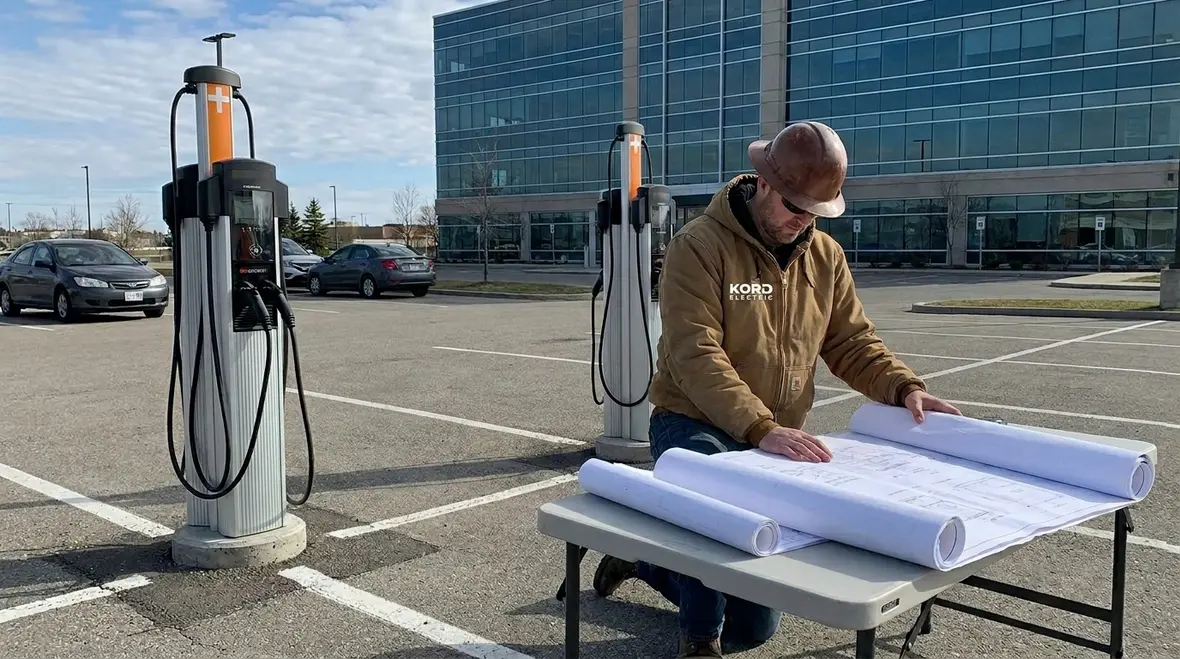
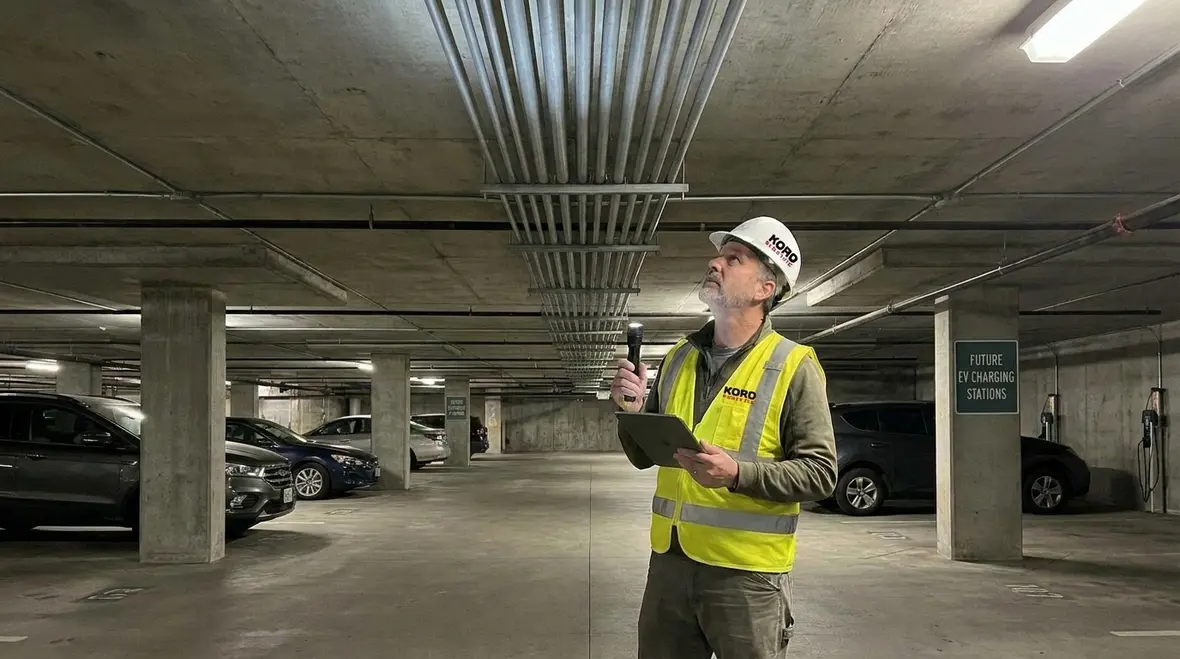
We start with a site walk and load review, because most budget problems come from guesswork, not bad intentions. Then, we build an estimate around the actual electrical path the chargers will take. First, we look at the service size, main panel capacity, transformer limits, and the way power flows through the building. Next, we map the routing for conduit, trenching, surface runs, and any needed structural work. Finally, we confirm grounding and bonding needs, because safety and code compliance do not get a discount for “good vibes.”
To keep things consistent, we also align our estimate with the same mindset used in our rewiring cost guide for commercial electrical systems. That guide stresses that commercial electrical rewires rise when scope expands beyond panel work, and when existing wiring is hard to access. For EV charging, the concept stays the same: if you only plan for the charger, but the site needs panel upgrades, new feeders, or civil work, your “simple install” becomes a larger project quickly. Therefore, we help you plan the electrical work, not just the hardware.
Cost drivers that move the number fast
Even when two properties look similar on a map, the cost picture can shift. For commercial and industrial facilities, these drivers matter most, and they appear early in our planning.
- Available power and panel capacity: If your service is tight, we may need new breakers, load management, or upgrades.
- Distance to power: The farther the chargers sit from the electrical room, the more conduit, wire, and labor show up.
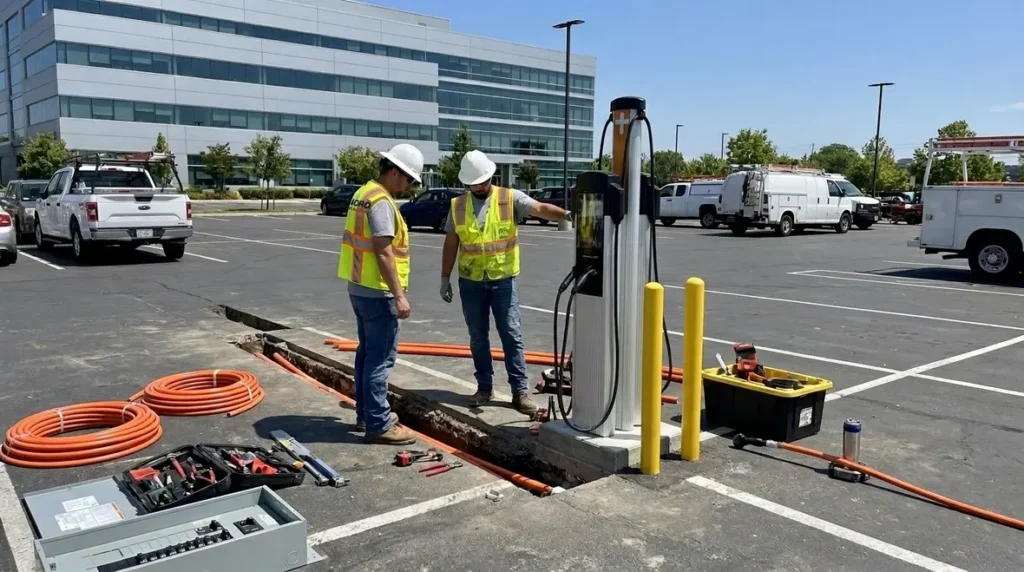
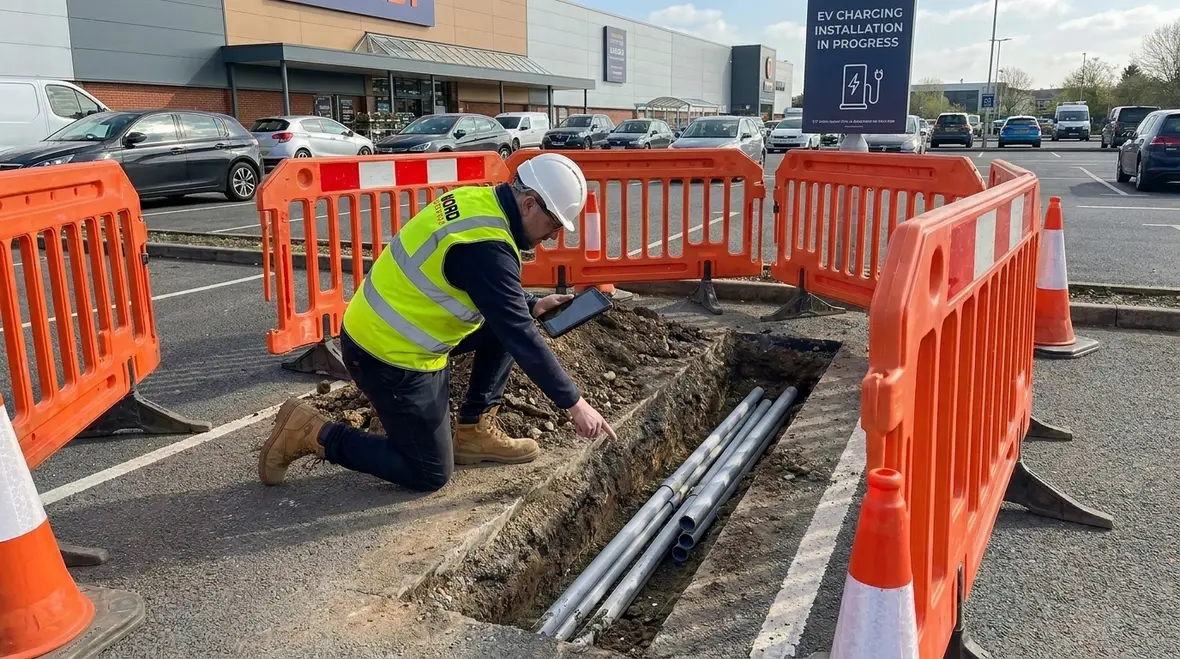
- Site work: Parking lot trenching, bollard bases, and surface restoration add cost, especially on occupied sites.
- Electrical service upgrades: Sometimes the charger plan requires utility coordination or transformer work.
- Permits and inspections: Commercial projects often face tighter timelines and more review steps.
Meanwhile, we keep an eye on schedule risk. If your operations depend on fast uptime, we plan around work windows. That way, a charger install does not turn into a “surprise closure” that nobody asked for, except the calendar.
Typical scope for a commercial charger install
To answer the prompt people ask most often, we outline what a complete commercial charger installation usually includes. Of course, exact scope changes by site, but the structure stays stable.
1) Engineering and layout: We confirm charger locations, power path, cable sizing approach, and equipment layout.
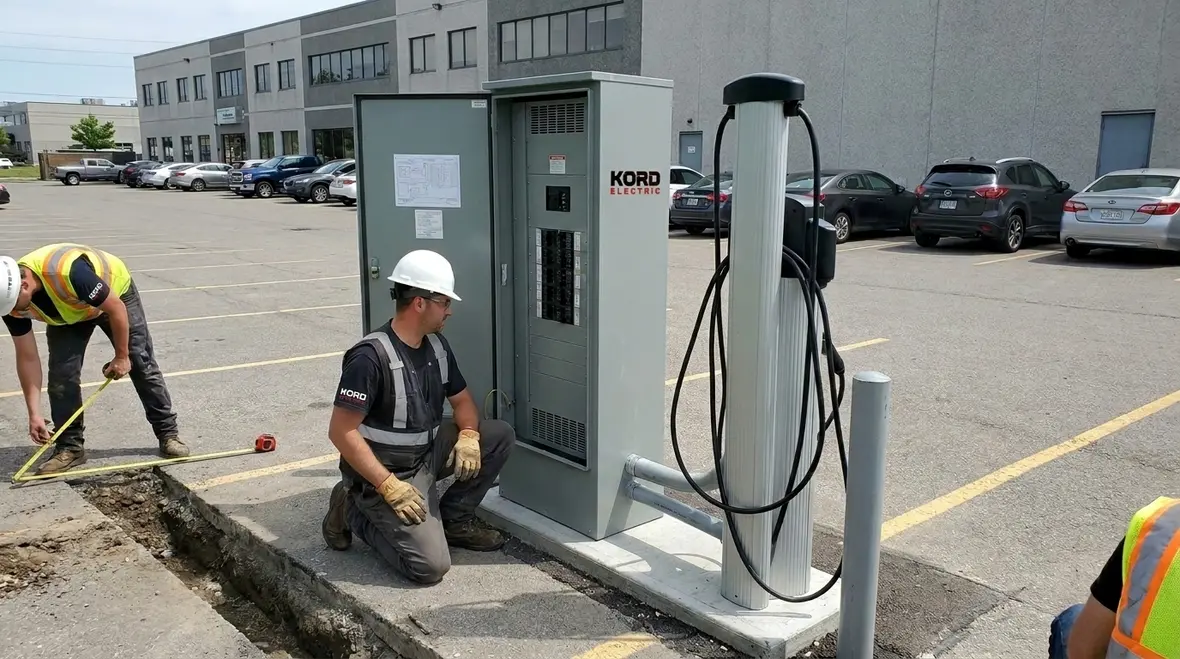
2) Service and panel work: We may upgrade panels, add breakers, install disconnects, and coordinate grounding and bonding.
3) Feeders and raceways: We run conduit or cable trays, pull feeders, and label everything for long term service.
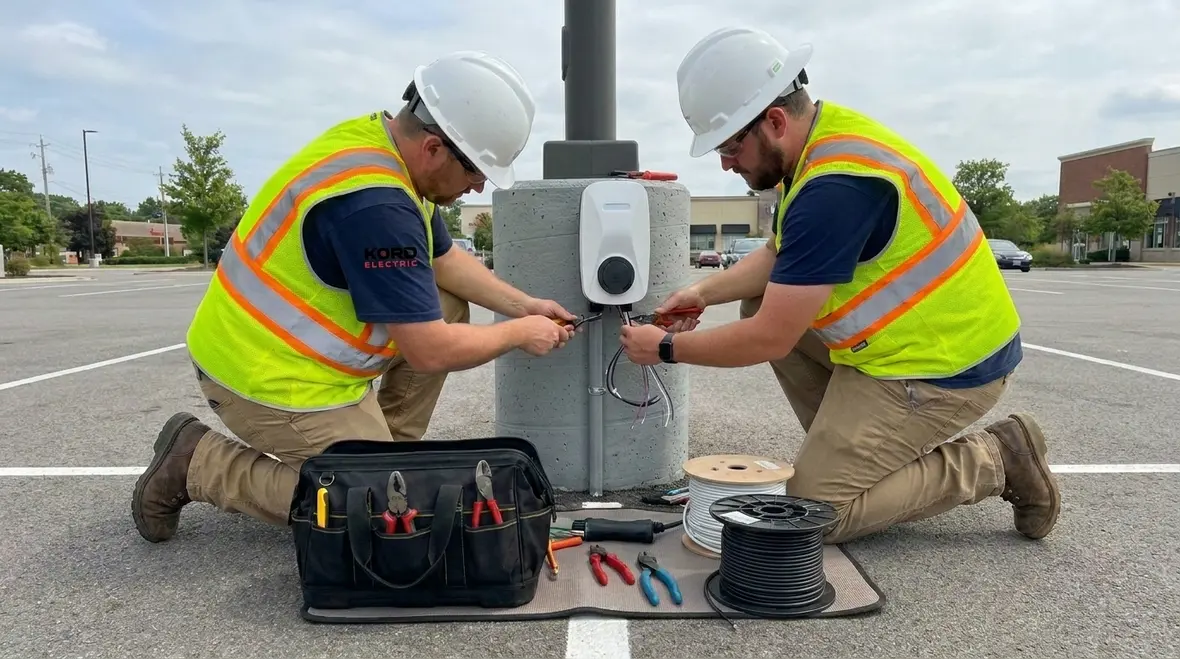
4) Charger mounting and wiring: We set charger bases, mount units, and connect the branch circuits with proper protection.
5) Commissioning and testing: We test at load, verify operation, and confirm safety controls before handoff.
So, when our clients ask for estimates, we do not treat chargers like a plug in appliance. We treat them like a commercial electrical load, because they are. And if your facility plans to expand later, we design for future ports instead of forcing a redo.
ROI for EV charging: how to calculate value without wishful thinking
ROI gets discussed like it is a magic spell, but for commercial and industrial facilities, it needs real numbers. Our expert service staff helps clients build an ROI view that works for property owners, fleet managers, and tenants.
First, we identify revenue and cost offsets. Then we estimate utilization and pricing. After that, we model demand charges, maintenance, uptime needs, and any software fees tied to the charging network.
- Revenue streams: Charging fees, tenant programs, and event based charging
- Cost offsets: Reduced fuel costs for fleets, if applicable
- Operational impacts: Rescheduling downtime, service calls, and access needs
- Incentives: State or utility rebates when eligible
- Lease and retention value: Higher tenant appeal and better retention in competitive markets
Next, we compare these benefits against EV charging station installation costs commercial and ongoing expenses. Since chargers depend on electrical capacity and reliability, we also include commissioning and test time in the planning phase. Ultimately, a strong ROI model protects you from the classic trap: assuming utilization will be high on day one, like everyone suddenly wakes up loving EVs.
Reusing infrastructure and planning for future ports
One of the smartest ways to manage EV charging station installation costs commercial over time is to plan the electrical “spine” so future expansion does not force a second major install. We look for opportunities to reuse existing conduit routes, panels with spare capacity, and available breaker spaces. However, we do not stretch old infrastructure past what it can safely handle.
Therefore, our technicians focus on build quality. We size conductors for the true load and future growth, and we label circuits so maintenance teams can service equipment without guesswork. Additionally, we coordinate with building stakeholders so the install does not disrupt parking access, loading bays, or security systems longer than required.
In practical terms, future ready design can reduce the “pay twice” effect. You install once, then you add ports by using pre planned pathways and electrical capacity. That is the difference between smart upgrades and the kind of upgrade that feels like repainting the same door every year because the hinge keeps squeaking. We prefer the hinge fix.
Choosing the right charger setup for your facility
Commercial setups rarely share one template, and we help clients pick a layout that matches their use case. Transit fleets, employee parking, visitor charging, and multi tenant properties all behave differently. Consequently, the electrical design changes based on how many users you expect and when they use the chargers.
- Employee and tenant charging: Typically steady load patterns, often fewer ports but longer sessions
- Public or visitor charging: Higher turnover, more attention to user flow and uptime
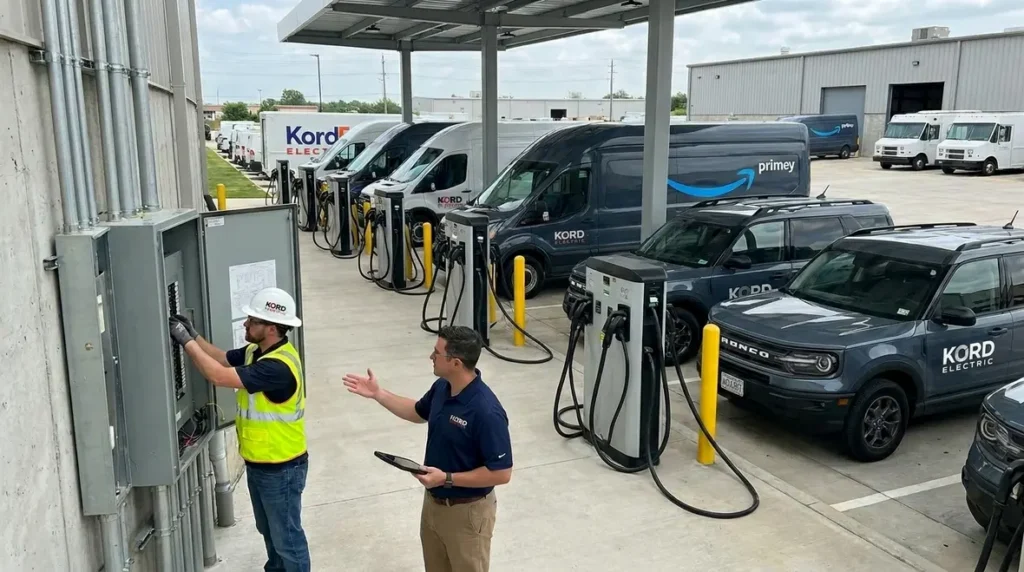
- Fleet charging: Scheduled windows, load management considerations, and fast recovery needs
- Multi building properties: Site wide planning, metering strategy, and clear ownership of costs
Then we align the charger count and power levels with available electrical service. In many cases, load management helps prevent oversizing the whole system at the start. We also recommend a plan for spare parts and service access, because a charger that cannot be serviced quickly becomes a slow revenue leak. Nobody enjoys that, and your maintenance team definitely does not either.
Dual column planning checklist for commercial EV charging projects
What we assess first
- Panel and service capacity
- Transformer limits and demand
- Site power routing and trenching needs
- Permits and inspection pathway
- Safe grounding and bonding details
What we help you plan next
- Charger count and layout strategy
- Load management and expansion paths
- Schedule windows and operational impact
- Commissioning testing and handoff
- ROI assumptions and reporting goals
FAQ
Commercial projects in charge of the details
When you hire Kord Electric, you get more than wiring. You get expert service staff who explain the scope in plain language, technicians who build for reliability, and project planning that respects commercial timelines. So if you want a charger system that performs and scales, we will help you estimate costs, map the electrical path, and build an ROI view you can stand behind.
If your facility is planning broader improvements, you can also align EV charging work with other upgrades like lighting installation services or electrical preventive maintenance, so you strengthen your overall infrastructure while controlling downtime and budget.
For dedicated charger planning, our commercial EV charger installation services connect the design, permitting, build, and commissioning steps into one clear path. That way, EV charging station installation costs commercial become predictable instead of mysterious—and your facility gets a system that is safe, scalable, and ready for long term use.
Contact Kord Electric today to schedule a site assessment and get a plan that fits your facility, not a generic brochure.