Commercial Power Distribution Troubleshooting Guide
At Kord Electric, we routinely handle commercial power distribution troubleshooting in industrial buildings where the stakes are high and the downtime clock feels louder than the alarms. Others may shrug at flickering lights or a warm panel, but we do not. When power distribution starts acting up, equipment performance drops, safety risks rise, and production schedules get pushed like dominoes at the start of a bad Friday night. To keep our clients steady, our technicians and expert service staff use a clear, calm method: identify the symptom, trace the pathway, test what matters, and fix the root cause, not just the visible problem.
How we spot early warning signs before power fails
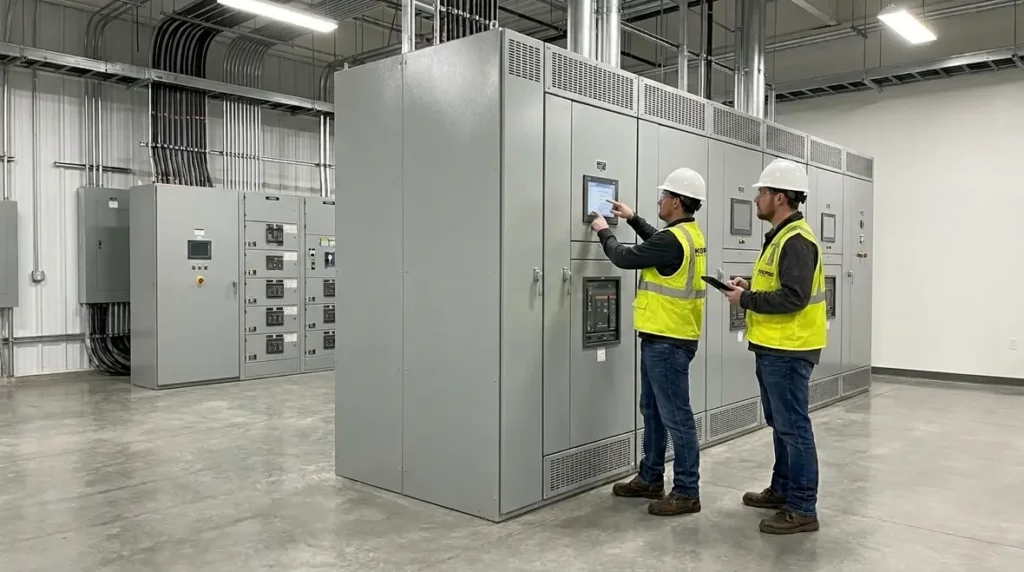
In most industrial and major property buildings, problems do not announce themselves with dramatic music. Instead, we see small signals first. For example, a switchboard may run hotter than usual, breakers may trip more often, or crews may report that certain loads “feel unstable.” When this happens, we treat it like a quiet customer complaint that grows teeth over time.
Our technicians start by mapping the electrical single line and reviewing recent events. Then, we compare operating conditions against normal baselines: load balance, voltage quality, phase currents, and temperature patterns. Next, we look for the common culprits that hide in plain sight, such as loose terminations, aging bus connections, moisture intrusion, and harmonic distortion from modern drives and process equipment.
And yes, sometimes the issue really is as simple as a connection that loosened over time, like a tie that never fully got tightened. The difference is that we tighten it correctly and verify it, rather than guessing while someone holds a flashlight and hopes for the best.
Troubleshooting overloads, tripping breakers, and nuisance faults
When breakers trip, many facilities assume the breaker is “bad.” However, we know better. We apply commercial power distribution troubleshooting steps in a way that protects the plant and keeps the fix honest. First, we check the type of trip. A thermal event points toward overload or poor cooling. An instantaneous trip often suggests a short circuit or a high current fault. Meanwhile, nuisance tripping can come from ground issues, wiring problems, or control settings that drift out of spec.
Next, we examine load behavior. If one circuit feeds critical equipment, we check whether that equipment started drawing more current than expected. Then, we confirm the breaker rating and coordination. If settings were changed for convenience during past repairs, coordination may no longer protect what it should. In other words, the system might be doing exactly what it was told, just not what it was intended to do.
We also verify that the distribution system supports the load profile it now carries. Industrial upgrades often add variable frequency drives, welding systems, compressors, and other power hungry tools. Therefore, the “old plan” can fail under new demand, even if no one touched the panel.
To keep things moving, our expert service staff documents each finding, then recommends adjustments such as load balancing, breaker recalibration where appropriate, tightening work with torque verification, or targeted replacement. We do not chase ghosts. We hunt causes.
Why voltage drops and brownouts happen in real facilities
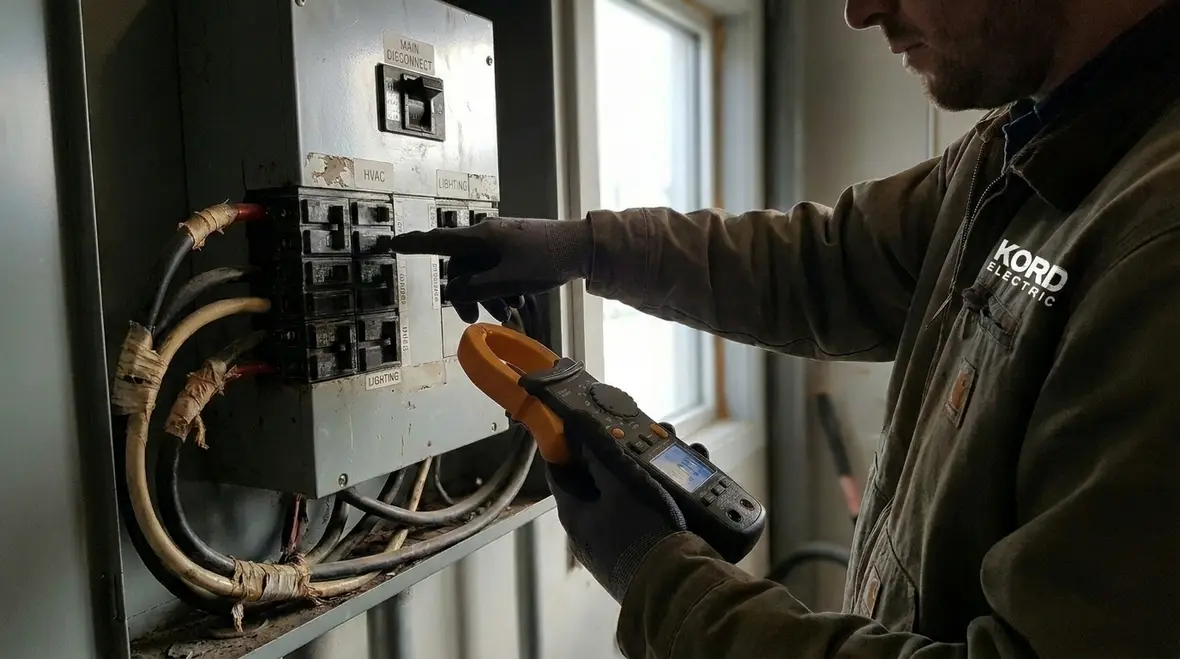
Voltage drop rarely stays quiet. It shows up as dimming lights, motor overheating, soft starters that struggle to start, and control boards that act “haunted.” If your facility runs long feeder runs, has high starting currents, or experiences frequent motor cycling, voltage drop can build like stress in a late shift.
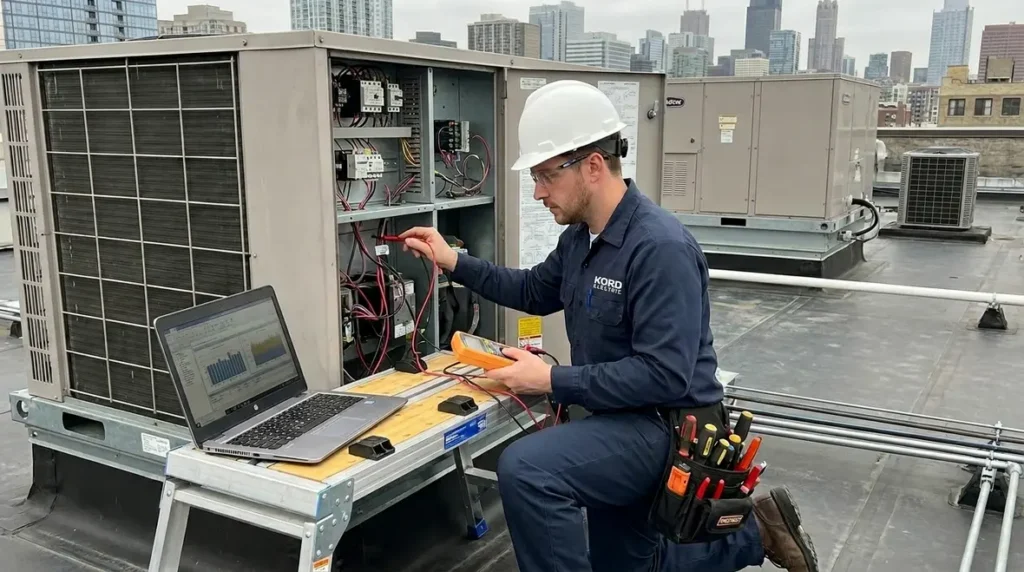
During our troubleshooting, we measure voltage at key points under load, not just at idle. Then, we check conductor sizing, connection resistance, and transformer condition. A slightly corroded connection can create a big problem over time. Also, shared neutrals, poor grounding, or overloaded distribution sections can amplify the issue, especially in buildings with lots of mixed single phase and three phase loads.
We also evaluate power quality. Harmonics can contribute to heating and reduce effective voltage. If facility equipment relies on modern rectifiers and inverters, harmonics can rise without anyone noticing until equipment complains. So, we test, we compare, and then we propose a fix that fits the system, not a generic answer that looks good on paper.
For facilities facing recurring voltage issues, pairing targeted diagnostics with a structured maintenance strategy can make a major difference. Many of our clients combine this kind of detailed analysis with longer term programs like our commercial and industrial electrical maintenance plans so voltage problems are caught and corrected before they cascade into full outages.
Ground faults, insulation issues, and the safety side of the story
Ground faults and insulation deterioration are not “electrical annoyances.” They can become safety hazards, and they can trip protection systems unexpectedly. In commercial and industrial settings, we treat these problems with the seriousness they deserve.
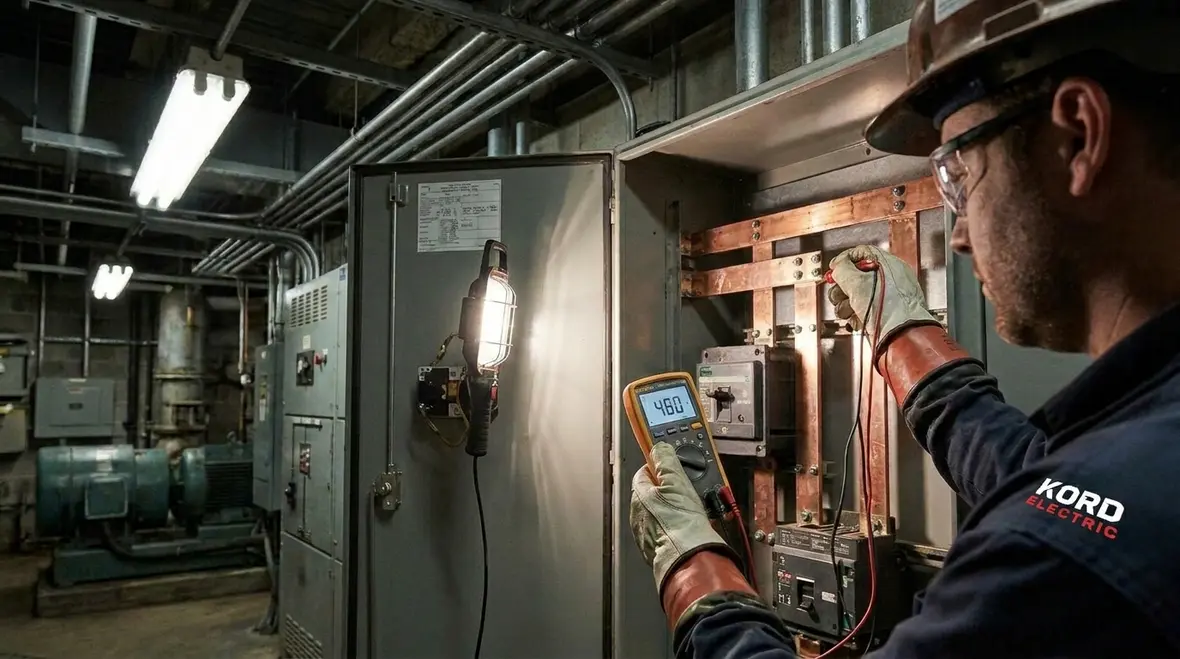
Our technicians start by checking the grounding system continuity and reviewing any recent work performed in the area. Then, we use appropriate testing to identify insulation weaknesses, moisture problems, or degraded cables. When insulation resistance drops, the system may still run, but it runs less safely. Over time, that loss can turn into repeat trips, nuisance alarms, and damaged equipment.
And here is where patience pays off. We do not rush to replace parts without locating the fault boundary. Instead, we trace circuits methodically, verify readings, and confirm the fix. If it feels slow, that is because it is careful. In safety work, speed without proof is just a fancy way of rolling dice.
In large facilities, this methodical approach is often paired with a broader culture of reliability. When teams embrace scheduled inspections, documented testing, and disciplined follow up, safety stops being a one time project and becomes part of how the building runs every day.
Harmonics and overheating in modern industrial loads
Industrial buildings increasingly depend on equipment that reshapes power: variable frequency drives, motor controllers, LED retrofits, HVAC controls, and process automation systems. These loads can cause harmonic distortion, which then affects transformers, neutral conductors, and bus bars. And yes, overheated neutrals can be a real thing. It is not a myth, and it is not “normal for the season.”
We check temperature trends, current waveforms, and load characteristics. Then, we look at panel design choices and upstream conditions. Sometimes the problem is born from the load mix, such as adding more drive-fed equipment without updating capacity. Other times, the system suffers from poor filtering or misaligned transformer tap settings.
From there, we recommend solutions that match the facility’s operational goals. That may include harmonic mitigation strategies, rebalancing loads, correcting grounding practices, or upgrading components that cannot handle the present waveform quality. Our expert service staff explains each step in plain terms so facility leaders understand what changes, why it matters, and what outcome to expect.

Preventive maintenance plans that stop repeat failures
When we see the same issue return after a quick patch, we know it is time for a stronger maintenance rhythm. Kord Electric supports commercial and industrial facilities with structured plans, aligned to how real buildings operate. If you want fewer surprises, you need scheduled work that catches issues during normal hours, not during peak production.
Our approach uses a maintenance strategy similar to what we outline in our commercial and industrial electrical maintenance plans. We focus on routine inspection, targeted testing, and documented results that help teams budget and plan repairs. Meanwhile, we coordinate with your facility staff to reduce downtime and keep operations stable.
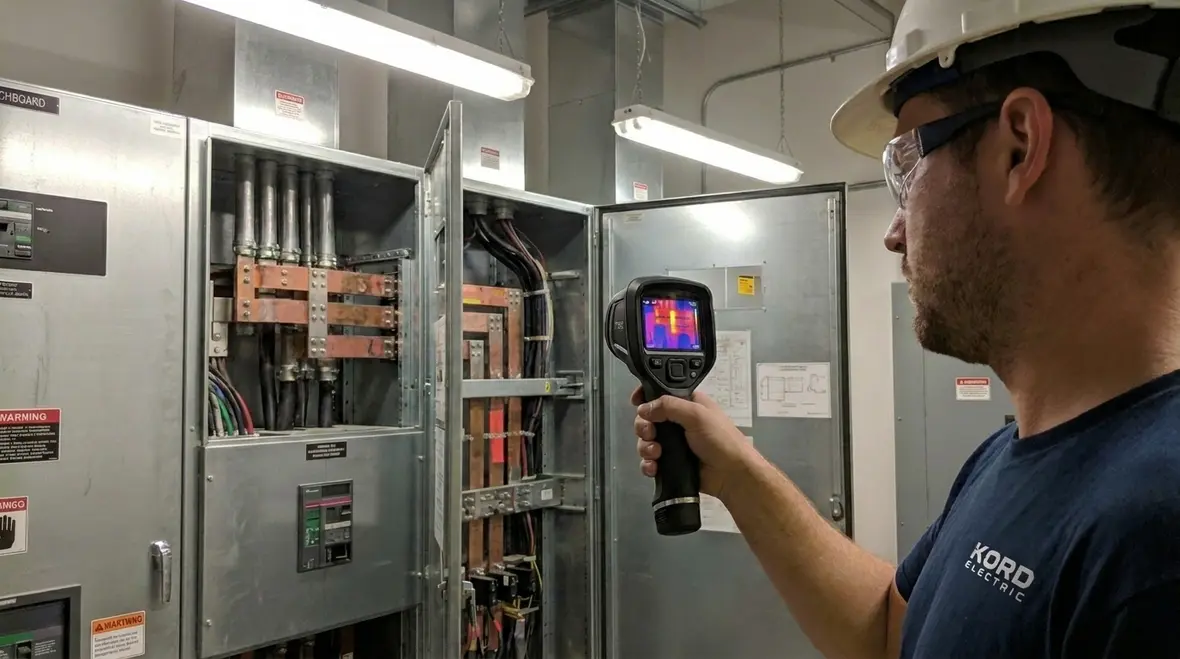
Depending on the building and equipment, preventive work can include breaker inspections, IR testing, torque verification on critical connections, thermal imaging on switchgear and panels, and cleaning or sealing where moisture is a known risk. In addition, we review event history so technicians can connect symptoms to root causes over time.
Here is the calming truth: preventive maintenance is not complicated. It is just consistent. The hard part is doing it before the system forces the issue.
Best practices for documenting issues and coordinating repairs
Even when repairs are done well, facilities struggle when information stays locked in someone’s memory. We help our clients avoid that by pushing documentation into the foreground. When we troubleshoot distribution issues, we record what we tested, what we found, and what we changed. Then we attach that record to the specific equipment and location so the next service event starts from facts, not guesses.
To keep repairs coordinated, we also plan work windows. We confirm isolation steps, safety procedures, and load priorities. Therefore, production teams know what will happen and when. This kind of coordination reduces stress, because nobody wants to explain to leadership why a “quick check” turned into a lost shift.
Our technicians also communicate recommendations clearly. They do not just say, “Replace it.” Instead, they explain which component drives the failure risk, how long it likely took to develop, and what performance impact to expect after the repair. That way, facility managers can make confident decisions based on evidence.
Over time, this kind of record keeping builds a living history of the site. It becomes easier to spot patterns, justify upgrades, and connect individual events to bigger system trends, instead of treating every outage like a brand new mystery.
FAQ
Need help with distribution issues in your facility
If your industrial building shows signs of tripping, overheating, flicker, or recurring faults, do not wait for the next outage to become your newest “tradition.” Kord Electric brings expert technicians, careful testing, and a steady plan to resolve the true cause behind the symptoms. We coordinate work to protect your operations and document every step so you can plan with confidence. Reach out today, and we will help you restore reliable power and reduce repeat failures before they cost you more than time.
If your power quality challenges include chronic voltage swings, equipment damage, or unexplained performance issues, you can also explore our dedicated service options like the Voltage Fluctuations in Commercial & Industrial Facilities service. For facilities that want to get ahead of the next outage entirely, pairing commercial power distribution troubleshooting with structured programs such as Electrical Preventive Maintenance creates a long-term path to reliability, not just a one-time repair.
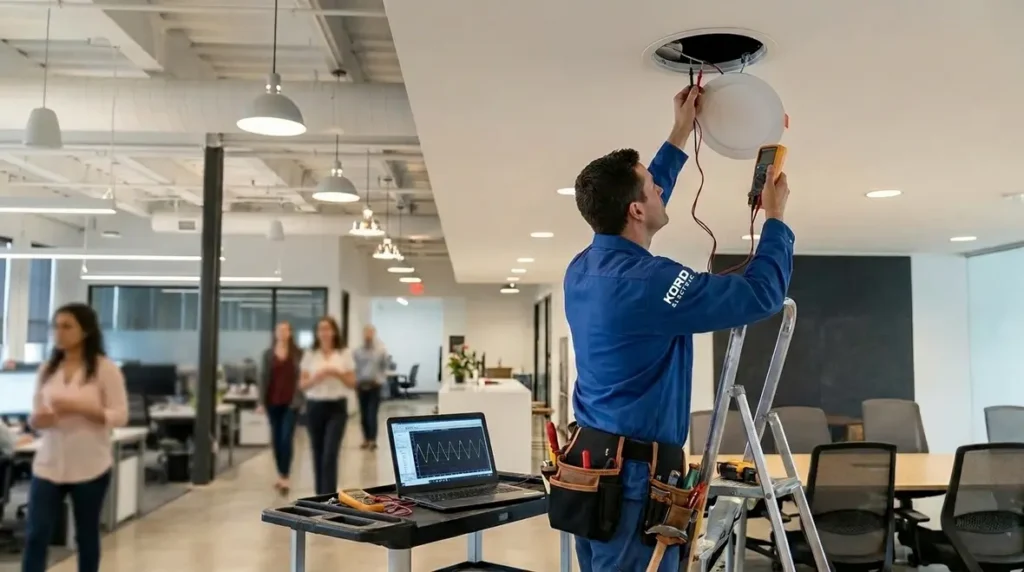
And if your plans include upgrades, expansions, or new infrastructure, our broader commercial services—ranging from recessed lighting installation to specialized systems like EV charger installation—can be integrated alongside troubleshooting and maintenance, so your distribution system and your projects move forward together.
When you are ready to bring order back to your power distribution, our team is ready to help you trace the pathway, test what matters, and fix the root cause with the same calm, methodical approach we bring to every major facility we serve.
Schedule expert commercial power distribution troubleshooting
Tell us what your facility is experiencing—frequent breaker trips, unexplained voltage fluctuations, overheating gear, or just a sense that “something is off”—and we will help you turn symptoms into answers. From there, you can decide whether to move forward with targeted repairs, a preventive maintenance plan, or both.
We are ready when you are.