Commercial EV Charger Installation Los Angeles CA
Commercial EV Charger Installation Requirements in Los Angeles, and what businesses must get right
When a company plans commercial EV charger installation los angeles requirements, we expect them to move with care, not guesswork. Los Angeles has building, electrical, permitting, and safety expectations that apply to offices, warehouses, retail centers, and other major property buildings. We also see a common mistake: teams try to treat a commercial charging plan like it is a casual home upgrade. That is where delays, costly change orders, and “fun” inspections show up like an uninvited guest at a team lunch.
At Kord Electric, we handle the full electrical path for commercial and industrial facilities, and we explain each step in plain terms. Our technicians and expert service staff walk facility managers through the rules, the hardware choices, and the power planning, so your project stays on schedule and meets local expectations.
Step one: site review that matches your load and your reality
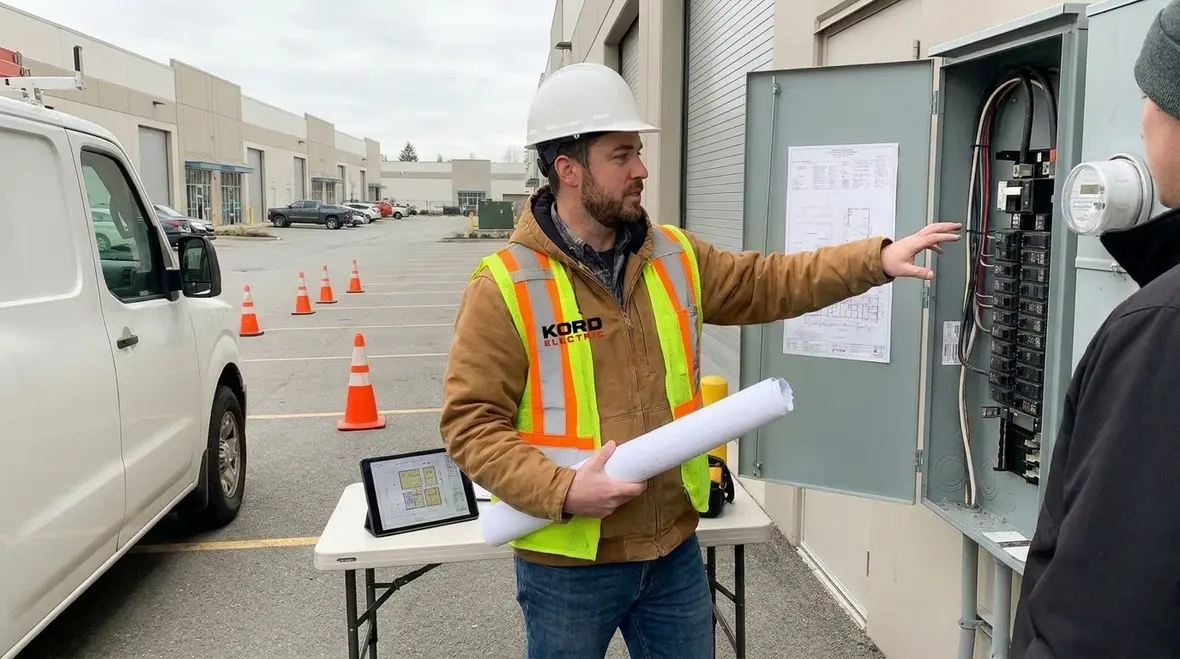
Before we suggest chargers, we look at the property like a power engineer with a calm heart. First, we confirm how much electrical capacity the site can safely support. Next, we check main service size, available breakers, transformer capacity, and panel space. Then, we review parking layout and EV access so charging spots do not turn into traffic puzzles.
Importantly, our approach stays focused on commercial and industrial facilities and major property buildings. We do not build a plan for “someone’s office,” we build a plan for a business that has peak load, tenant needs, and real operating hours. And because each site behaves differently, we often map charging zones and consider demand management early, so you do not outgrow your system before the ink dries on your lease or your grand opening ribbon.
To keep things smooth, we also explain what we find. Our expert service staff do not just point at a one line diagram and vanish. They talk through options, tradeoffs, and timelines in a way that a facility director can actually use.
For teams that want to see how site reviews connect to a broader roadmap, it can help to look at how we think about long term scaling in our commercial EV charging planning guide for scaling infrastructure. It shows how capacity checks, layout, and demand management fit together instead of living in separate spreadsheets.
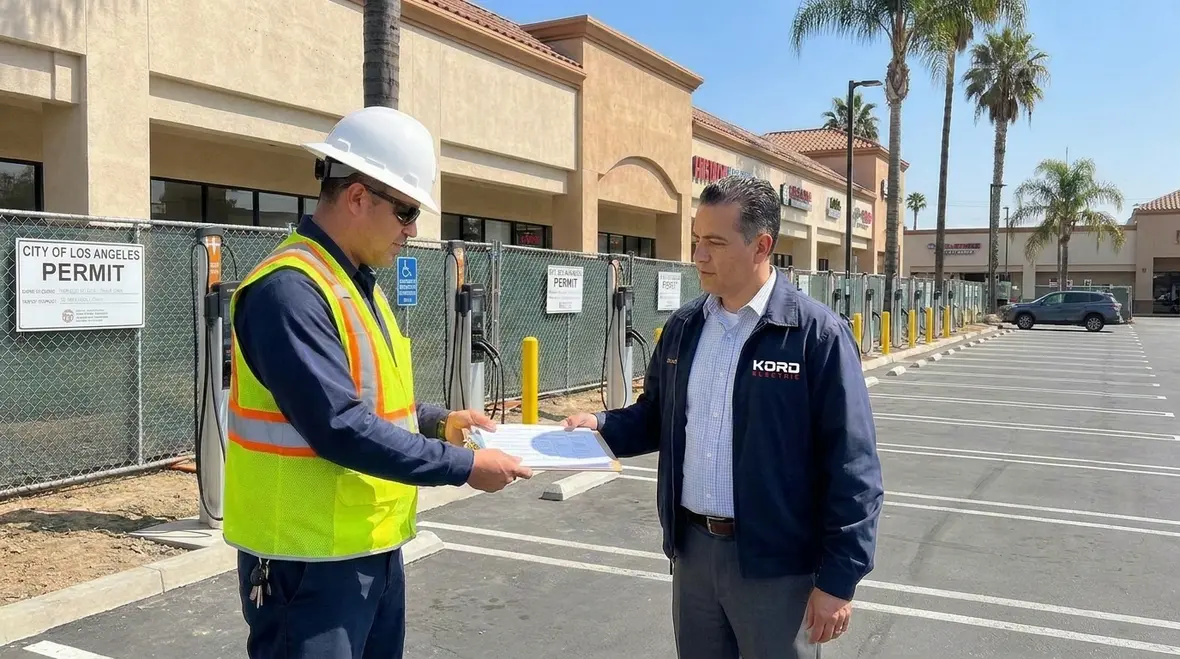
Permits, inspections, and LA compliance: what we coordinate for your project
After the site review, we help you move through permitting and inspections with less friction. We coordinate documentation, scope details, and electrical drawings that align with local expectations for commercial work in Los Angeles. In practice, this means we plan around code requirements, safety rules, and the inspection steps that your AHJ will expect.
Furthermore, we design the electrical work so it passes review without drama. That includes proper conduit routing, correct cable sizing, safe equipment placement, and clear labeling. Then, once installed, we support close out so the system is ready for day to day use, not just a photo op.
And yes, we have seen projects where the charger looked great but the paperwork was not ready. That is like buying a nice suit for a job interview but forgetting your ID. The suit does not help if the process fails.
Because EV charging touches panels, feeders, and sometimes the broader distribution system, we often align permitting and inspection work with a facility’s existing electrical strategy. That may include insights from infrastructure planning and related articles in the Kord Electric Blog, so you are not approving one project while another creates a surprise constraint across the building.
Electrical design and panel planning that avoid future bottlenecks
Next, we build a design that anticipates growth. Many commercial teams start with a few chargers and later add more units, then suddenly they hit limited panel capacity or constrained feeder space. So we plan the electrical backbone from the start.
At this stage, our team focuses on service upgrades when they are needed, load calculations, and strategies that keep the system safe. We may include options like load balancing or demand response style controls, depending on your business goals and site constraints. Also, we consider how people will use the chargers during business hours, after hours, and on high demand days.
From there, we review hardware selection with you. We discuss why certain charger models fit better for commercial duty cycles, how cable management affects maintenance, and how weather protection matters for outdoor parking areas. We also tell you what to expect during commissioning so the system starts up properly.
If your property is also thinking about future phases of electrification, we often connect this panel planning with ideas from our infrastructure and growth focused resources. That way, the design that feeds today’s chargers can also support the next wave of EV adoption at your site.
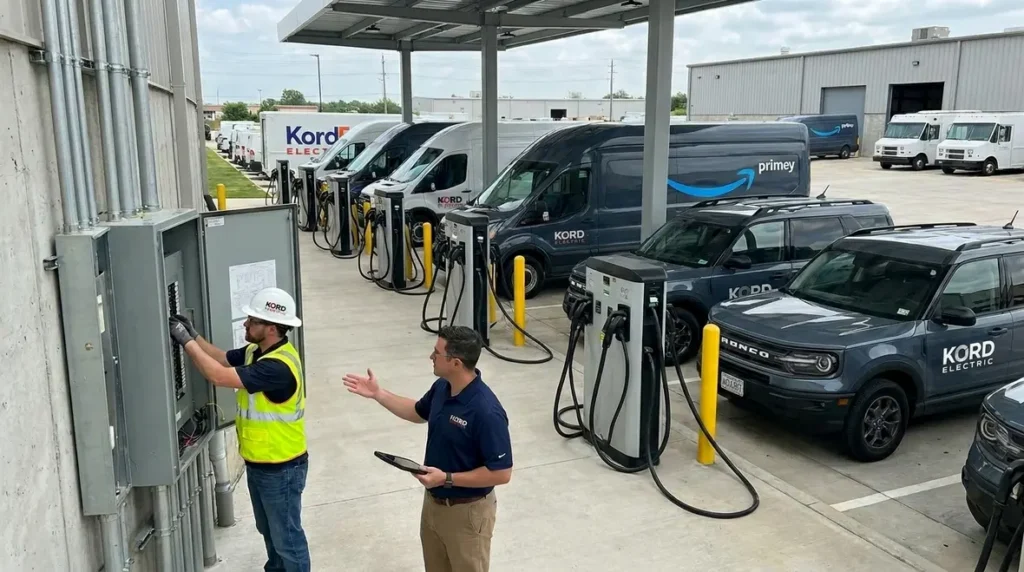
Infrastructure scaling for major properties: planning for the next 3 to 7 years
Commercial EV programs succeed when they scale. And they fail when the design only fits today. That is why our planning draws from our commercial EV charging planning guide and scaling infrastructure approach.
We often start with a forecast that connects parking demand to business operations. Then, we think in phases. For example, we design your first phase with the right electrical capacity and physical pathways so future expansions do not require demolition or major rewiring. In the real world, that approach saves money and reduces downtime.
We also coordinate the “invisible” parts of the system. That includes pathway planning, conduit stub ups, and space for additional breakers or equipment. Meanwhile, we make sure the chargers fit into your site’s rules for traffic flow and accessibility. If your property runs like a machine, charging should match that rhythm.
In short, we help you build like a long term operator, not like someone installing a temporary sign. If you want to go deeper into scalable layouts and phased growth, our detailed commercial EV charging planning guide for scaling infrastructure walks through how we design for steady growth instead of constant rework.
Installation details that keep operations calm on move in day
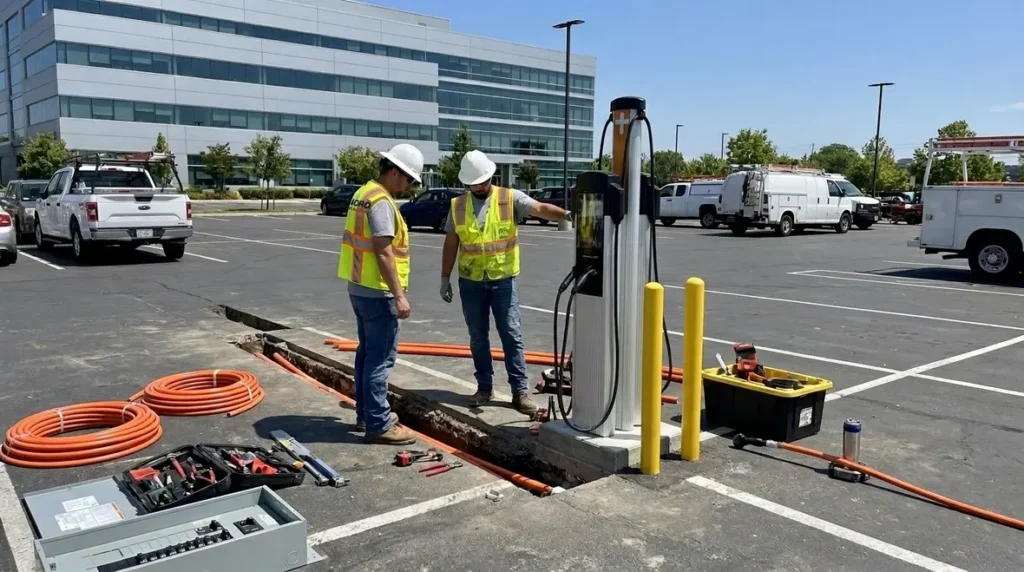
When we install, we keep the property team in mind. Our work processes are built for commercial and industrial environments, where operations cannot pause for long. We manage cable routing, conduit installation, and charger mounting with careful attention to safety and site cleanliness. We also schedule work windows that reduce disruption.
Additionally, we verify correct grounding and bonding, test connections, and confirm that the system performs as expected. Then, our technicians review basic use points with your on site staff, so the chargers do not become a “mystery box” that only engineers can operate.
Here is where our expert service staff help in a practical way. They explain what a user will see, what an operator will monitor, and what to do when you need service. And because commercial sites run on trust, we provide clear steps for maintenance and reporting.
We also use common sense. If it looks messy, it will stay messy. If it is labeled clearly, it gets fixed faster. That is not just good engineering, it is good business.
Two columns of costs and timelines we typically plan for major buildings
Different properties create different requirements, so we plan with ranges and clear assumptions. Below, we share the way we typically think about project scope. For commercial and industrial facilities and major property buildings, the goal is always predictable outcomes, not surprise invoices.
Cost factors we often see
Electrical service upgrades or transformer impacts
Panel and feeder work needs
Conduit runs, trenching, or structural mounting
Charger count and power level selection
Site controls, monitoring, and software integration
Permitting and inspection coordination
Timeline factors we often see
Site survey and load study complexity
Permit turnaround time
Equipment lead times for chargers and parts
Civil work scheduling for conduit routing
Installer schedule for limited access areas
Commissioning and documentation close out
If you want a deeper dive on how these cost and schedule pieces usually land for commercial properties, you can pair this overview with our broader guides on commercial EV charging infrastructure and cost ranges. Together, they turn a vague budget line into a concrete, defensible plan.
Maintenance, monitoring, and support that keep your chargers working
After installation, the system still needs a plan. We help commercial teams set expectations for maintenance and monitoring so chargers stay reliable. That includes routine checks, managing wear on connectors, and reviewing alerts that can point to issues early. When a charger goes down, a quick response matters more than any marketing slide.
Also, we explain support flow. Our expert service staff can guide your team on how to report issues, what details help our technicians diagnose faster, and what “normal operation” looks like. We do this because downtime on a commercial property hits operations, customer experience, and tenant trust.
To be blunt, EV chargers are not magic. They are power systems plus electronics. However, when we plan correctly and support them properly, they behave like the steady infrastructure your building needs.
Many owners in Los Angeles pair EV charger support with broader electrical service programs, especially when they already rely on structured Los Angeles County electrical services for panels, distribution, and preventive work. That way, your charging network becomes part of a unified reliability strategy for the entire facility.
FAQ: commercial EV charger installation in Los Angeles
Call Kord Electric for a commercial EV plan that holds up in Los Angeles
If your facility needs commercial EV charger installation los angeles requirements handled with real engineering and real project management, we are ready. Kord Electric serves commercial and industrial facilities and major property buildings, and our technicians and expert service staff explain every step in plain language. We plan your electrical design, coordinate permits, and install chargers with calm, careful execution. Call us to review your site and build a scalable EV charging plan that works today and tomorrow.
When you are ready to move from planning into action, you can also explore our dedicated EV charger installation services, which connect site evaluation, design, and field work into one coordinated path from first assessment to final commissioning.
For facilities across the broader region, Kord Electric’s Los Angeles County electrical services keep panels, distribution, and emergency response aligned with your EV charging plans, so your electrical infrastructure strategy stays unified instead of scattered across multiple vendors.
In other words, you get one partner to coordinate the power path, the chargers, and the day to day reliability your tenants and drivers count on.