Commercial EV Charger Installation Site Planning
EV charger installation site planning that prevents expensive surprises
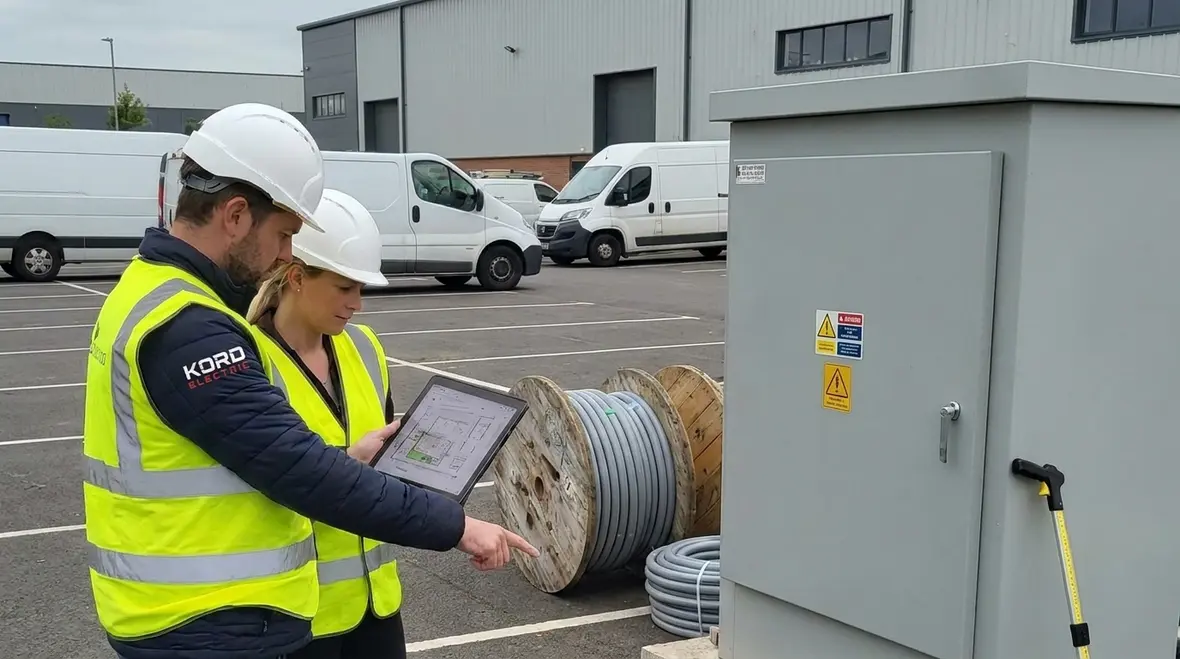
At Kord Electric, we focus on commercial and industrial facilities and major property buildings, and we start with EV charger installation site planning inside the first conversation. We do this because your power, your layout, and your future maintenance schedule do not care about optimism. They care about engineering and clean preparation.
When a site shows up “ready for chargers,” we treat that like a delivery driver saying “I know the exact address,” then asking for parking validation. It might be true, but we verify it. And because voltage, cable paths, and traffic flow affect uptime, our technicians build a plan that holds up after day one, after day one hundred, and after someone inevitably parks in the wrong place.
Assess the electrical capacity and protect against voltage issues
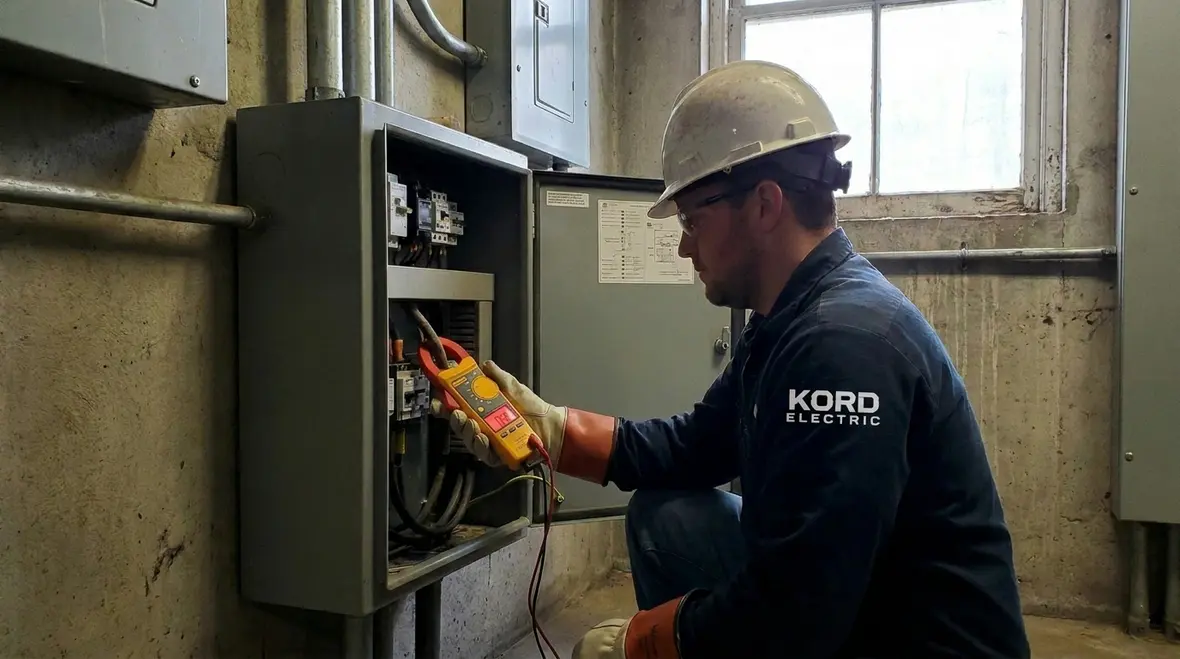
First, our team checks whether the building can support the load without causing problems for other systems. We review the service size, transformer capacity, panel ratings, and existing demand. Then we confirm how the new chargers will run under real conditions, not ideal spreadsheet numbers.
Next, we look for voltage fluctuations that can shorten equipment life and interrupt charging. Kord Electric also addresses these concerns as outlined in our guidance on voltage fluctuations in commercial and industrial settings. In simple terms, when voltage dips or swings, chargers can throttle, stop, or report errors. This can lead to “it worked yesterday” complaints that no one enjoys, especially the facilities manager who has enough on their plate.
To prevent that, we often recommend load studies, panel balancing, and, when needed, upgrades to distribution equipment. Our expert service staff explains what they find in plain language, and they do it before we install anything. That way, stakeholders know why decisions get made, instead of guessing why. And yes, we know “guessing” is fun in movies, but it is not a charging strategy.
For many properties, EV charging is arriving alongside other reliability upgrades. When that happens, we align EV charger installation site planning with broader power quality work, such as voltage fluctuation mitigation and preventive maintenance, so the building’s infrastructure tells one clear story instead of three conflicting ones.
Map charger placement for traffic flow and safe access
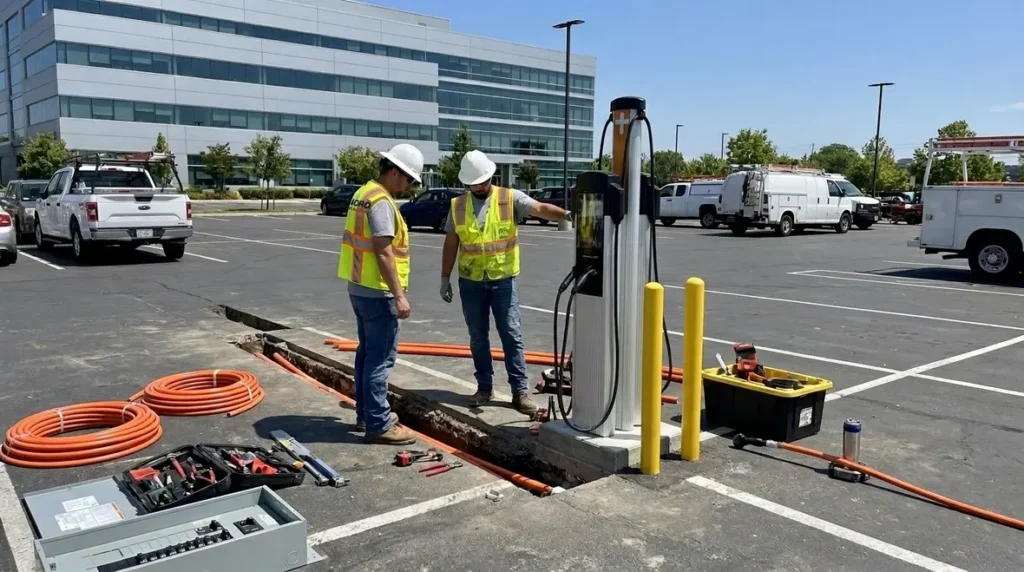
After the electrical side checks out, we plan placement like we are building a small, dependable system for people, vehicles, and maintenance crews. We evaluate parking geometry, turning radii, pedestrian routes, emergency access, and how snow removal or landscaping might affect access areas.
Then we verify cable routes and conduit runs so they do not become trip hazards or unnecessary repair points. If you want fewer disruptions later, you place chargers where the path for power is logical and protected. Moreover, we factor in signage, bollards, and mounting heights so vehicles cannot collide with hardware. Facilities teams do not need extra damage claims on a Monday.
We also consider future growth. A site rarely stays at one or two chargers once tenants and drivers see availability. So we plan spare capacity, space for additional units, and realistic cable pathway allowances. In other words, we design for year one and year three, not just the first photo op.
That forward-looking approach pairs naturally with EV charging infrastructure scalability. When we plan EV charger placement, we coordinate with future-ready electrical work so new chargers can be added in phases without tearing up the same pavement twice or overloading service capacity the moment utilization increases.

Designing for fleets, tenants, and visitors at the same time
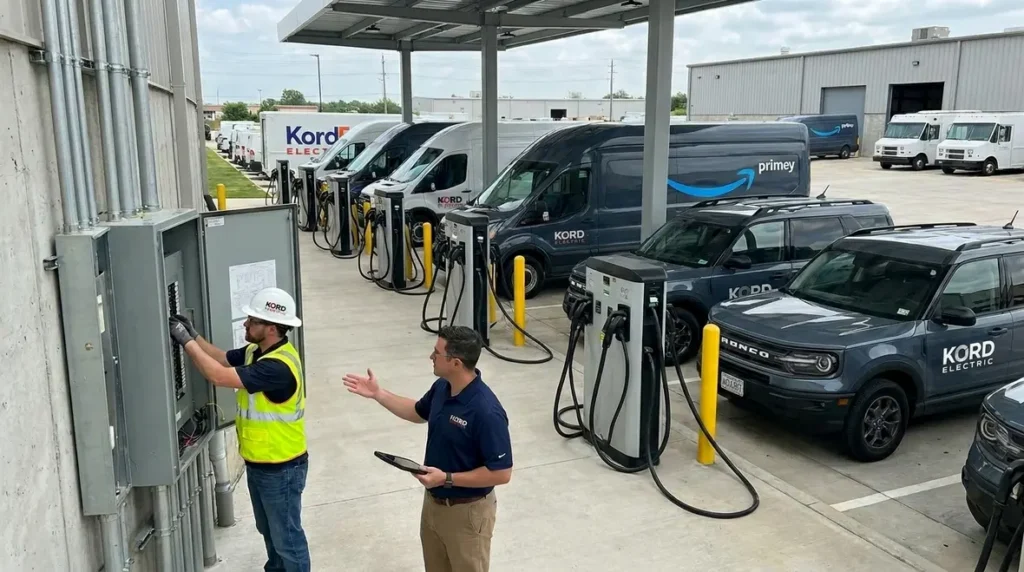
Commercial properties often serve more than one audience. Fleets want predictable charging windows and clear access. Tenants want reliable daily charging near their normal parking areas. Visitors want simple, obvious spaces that do not require a map. Our planning aims to satisfy all three without letting one group block out the others.
We often separate dedicated fleet charging zones from visitor-heavy areas, while still using shared electrical infrastructure behind the scenes. That keeps “back of house” operations efficient and “front of house” experiences straightforward. The result is an EV charging layout that feels natural to drivers and manageable to operations teams.
Prepare foundations, conduit paths, and weatherproofing
Now we talk physical prep, because a strong plan fails if the ground work is weak. Our technicians inspect the site surface and subgrade conditions, then confirm that foundations, mounting points, and anchoring meet the charger manufacturer requirements and local standards.
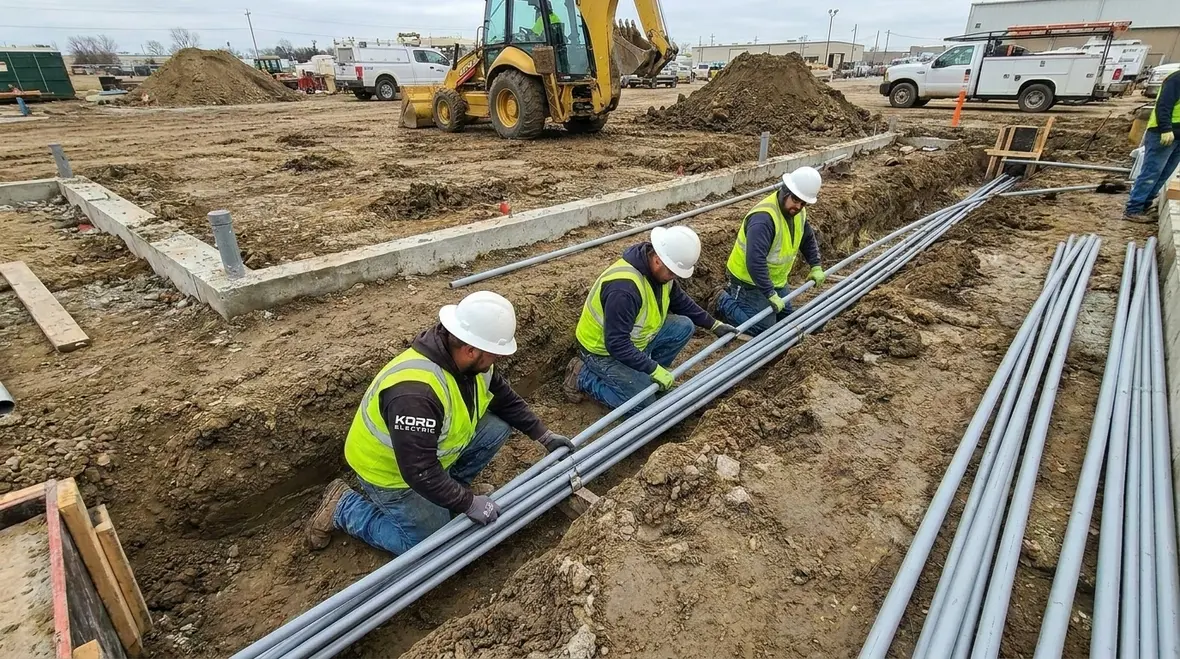
Next, we design conduit and cabling routes that protect against moisture, corrosion, impact, and heat. We also coordinate trenching schedules and backfill plans so the work does not disrupt other operations more than it must. If a facility runs on tight timelines, we align installation steps with your maintenance windows and operational needs.
Weatherproofing matters more than many people think. Outdoor installations face freeze thaw cycles, salt exposure, heavy rain, and dust. Therefore, we ensure proper sealing, correct conduit fill considerations, and durable exterior components. Our expert service staff explains these details as they happen, so decision makers understand what they are buying: long term reliability, not temporary hope.
Coordinating EV chargers with broader maintenance and upgrades
If your property already follows structured electrical preventive maintenance, we align EV charger installation site planning with that schedule. That way, new chargers, panels, and conduits are inspected and serviced alongside existing gear instead of becoming an isolated project that nobody owns.
In practice, we often sync trenching or paving work with other capital projects, like lighting upgrades or parking lot renovations. By bundling the work, facilities can reduce downtime, avoid duplicate disruption, and keep budgets focused on long-term improvements instead of scattered one-off repairs.
Coordinate permits, inspections, and utility requirements early
Permits and inspections can feel like a maze designed by someone who hates weekends. Still, we keep it organized. First, we identify the required permits for electrical work, site modifications, and any work that affects parking areas or access routes.
Then we coordinate with the utility when a service upgrade, transformer work, or metering changes are needed. Utility processes move on their own schedule, so we start early to avoid late stage delays. We also plan for inspection timing so the site can stay productive. No one benefits when construction drags, and your staff certainly does not want strangers crawling around the building after hours.
Most importantly, our team documents the design and installation steps so inspectors can verify quickly. That reduces rework and helps your chargers go live faster. And when questions come up, our technicians handle the explanations clearly. They do not hide behind jargon. They explain what was done, why it was done, and how it keeps the site safe.
Keeping EV projects aligned with AHJ and utility expectations
Authorities having jurisdiction and serving utilities care about documentation, protective devices, and safe load management. We build those details into the design from day one so permits reflect the real project and field work matches the approved plans.
By tying EV charger installation site planning to utility coordination and proper documentation, we help keep approvals on track and reduce last-minute design changes that burn time and budget.
Plan commissioning, testing, and driver readiness
Even when everything looks right, commissioning decides whether the charger performs like it was promised. We test electrical connections, verify protective devices, and run functional checks to confirm proper operation. We also validate communication settings and confirm that the charging experience matches the user plan.
Then we test under the conditions that matter for a commercial environment: multiple users, varying vehicle loads, and normal site behavior. If your facility has fleets, we confirm charging schedules and user access controls. If you serve visitors, we validate signage and how drivers start sessions.
We also plan driver readiness through documentation and clear operating steps for your team. In addition, we advise on simple housekeeping routines like cable inspection and keeping the access zone clear. That sounds basic, but it prevents the kind of failures that grow from tiny issues into bigger headaches. Think of it like changing the batteries in a smoke detector. Nobody applauds, but everyone thanks you when it works.
Connecting on-site teams to everyday charging operations
Once commissioning is complete, the chargers move into daily operations. We help facilities teams understand how to monitor status, respond to common alerts, and escalate issues for service when needed. The goal is not to turn your staff into full-time EV technicians, but to give them clear, simple playbooks so they know what to check before calling for help.
This is also where EV charger installation site planning intersects with ongoing training. Short sessions, quick-reference guides, and clear labeling keep the system approachable, even as equipment, software, or usage patterns evolve.
Ongoing maintenance strategies that keep uptime high
After installation, EV chargers become part of your facility infrastructure. So we set up a maintenance approach that fits commercial and industrial operations. Our technicians recommend inspection intervals for connections, hardware condition, grounding integrity, and enclosure seals. We also suggest a routine for clearing minor obstructions and checking for signs of physical damage.
Next, we review performance trends and error logs. When we see patterns, we act early instead of waiting for a full failure. That approach protects both your drivers and your budget. And yes, we track the details so your team does not have to become a part time electrical detective.
Finally, we build support into the process from the start. Our expert service staff helps establish a response plan so your site knows what happens during downtime, who to call, and how to restore charging quickly. Because in the commercial world, uptime is not a luxury. It is a requirement.
Linking EV charger maintenance with broader facility reliability
Well-planned EV charger installation site planning connects naturally to long-term electrical reliability. By coordinating EV maintenance with broader services like electrical preventive maintenance and power quality corrections, we help properties stay ahead of issues instead of reacting to them.
Some facilities also integrate EV charging with other reliability-focused programs, from emergency electrical services to lighting system upgrades. That kind of alignment keeps your infrastructure strategy coordinated and avoids the patchwork feel that comes from disconnected projects.
FAQ
Ready for a dependable rollout at your facility
If you want EV charging that works on day one and stays steady after day one hundred, Kord Electric can help. We prepare the electrical capacity, plan safe placement, coordinate permits, and support commissioning and maintenance for commercial and industrial sites. Our expert service staff explains each step in plain terms, because nobody should be surprised by a site upgrade. Contact us to discuss your facility needs, timelines, and expansion goals, and we will build a plan you can trust.
If your property is evaluating next steps, you can also explore Kord Electric’s dedicated EV charger installation services, which bring design, permitting, and field execution together for commercial and industrial facilities. When EV charger installation site planning is tied directly to experienced installation and service teams, your rollout moves from “someday” to a clear, dependable path.