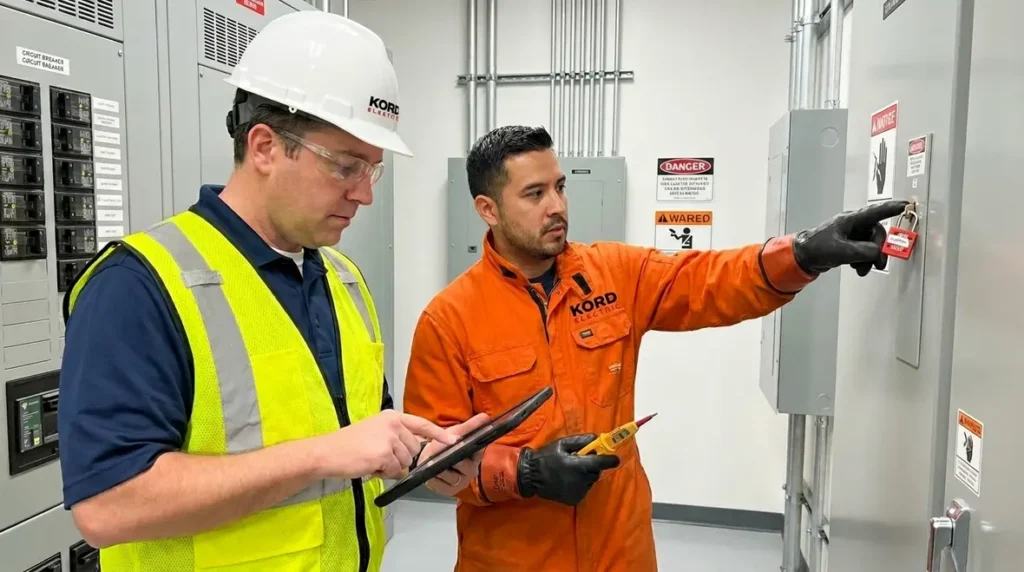
At Kord Electric, we help facility managers keep commercial and industrial buildings running like they should, not like a sitcom that never ends. In this guide, we lay out the electrical preventative maintenance checklist right inside the first 100 to 150 words: inspect and log panel conditions, test emergency systems, verify grounding and bonding, check protective devices, inspect feeders and conductors, measure insulation resistance, and review all labeling and documentation. Then, we explain how our technicians walk through each step with clear, calm explanations so your team knows what we did and why it matters. And yes, we also make sure the electrical system stays ready for the real world, not the “it worked last time” world.
Electrical Preventative Maintenance Checklist Guide
How an electrical preventative maintenance checklist prevents costly downtime
Third person teams at Kord Electric typically see the same pattern: something small starts to drift out of spec, then a breaker trips more often, then one day the equipment acts like it has amnesia. That is the moment facilities managers wish they had used a stronger electrical preventative maintenance checklist sooner.

Our experience with commercial and industrial facilities shows that preventative work cuts risk in three big ways. First, we catch early signs of wear, heat, loose connections, and moisture intrusion before they turn into outages. Second, we verify that protective devices trip correctly so faults do not spread. Third, we keep compliance documentation organized, because nobody wants to scramble during an audit.
Of course, the building rarely sends a note that says, “Hey, I am getting worse.” Instead, it whispers. A slight hum becomes a stronger buzz. A panel door feels warm. A protective device trips under load when it should not. Then the system escalates like a villain who has been waiting off screen.
That is why many facility managers pair a disciplined electrical preventative maintenance checklist with broader support that uncovers hidden issues behind panels and ceilings. For example, structured inspections similar to those described in Kord Electric’s guidance on hidden electrical risks in commercial buildings help catch overloaded circuits, loose or corroded connections, and aging switchgear long before they turn into surprise outages and emergency repair calls.
Start with the building electrical map and history, then build your work plan
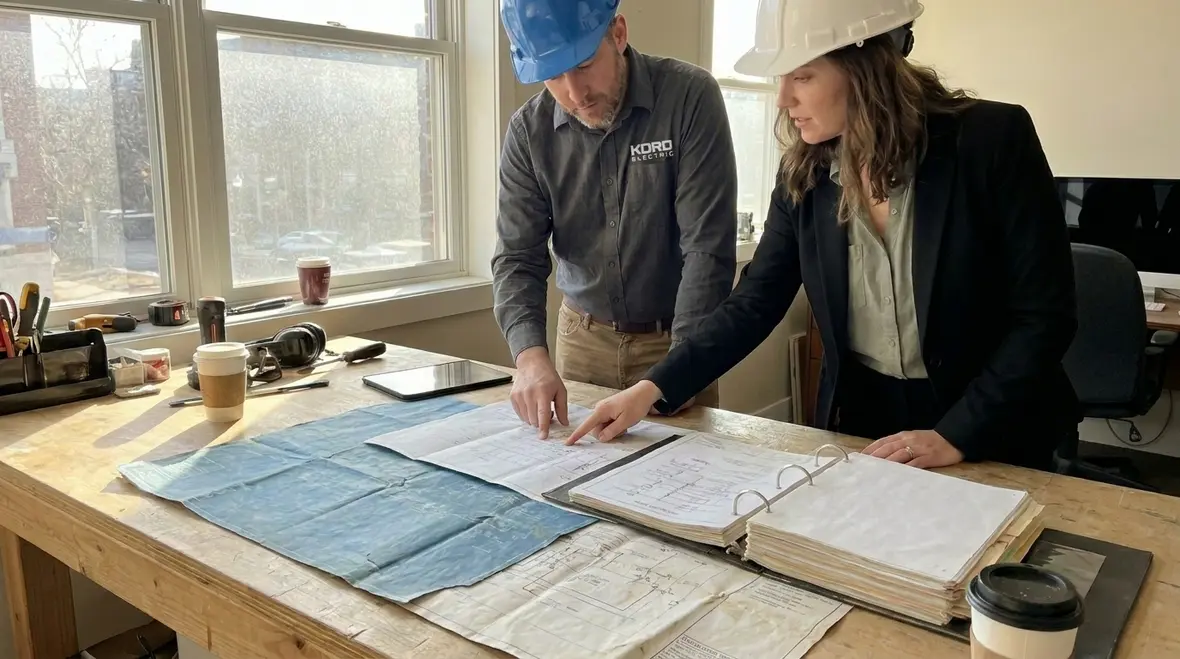
When our expert service staff supports facility managers, we start with understanding the whole electrical layout. We recommend the facility team begin by collecting as built drawings, one line diagrams, panel schedules, and prior service reports. Then we connect that information to real conditions in the field. This step matters because a maintenance plan without an electrical map turns into guesswork, and guesswork is how expensive repairs happen.
Next, we identify critical loads and the operating reality of the site. For example, hospitals, data centers, manufacturing lines, and large campuses all behave differently. Even within one building, a critical process may depend on multiple transformers, switchgear sections, and busways.
Then we schedule the work. We coordinate with operations so testing happens during stable windows. That way, downtime stays minimal and predictable. Additionally, our technicians document any changes, so the next round of maintenance does not start from scratch.
For organizations formalizing this planning step, it often helps to align the building’s map and maintenance history with a structured program like the commercial and industrial electrical maintenance plans Kord Electric describes for large facilities. There, preventative maintenance is treated as a strategic asset that protects uptime, supports budgeting, and keeps panels, switchgear, transformers, and distribution equipment on a clear service schedule instead of a “fix it when it breaks” loop.
What to inspect first in panels, breakers, and switchgear
Panels and switchgear often act like the nervous system of a major facility. When they suffer, the entire operation can feel it. Therefore, our technicians take a structured approach during inspections.
Here is how the first pass typically works in commercial and industrial settings:
- Visual condition checks for heat damage, discoloration, corrosion, moisture, and signs of arcing
- Torque and hardware review where appropriate, especially for bus connections and terminations
- Breaker and contact condition review, including wear patterns and proper mechanical operation
- Bus bar and lug inspection for loose connections, oxidation, or physical stress
- Label and directory verification so the next technician can find the right circuit without playing detective
Meanwhile, we also watch for “silent failures” that do not always show up as obvious damage. For instance, a breaker might still operate, but its internal components may be aging. So we follow up with testing where needed.
Consistent labeling work becomes especially important here. Kord Electric’s electrical panel labeling best practices guide walks through how accurate directories, circuit descriptions, and panel naming conventions help technicians and first responders move quickly during maintenance and emergencies. When labeling is paired with a disciplined inspection routine, the electrical preventative maintenance checklist becomes easier to execute and much faster to understand.
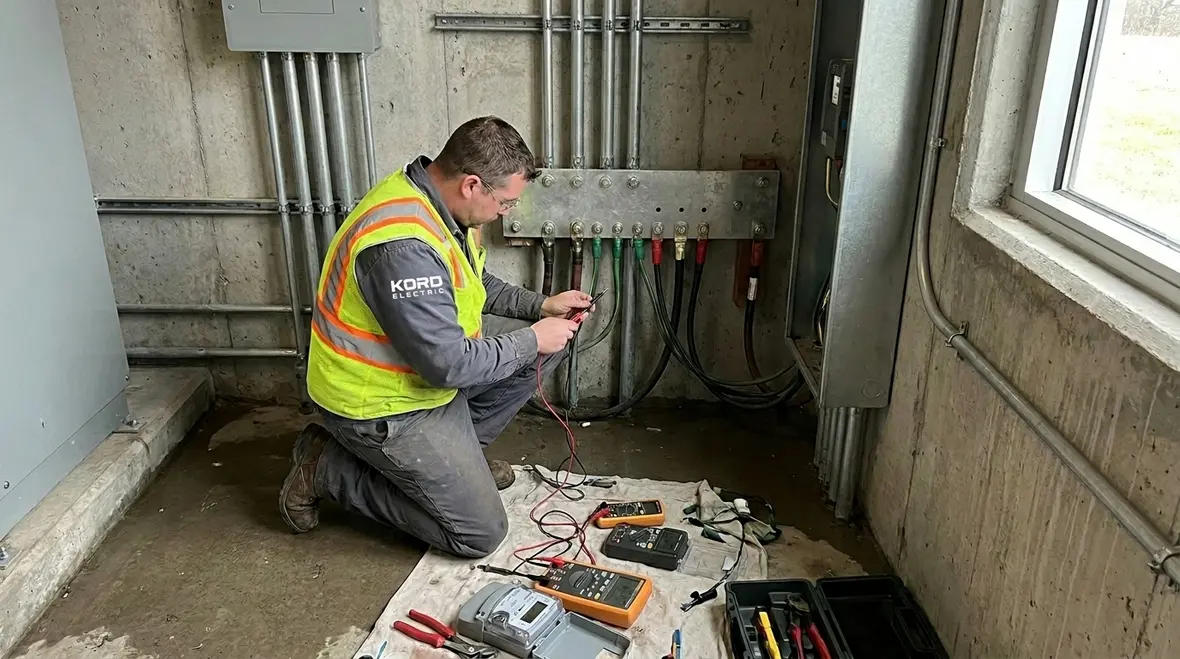
How we test grounding, bonding, and insulation without guessing
A strong electrical system does not only switch power on and off. It also protects people and equipment by controlling fault paths. Because of that, facility teams should test grounding, bonding, and insulation in a planned rhythm.
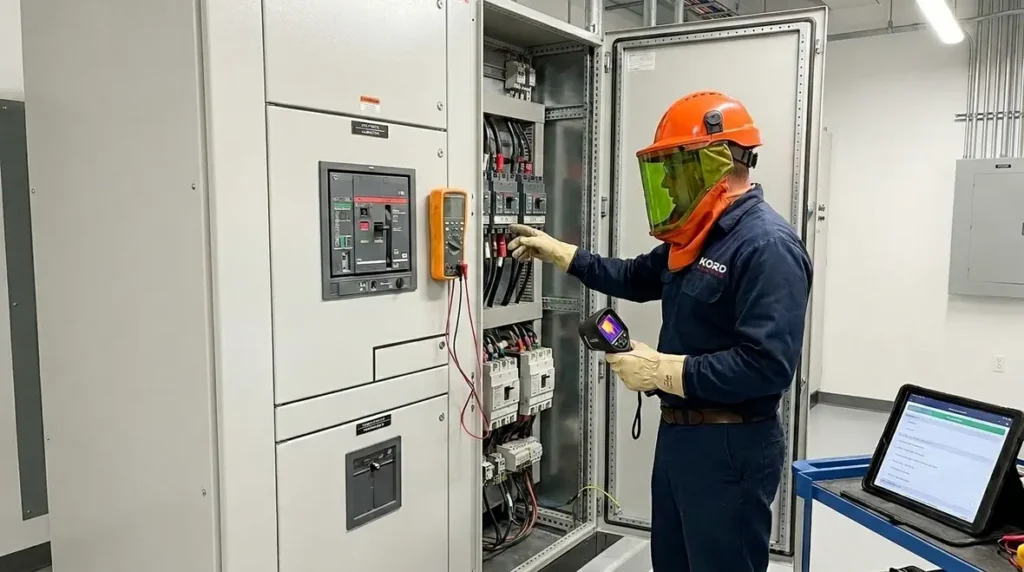
Our expert service staff typically focuses on:
- Grounding continuity and bonding verification for correct connections across system components
- Insulation resistance testing on feeders and motors as applicable to the equipment type
- Verification of neutral and ground relationships in systems where miswiring can cause nuisance issues or hazard conditions
- Assessment of corrosion and coating breakdown on grounding components, especially in exposed or humid areas
Then, we interpret results with the building’s load patterns in mind. Insulation values can shift due to moisture, temperature, and usage hours. Therefore, we compare readings over time, not just against a single snapshot. That history shows whether the system is stable, improving, or creeping toward a problem.
And just to keep things realistic, sometimes the building “works fine” right up until it does not. Testing helps prevent that moment from turning into a fire drill with a stopwatch.
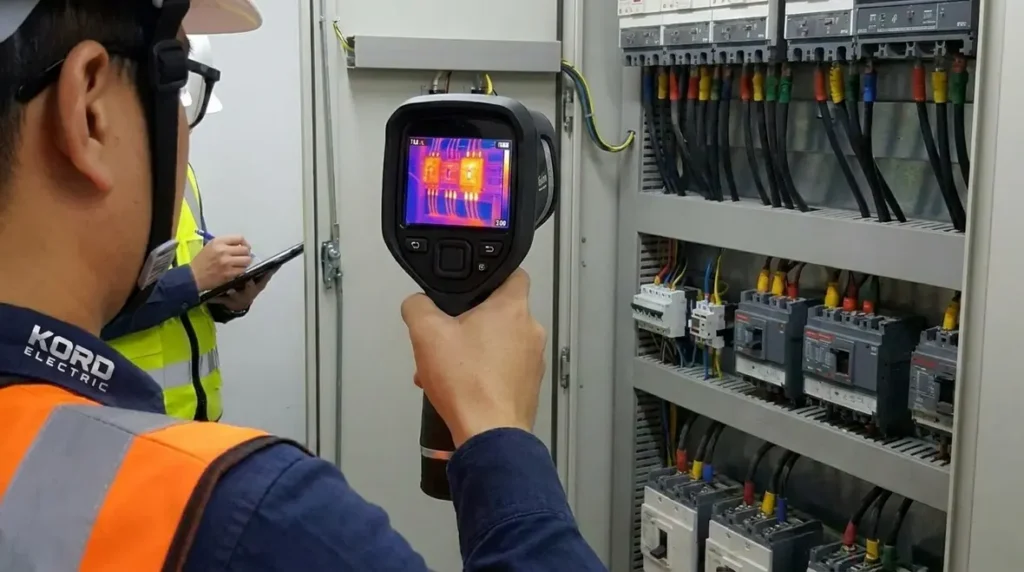
In high demand environments, these tests are often supported by tools like infrared thermal imaging and power quality analysis. The same mindset that underpins Kord Electric’s work on hidden electrical risks and compliance topics such as GFCI outlet California commercial requirements applies here: verify protection paths, document findings, and correct weak points before someone discovers them during an outage, an incident, or an inspection.
Emergency power, life safety, and critical systems that must stay ready
Commercial and industrial facilities often depend on more than just normal power. Life safety systems, emergency lighting, fire alarm equipment, exit signage, and emergency generators all require a maintenance approach that prioritizes readiness. Our technicians help facility managers build schedules that reduce risk and keep documentation clean.
We commonly support checks that include:
- Emergency lighting inspection for correct operation and runtime performance
- Exit sign functional verification and charging condition checks
- Generator and transfer switch readiness including exercise schedules and load transfer verification where applicable
- Coordination review to confirm protective devices respond as intended during fault conditions
Additionally, we ensure testing aligns with operational needs. A facility cannot just shut down because a test is inconvenient. So we plan, coordinate, and confirm results. When something fails, we communicate the issue clearly and outline next steps.
Here is a truth most people learn the hard way: emergency systems rarely fail in a gentle way. They fail loudly, at the least helpful time. Prevention turns that “loud moment” into an informed repair plan.
For facilities that have already experienced unexpected outages, Kord Electric’s article on emergency power failures in commercial buildings explains how proper maintenance of normal and backup power, transfer switches, and protective devices transforms chaotic recoveries into calm, documented responses. An electrical preventative maintenance checklist that includes emergency systems is one of the most effective ways to keep that “emergency” label from becoming a regular calendar event.
Preventive maintenance for cables, feeders, transformers, and load banks
Once the team verifies control equipment, we broaden the scope to the rest of the electrical distribution system. Feeders and conductors can degrade due to thermal cycling, vibration, water intrusion, or age. Transformers can develop insulation issues or cooling problems. Busways can accumulate dust and moisture where airflow routes allow it.
Our approach includes targeted inspection and testing based on the asset type and usage. We also look for early warning signs that point to a bigger problem. For example, abnormal heat patterns can indicate overload, connection problems, or ventilation restrictions.
For some facility conditions, load testing and related evaluation help confirm performance under real demand. When load banks and testing devices are used, our technicians plan the test to protect equipment and minimize disruption.
And because facility managers manage people, time, and budgets, we deliver outcomes in plain language. We explain what we found, what it means, and what we recommend next. This keeps the maintenance process from feeling like an endless trade show where nobody says what time the event ends.
These distribution level checks complement the broader guidance in Kord Electric’s resources on hidden electrical risks in commercial buildings, where issues like overloaded conductors, aging transformers, and poorly documented modifications are identified as key contributors to downtime and safety hazards. Treating cables, feeders, and transformers as primary assets in your electrical preventative maintenance checklist keeps them from becoming invisible weak links.
Dual column scheduling: what to do monthly vs quarterly vs semi annual
To help teams run a workable program, we often recommend a simple rhythm. Below is a practical dual column example for commercial and industrial facilities. Actual schedules vary by equipment type, code requirements, and site criticality, and our team adjusts those details with your operations leadership.
Monthly focus
- Thermal and visual checks of panels and terminations
- Verify labeling and inspect for water intrusion
- Review any nuisance trips or recurring breaker events
- Check emergency lighting status where applicable
- Log observations in your electrical preventative maintenance checklist for trend tracking
Quarterly to semi annual focus
- Inspect switchgear compartments and bus areas
- Verify grounding and bonding condition
- Perform insulation resistance testing for key feeders
- Confirm generator readiness and transfer switch function
- Document results and flag assets for deeper action
- Update labeling and one line diagrams when field conditions change
Meanwhile, we keep the work tied to actual building usage. Therefore, you do not run tests just because the calendar says so. You run tests because the system’s needs demand it.
This calendar-based view pairs well with the more detailed programs described in Kord Electric’s commercial and industrial electrical maintenance plans. There, the schedule is connected directly to asset criticality, load demand, and risk tolerance, so inspections, testing, and documentation all move in step with how the building actually operates.
Records, reporting, and communication that facility teams can actually use
Even the best field work fails if nobody can find the evidence later. Facility managers need clear records for internal planning, audits, and vendor coordination. Our technicians document what they inspected, what they tested, the readings where applicable, and the recommended follow up actions.
We also format updates so your team can make decisions quickly. Instead of vague notes, we deliver specific findings tied to the asset location and condition. Additionally, we include photos when they help explain the issue. That is how a maintenance plan stays useful after the last person leaves the meeting.
And yes, we still explain the “why.” People do not just want a report; they want to understand what could happen if a minor issue grows. Our expert service staff speaks plainly, so facility leaders can prioritize work without needing a second degree in electrical engineering.
These records also help align maintenance activities with broader compliance and safety goals, including those described in resources like the NFPA 70 overview for commercial buildings and Kord Electric’s guidance on electrical safety compliance for small businesses. When reports are structured, easy to search, and consistently updated, they form the backbone of a defensible, audit ready electrical preventative maintenance checklist.
FAQ
Final thoughts and next step with Kord Electric
If your building runs critical operations, then preventative electrical maintenance should be treated like a safety system, not a “nice to have.” Kord Electric builds practical schedules, performs careful testing, and documents everything so your team can plan repairs with confidence. Our technicians explain findings in plain terms, so decisions stay fast and grounded. If you want a reliable program for your commercial or industrial facility, contact Kord Electric to review your current electrical maintenance needs and set up a plan that holds up in the real world.
For leaders comparing next steps, it can help to explore how preventative work fits alongside other long term investments such as rewiring cost guides for commercial electrical systems and the broader range of commercial electrical services Kord Electric provides. Taken together, these resources show how a disciplined electrical preventative maintenance checklist, strategic upgrades, and responsive service all work in the same direction: fewer surprises, stronger infrastructure, and safer buildings.