Commercial EV Charging Fleet Readiness Guide
When a company plans for commercial EV charging fleet readiness, it cannot treat charging like a last minute accessory. At Kord Electric, we focus on major commercial and industrial facilities and large property buildings, and we help them prepare before the first vehicle shows up. In the next sections, our team explains how owners, managers, and operations staff can build a charging setup that stays reliable as demand grows. That means electrical capacity planning, careful site readiness, and clear maintenance paths that keep downtime low. And yes, we also tell the truth about the wiring, because nothing ruins a schedule like a “mystery breaker” on a busy morning.
How Kord Electric plans for EV fleet charging at commercial sites
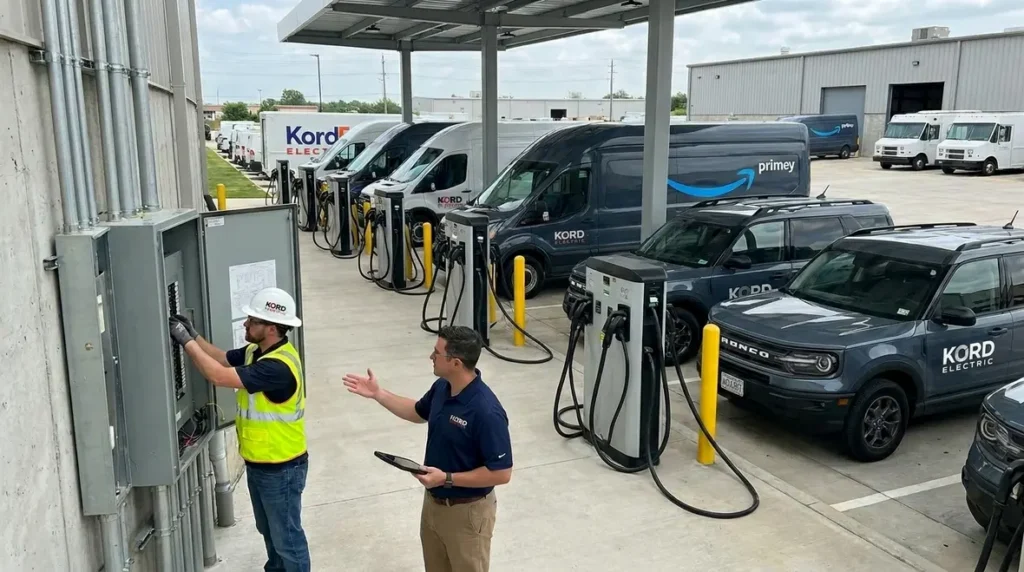
Third party suppliers may sell chargers with flashy brochures, but the real work starts on site. We approach commercial and industrial electrical projects with a simple goal: match the charging load to the building’s power reality. First, our technicians review utility data, panel schedules, and existing loads for HVAC, lighting, lifts, refrigeration, and any other heavy users. Then we model the expected charging draw based on fleet size, vehicle charging curves, and the time windows your drivers actually use.
Next, we identify the charging strategy that fits your operations. For example, a site with shift based departures may need controlled charging that spreads demand. In contrast, a logistics hub that charges overnight may support a higher peak load, but still needs smart sequencing to protect the service and feeders. Therefore, the design supports both daily uptime and future expansion, not just today’s number of trucks.
Site readiness steps before installation begins
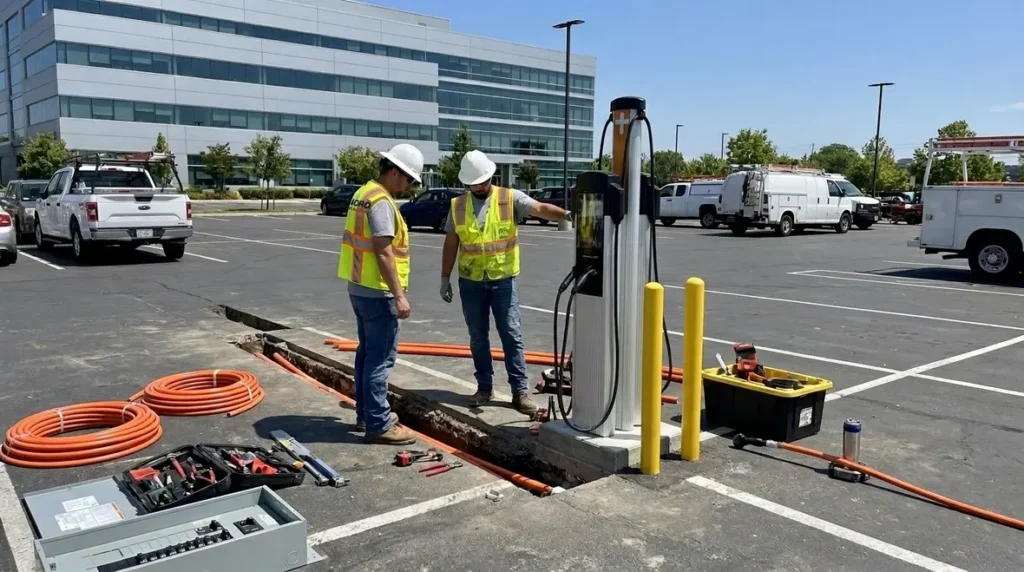
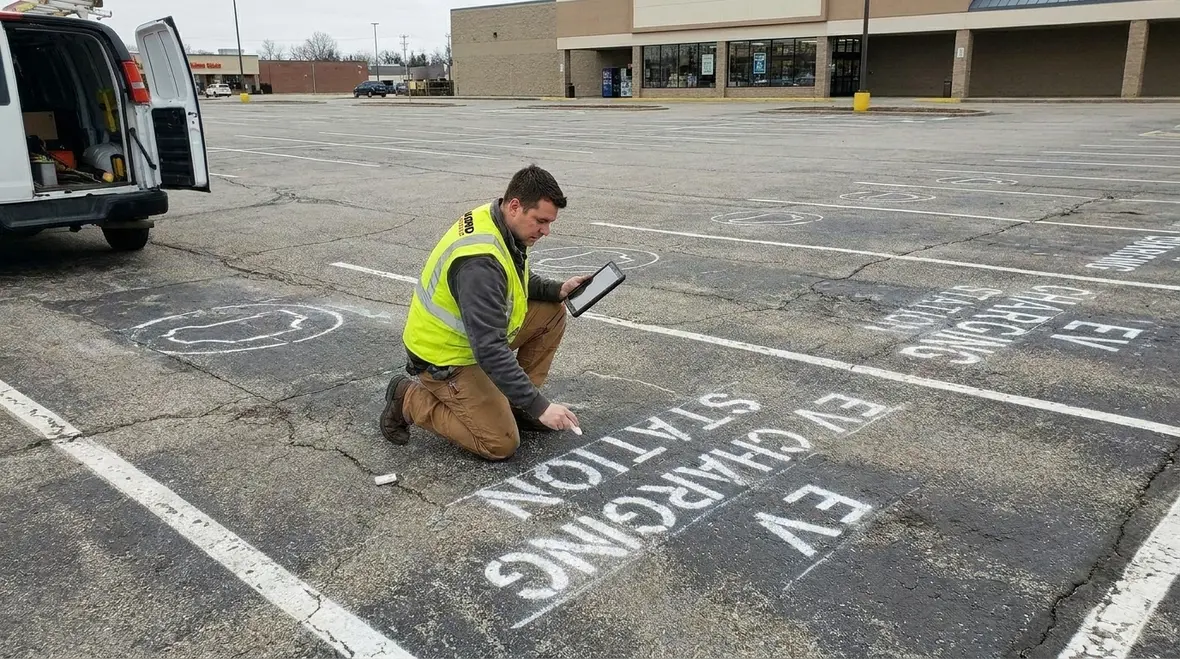
Once we understand the electrical side, we handle the physical and operational steps that make the install smooth. After all, chargers do not run on good intentions. Our expert service staff begins with a site walk that covers parking layout, cable routes, drainage, access lanes, and equipment placement. Then we confirm mounting options, post locations, and clearance needs so vehicles can plug in safely without blocking traffic or creating hazards.
In addition, we plan for weather protection and durability. Outdoor areas face heat, freeze thaw cycles, dust, and chemical exposure depending on the location. So we select components built for real conditions, and we route conduit and cabling to resist impact and moisture intrusion. Moreover, we coordinate with facility staff so the installation does not shut down critical areas. If someone needs their loading dock open during work hours, we plan around it.
As a final readiness check, we verify that signage, access control, and user flow align with how drivers actually work. That may sound like a small detail, but in practice it reduces mistakes and support calls. And nobody wants a driver calling the front office like it is 2004 and they just discovered Wi Fi.
Commercial electrical maintenance plans that support long term charging uptime
EV fleets need steady power and steady care. That is why we align our work with structured commercial and industrial electrical maintenance plans. Kord Electric maintains equipment through planned service, not guesswork, and we help facilities keep the full electrical system healthy, not just the charger hardware. If a facility already has a maintenance program, we tune it to the new load and new risks that come with charging infrastructure. For a deeper look at how this works across large buildings, many facilities also review our documented approach in our commercial and industrial electrical maintenance plans guide, then align their EV strategy with that framework.
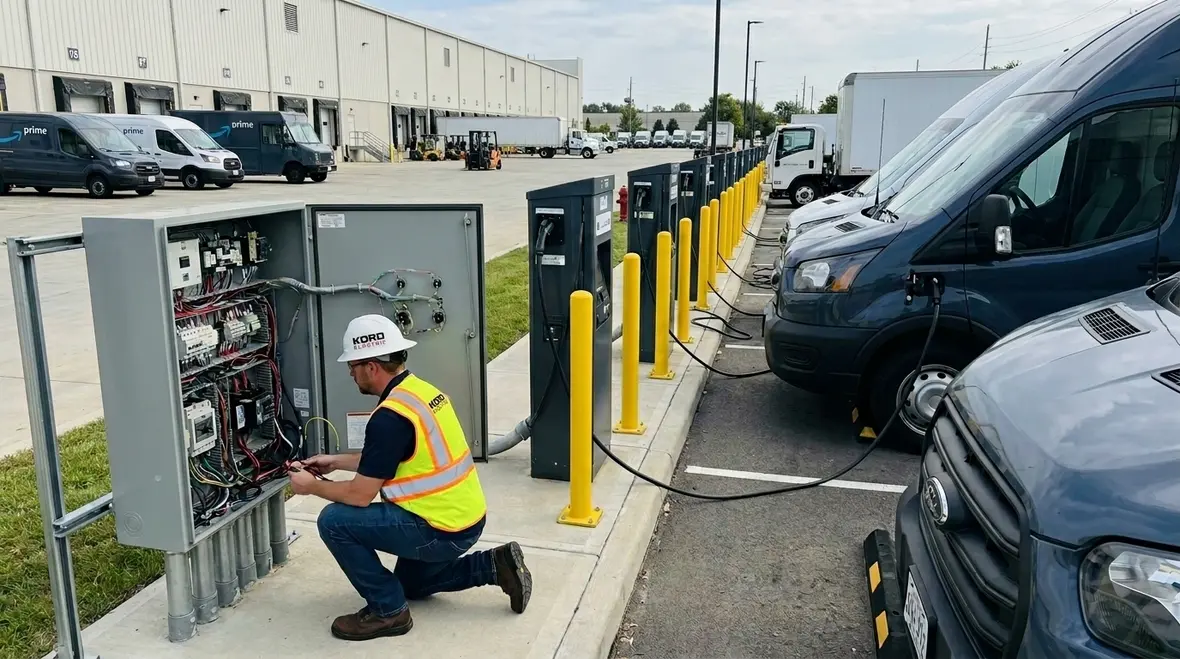
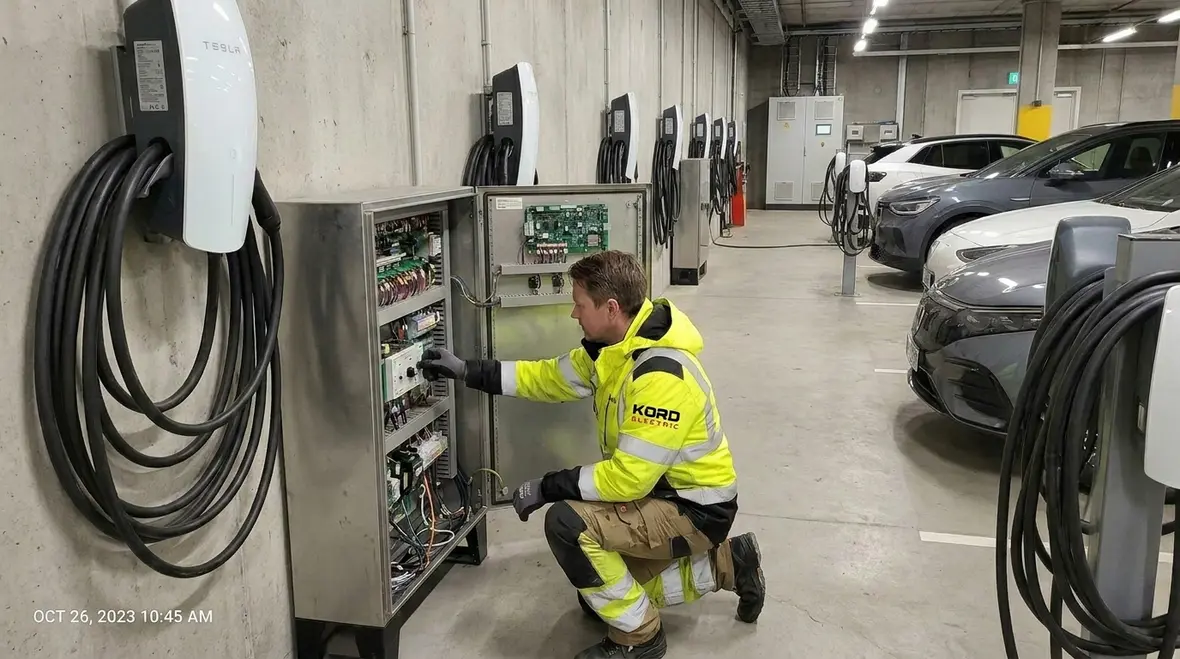
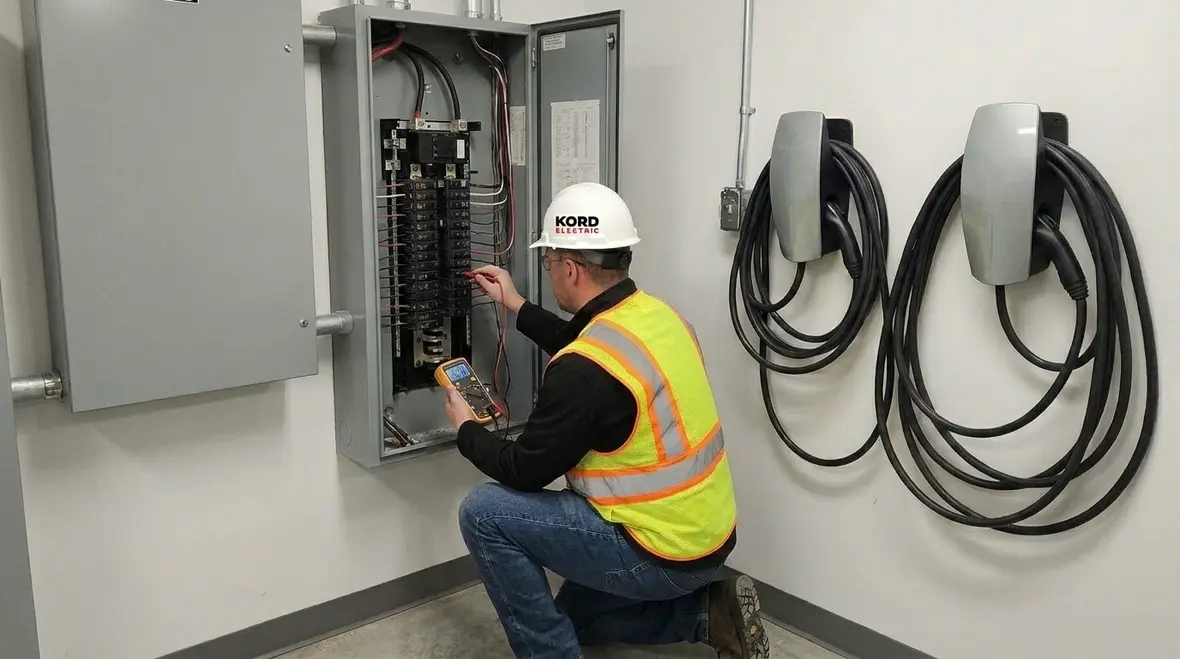
Typically, our approach includes inspection and testing of panels, breakers, bus bars, and terminations, along with review of grounding and surge protection. Over time, connections can loosen, moisture can affect performance, and temperature cycling can change how components behave. Therefore, scheduled checks reduce the chance of failures that disrupt fleet schedules.
Also, we track performance indicators that matter to operations. For example, we monitor load behavior, look for patterns in faults, and confirm that the protection settings still fit the site. Then our technicians document findings in a way that facility leaders can understand, so decisions are based on data, not on “that looks fine” vibes.
Load management and power quality for reliable fleet charging
Even when a building has enough power on paper, charging can still cause trouble if the system cannot handle changing loads. We address this through load management and power quality practices built for commercial settings. First, we evaluate demand charges, transformer capacity, and how the site behaves during peak hours. Then we design charging controls that keep the system within safe operating limits.
Next, we reduce power quality issues that can damage equipment or lead to repeated fault events. For instance, unmanaged charging may introduce harmonics or create voltage dips during heavy sessions. Our technicians review the electrical path from utility service to distribution and into the charger circuits, so the system remains stable while vehicles plug in and start charging at the same time.
In many cases, we recommend a staged approach: prioritize essential chargers, delay non critical charging, or use smart scheduling based on energy pricing and grid conditions. As a result, fleet operations can charge when it makes sense and avoid “everyone plugs in at once” chaos. It is like a group chat with no rules. It works until it does not.
Technology choices that support fleet growth and operator needs
Once power and site readiness align, we help facilities choose a charging setup that fits both today’s fleet and tomorrow’s growth. Our team considers how many connectors you need, the power levels required, and whether the site needs simple access or tighter controls for drivers, contractors, or visitors. We also support needs like RFID access, billing options, and reporting so operations can track charging usage without chasing spreadsheets.
Just as important, we think about how the system integrates into existing facility tools. For some sites, the charging network must coordinate with energy management systems. For others, the focus stays on reliability and basic uptime. Either way, we explain the tradeoffs clearly, and our expert service staff makes sure operators know what the system can do and what it cannot. No mystery boxes. No “trust us” decisions.
Then we plan for expansion from the start. We consider future conduit space, spare breaker capacity, and the electrical layout needed to add more chargers without major rework. This protects budget and reduces downtime later, which is good news for everyone who has ever lived through an emergency installation call.
Safety, code compliance, and commissioning that teams can trust
Commercial EV charging does not forgive shortcuts. We follow code requirements and safety best practices for every stage: design, installation, testing, and commissioning. Before a system enters active service, our technicians verify correct wiring, safe conductor sizing, proper protection, and correct grounding. Then we test the full charging path, not only the physical hardware.
To support safe operations, we also make sure that the facility understands the equipment boundaries. Operators need to know how to handle alerts, what fault indicators mean, and how to respond without escalating every small event into a major incident. Our expert service staff explains these steps during handover, and we provide guidance that matches the site role, whether that is a fleet manager, electrician lead, or property maintenance supervisor.
Finally, commissioning confirms performance under realistic conditions. We check that charging sessions start and stop safely, that the load behavior matches the design intent, and that protection systems respond as expected. Therefore, the system earns trust through evidence, not through marketing language.
How to keep commercial EV charging fleet readiness steady after go live
After installation, the work shifts from setup to stability. We help commercial and industrial facilities keep commercial EV charging fleet readiness strong through ongoing service and clear maintenance rhythm. First, we schedule inspections aligned with how often chargers run and how the environment affects them. Next, we review electrical health, including terminations and protective devices, so any early signs of wear can surface before they become failures.
Then we support the operational side. We help teams understand charging patterns and how to adjust usage without stressing the electrical system. If the fleet changes shift times or adds vehicles, we revisit the plan. In other words, we do not treat the charging design like a “set it and forget it” project. Because in the real world, fleets evolve. So should the charging setup.
And when something does occur, our approach stays calm and methodical. We investigate, isolate the cause, and document the fix. That reduces repeat issues and helps the facility avoid the classic situation where a problem returns like a rerun from a sitcom you never asked for.
Facilities planning for long term reliability often pair commercial EV charging fleet readiness with broader electrical upgrades and service improvements. For example, sites in Southern California that need integrated electrical support across multiple systems frequently review regional options such as Los Angeles County electrical services for commercial properties to help align fleet charging projects with other critical power work on the same campus.
FAQ
Conclusion and call to action
For major commercial and industrial facilities, EV charging must perform like real infrastructure, not like a hopeful science project. Kord Electric builds commercial EV charging fleet readiness with power planning, site readiness, safe installation, and maintenance that keeps uptime steady. If your fleet is growing, your schedule is tight, or your building needs upgrades, we will help you move with confidence. Reach out to Kord Electric today to discuss your site, your load needs, and a plan that supports reliable charging long after go live. If you are coordinating broader electrical projects alongside fleet charging, our team can also align your plans with related services like commercial power distribution upgrades and regional service offerings so the entire electrical system moves forward together.
For facilities that want a partner on both the EV charging side and the core electrical infrastructure, Kord Electric also supports projects through dedicated service offerings for larger properties and industrial campuses. These services can dovetail with your charging design so upgrades to panels, feeders, or protective devices all support the same long term reliability goals instead of happening in isolation.
When you are ready to move from planning into action, our team will walk the site, document the requirements, and turn your commercial EV charging fleet readiness goals into a practical roadmap for implementation and maintenance.