Commercial EV Charging Infrastructure Cost Guide
Commercial EV Charging Infrastructure Cost: What Businesses Really Pay
When a business owner looks at electric vehicle charging, the first question usually lands like a well placed punchline: “What does this cost?” In fact, the commercial ev charging infrastructure cost often hinges on site conditions, charger speed, and electrical work. For many facilities, pricing also varies based on whether a company needs trenching, panel upgrades, load management, or networked chargers that help track usage. And yes, every business wants a clean install that looks sharp and runs without drama.
At Kord Electric, we guide commercial and industrial facilities and major property buildings through a clear plan. Then we help them turn that upfront spend into a real return. After all, EV charging is not a hobby project. It is a smart utility upgrade, and we treat it that way.
Why Commercial Charging Pays Off for Property and Fleet Operators

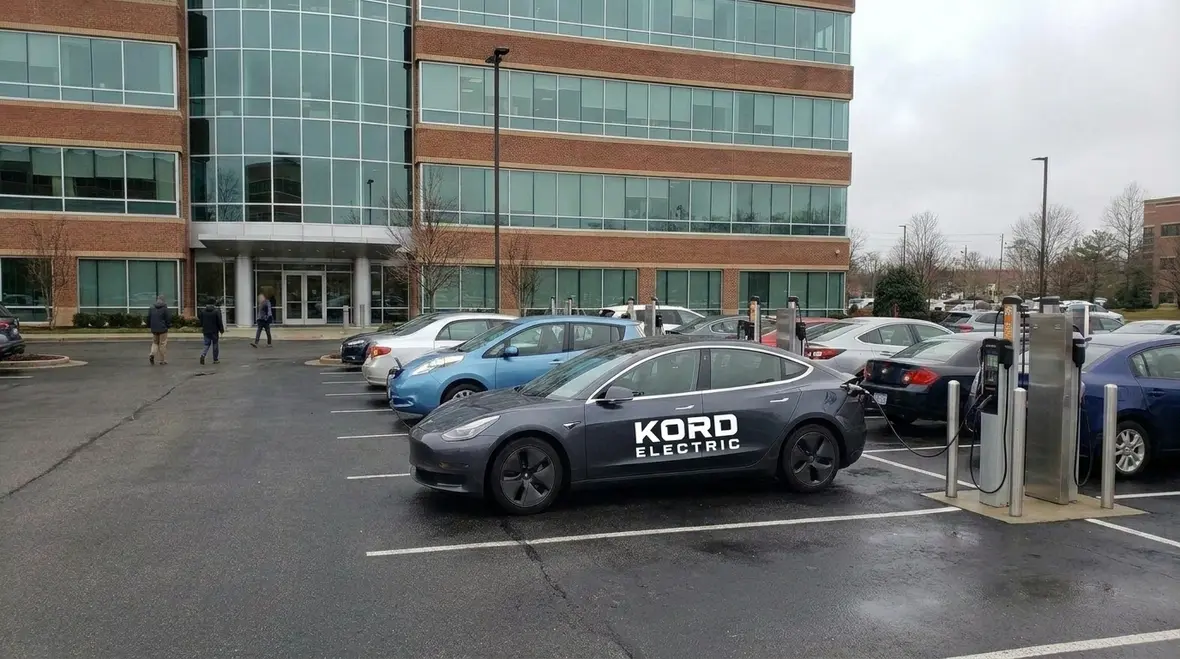
Commercial charging pays when it supports revenue and reduces friction. For example, tenant satisfaction improves when visitors and residents find reliable charging near parking. Meanwhile, fleet and service companies benefit when they reduce fuel and maintenance costs. In addition, businesses that invest early often gain an advantage in contracts, leasing, and corporate partnerships.
Now, some owners think the return must come only from charging fees. That is not always the case. Instead, value can show up in steadier occupancy, better brand image, and smoother operations. And if someone claims, “EV charging is just a parking amenity,” they are about to meet a spreadsheet. The spreadsheet usually wins.
Kord Electric helps teams connect the dots between usage, pricing strategy, and hardware choices. Our service teams explain tradeoffs in plain language, so owners can plan with confidence. For properties ready to move from planning to execution, our dedicated EV charger installation services provide a direct path from concept to live, revenue ready charging infrastructure.
ROI Model That Converts Power Into Profit
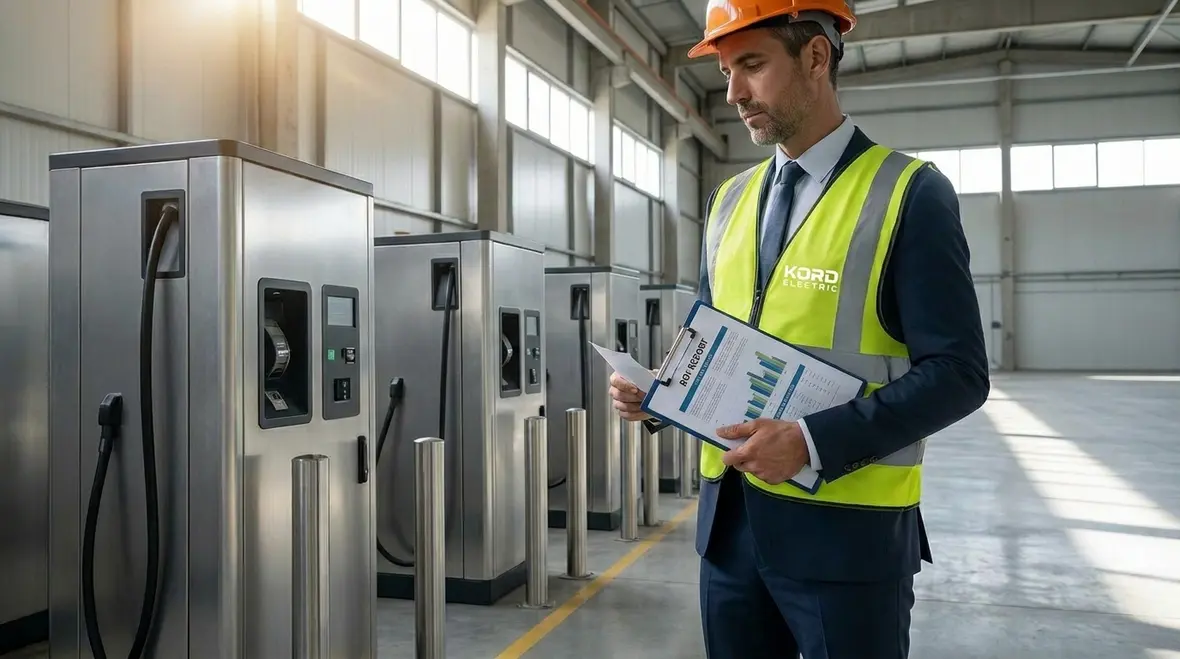
To build a practical ROI view, we start with a simple question: how will charging be used on your site. Then we map that use to costs and savings. From there, ROI becomes less like guesswork and more like planning.
Here is the framework we often use during consultations for commercial and industrial facilities and major property buildings.
- Demand: daily sessions, expected vehicle types, and how often charging points will be used
- Pricing: free access for branding, tenant-only charging, or pay per session or kWh
- Energy costs: how your tariff affects per session costs and margin
- Utilization ramp: how usage grows as EV adoption increases at your location
- Maintenance and uptime: warranties, service schedules, and parts coverage
- Electrical scope: charger quantity, cable routing, conduit, and any panel upgrades
Next, we compare that projected value against the total installed cost and the operating plan. Even if the first year looks modest, many owners see stronger results once usage stabilizes. Also, smart charging features can protect your budget by managing power when multiple vehicles charge at once.
Implementation Guide: From Site Survey to Commissioning
Our technicians follow a calm, step by step approach, because rushing an electrical job is how problems show up later like uninvited guests. First, we evaluate the site. Then we design the charging layout. After that, we handle electrical engineering, installation, and testing.
Here is the flow Kord Electric uses, aligned with how we approach EV charger installation at commercial locations. Owners like this because it makes the process feel grounded, not mysterious.
- Site survey: we inspect parking layout, existing panel capacity, cable paths, and load risks
- System design: we size circuits, decide charger placement, and plan for future expansion
- Permits and planning: we coordinate paperwork steps so the install stays compliant
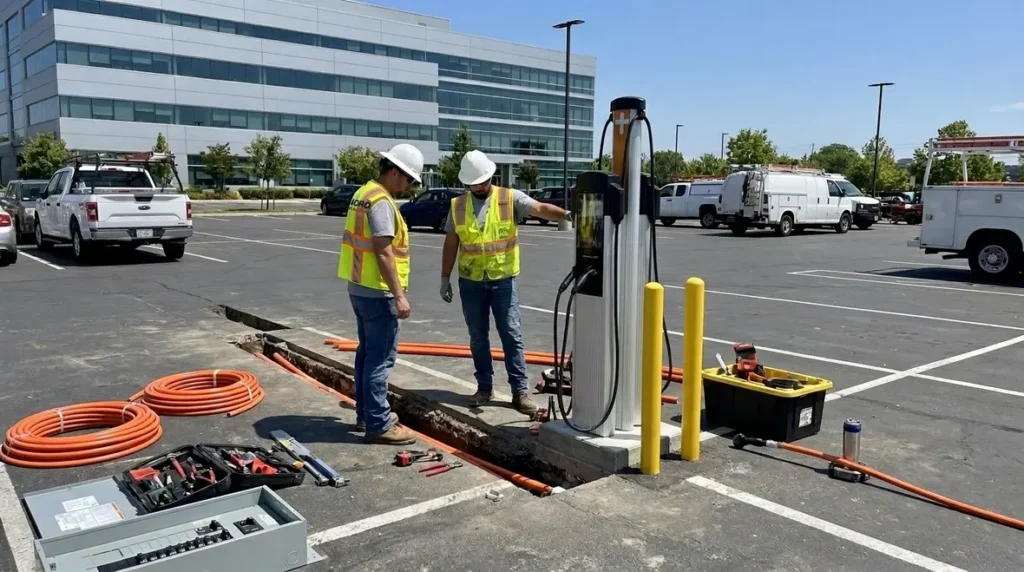
- Electrical work: conduit runs, trenching if needed, panel or breaker work, and safe termination
- Charger installation: mounts, weather rated connections, and labeling for clear use
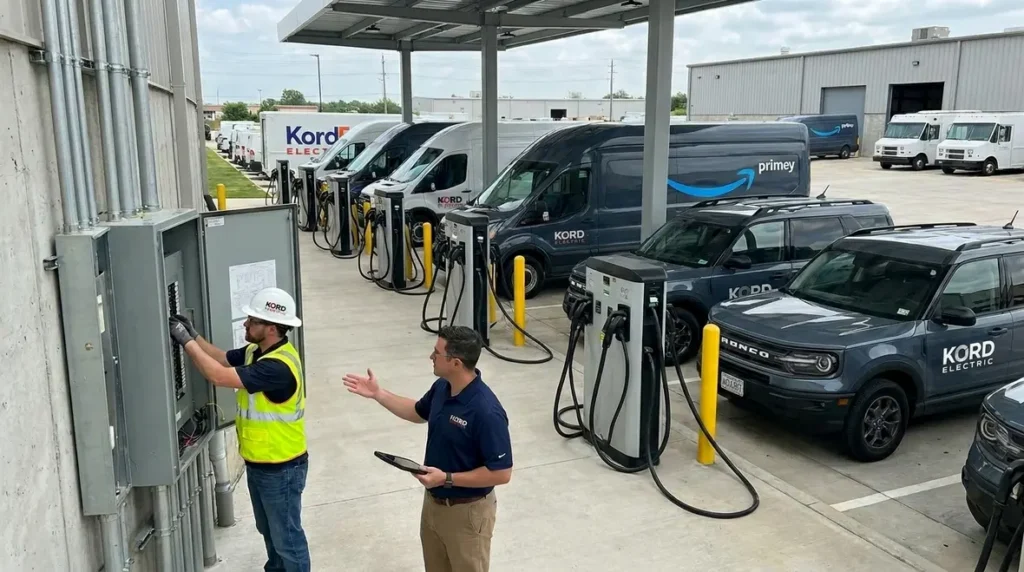
- Testing and commissioning: we verify power delivery, network function if included, and safe operation
During this phase, our expert service staff does not just install equipment and vanish. Instead, they explain how to operate the system, how billing or access works if you choose that setup, and what your team should watch over time. We want the charging system to feel like it belongs there from day one, not like a science project someone tried to hide in a corner.
For organizations coordinating multiple upgrades at once, EV charging can also be planned alongside broader initiatives such as lighting installation services or preventive maintenance programs, so electrical work stays synchronized instead of scattered across separate projects.
Hardware Choices That Match Your Load and Parking Reality
Choosing chargers is where businesses either stay on budget or overspend. And yes, the “bigger is better” idea can cost real money when electrical upgrades are avoidable. So we align hardware with your electrical capacity, charging behavior, and future needs.
For many commercial sites, businesses benefit from a mix of charging speeds. Slower options can serve longer dwell times like offices and apartment properties. Meanwhile, faster chargers suit quick turns for public facing parking and retail areas.
Then there is load management. As a result, when multiple vehicles charge at once, the system can balance power instead of tripping breakers or forcing expensive upgrades. Also, networked chargers often support reporting and monitoring, which helps managers plan usage and adjust pricing strategies.
Kord Electric helps buyers choose confidently, and our technicians explain the why behind every recommendation. When people understand the tradeoff, they stop second guessing. And honestly, nobody enjoys arguing with their own utility bills.
Managing Electrical Capacity Without Blowing the Budget
Commercial and industrial buildings often have real constraints. Panels may run near capacity, and adding chargers can trigger upgrades. However, that does not always mean you must rebuild the entire electrical system.
We look for practical paths. First, we evaluate the existing load profile. Then we map charger demand to time windows, which matters for commuter behavior and fleet schedules. If your site hosts charging during off peak hours, the plan can differ from a location where usage peaks at lunch and weekend events.
Next, we assess whether load management, smart scheduling, or additional circuits reduce the scope of panel upgrades. In many cases, thoughtful design keeps the commercial ev charging infrastructure cost closer to what owners expect, rather than turning into a surprise upgrade at the worst possible moment.
Our team also focuses on safe installation. We use correct conduit routing, proper termination, and good labeling. That reduces service calls and protects uptime, which is what property managers and operations teams truly care about.
Dual Column Breakdown: What Drives Commercial EV Charging Pricing
Under the hood, most commercial EV charging projects are shaped by a familiar set of cost drivers. Understanding these line items early makes it much easier to benchmark proposals and explain budgets to internal stakeholders.
| Cost Driver | What It Means on Your Site |
| Electrical upgrades | Panel capacity, breaker changes, transformers if needed, and safe load design |
| Site preparation | Trenching, conduit runs, surface restoration, and weather protection needs |
| Charger type and ports | Power level, number of connectors, and whether you need networking features |
| Installation complexity | Distance from panel, mounting requirements, and parking layout constraints |
| Management features | Load balancing, scheduling, access controls, reporting, and monitoring |
Once those variables are clear, the commercial ev charging infrastructure cost no longer feels like a black box. It becomes a set of levers you can adjust for budget, performance, and future expansion.

FAQ
Final Word and Call to Action
If a business owner wants charging that works, looks professional, and fits real site limits, Kord Electric is ready to help. We serve commercial and industrial facilities and major property buildings, and our technicians guide the entire path from survey to commissioning. To plan your next step, contact our team for a site assessment and a clear implementation plan. Then you can forecast the total investment, protect electrical capacity, and build a charging setup that performs like it means it.
For facilities planning additional upgrades alongside EV charging, our team can also coordinate related solutions such as electrical preventive maintenance or broader commercial electrical projects, so your infrastructure investments work together as a single, reliable system instead of a patchwork of separate jobs.
When you are ready to move from research into action, a dedicated commercial partner makes all the difference. Kord Electric combines design, installation, and long term support for EV infrastructure, helping property owners control risk, manage energy, and keep their charging systems ready for the next wave of drivers who expect power waiting at the curb.