Industrial Electrical Panel Thermal Imaging Guide
At Kord Electric, we use industrial electrical panel thermal imaging to help protect the electrical backbone of commercial and industrial facilities. In our experience, a panel can look fine while small problems silently build heat behind the door. And yes, that heat does not care about your maintenance schedule or your favorite podcast playlist. It shows up as hotspots, abnormal temperature rise, and uneven load patterns. In this article, we explain why thermal imaging becomes essential for industrial electrical panel health, how our expert service staff works through the findings, and what actions we recommend to keep your property reliable.
Why thermal imaging matters for industrial panel health
In a facility, electrical panels do not fail in a dramatic movie way. Instead, they degrade in real time. Over the months and years, loose connections, aging bus bars, damaged insulation, and uneven phase loading can create added resistance. And resistance creates heat. Therefore, industrial electrical panel thermal imaging becomes a practical early warning system rather than a last minute rescue plan.
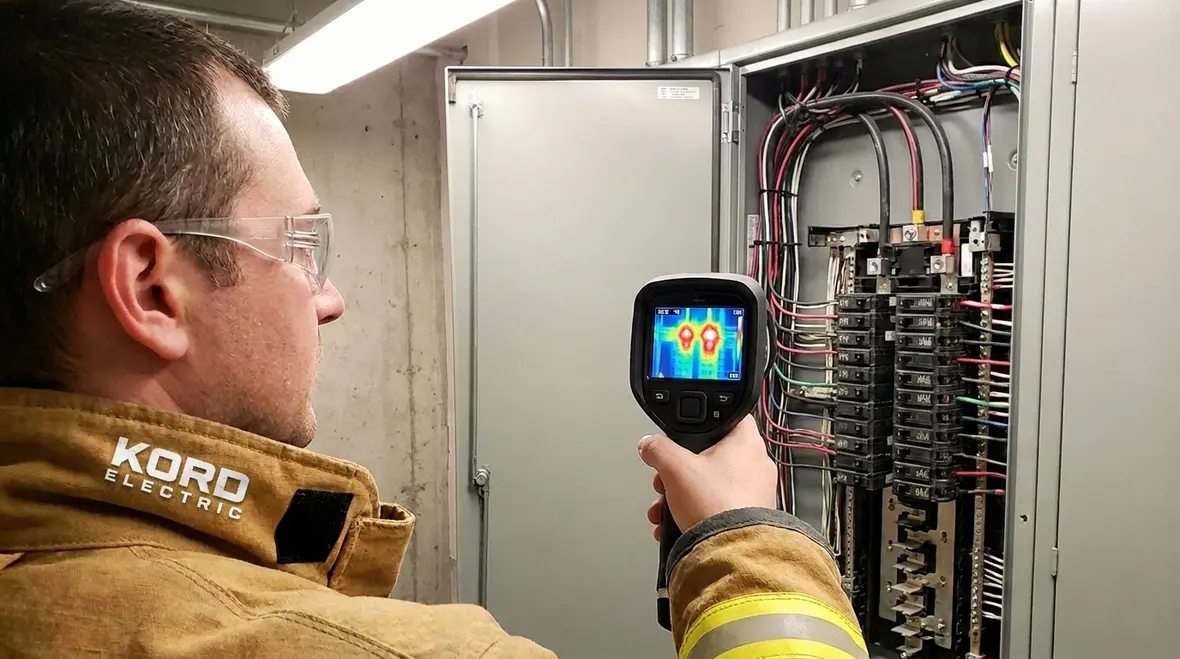
Our technicians look for temperature differences that suggest a problem, even when standard visual checks miss it. For example, a breaker may appear intact, yet the contact surfaces inside can develop higher resistance. As a result, that breaker area runs hotter than the surrounding components. When we capture those readings, we can prioritize where to investigate first. In short, we stop guessing and start measuring.
What our team sees inside a panel during a thermal scan
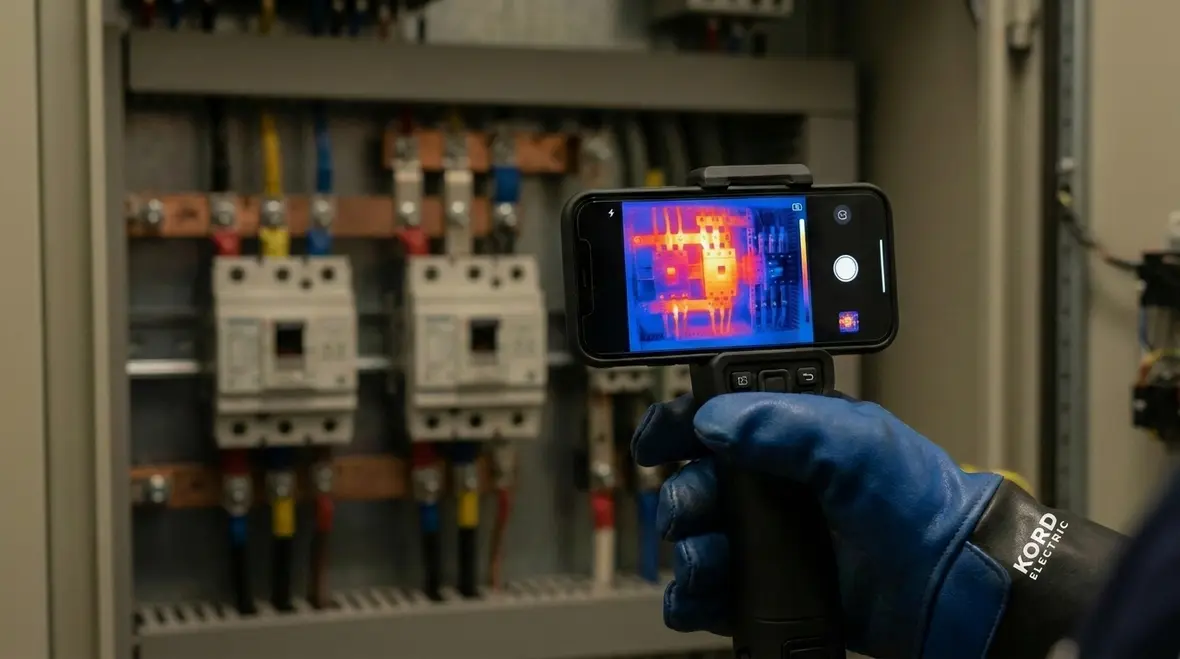
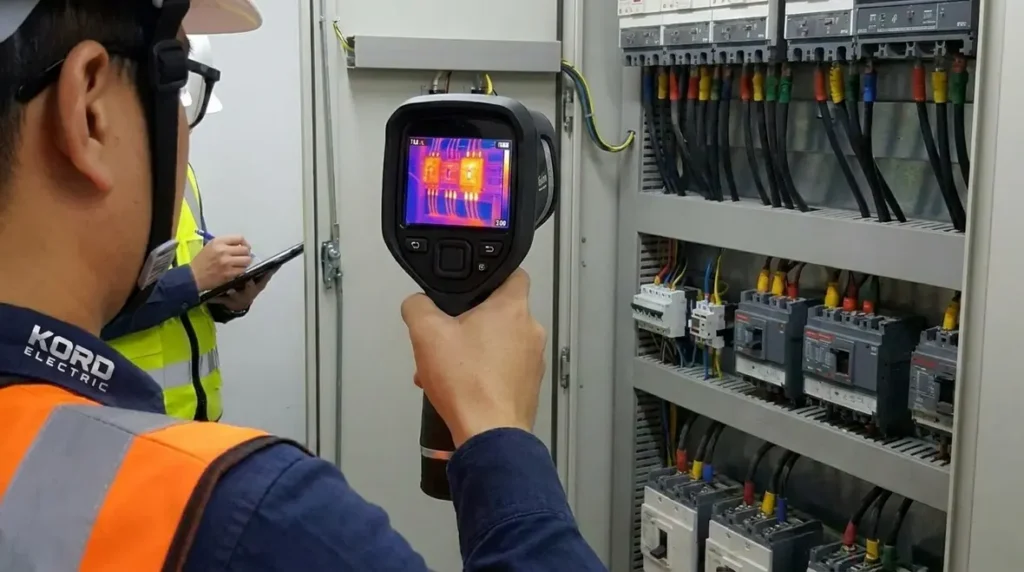
To get reliable results, our expert service staff does not just aim a camera and click. First, we review the facility context. Then we coordinate scan timing so the panel reflects actual operating load. After that, we document temperature patterns and compare them to expected behavior across phases and sections.
During a thermal scan, our technicians commonly evaluate bus bars, breaker terminals, feed-throughs, lugs, and any known load circuits. We also consider environmental effects such as airflow restrictions, cabinet fill level, and nearby heat sources. If the panel sits in a hot mechanical room or next to heavy steam lines, the scan still matters, but the interpretation needs careful judgment. So we combine the thermal results with electrical observations, torque history, and any prior maintenance notes.
And if someone asks, “Isn’t this just a fancy camera thing?” we usually smile, then explain that the camera is the measurement tool. The real value is how we apply it. A thermal image without electrical context is like having a weather app without knowing how to drive. You can stare at the forecast all day, but you still need safe decisions.
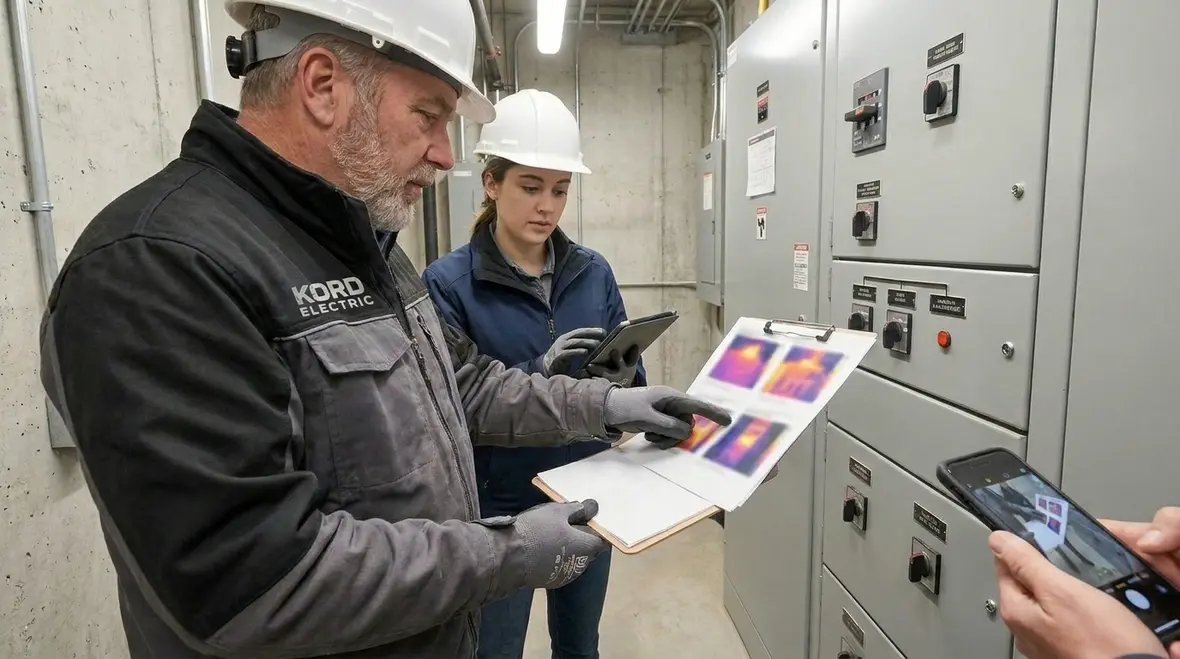
Common electrical issues thermal imaging helps catch early
Several faults can develop gradually. However, many of them create heat before they create failure. Consequently, our industrial electrical panel thermal imaging approach helps detect issues sooner than a routine inspection. Here are examples we often find in commercial and industrial environments.
- Loose connections: Small gaps at lugs or breaker interfaces raise resistance and temperature.
- Worn or corroded terminals: Moisture and contamination can reduce contact quality over time.
- Phase imbalance: Unequal loading can push one phase hotter, which may also harm connected equipment.
- Damaged conductors or insulation: Hidden degradation can create localized hot spots.
- Overloaded circuits: Even when breakers hold, chronic overheating can shorten component life.
Next, we use the findings to guide next steps. Sometimes we recommend targeted torque verification. Other times, we recommend component testing or replacement planning. Either way, we help you act before “it worked last week” turns into a downtime event this week.
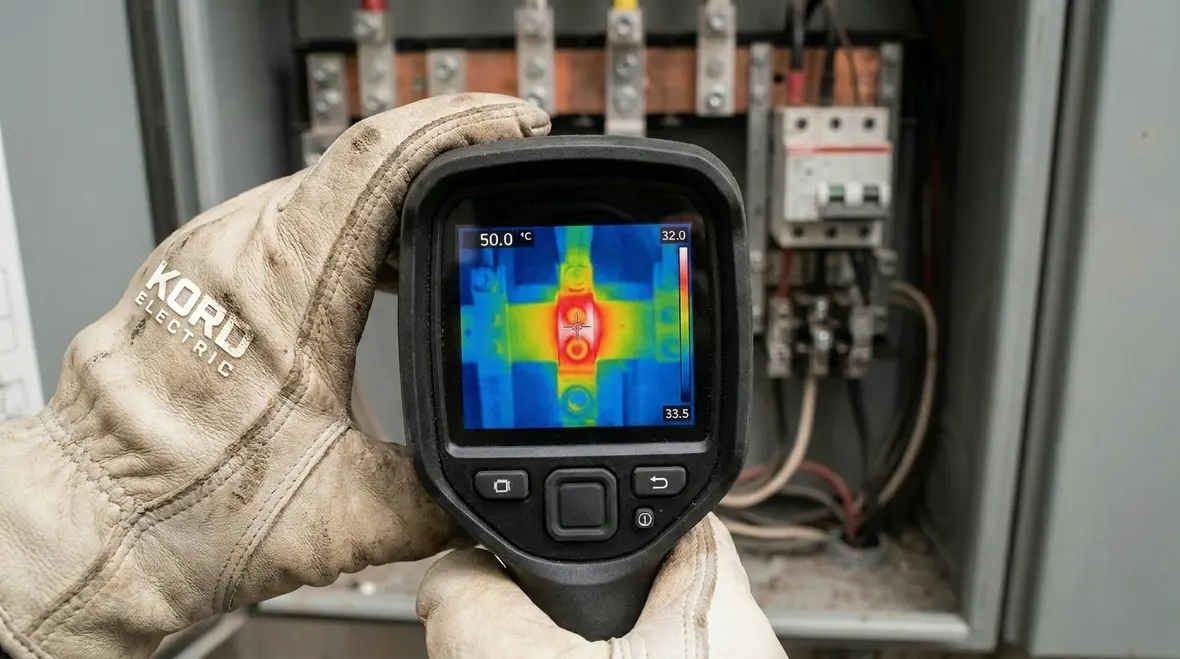
How we translate temperature readings into real maintenance actions
Thermal imaging alone does not keep lights on. It is the start of a disciplined process. Therefore, our team develops a clear plan that connects thermal results to electrical risk. First, we label the suspected locations and record the temperature spread. Then we compare results across similar components and across phases.
Once we identify a likely issue, we determine the safest and most efficient method to confirm it. That might include infrared follow up with additional angles, terminal inspections, electrical testing, or targeted documentation review. We also account for scan conditions. For instance, a panel that recently ran at peak load can show more heat than normal, so we consider load history and expected operating patterns.
Finally, we help the facility choose an action level that fits their downtime tolerance. Our expert service staff often explains the tradeoffs in plain language. If a component shows a concerning hot spot, we do not hide behind vague recommendations. We explain what it means, what it could lead to, and what it costs to address now versus later. That is how thermal insights become scheduled reliability instead of reactive fire drills.
Why industrial facilities benefit more than you might think
Commercial and industrial properties usually run higher loads, more shifts, and more equipment than typical smaller sites. As a result, panels face more mechanical vibration, frequent cycling, and steady heat buildup. Then add changes like tenant upgrades, HVAC seasons, and EV charging growth. Those updates can alter load distribution, which can change thermal behavior inside the panel.
If a facility installs new high demand equipment, like EV charging, the electrical system experiences extra stress. In that situation, thermal imaging becomes even more valuable because it helps confirm whether the panel components and bus connections handle the new load safely. Kord Electric supports major property buildings and commercial sites with professional planning and installation support. We also help our clients understand how the added demand can affect panel temperature patterns over time, not just on day one.
For properties planning new charging infrastructure, our team coordinates commercial and industrial EV charger installation with load studies and thermal checks so the panel, feeders, and distribution equipment match the real behavior of future EV demand instead of guessing from a datasheet.
And honestly, equipment upgrades always sound simple until someone opens the panel and discovers the “mystery” wiring that worked since the last ice age. Thermal imaging helps us keep those surprises smaller and more manageable.
Integrating thermal imaging with preventive electrical maintenance
Many facilities treat electrical maintenance like a once a year ritual. Yet the electrical environment changes constantly. Therefore, we recommend building thermal imaging into a preventive plan that fits the facility’s schedule and operating goals. We can coordinate scans around load conditions, planned outages, and major equipment cycles.
We also help facilities track trends. Trend data matters because a temperature rise that slowly increases over time often signals tightening or degradation issues. When we revisit a panel later, the comparison tells a stronger story than a single image snapshot. Additionally, we can align findings with other maintenance tasks such as inspections, breaker servicing, and cable management improvements.
Kord Electric’s electrical preventive maintenance services integrate infrared and industrial electrical panel thermal imaging usage into structured programs, so facility teams see clear reports, prioritized risk levels, and recommended timelines instead of a pile of unfiltered images.
In our process, we emphasize clarity. Our technicians explain what they see, what they suspect, and what actions make sense for commercial and industrial settings. That way, building managers and facility teams can make decisions with confidence rather than uncertainty.
FAQ
Take the next step with Kord Electric
Electrical reliability should not rely on luck, and it certainly should not depend on “it probably feels fine.” Kord Electric helps commercial and industrial facilities use industrial electrical panel thermal imaging to identify risk early, prioritize fixes, and support smart preventive maintenance. Our technicians and expert service staff explain the findings clearly, then recommend practical actions that match your downtime needs. If you want a calmer maintenance schedule and fewer surprises, contact Kord Electric to plan your next thermal scan.
If your facility also needs support beyond thermal imaging, our team delivers structured electrical preventive maintenance programs and coordinates with services like emergency response, voltage stability work, and capacity planning so your panels, distribution, and critical equipment operate as one reliable system.
For properties planning future-ready infrastructure upgrades, from EV charging expansion to broader power system improvements, we can integrate industrial electrical panel thermal imaging usage into a long-term strategy that keeps your facility safer, more resilient, and easier to operate year after year.