Preventing Commercial Power Surge Damage in Buildings
Power in a commercial building is supposed to be the quiet background character in every workday. Lights stay on, drives keep spinning, servers hum, and no one thinks about the voltage that makes everything possible. Yet when preventing commercial power surge damage becomes a topic of conversation, it usually means something already broke, a line item on the budget just grew teeth, and everyone suddenly wishes the power story had stayed boring.
This guide walks through how transient voltages really behave in commercial and industrial facilities, why basic surge strips are not enough, and how layered protection, wiring details, and smart planning protect critical loads. Along the way, we will connect the dots between everyday electrical behavior and long term reliability, so you can see how to protect your building before the next spike, dip, or “mystery failure” shows up.
Why transient voltages quietly damage commercial systems
When a facility experiences preventing commercial power surge damage, it is not only about a single loud event like a lightning strike. It is about the everyday transients that show up as brief spikes, dips, and noise on the power line. These micro events can stress electronics, shorten the life of motors and drives, and push sensitive controls out of tolerance, long before anyone sees a fault. At Kord Electric, we focus on commercial and industrial buildings and major property systems, because those owners deserve protection that holds up under real load, real weather, and real operation.
In this guide, our team explains what goes beyond a basic surge protector, how transient voltages travel through commercial systems, and how we design protection that fits how your building actually runs. Yes, power is supposed to be boring. Unfortunately, it is not. Transients love chaos, and our technicians do not.
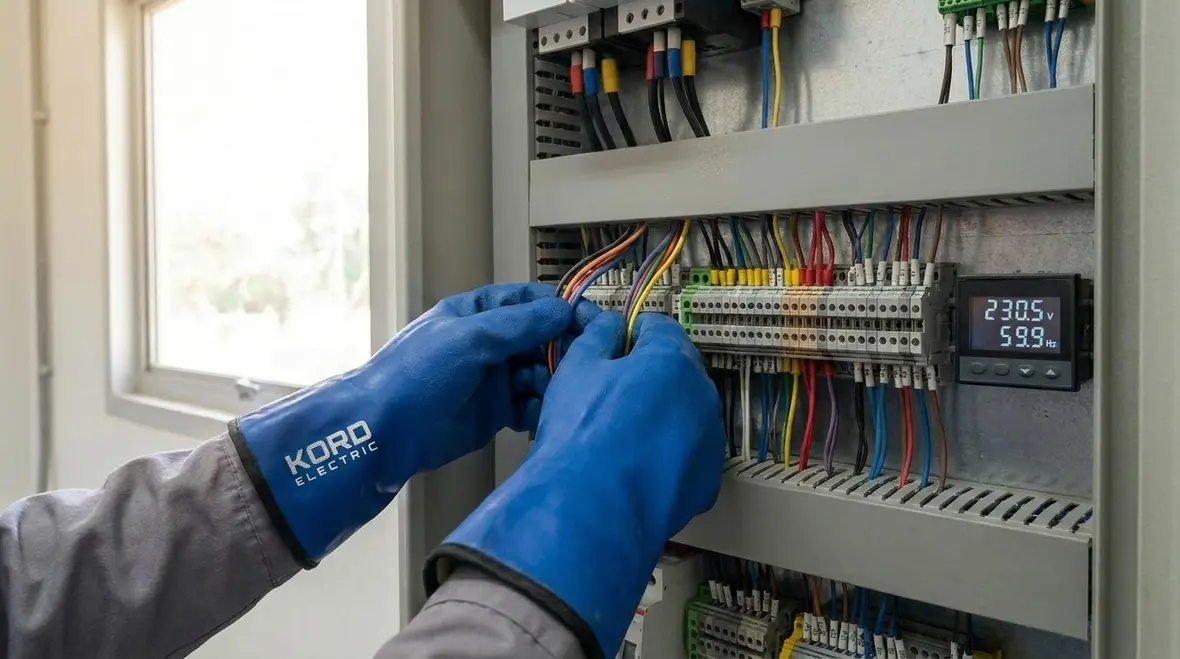
Those transients can be so short that meters barely notice them, yet the insulation inside drives and controls definitely does. Over time, this “background stress” behaves like voltage erosion. The building keeps running, but equipment lifespans shrink, nuisance resets become normal, and teams start thinking that downtime is just part of the job. It is not. It is often a symptom of unmanaged transient activity moving through the system.
How transients sneak past basic surge protection
Our expert service staff often sees the same pattern: a building has a surge device, yet equipment still fails. That usually happens because many surge protectors focus on the “big” spike, but transients in commercial environments come in several forms. They can be caused by switching operations, motor starting and stopping, contactor cycling, variable frequency drive behavior, capacitor bank steps, and even utility line events that do not look dramatic.
Here is the key point. Transient voltage does not always arrive at your panel the way people expect. Instead, it can enter the building at one point, travel along branch circuits, and ride through grounding and bonding paths. Then it can show up at the load side, where it stresses control boards, sensors, lighting drivers, and communications equipment. So even if the main surge device does its job, the rest of the system may still see harmful voltage stress.
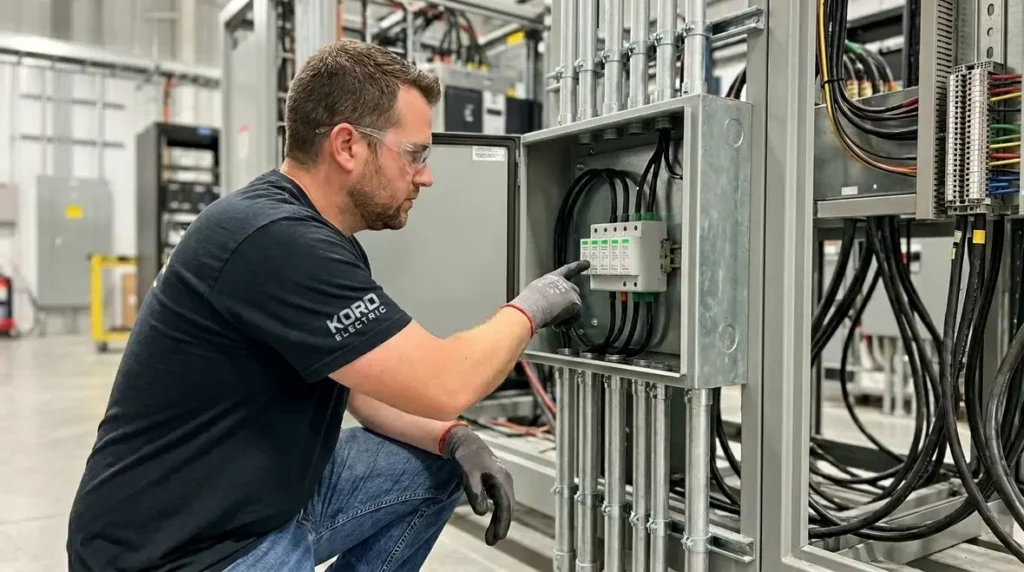
To make it easier, our technicians treat transient protection like layered defense. We do not rely on one device and hope. We map where the transients travel, and we protect the path, not just the doorway. That includes feeder paths, panel locations, branch circuits to sensitive equipment, and even where facility operations create their own “in house” disturbances every time large loads cycle.
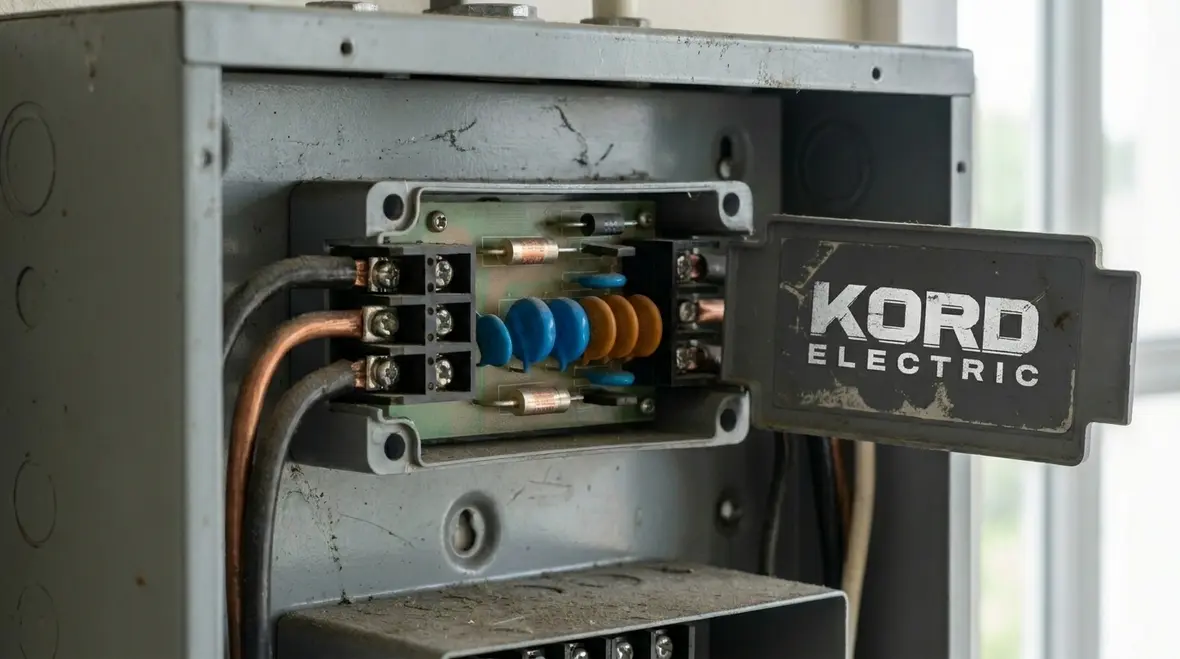
In many buildings, that path starts with utility service, runs through switchgear and distribution panels, and ends at control cabinets and server racks that never signed up to be the front line against transients. If those paths do not have coordinated protection stages in place, the weakest component becomes the de facto surge device. Unfortunately, the weakest component is usually expensive and mission critical.
Layered protection for commercial power distribution
We build transient protection in layers because commercial power is layered too. A building is not one circuit, and it is not one load. It is a network of panels, feeders, branch circuits, and equipment that all behave differently under stress.
Layering typically includes these elements, and we decide what fits based on the building’s electrical one line, load list, and operating schedule:
- Service entrance protection sized for the incoming environment and utility characteristics
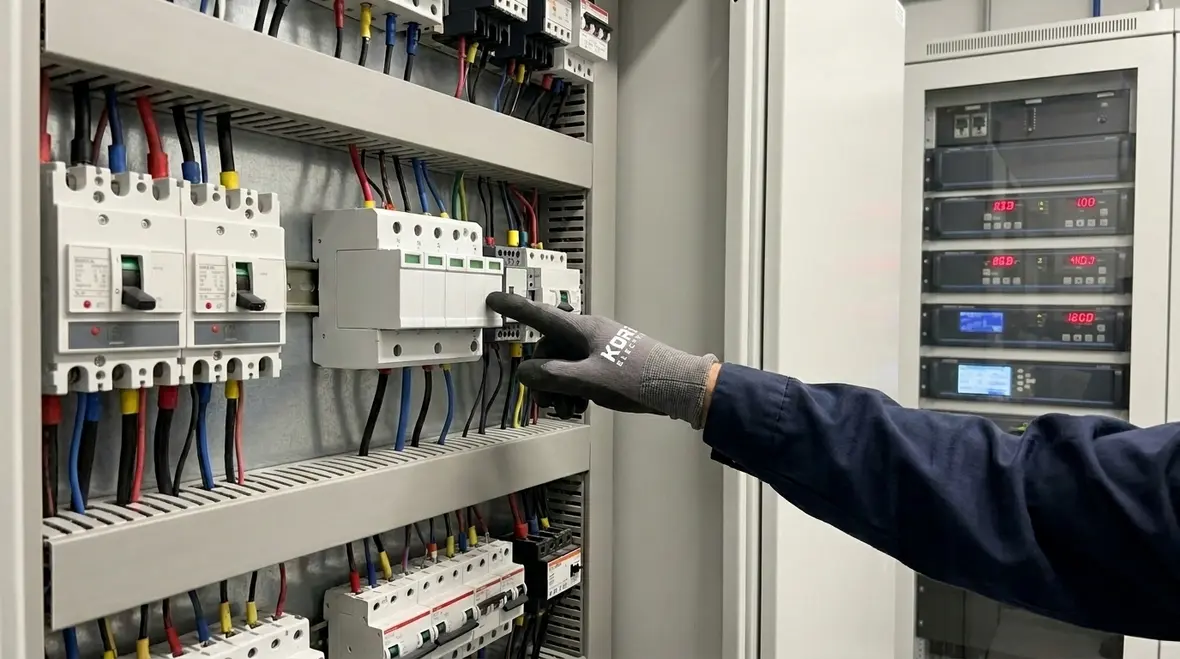
- Panel level devices to reduce residual voltage along feeder paths
- Distribution circuit protection for sensitive areas such as controls, communications, and specialty loads
- Proper grounding and bonding so surge currents move the way the design intends
- Coordinated devices so protection stages do not compete with each other
Then we validate the approach with field checks and documentation. In the real world, the “best” device on paper does not help if the wiring method, grounding continuity, or coordination timing does not match the design. So we look at the whole system, not just the part that gets photographed.
This layered strategy aligns closely with broader reliability planning across a facility. Just as owners rely on structured electrical maintenance to catch hidden issues early, they rely on a structured surge protection design to keep voltage disturbances from causing repeated, expensive surprises. When those two efforts work together, preventing commercial power surge damage becomes part of the facility’s normal operating strategy instead of an afterthought.
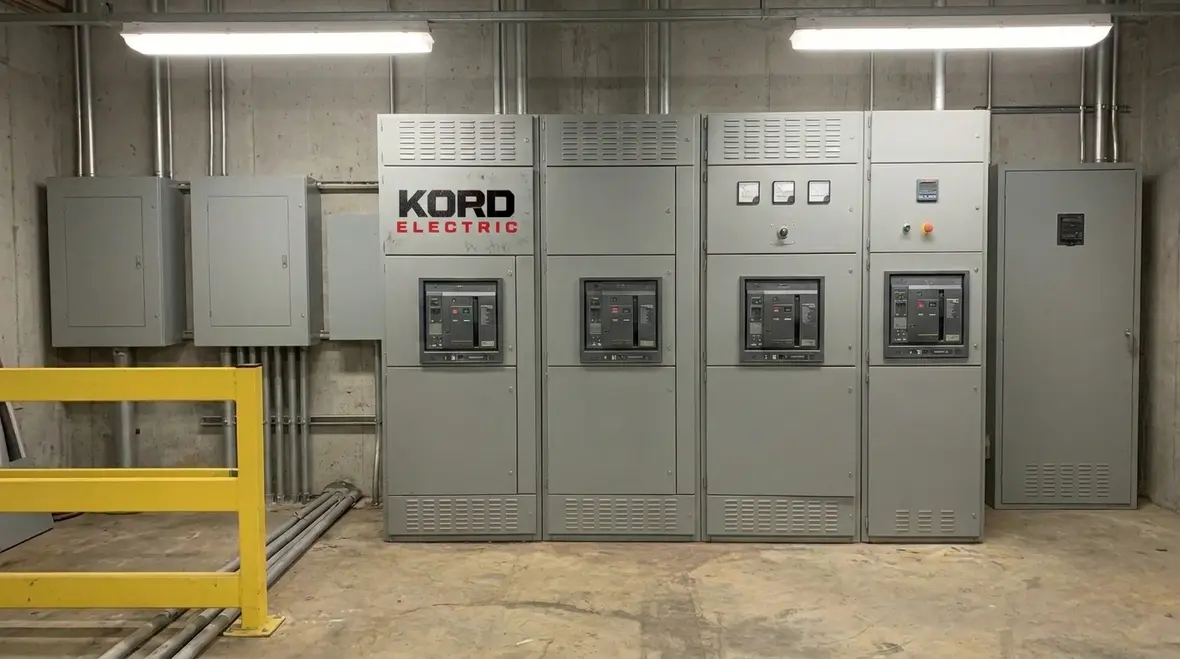
For commercial portfolios with multiple buildings, that same layered thinking also supports better capital planning. Once you understand which panels, feeders, and loads create the highest transient exposure, you can phase protection upgrades based on risk instead of guesswork, starting where the impact will be felt fastest.
Why grounding, bonding, and wiring details matter
People often assume surge protection is plug and play. In a commercial or industrial facility, that assumption is how you end up paying twice, once for the equipment and again for downtime. Our technicians know that transient energy needs a controlled path. If that path is vague, the energy goes searching, and it may stress equipment instead of moving away safely.
For example, if bonding is incomplete or corrosion builds up at terminations, the impedance can rise. Then the voltage rise across equipment chassis and control grounds increases. Similarly, if conductors are installed without proper routing or if terminations are loose, the effective impedance changes, and the surge device may clamp at a level that still allows harmful stress at downstream loads.
So we review grounding and bonding practices, and we confirm that protective devices connect to the intended reference points. We also pay attention to conductor sizing, termination torque, and route length. These details sound unglamorous, yet they decide whether the protection actually works when the building needs it.
And yes, sometimes the building has “as built” drawings that look like they were drafted during a power outage. We still fix the gaps, because our job is not to admire the paper. Our job is to keep the facility running. That might mean cleaning up an overcrowded panel, reworking a questionable bonding jumper, or tracing a branch circuit that apparently decided to take the scenic route through three different junction boxes. Whatever it takes, the goal is clear: give transient energy a better path than your most valuable equipment.
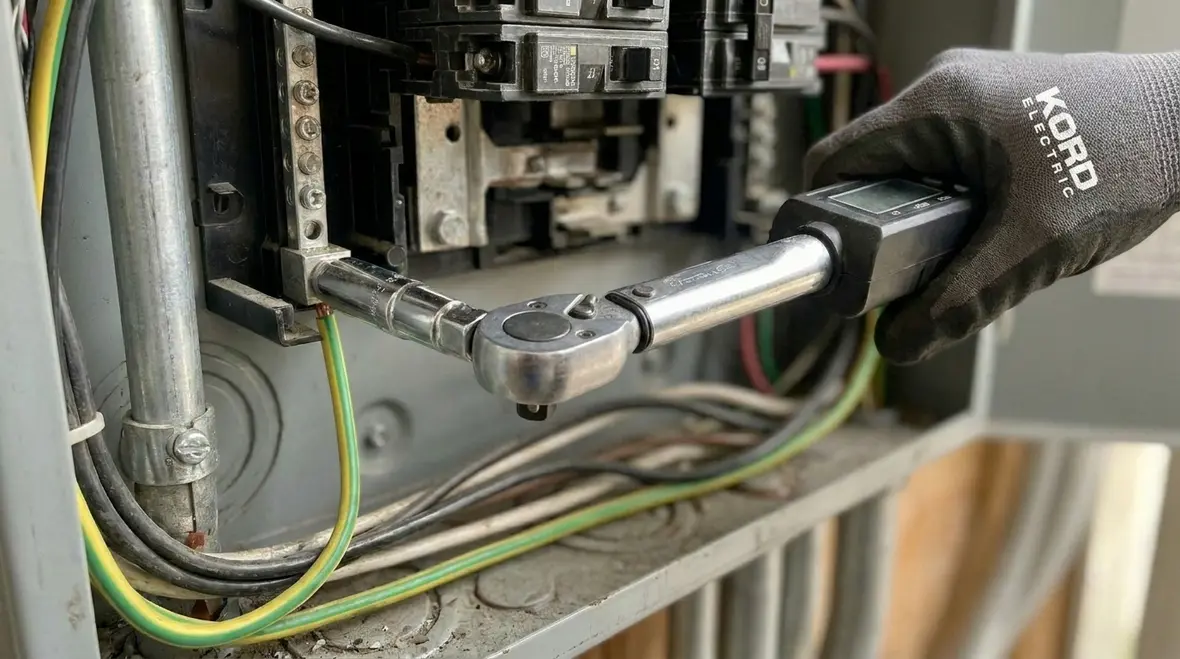
Strong grounding and bonding also support other reliability goals, from reducing nuisance breaker trips to maintaining voltage stability under heavy load. When these fundamentals are correct, surge protection devices perform more predictably, and the rest of the electrical system behaves more like the calm, steady infrastructure your operations team keeps hoping for.
Preventing commercial power surge damage in critical loads
Once transient protection is layered at the electrical levels, we shift attention to the loads that feel the impact first. Commercial and industrial environments often include equipment that is more sensitive than typical lighting circuits or simple receptacles.
Our technicians typically prioritize protection for loads such as:
- Building automation and controls including BAS panels, thermostatic controls, and power monitoring
- Variable frequency drives and motor control systems
- Industrial lighting drivers and high efficiency fixtures
- Security systems such as cameras, access control, and intrusion detection
- Communications equipment including network switches, access points, and structured cabling interfaces
Then we match the protection approach to the reality of the system. For instance, lighting upgrades can reduce energy use, but we also confirm that drivers and controls remain protected from transients. If the facility is doing a commercial lighting upgrade, our experience from the cost guide helps owners plan the full scope. We often explain that the upgrade budget should include electrical protection where needed, because cutting energy cost while ignoring electrical stress can be like buying a new suit and keeping a broken zipper. Technically you are dressed. Practically you still have problems.
In that same spirit, we review the upgrade cost picture for commercial lighting projects and show how electrical considerations can affect total outcomes. You can read our guide here: Kord Electric Blog: Commercial Lighting Upgrade Cost Guide. Our team uses that kind of clarity so facility managers can plan upgrades that perform, not just look good.
We also connect surge protection planning to broader electrical reliability measures. For example, if a property is already addressing voltage fluctuations or hidden electrical risks elsewhere in the building, it often makes sense to integrate surge protection improvements into the same project window. Combining these efforts can reduce future emergency calls, protect sensitive equipment, and keep your operations team focused on production instead of repeated troubleshooting.
How we assess risk and plan protection upgrades
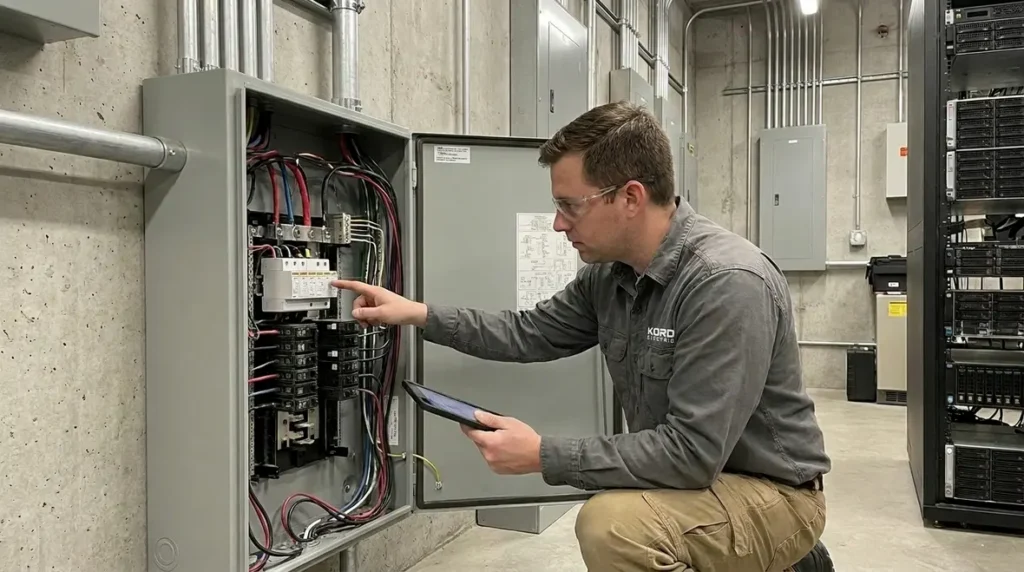
We do not guess. We assess. The process usually starts with how the facility operates, when it runs, and what equipment it uses. Then we review the electrical distribution, including where branch panels feed sensitive zones and where switching events happen. After that, we look at protection history: what surge devices are present, when they were installed, and whether downstream coordination exists.
Next, our expert service staff walks through the “transient map,” which is simply a practical way to describe where voltage stress could land. We identify likely sources, such as motor starting, HVAC cycling, elevator operations, compressor starts, and other switching loads. Then we estimate where protection should sit so that preventing commercial power surge damage becomes a system outcome instead of a device purchase.
Finally, we create an upgrade plan that respects downtime constraints. Major property buildings and industrial facilities do not pause easily, so we schedule work to reduce disruption. We also document what we change and why, so the owner and operations teams know what is now protected and how the system behaves under normal switching and unexpected events.
In many cases, that plan connects naturally with broader commercial and industrial electrical maintenance strategies. When preventive maintenance, surge protection upgrades, and voltage stability work support each other, facilities see fewer emergency calls, fewer unexplained failures, and a much steadier operating picture across their electrical systems.
Our goal is calm, reliable power for commercial and industrial life. Not drama. Not guesswork. Just fewer surprises.
FAQ: Transient voltage and commercial surge protection
Taking the next step with Kord Electric
If your facility has sensitive controls, drives, or modern lighting systems, it deserves more than a single surge device and a prayer. Kord Electric designs layered protection for commercial and industrial buildings and major property systems, and our technicians explain every recommendation in plain business terms. Reach out to us for an assessment and a practical upgrade plan that fits your operation schedule. Let us help you reduce downtime risk and protect performance before transient events find the weak points.
For owners building a broader reliability roadmap, it can be helpful to connect surge protection upgrades with services that address voltage fluctuations, hidden electrical risks, and long term maintenance planning across your facilities. That way, each step you take to harden your electrical systems reinforces the next, instead of solving one issue while leaving related vulnerabilities untouched.
When unplanned electrical problems do appear, fast response matters. Kord Electric’s emergency electrical services help stabilize systems, protect people and property, and restore power safely, so you are not left navigating critical issues alone. Pairing that level of support with a thoughtful surge protection strategy gives your facility both a stronger defense and a reliable backup plan.
Whether you are planning a lighting upgrade, addressing voltage stability, or quietly working on preventing commercial power surge damage before it makes headlines in your maintenance logs, our team is ready to help.
Conclusion
Transient voltages do not arrive with a warning label. They hide inside normal operations, they ride along grounding paths and feeder circuits, and they wait for the weakest link in your system to reveal itself at the worst possible moment. Preventing commercial power surge damage in buildings means treating surge protection as a system design challenge, not a single product on a panel door.
By layering protection from the service entrance to critical loads, tightening grounding and bonding practices, and coordinating upgrades with how your facility actually runs, you turn power quality from an ongoing mystery into a managed, predictable part of your infrastructure. Along the way, you protect sensitive equipment, reduce downtime risk, and give your teams one less invisible problem to worry about behind the walls.
If your building is ready for that kind of calm, reliable power story, Kord Electric is ready to help you write it—step by step, circuit by circuit, with a protection plan built for real commercial life.