Commercial EV Charging Planning for Facilities
Kord Electric starts with commercial EV charging planning because we know the stakes are high for commercial and industrial facilities. When fleets, employees, and visitors depend on charging, you cannot “figure it out later.” You plan it once, you design it right, and you install it safely. In the next sections, we outline the essential planning steps our team uses, and we explain the process like our expert technicians do on every site visit. And yes, we also remind people that electricity is not a mystery novel; it follows rules, even when deadlines try to write their own plot twists.
Define the goals for fleet charging and property needs
Before we touch a single wire, we sit down with the decision makers at the facility. Then, we map out why the charging is needed and what success looks like. For example, an industrial plant may need predictable turnaround times for service vehicles. Meanwhile, a multi tenant property might want easy access for staff and deliveries. When we clearly define the goals, we reduce rework later and we keep the project aligned with operations.
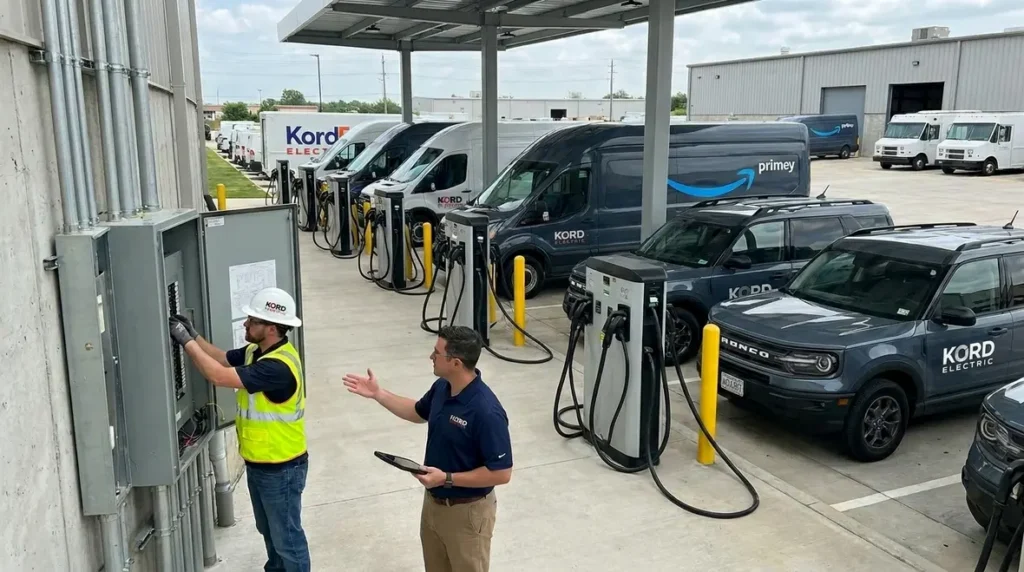
Next, we confirm the site constraints that often decide everything: loading patterns, vehicle types, parking layout, and access routes for installation equipment. Then we gather basic electrical information, but we do it the smart way, not the “let’s guess and pray” way. Our technicians review the existing service capacity, switchgear, panels, and any known future expansions.
Finally, we set expectations around usage and growth. Charging demand changes as fleets convert. So we plan for a realistic ramp, and we design a system that can expand without turning the site into a long, expensive construction zone.
Site assessment that respects layout, safety, and uptime
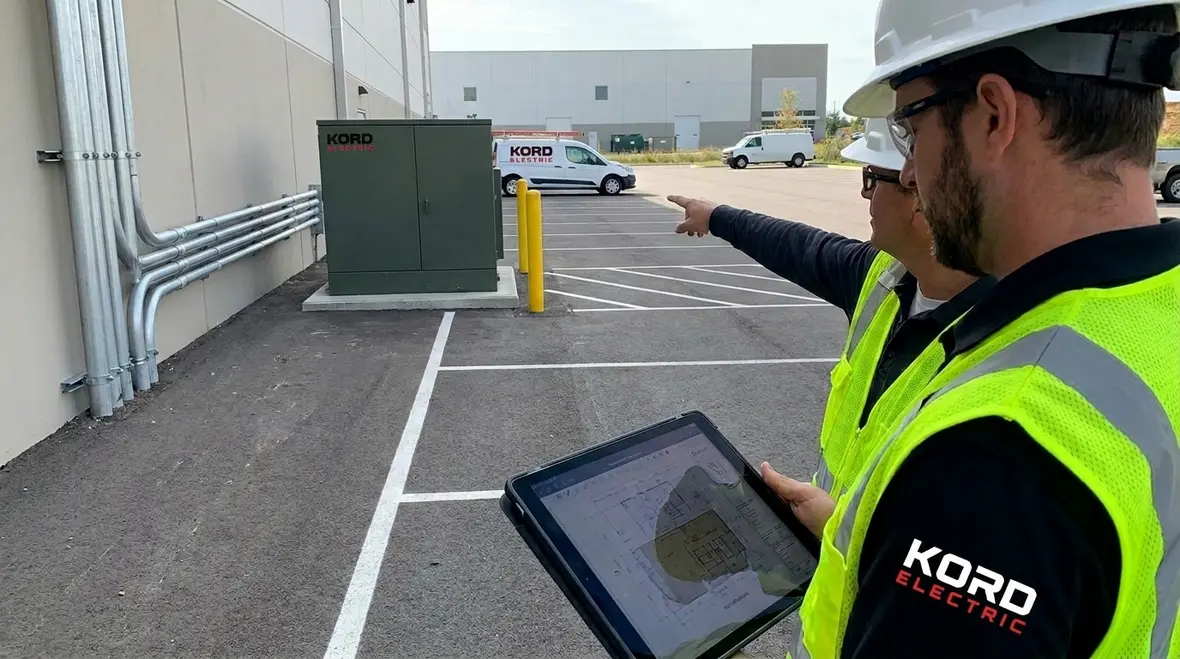
After we define the goals, we walk the site with the people who run it. That is where the real planning starts. We look at curb lines, parking depths, and the exact space where vehicles will stop. Then we consider how drivers will approach the charger, because poor placement turns chargers into decorative sculptures.
Next, we evaluate safety requirements. This includes cable routing, conduit runs, lighting considerations, and how we will protect equipment from vehicle impacts. We also consider weather exposure and wash down conditions for industrial areas. Then, we plan for efficient maintenance access so technicians can service chargers without shutting down the whole lot.
At this stage, our expert service staff also explains the reasoning behind each decision. They translate what we see into practical steps the facility team can understand. In short, we remove confusion early, and we avoid surprise changes later.
Power capacity and load strategy built for real buildings
Many planning problems start with one simple issue: people assume the existing electrical system can handle the new load. So we do not assume. We calculate and we verify. First, we review the utility service size, transformer capacity, demand data, and existing major loads like HVAC, process equipment, elevators, and lighting. Then, we model the charging load based on expected usage patterns.
Next, we decide how to manage that load. We may recommend load balancing, smart scheduling, or staged upgrades. And when the site needs a larger electrical service, we plan the pathway and timeline with care. Because downtime and permits matter, especially for commercial and industrial operations that run on schedules.
Meanwhile, we keep an eye on future growth. If another fleet conversion is coming in two years, we plan for it now. That approach reduces expensive redo work. Also, it prevents the classic “we should have planned for more” moment that nobody wants to say out loud in a project meeting.
Integrating power strategy with broader electrical upgrades
When we evaluate EV charging loads, we also look for opportunities to align with other electrical priorities. For example, if a facility is planning lighting upgrades, panel replacements, or new automation controls, we can design the commercial EV charging planning around that roadmap. This keeps trenching, switchgear modifications, and permitting bundled instead of scattered across multiple disruptive projects.
For properties that want a deeper dive on lighting-related upgrades, our team often recommends reviewing resources like our recessed lighting installation service page. That content helps facility managers understand how lighting and EV charging draw from the same electrical backbone and why coordinated upgrades typically reduce long term costs while supporting safer, cleaner installs.
Choose charger types and network features that match operations
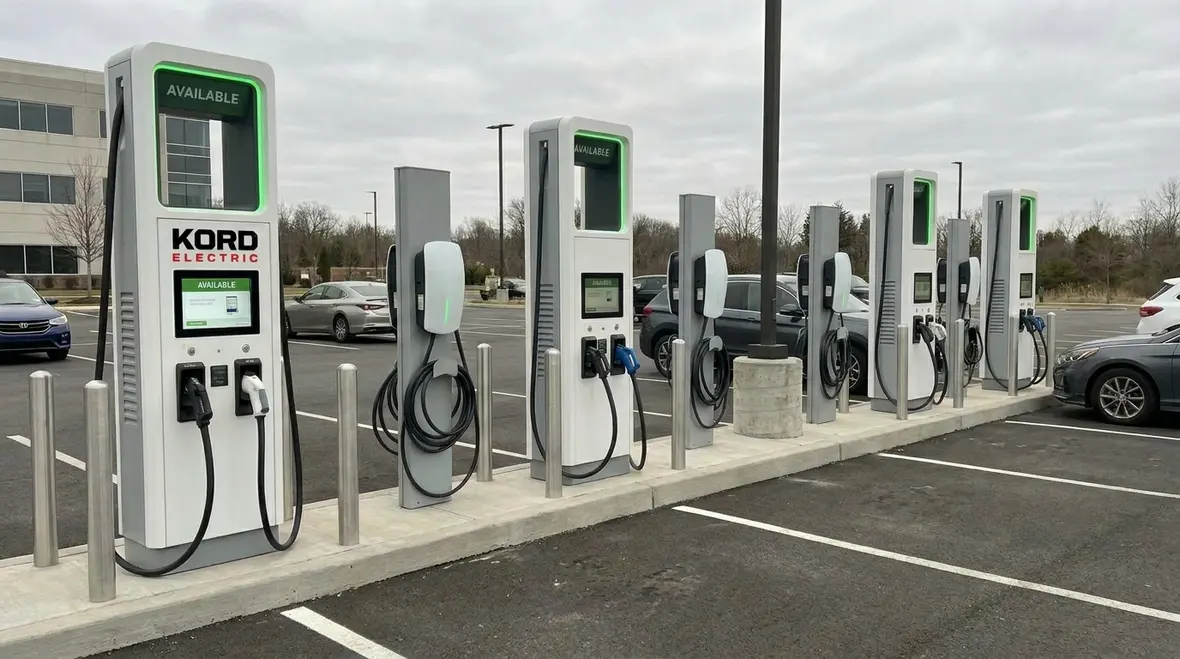
Once the electrical plan is grounded, we focus on equipment selection. We match charger type to the vehicles and charging behavior. For example, some fleets need fast charging for quick turnarounds, while others can use slower rates with predictable overnight charging. Then we select connector types and mounting styles that fit the parking and access layout.
Next, we consider how the chargers must behave in day to day operations. Many commercial sites need networked management. That allows reporting, scheduling, performance monitoring, and better control for facility teams. We also discuss authorization options, usage tracking, and how staff or drivers will interact with the system.
Then, our expert service staff explains what network features do, and just as importantly, what they do not do. We keep the conversation practical. We avoid vague promises. In the end, the chosen setup should support operations, not create a new set of headaches.
Balancing fast charging with operational reality
In real facilities, the “fastest possible” charger is not always the smartest choice. Fleet managers have to balance charge times with panel capacity, demand charges, and how long vehicles actually park. As part of our commercial EV charging planning process, we walk through realistic duty cycles: which vehicles turn quickly, which sit all day, and which can rely on overnight charging. That conversation often leads to a mix of charger levels, not a one speed fits all solution.
Electrical routing, installation details, and disciplined code compliance
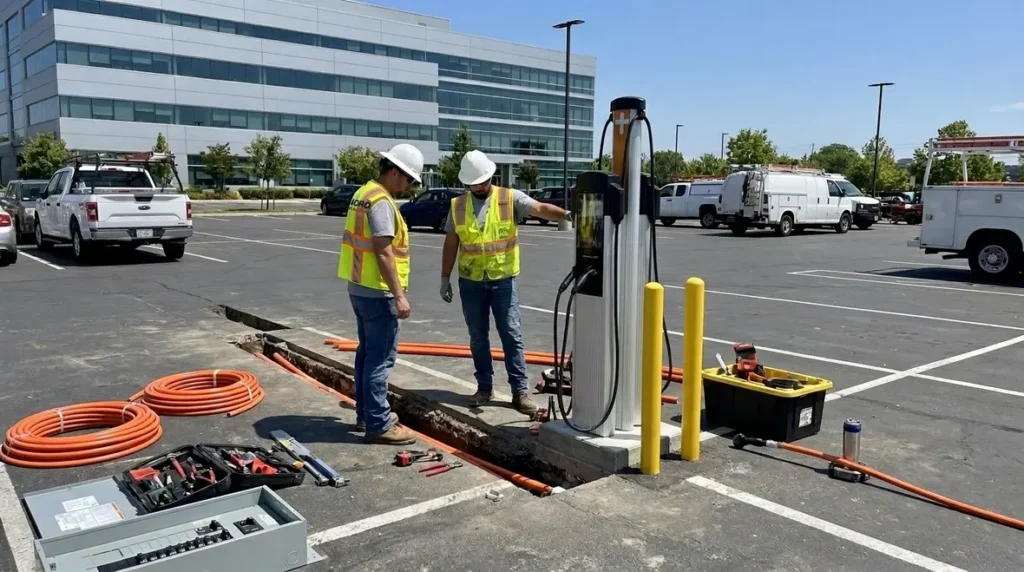
Here is where precision matters. We design the installation path so conduit runs, cable lengths, and grounding methods meet requirements. We also plan for clean separation from sensitive building systems when needed. Then we coordinate locations so trenching, surface restoration, and mounting choices stay within the site rules.
At Kord Electric, we pay attention to the small details because small mistakes become big problems. For example, we treat conduit routing like it is part of the building design, not an afterthought. And when we coordinate with other trades, we protect the project from delays.
Although our company is known for multiple electrical installation categories, we approach every job with the same care and structure. For instance, when someone needs recessed lighting installation guidance, our mindset stays consistent: plan the layout, confirm measurements, protect surfaces, and install with the right steps rather than fast shortcuts. The goal is the same here. We want safe, reliable results that hold up long after the ribbon cutting.
To keep everything organized, we also plan the documentation needed for permitting and compliance. That includes labeling, proper termination practices, and testing. Then, we confirm the system works as designed before we close up the work.
Coordinating EV charging with lighting and safety systems
Because EV charging sites often sit near loading zones and parking circulation, we also pay attention to lighting levels, emergency egress paths, and signage. That might mean coordinating with existing lighting circuits, planning for new fixtures, or verifying that a previously completed lighting installation meets current needs now that chargers will attract more traffic. The result is a charging area that feels intentional instead of improvised.
Permitting, budgeting, and project phasing that avoids costly surprises
After the design and equipment choices settle, we move into project planning. First, we build a clear budget that includes equipment, electrical work, civil scope if needed, and any electrical service upgrades. Then we factor permitting timelines and inspection windows. This matters because commercial and industrial sites often require steady operations, so we cannot assume the calendar will cooperate.
Next, we plan phasing. If we can install in stages, we reduce disruption. For example, we might start with one zone, verify performance and load behavior, then expand. That approach protects uptime. It also gives the facility team real data to refine expectations.
Then we communicate the schedule clearly. Our technicians and expert service staff keep the facility informed on what happens next and why. And yes, sometimes the answer to a question is “because inspection needs it.” That is not drama. It is just how good projects protect people and investments.
Aligning commercial EV charging planning with financial goals
Permits and equipment are only part of the story. We also help facilities explore incentives, phased capital spending, and opportunities to coordinate EV work with other projects already on the budget calendar. Thoughtful commercial EV charging planning can turn a single line item into a broader modernization effort that improves electrical resilience, supports sustainability goals, and strengthens the property’s value without blowing up the annual plan.
Ongoing maintenance, reporting, and support after commissioning
Commissioning is not the end of the story. After installation, we verify performance and we help the site team understand ongoing needs. We cover routine inspection, cable and connector care, and how to spot issues before they become downtime.
Next, if the chargers include network reporting, we show facility stakeholders how to use the data. That includes usage trends, operational alerts, and session reporting. Then, we align support options with how the property runs. Some sites want rapid response during peak hours. Others plan for scheduled maintenance windows.
Because commercial and industrial facilities work like machines, we treat service like a system. We keep communication clear and we respond with practical next steps. This helps the chargers stay dependable, which protects service levels and driver confidence.
Connecting EV charging to preventive maintenance programs
For many facilities, EV chargers become just one more critical system alongside panels, lighting, and backup power. We can fold charging stations into broader electrical preventive maintenance programs so inspections, testing, and documentation stay organized. That way, the same disciplined approach that keeps core electrical infrastructure reliable also protects your new charging investment over the long term.
FAQ
Final thoughts and next steps with Kord Electric
Kord Electric helps commercial and industrial facilities build EV charging that works today and scales tomorrow. We handle planning, power strategy, equipment selection, installation details, permitting support, and post installation service. If you want commercial EV charging planning that stays grounded in real site conditions, we are ready. Contact us to schedule a site assessment, and we will explain options with clarity, calm, and the kind of discipline your electrical system deserves.
For facilities across the region, our broader Los Angeles County electrical services give you a single partner for EV charging, lighting, panels, maintenance, and more. That means one coordinated team managing the details instead of a patchwork of disconnected contractors.
If you are ready to move from “we should plan EV charging someday” to a concrete roadmap, our commercial EV charger installation and planning services can guide you from first walkthrough to final inspection. Whether you are supporting a growing fleet, preparing for tenant requests, or positioning your property for new regulations, starting with a disciplined plan is the most reliable way to hit your goals without unnecessary rework.