Commercial EV Charging Planning for Facilities
Commercial EV charging infrastructure planning for facility managers, without the chaos
Commercial EV charging infrastructure planning is where most facility projects either run smooth or turn into a “why is this taking forever” story. At Kord Electric, we help facility managers design charging that fits the building, serves drivers reliably, and stays within electrical and operational limits. Others guess, then retrofit, then pay again. We prefer the calm path up front. That means we plan power, placement, conduit routes, equipment needs, and site rules so your chargers do not become expensive decorations. In this guide, our expert service staff and technicians explain what matters, what to watch, and how to move from “We should add EV chargers” to “This works every day.”
Start with your site goals and real driver behavior
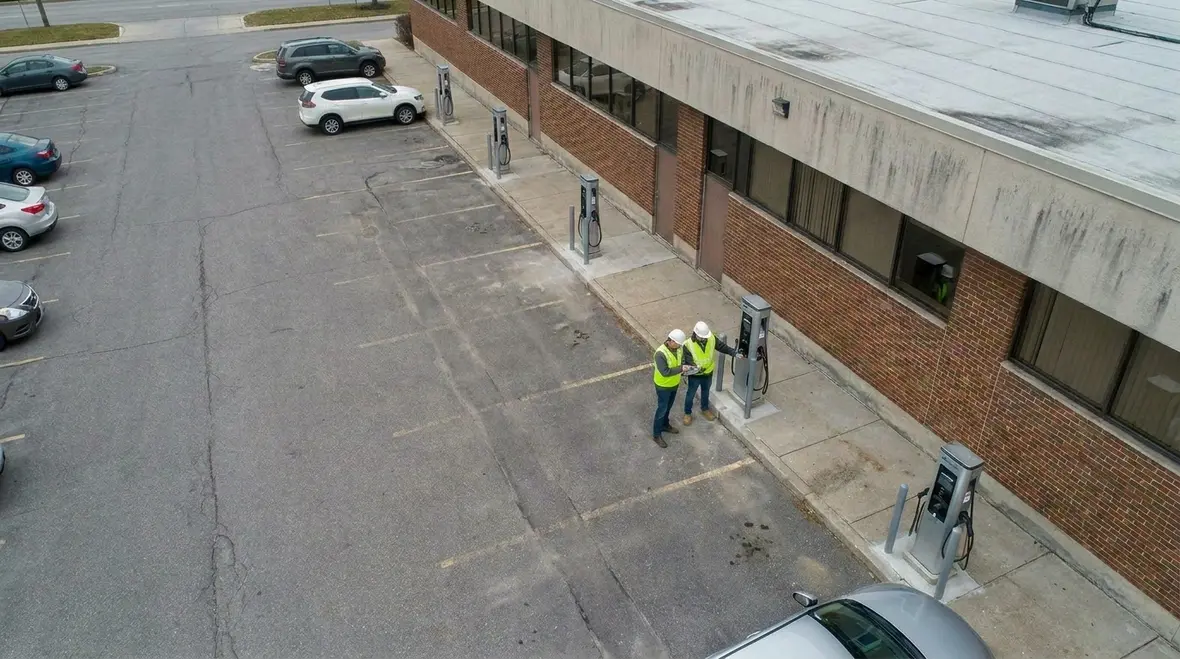
Facility managers usually start with a simple goal: add EV charging. However, commercial and industrial sites need more than that. First, we ask who will charge. Is it fleet vehicles returning nightly? Is it visitor parking for a major property building? Is it customer parking with turnover during business hours? Then we map demand by time, because energy is not evenly distributed across the day.
Next, we look at how drivers behave on your site. Some arrive with low state of charge and expect quick sessions. Others plug in for longer stays. Therefore, the plan should match both session length and volume. If your site has peak activity windows, your electrical plan must support that reality, not a best case fantasy. And yes, we have seen plans that assume every EV arrives at 2 p.m. on a Tuesday. That is not a strategy, it is a sitcom.
At Kord Electric, our team works with facility stakeholders to define targets like utilization rate, growth timeline, and uptime expectations. After that, we translate goals into equipment and power needs.
Analyze load capacity, panels, and power paths
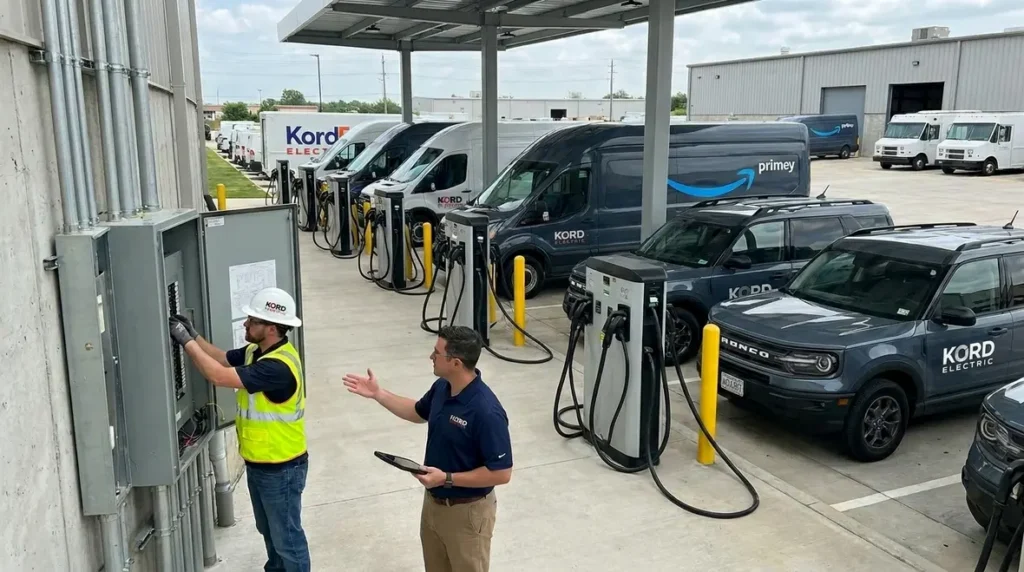
Once goals are clear, commercial ev charging infrastructure planning shifts to electrical reality. We evaluate incoming service size, distribution panels, and spare capacity. We also review demand charges, local utility rules, and available upgrade paths. If the building electrical system can handle the load, we scale charging intelligently. If it cannot, we plan upgrades early so the project stays on schedule.
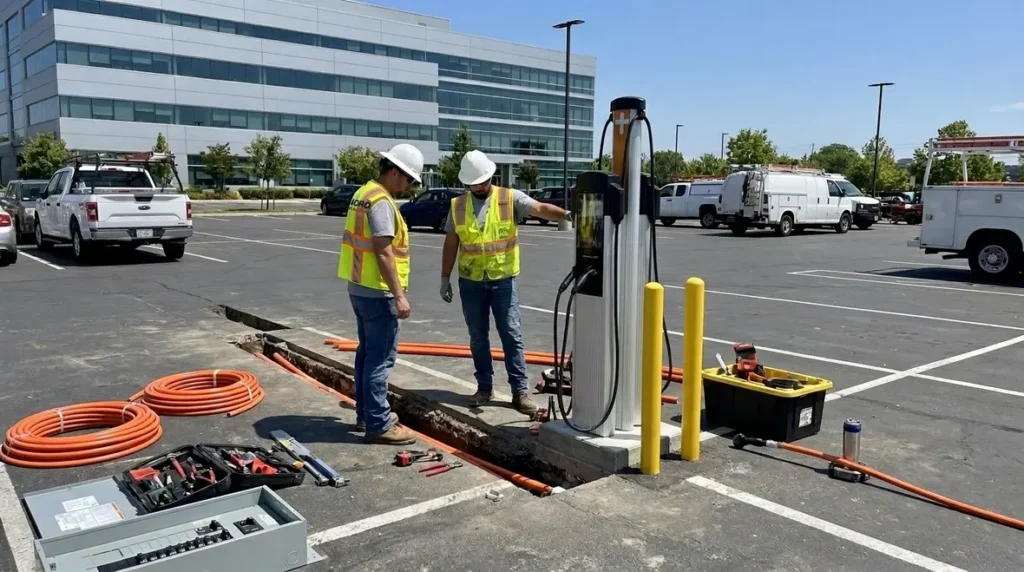
Our technicians typically trace power paths from utility entry to switchgear, then to each charger area. As a result, conduit routes and trenching align with real architecture, not drawings that only exist in meetings. We also consider future expansion. Many facilities add chargers in phases, so we design for the next step instead of rebuilding.
Energy management often becomes part of the solution. When multiple chargers operate on the same circuit groups, we balance output so the site does not trip breakers or create unstable behavior. In other words, we manage the amps like a traffic controller, not like someone waving a flag during a parade.
Plan charger placement for safety, access, and operations
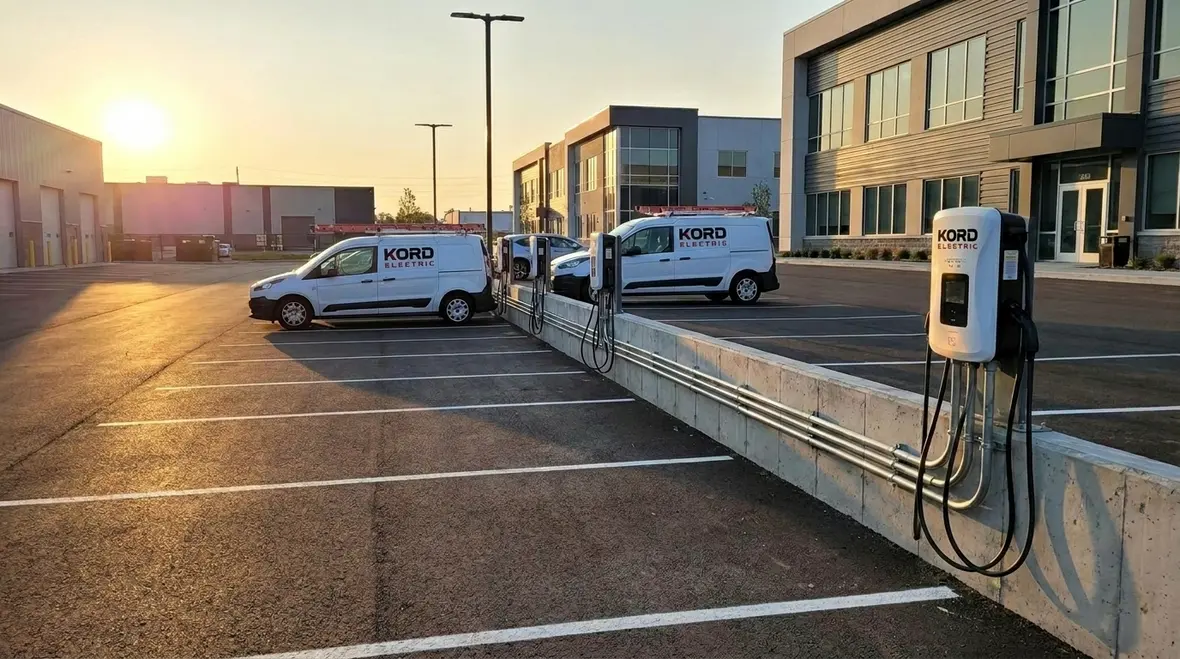
Placement decides whether drivers feel confident or frustrated. Therefore, we evaluate parking layout, pedestrian pathways, vehicle turning radius, and how your loading docks and traffic flow operate. For major property buildings, we also review signage and lighting so drivers can locate charging without guesswork. For industrial and commercial sites, we consider vehicle routes, backup clearance, and whether the chargers sit near equipment that could block access.
Next, we address site safety details. We plan for bollards, mounting heights, and weather protection. We also coordinate with site rules like towing policies, designated parking enforcement, and workflow around deliveries. If chargers sit in a “technically convenient” spot, but your operations team cannot access that area safely, the plan fails.
Our expert service staff explains these tradeoffs in plain language. They walk facility managers through how placement affects installation time, maintenance access, and daily usability. That way, decisions come with understanding, not surprises.
Specify the right equipment and charging levels
Different businesses need different charging behavior. We help teams choose equipment based on expected use, parking duration, and power availability. First, we confirm whether the site needs Level 2 for overnight fleet charging or whether higher power options fit the use case for faster sessions. Then we consider connectivity needs like network management, monitoring, and reporting.
In commercial settings, you often need a system that supports business rules. For example, some sites require authentication, session tracking, or limits that align with parking policies. Additionally, Kord Electric plans for how the system will integrate with facility operations so staff can manage it without becoming part time IT. Nobody wants that. Not even the folks who watch every episode of tech reality shows.
As chargers grow in number, we also plan for maintenance access and component replacement. Therefore, we specify equipment that suits harsh environments where dust, temperature swings, and constant vehicle movement can take a toll.
Coordinate installation design, permits, and site disruption
After equipment selection, the plan becomes a schedule and a blueprint. We coordinate trenching or conduit runs, mounting locations, and cable routing so installation matches your site constraints. Then we align with permitting requirements for your area, including electrical approvals and inspections.
For facility managers, the biggest pain usually comes from disruption. So we design installation approaches that reduce downtime and keep access clear for customers, staff, and deliveries. Whenever possible, we plan work in phases and sequence it around occupancy or production schedules. That is how we prevent “charger installation” from turning into “shutdown season.”
If upgrades are required, we plan the order of work so the building electrical system supports commissioning and testing. At each step, our technicians follow a disciplined process. They verify wiring integrity, check protective devices, and test charger behavior under load. Then they document the results so your maintenance team has a clear record.
For a closer look at our approach, facility managers can review the details on Kord Electric at https://kordelectric.com/ev-charger-installation/.
Build a maintenance plan with uptime in mind
Charging infrastructure cannot be “set it and forget it,” especially in commercial and industrial environments where reliability affects customer confidence and fleet operations. Therefore, we plan maintenance from day one. That includes inspection schedules, cleaning guidance where needed, and periodic checks of connections and protective components.
We also plan for monitoring and response. If a charger goes offline, someone must know quickly and know what to do next. Our expert service staff can guide facility stakeholders on operational steps and escalation paths. This matters because fast recovery protects your service levels and reduces repeat downtime.
Additionally, we advise on how to handle software updates and network changes. Charging networks can evolve, and equipment needs to stay secure and functional. By coordinating updates within your operating windows, you prevent interruptions during peak demand.
Key steps for successful commissioning and scaling
When the installation completes, the work does not stop. Commissioning is where we confirm that the chargers deliver what the plan promised. We test electrical performance, verify communication, and confirm power balancing behavior across connected units. Then we validate that the system supports your intended user experience, including access rules and reporting.
Once commissioning works, scaling becomes easier. Our team helps facility managers map future expansion based on remaining capacity. Instead of guessing, we use the installed infrastructure data and electrical pathways to plan additions. That reduces redesign and speeds up future installs.
In the commercial world, timing matters. Therefore, we build a repeatable approach so new charger phases follow the same standards, safety practices, and operational rules.
FAQ
Bring EV charging online with a plan that holds up
Facility managers do not need guesswork. They need a solution that matches the building, supports the operation, and scales without surprises. At Kord Electric, we guide commercial and industrial projects through commercial EV charging infrastructure planning, electrical design, and installation with a calm, expert process. If you are planning chargers for a major property building or an industrial site, contact us for an assessment and a practical path forward. Let us help you install once, succeed fast, and avoid the “retrofit later” trap.
If your facility is also reviewing broader upgrades, you can pair EV charging work with structured electrical preventive maintenance or other commercial electrical projects so your entire infrastructure supports the same reliability and uptime goals.
To move from planning to action, explore our dedicated EV charger installation services for commercial and industrial properties. Our team handles design, installation, and commissioning so your commercial EV charging infrastructure planning turns into a system that works every day.