
Industrial Power Quality Analysis Services for Uptime
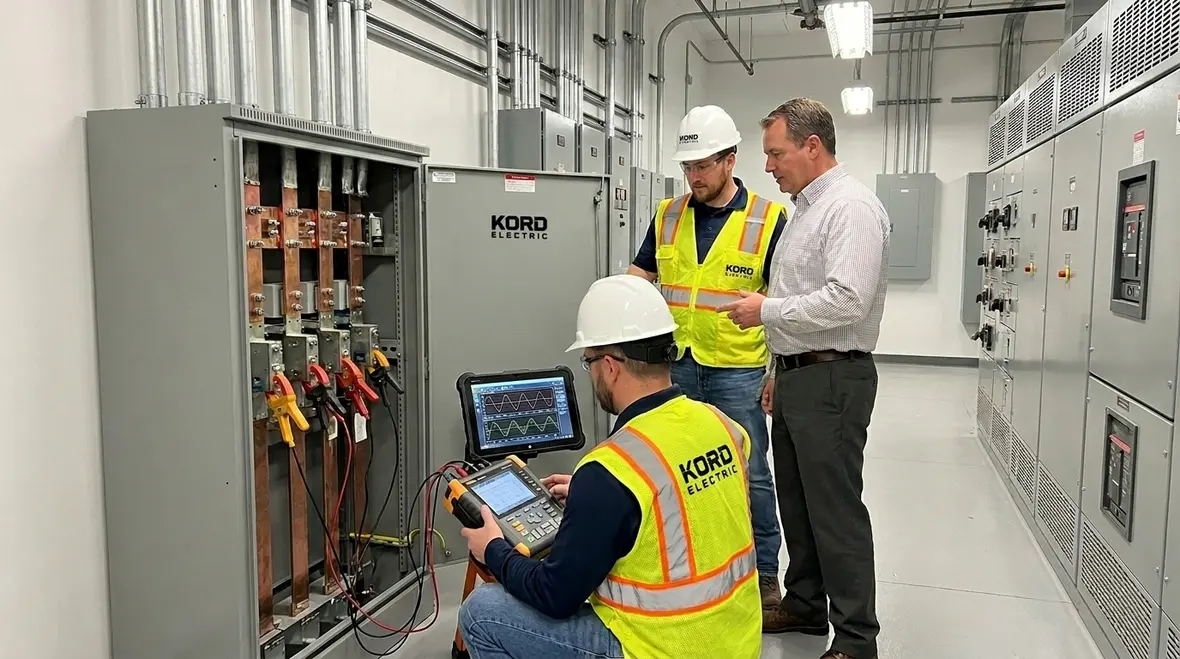
Kord Electric helps commercial and industrial facilities protect uptime and improve efficiency with industrial power quality analysis services. When our team runs power studies, we do more than “check the lights.” We look at how voltage, current, harmonics, and transients behave across your facility, so others can stop guessing and start planning. Then our technicians explain what they find in plain language, because nobody should need a degree in electrical theory to understand why a production line hiccups. After all, if your equipment acts up like it drank too much coffee, power quality is often the culprit.
Why power quality directly impacts facility efficiency
In most large facilities, energy is not just a utility cost. It is a daily operating tool. When power quality slips, equipment does not fail all at once. Instead, problems build quietly: motors run warmer, drives derate, transformers age faster, and control systems become more sensitive. Over time, that turns into lower throughput and more unplanned downtime.
Moreover, poor power quality can waste energy. For example, harmonics can increase current and heat in conductors. As a result, you may see higher demand charges, higher losses, and faster wear in switchgear. Even if your billing looks “normal,” your plant can still lose efficiency through heat, vibration, and extra cycling.
And yes, this can feel like chasing a ghost. The ghost just happens to live in the electrical system. That is why we rely on measured data, not assumptions.
What our technicians watch for during analysis
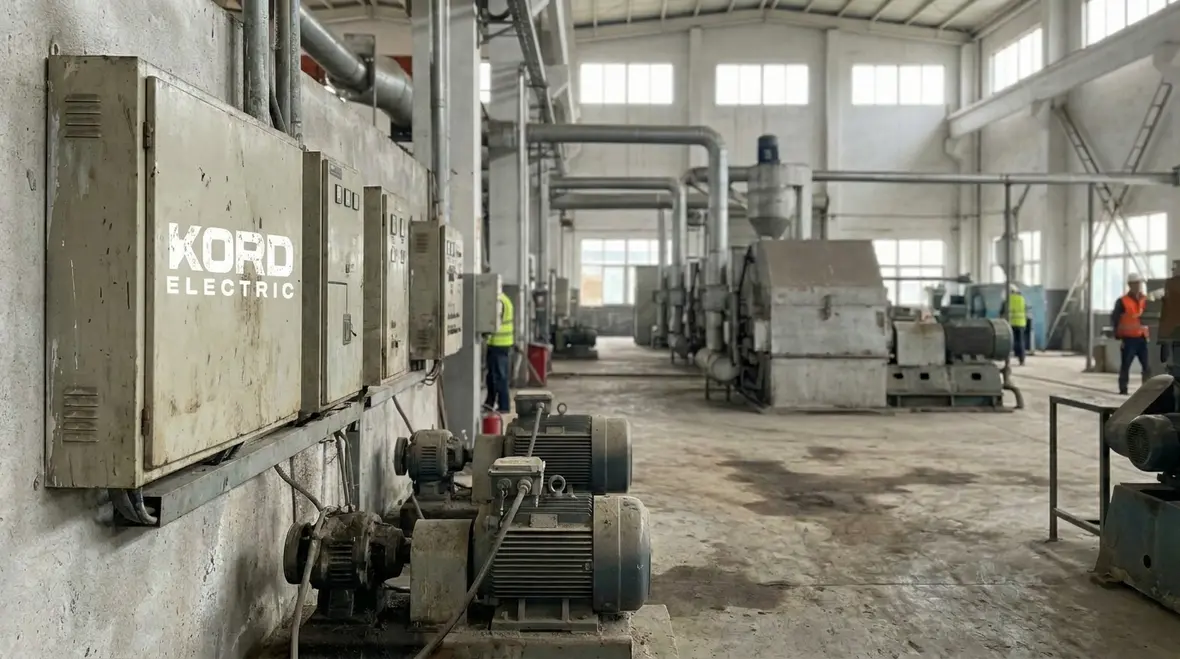
Kord Electric sends experienced technicians to examine the electrical environment where commercial and industrial equipment actually works. Then they capture data long enough to see real conditions, including startup events, load changes, and shift transitions. Next, our expert service staff explains the results and connects them to what the facility experiences day to day.
During industrial power quality analysis services, we typically focus on these common stressors:
- Voltage sags and swells that can trip drives, PLCs, or safety circuits
- Frequency drift that impacts clocks, controls, and sensitive processes
- Harmonics that increase heating and reduce motor and transformer efficiency
- Imbalance across phases that creates extra current and uneven wear
- Transients like switching spikes that harm power supplies and electronics
- Noise and poor grounding effects that trigger nuisance faults
Because we serve major property buildings and industrial sites, our team also looks at where loads concentrate. For example, mechanical rooms, rooftop HVAC systems, process equipment, and large drive banks often create the conditions that ripple through the distribution network.
How analysis supports smarter maintenance plans
Many facilities already run maintenance, but they often schedule work using time, not evidence. Then the plan becomes a calendar routine. It might feel safe, but it does not always address the real risk.
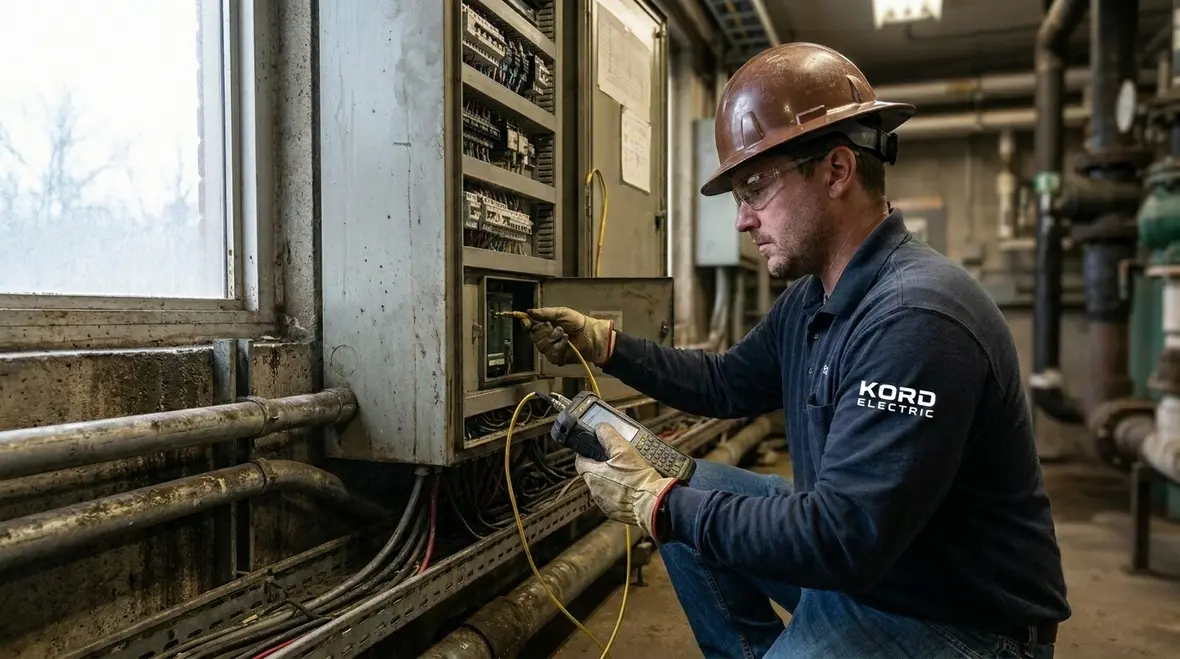
In contrast, our approach links power quality findings to maintenance priorities. In fact, our commercial and industrial electrical maintenance plans are built to keep systems reliable, and power analysis feeds that process. From there, others can align inspection intervals, adjust troubleshooting focus, and plan corrective work before failures spread. To see how these strategies come together, explore our dedicated overview on commercial and industrial electrical maintenance plans.
To keep this practical, our expert service staff helps facilities translate electrical data into actions like:
- Targeted inspection of panels, switchgear connections, and terminations when imbalance or high impedance shows up
- Review of grounding and bonding when noise or nuisance trips appear
- Drive and motor tuning when harmonics and thermal stress show up in load patterns
- Coordination changes for protection devices when events indicate poor selectivity
When maintenance plans use measured evidence, the facility stops treating symptoms as if they are causes. And that is where real savings begin.
Power quality as a foundation for preventive maintenance
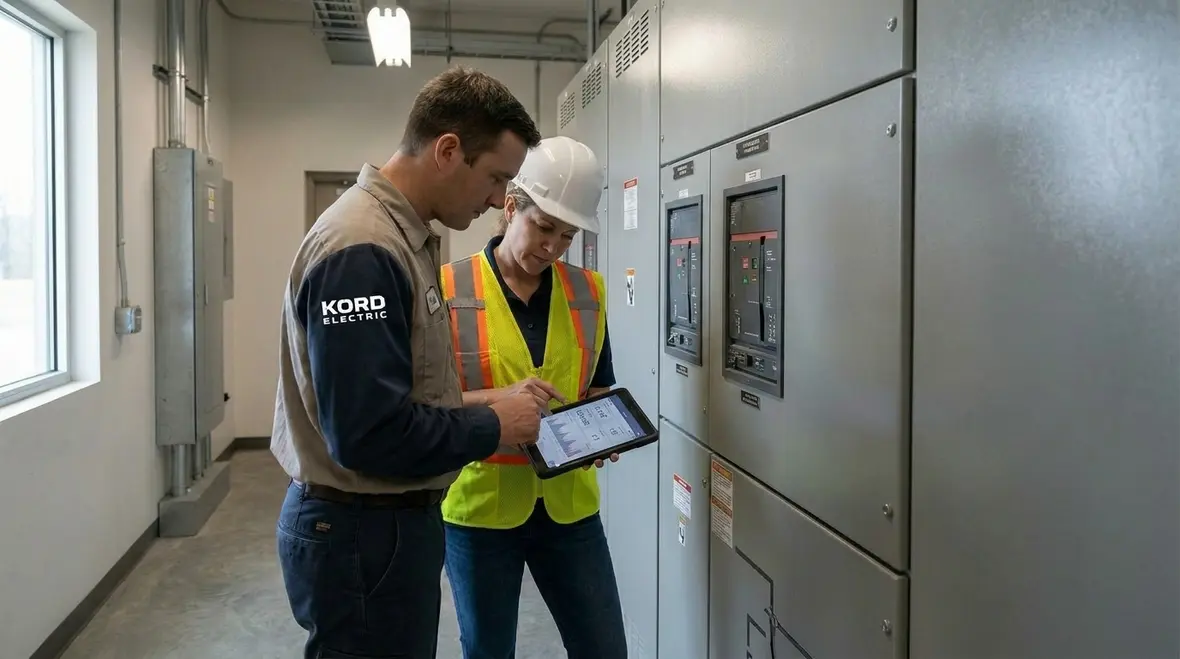
When electrical data becomes part of the maintenance conversation, planning shifts from “What should we do this quarter?” to “What does the system actually need?” That is where industrial power quality analysis services and structured programs such as electrical preventive maintenance work hand in hand. Evidence-based adjustments reduce surprise failures and help prioritize limited maintenance budgets where they will have the biggest impact on uptime.
Where problems hide: distribution, loads, and building “hot spots”
Power quality problems often look random until you map them. Then you see patterns. For instance, a manufacturing site might only experience voltage sags during a specific production run. A major property building might see more issues during certain tenant operations, elevator cycles, or HVAC demand spikes. However, the root cause could be upstream in feeders, or downstream in a large motor or drive.
Therefore, we take a facility view. We do not just test the main. We trace how conditions travel from utility interfaces into the facility distribution and then into critical loads. This matters because the same harmonic profile can show up differently at different buses. Similarly, phase imbalance might originate at a panel with uneven single phase loads, then multiply as it feeds other equipment.
In real terms, this is how industrial power quality analysis services protect uptime. They help facility managers pinpoint which part of the system actually needs attention. That reduces “shot in the dark” work, which is great for movies and terrible for budgets.
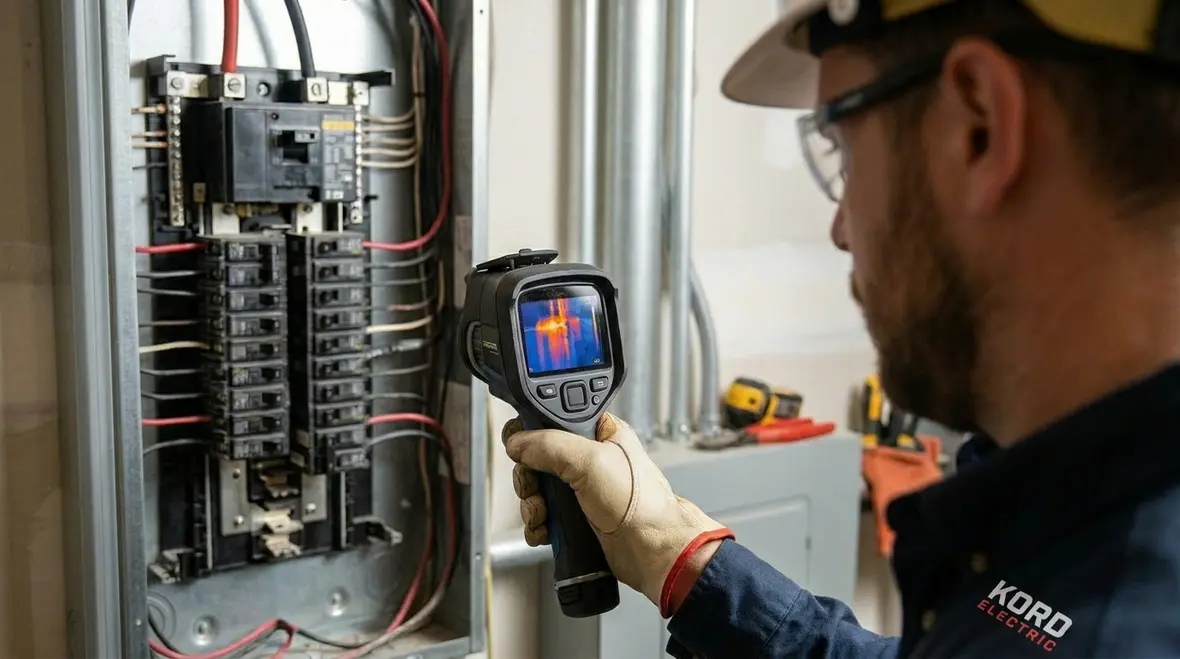
From random symptoms to clear electrical maps
Once data loggers capture how voltage, current, and harmonics behave over time, those “random” nuisance trips begin to make sense. A certain conveyor might always fault when a nearby chiller cycles. A bank of lighting may flicker whenever a large motor starts across the line. By tying those events back to the distribution one-line, our team can show exactly which panels, feeders, or loads deserve attention first, instead of chasing every symptom as a new mystery.
For facilities already dealing with flickering lights, unexpected shutdowns, or unstable voltage, those symptoms often overlap with the same conditions explored in our guide on voltage fluctuations in commercial and industrial facilities. Power quality analysis simply extends that conversation across the entire electrical ecosystem.
Choosing the right fixes for uptime and cost control
After we gather data, we recommend solutions that match the severity, location, and risk level. Some fixes are simple, like correcting loose connections, improving grounding paths, or balancing loads. Other cases need engineered mitigation, like harmonic reduction strategies or ride through approaches.
Our technicians explain options and tradeoffs in clear terms. Then others can decide based on production needs, downtime tolerance, and long term performance goals. Because we work in commercial and industrial settings, we understand that “quick” cannot mean “short lived.”
Common outcomes we support include:
- Reduced nuisance trips and fewer interruptions to critical controls
- Lower heat in motors, transformers, and switchgear components
- More stable performance of variable frequency drives and automation systems
- Better protection device coordination, so faults clear faster and cleaner
- Improved energy use through fewer losses from harmonics and imbalance
And when the fix is not fully installed at once, we help the facility plan a phased approach. That way, the facility keeps operating while work progresses. Nobody wants an electrical project that schedules like a sitcom: dramatic pauses, then random surprises.
Aligning corrective work with broader infrastructure goals
Sometimes, power quality analysis uncovers issues that tie directly into other strategic upgrades, such as lighting retrofits, panel changes, or future EV charger deployment. In those cases, we help facilities align corrective steps with broader projects, coordinating with services like lighting installation services or EV charger installation so that each upgrade strengthens reliability instead of adding new stress to an already taxed system.
How often should facilities run power quality studies
A one time test can reveal a lot, but industrial and commercial loads do not stay still. Then new equipment arrives. Schedules change. Tenants grow or relocate. Production lines upgrade. As loads shift, the power profile changes too. That means power quality monitoring should evolve with the facility.
In many cases, we recommend studies when there is a pattern of symptoms, such as repeat faults, frequent drive resets, unexplained downtime, or rising thermal issues. Also, after major upgrades, construction phases, or changes to HVAC and process systems, a fresh look often pays off.
For facilities that follow ongoing electrical maintenance plans, our team can align power quality analysis with routine inspections. As a result, others get a continuous story, not a one chapter mystery.
Integrating industrial power quality analysis services into long-term planning
When industrial power quality analysis services become a recurring part of the maintenance calendar, each new study adds another chapter to the facility’s electrical history. Trends become easier to spot. Equipment that consistently runs hot or close to its limits moves higher on the capital planning list. Conversely, systems that remain stable can be left alone, which keeps budgets focused instead of scattered.
Over time, this approach supports not just uptime, but smarter investment decisions. Instead of waiting for a hidden imbalance or harmonic issue to damage a transformer or drive bank, facilities can act while the problem is still inexpensive and contained.
FAQ
Conclusion: protect efficiency with evidence, not hope
Commercial and industrial facilities do not lose efficiency all at once. They lose it quietly, through heat, instability, and repeat faults. With industrial power quality analysis services from Kord Electric, others get measured insight and a clear path to corrective action. Our technicians collect real data, our expert service staff explains it in plain terms, and your maintenance plan gains direction. If your facility has unexplained downtime or rising costs, contact us for a power quality assessment and move from uncertainty to control today.
If your facility is also ready to strengthen its broader electrical strategy beyond diagnostics, explore how our dedicated electrical preventive maintenance services can be paired with industrial power quality analysis services to build a long-term, uptime-focused plan for your commercial or industrial property.


