
Smart Building Electrical Systems Cut Costs, Comfort
How smart building electrical systems cut costs and raise comfort for commercial buildings
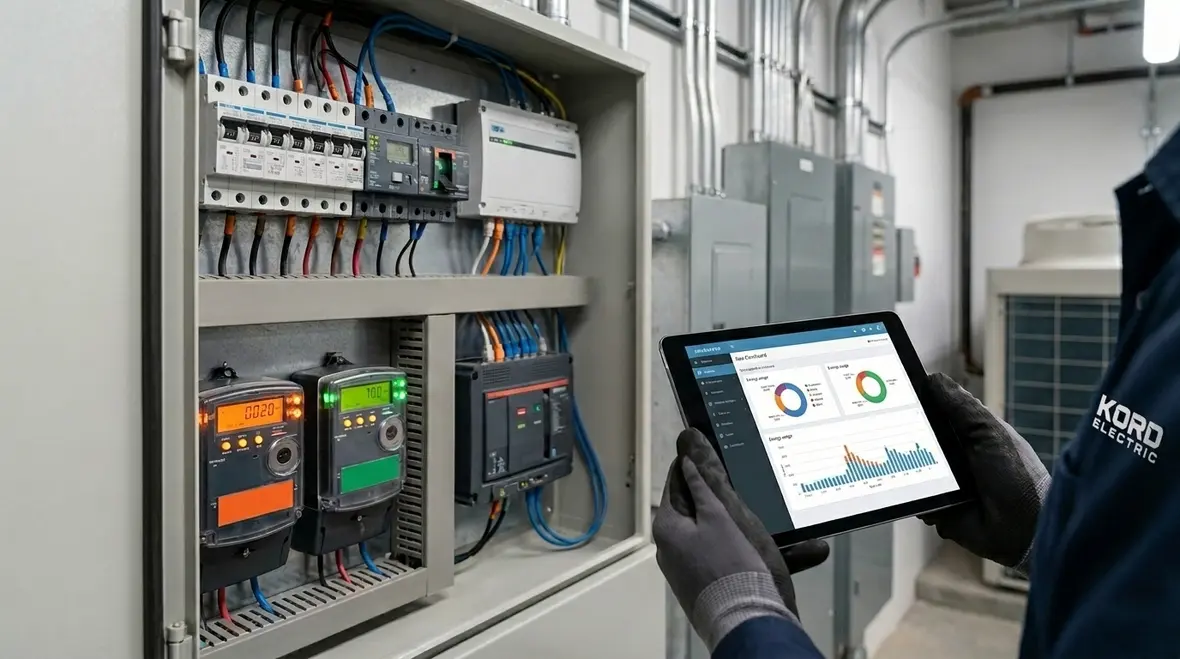
When Kord Electric teams enter a commercial or industrial facility, we quickly notice one thing: energy use is often predictable, but control is not. Smart building electrical systems change that by coordinating lighting, HVAC power interfaces, outlets, and load management so the building performs the way people expect it to feel. That means steadier comfort, fewer spikes in demand charges, and less waste when spaces sit empty. At the same time, our clients gain clearer reporting, so facilities teams stop guessing and start managing. In other words, it is like upgrading from “turn it off and hope” to “we know what is happening, and we can prove it.” And yes, we still enjoy the occasional sitcom moment where someone finds the lights left on during the weekend. Smart systems prevent the reruns.
In this article, third person perspective keeps the focus on what works. Meanwhile, Kord Electric’s technicians and expert service staff will explain the practical parts as they happen on real building electrical projects.
What a modern electrical system learns and adjusts

Smart building electrical systems rely on sensors, controls, and communication that connect electrical distribution to the building’s operational needs. Instead of treating power like a one track highway, the system adds exits, on ramps, and traffic lights. As a result, it can scale loads up or down based on conditions rather than fixed schedules.
For example, occupancy data tells the system when a space needs lighting at full output. Then the controls can dim when fewer people remain in the room. Additionally, time based logic handles predictable patterns such as shift changes. Yet the real advantage comes when multiple signals combine, like occupancy plus daylight, or equipment schedules plus demand limits. That is where comfort improves and energy waste drops.
Our expert service staff often explains it this way during site walks: “Electricity does not mind working hard, but buildings do not need electricity working hard all day.” Then they show how coordinated controls reduce unnecessary runtime without changing the experience for occupants.

How energy optimization actually reduces demand charges
Facilities managers care about energy cost, and they care about peak demand most of all. A smart electrical control approach watches for load spikes across panels, feeders, and branch circuits. Then it shifts non essential loads to off peak windows, trims simultaneous start events, or stages equipment after the building stabilizes.
To make this concrete, Kord Electric technicians frequently encounter kitchens, laundry, process areas, and large ventilation loads that start at the same time. Traditionally, those loads create steep demand peaks. In contrast, with modern monitoring and control, the building can sequence start times, coordinate with ventilation schedules, and apply load shedding rules when needed. Even small delays can matter, because utility pricing often rewards lower peak demand.
Another benefit of smart building electrical systems shows up in power quality monitoring. When voltage dips or harmonics rise, equipment efficiency and comfort can suffer. Smart monitoring flags issues early, and maintenance teams get time to respond before failures and complaints pile up. That is not just cost control; it is operational reliability.

Comfort goes beyond lights: power that supports HVAC and outlets
Many people think smart control equals “smart lights.” Yet commercial comfort depends on more than illumination. Kord Electric focuses on how electrical systems support the whole experience, including the power pathways that feed HVAC interfaces, motors, and receptacle circuits for business critical devices.
For instance, when HVAC systems cycle, the electrical system can coordinate start behavior to prevent nuisance trips and keep airflow stable. Additionally, the electrical distribution can handle smart scheduling so spaces receive the right conditioning at the right time, not at random. The result feels like consistency to the occupants and calmer operations to the facility team.
Outlet and equipment power also play a role, especially in buildings with labs, telecom closets, training rooms, and mission critical spaces. Smart monitoring can detect abnormal draw and report it. Therefore, facilities staff can catch issues like failing drives, clogged equipment, or wiring faults earlier than they would through simple monthly inspections.
Our technicians explain the advantage with a steady, down to earth tone: “If the system can tell you what it is doing, it can also tell you what it is not supposed to be doing.” Then they guide teams through how the monitoring data maps to actual electrical circuits.
Integrating panels, metering, and controls without breaking operations
Smart upgrades can sound like a big disruption, but Kord Electric helps commercial and industrial properties integrate electrical monitoring and control with minimal downtime. First, the team assesses existing panels, feeders, grounding practices, and load profiles. Then the project plans the phased approach, so critical systems keep running.
Dual layer visibility often drives the results. One layer focuses on electrical distribution data, such as circuit level metering, branch load tracking, and breaker level status. The other layer connects to building management, so the electrical data supports control decisions that facilities teams trust.
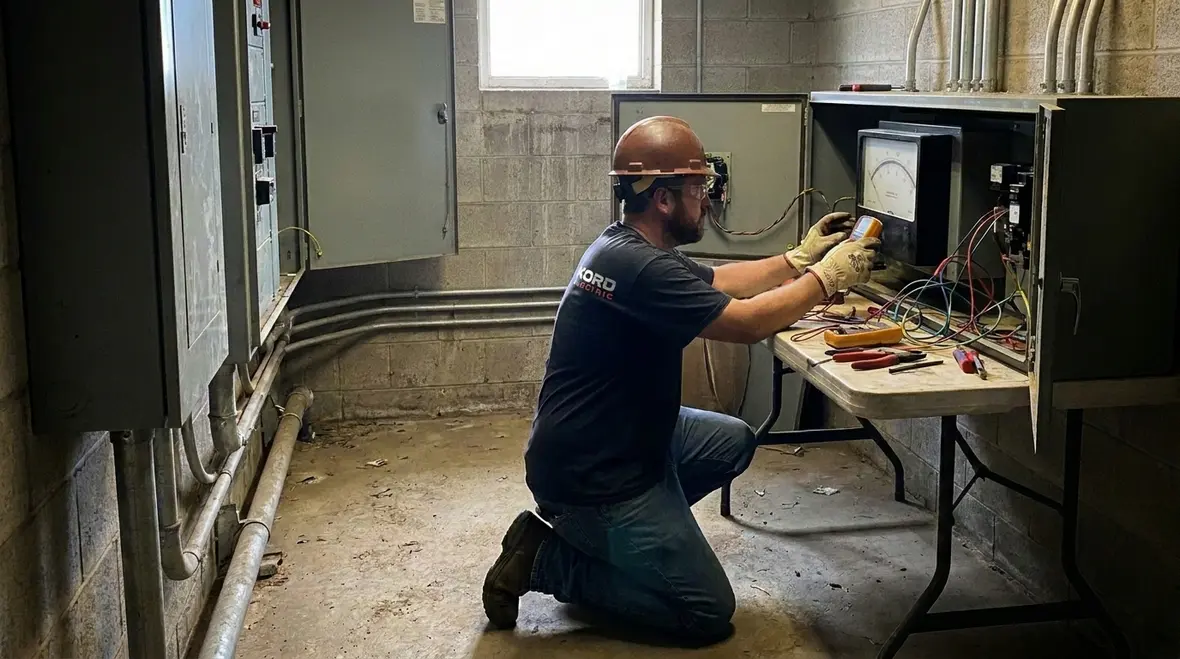
During installation, our expert service staff frequently confirms sensor placement, calibration, and communication integrity. In addition, they train the building team to interpret reports. That matters because data without context becomes a screen full of numbers, and nobody wants to stare at a spreadsheet like it is the final season of a streaming show.
To show how this fits together, the article presents one practical layout below. For a broader look at how commercial electrical infrastructure supports modern facilities, property teams can also review the related discussion in Commercial Electrical Systems for Modern Buildings.
| Component | What it enables |
| Panel metering | Tracks demand and energy use, supports peak reduction |
| Circuit monitoring | Identifies waste on specific loads and equipment |
| Building controls integration | Coordinates schedules, sequencing, and load shedding rules |
| Alarm and reporting | Alerts teams to faults, abnormal draw, and power quality drift |
Scheduling, occupancy, and automation that people can trust
Automation works best when it matches how staff actually operate. Therefore, Kord Electric emphasizes schedules that reflect shifts, cleaning cycles, maintenance windows, and occupancy patterns unique to commercial and industrial facilities.
Occupancy based control improves comfort while cutting energy. Yet it must be tuned so the building does not behave like it is indecisive. For example, sensors need correct placement to avoid false readings. Moreover, the system should apply smooth transitions for lighting and comfort related loads. Quick flickers make people grumpy, and grumpy people file tickets. Tickets increase workload. Workload increases the odds someone asks, “Can we just make it simple?” That is where proper commissioning comes in.
Commissioning and tuning is where our expert service staff earns trust. They review logs, validate that controls respond within expected timeframes, and confirm that automation does not interfere with safety or process needs. Then they document settings so building operators can adjust without guesswork.
So, the system stays reliable, and the building team does not feel like they are babysitting a thermostat with trust issues.
Cyber safe design and maintenance for long term performance
Smart electrical systems depend on communication, and communication needs thoughtful security and maintenance. Kord Electric supports secure design practices that limit access, reduce exposure, and protect control pathways. This includes network segmentation where appropriate and careful configuration of user permissions.
Additionally, long term performance needs routine checks. That means sensor health checks, firmware reviews, and verification of metering accuracy. It also means maintaining the building electrical system so power quality stays within safe limits. Many facility leaders pair smart building electrical systems with structured electrical preventive maintenance so performance improvements stay locked in over time.
Our technicians also advise clients on change management. If a facility modifies equipment or shifts processes, the smart control rules should adjust too. Otherwise, the system may optimize for old reality. In that case, even a well built smart system stops being “smart” and starts being “confidently wrong.” Nobody wants that, not even the fictional characters who feel confident even when they absolutely should not be.
Featured FAQ for commercial and industrial smart electrical systems
Smart electrical systems in commercial buildings: a clear next step
Energy waste and comfort complaints do not have to be part of daily operations. Kord Electric helps commercial and industrial facilities implement smart building electrical systems that reduce peak demand, improve reliability, and give teams clear data for better decisions. Our technicians and expert service staff guide the process from assessment to integration and commissioning, so upgrades fit real building operations.
For properties that want to connect the benefits of smart building electrical systems with long term reliability, pairing upgrades with structured maintenance and power quality support makes a measurable difference. Facility leaders can explore how this works in practice by reviewing services such as voltage fluctuation diagnostics and repair and broader electrical preventive maintenance programs, then aligning those offerings with their own buildings’ goals.
If a property team wants measurable results instead of guesswork, it is time to take the next step. Contact Kord Electric today to plan a smart, efficient electrical upgrade that supports both cost control and comfort across the life of the facility.
To see how smart building electrical strategies connect with larger infrastructure planning, facilities teams can also read Kord Electric’s insights on topics like commercial and industrial electrical maintenance plans and rewiring cost guides for commercial electrical systems before mapping out their own upgrade path.


