Emergency Power Continuity Planning for Business
Emergency Power Continuity Planning is how we keep commercial and industrial sites working when the lights go out, the grid gets moody, or an outage turns into a full day problem. At Kord Electric, we approach this like a strategy, not a scramble. Our technicians and expert service staff build plans that balance reliability, safety, and real world constraints like load, transfer time, and voltage behavior. And yes, we take the “what if” seriously, because we have learned the hard way that downtime rarely announces itself with a polite calendar invite. In the sections ahead, we lay out how businesses protect operations with a clear, step by step approach to emergency power continuity planning, including voltage awareness, equipment readiness, and drills that actually mean something.
What “business continuity” means when power fails
In commercial and industrial facilities, business continuity does not mean “we have a generator somewhere.” Instead, it means we keep critical systems alive with enough time and enough capacity to prevent cascading failures. When power drops, the risk is not only darkness. It is refrigeration loss, server shutdowns, HVAC control errors, access control lockouts, security blind spots, and process interruptions. As a result, planning must map what truly needs power, what can wait, and what must transition smoothly.
Others often focus on the big switch. However, we focus on the full chain. First, we confirm the outage type and duration assumptions. Next, we define start, transfer, and run requirements for each critical load. Then we check how equipment behaves during events, including start surges and momentary dips. Finally, we document who does what, when, and how, so your team does not improvise during the loudest minute of the day.
How we build a continuity plan that works on real days
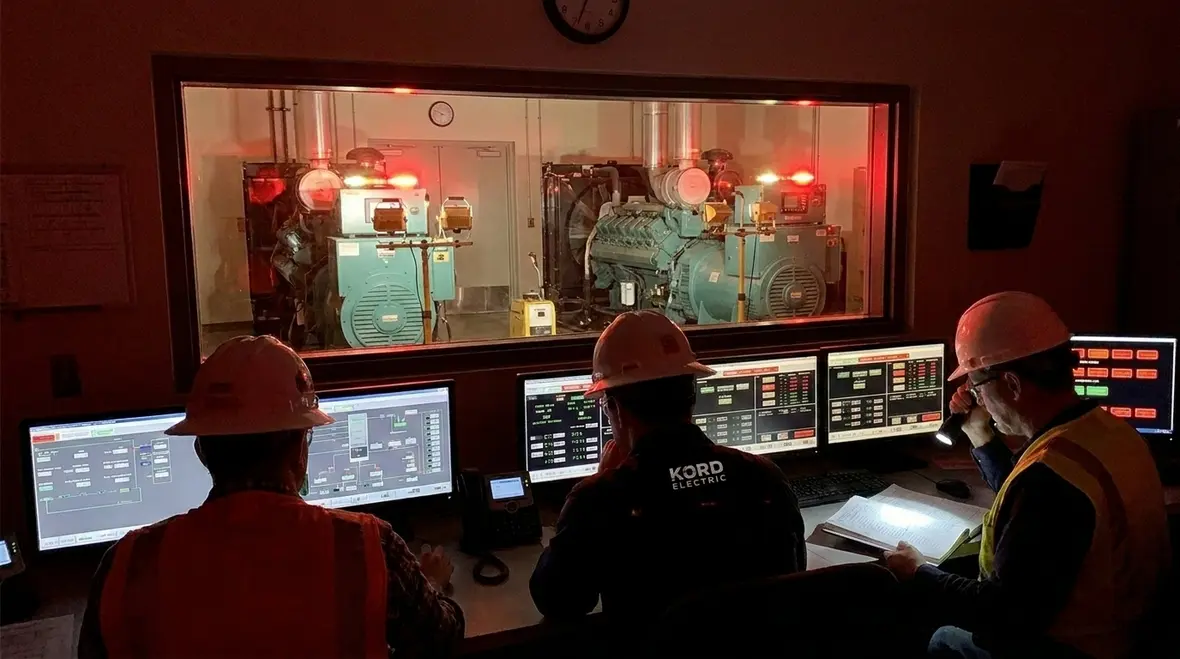
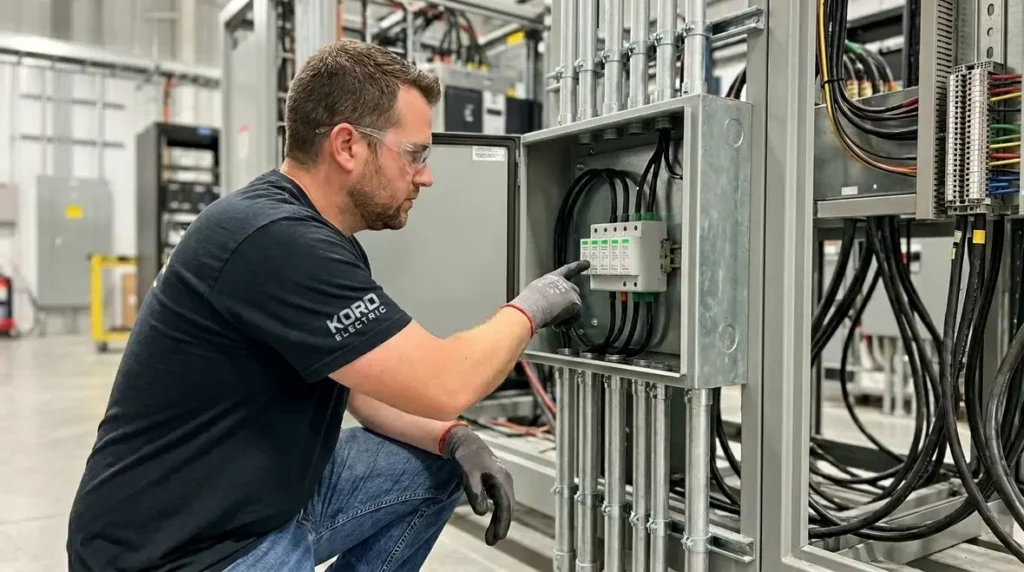
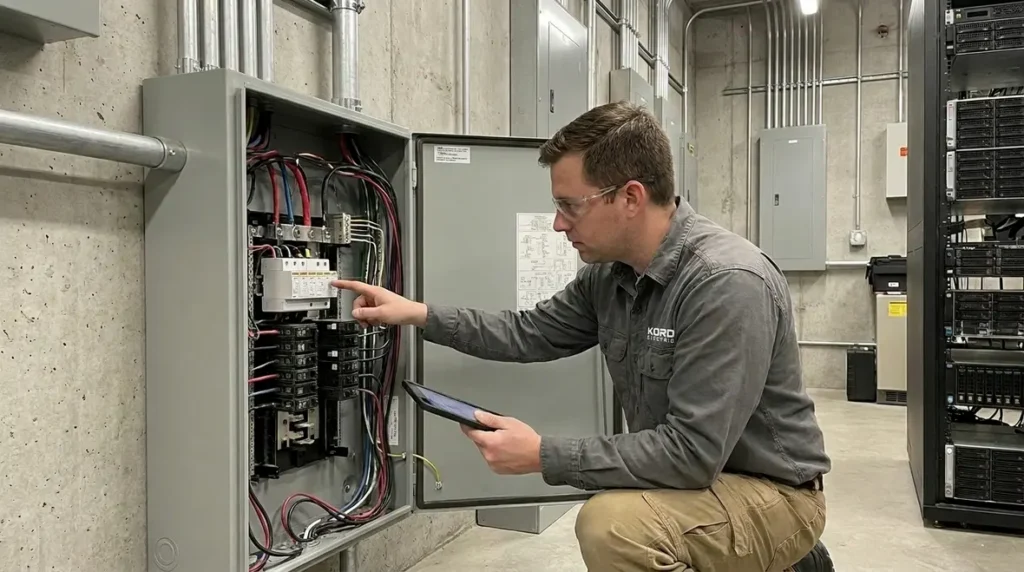
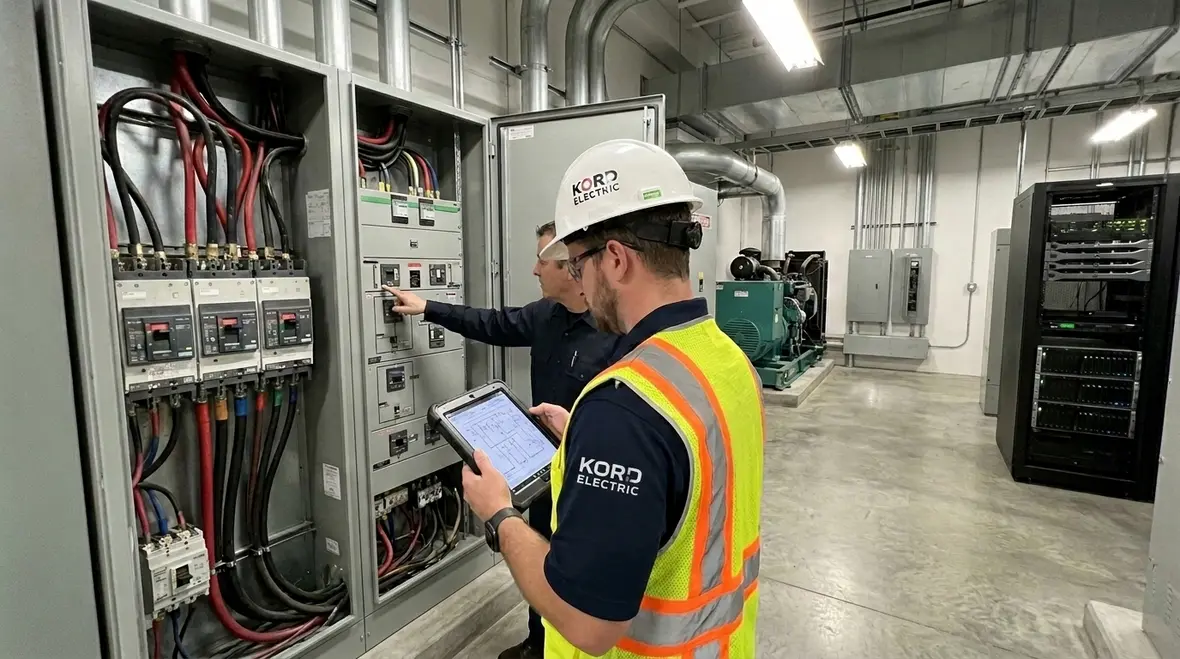
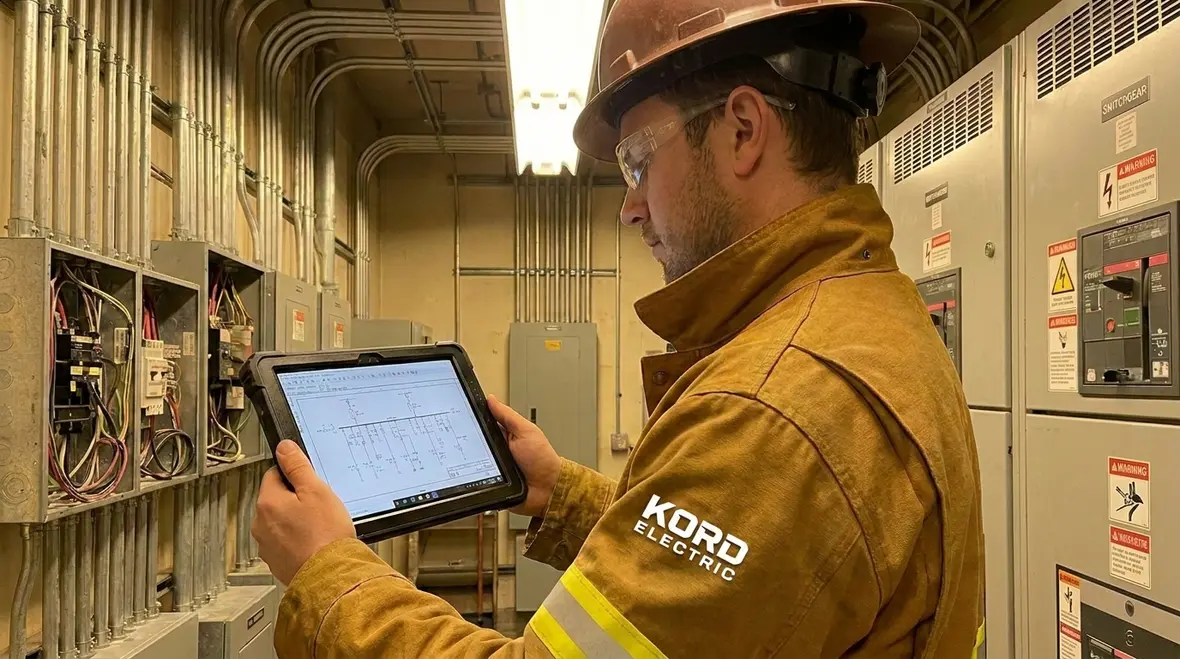
We start with a site reality check, because every major property building has its own heartbeat. Our technicians walk the facility, review electrical one line diagrams, and verify what is actually connected versus what used to be connected. After that, we define critical circuits using business priorities, not guesswork. For example, a manufacturing plant may prioritize drives and controls, while a logistics center prioritizes lighting, conveyors, and communications. A healthcare adjacent facility or a data and IT area prioritizes servers, networking, and life safety related functions.
Then we translate those priorities into electrical design inputs:
- Load grouping so essential equipment starts in a safe sequence
- Transfer strategy with realistic timing for motor loads and sensitive electronics
- Fuel and run time assumptions aligned with your operating model
- Spare and redundancy planning for components that fail more than people want to admit
From there, we create a plan your team can follow during an emergency. Moreover, we include operational steps like access to electrical rooms, communication paths, and responsibilities for facility staff. If the plan only exists on a PDF, it might as well be a bedtime story.
Why voltage fluctuations matter for commercial power reliability
Many outages are obvious. Voltage quality problems are not. Yet the commercial grid can drift, sag, or spike long before a full blackout arrives. That matters because controls, drives, and automation do not always fail when the lights go out. Sometimes they fail earlier, under stress. In our work, we often see voltage behavior show up as nuisance trips, overheating, shortened equipment life, and slow recovery after disturbances.
On our site, we explain how voltage fluctuations in commercial and industrial settings can create operational risks and equipment strain. We also cover how voltage stability affects motors, sensitive electronics, and protection devices. In plain terms, a facility can look “fine” until it suddenly is not. For more detail on this topic, you can also review our dedicated overview of voltage fluctuations in commercial and industrial facilities, which digs deeper into root causes and corrective strategies.
That is why our emergency power continuity planning process considers more than outage events. We evaluate how the facility behaves during abnormal conditions and we coordinate solutions that support stable operation. For example, we account for how voltage drops impact start up, how transfer impacts electronics, and how generator output should remain within acceptable limits. When we install and maintain systems, we aim for steadiness, not just survival.
Generator readiness and transfer systems: the hidden weak links

Businesses often treat standby power as a binary choice. Either it works or it does not. We treat it like a living system with moving parts, and we keep the focus on readiness. First, we verify that generator capacity matches the planned loads, including starting currents. Then we test transfer equipment to confirm the control logic behaves correctly under real conditions. We also check protective settings and ensure coordination so one failure does not shut everything down.
Our technicians do not just “press buttons.” We explain the sequence in clear language, and we show your team what should happen, what should be measured, and what indicators to watch. That calm, step by step approach reduces confusion because, during a real event, people get busy and memory gets fuzzy. Like a pop quiz from a substitute teacher, except the consequences are expensive.
Additionally, we confirm that the facility has the correct operating mode for each scenario. Transfer timing, load shed logic, and emergency communications matter. When we design the system, we make sure it transitions without creating new problems.
Load management and sequencing that protects both equipment and operations

Even with a properly sized generator, poorly planned load starts can trigger overloads and nuisance shutdowns. This is where emergency power continuity planning becomes practical. We analyze what loads start together, which ones need a soft start, and which ones should be staged. Then we build a load plan that supports stable generator operation.
For example, motor driven equipment can pull large starting currents. As a result, we may stage non critical loads after critical systems stabilize. Meanwhile, we prioritize control systems, safety relevant systems, and core operational circuits. This sequence prevents the generator from fighting the facility all at once.
We also account for system behavior during transfer. Sensitive equipment can dislike fast changes. Therefore, we coordinate controls and consider how power electronics respond. Our expert service staff help facility managers understand what they are seeing, so they can make better decisions during drills and real events.
Finally, we document the plan clearly. That way, if a manager or electrician is off duty, the response still stays consistent. Continuity means continuity, not chaos.
Testing, drills, and maintenance that keep plans current
A continuity plan that has not been tested is like a fire extinguisher you only talk about in theory. We run regular testing so you learn what the equipment does, not just what the spec sheet claims. We also schedule maintenance to keep transfer components, fuel systems, battery backups, and controls in top condition.
However, testing must stay tied to your business reality. For instance, if your production schedule changes or you add new equipment, your load profile shifts. Therefore, we review and update the continuity plan after major upgrades. We coordinate with operations and electrical teams so testing does not disrupt critical work longer than needed.
Our technicians also support training. We walk through the emergency power continuity planning steps with your team, and we make sure everyone understands roles and limits. Over time, people become confident. Then, if the unexpected happens, the site responds with less hesitation and better order.
FAQ about emergency power continuity planning for major properties
Ready to strengthen reliability without the downtime drama?
If your commercial or industrial facility cannot afford guesswork, we are ready to help. At Kord Electric, we build emergency power continuity planning that supports safe transfers, smart load sequencing, and reliable performance under real conditions. Our technicians explain the system clearly, test it with purpose, and help keep your plan current as your business changes.
In many cases, emergency power work pairs naturally with broader reliability efforts such as resolving voltage fluctuations in commercial and industrial facilities, commercial rewiring, or large scale electrical preventive maintenance. Taking a coordinated approach allows you to improve power quality, backup systems, and day to day reliability with one unified strategy instead of scattered fixes.
To explore how a structured plan could support your facility, including emergency power continuity planning, generator readiness, and voltage stability improvements, connect with our commercial and industrial specialists. We can review your current setup, outline practical upgrades, and help you prioritize investments that reduce risk while supporting long term growth.
For organizations that need both planning and hands on implementation, our team also delivers related commercial electrical services across Southern California, from panel upgrades and rewiring projects to targeted troubleshooting and corrective repairs. Aligning these efforts with your continuity strategy helps ensure you are not only ready for the next outage, but operating more efficiently between events.
At Kord Electric, the goal is simple: keep your building powered, protected, and predictable, even when the grid does something unexpected. When you are ready to move from “we hope it works” to “we know what happens,” we are here to help you plan, test, and maintain a system that responds the way you need it to.
Contact us to review your current setup and create a continuity strategy that stands up in the moments that matter most.