Commercial EV Charging Stations for Business Parks
Commercial EV Charging Stations for Business Parks, and why planning matters early
At Kord Electric, we help business parks deploy Commercial EV Charging Stations that feel reliable on day one and still make sense years later. We plan like people who have seen what happens when a parking lot gets “upgraded” after the fact. You know the type: conduits guessed, loads assumed, and signage added with the confidence of a fortune cookie. Fortunately, our approach is calmer. We design for real use, real power, and real maintenance needs. And yes, our technicians and expert service staff explain the process in plain language, so other stakeholders do not need a translator for electrical plans.
In this guide, we walk through how others should plan EV charging infrastructure for commercial sites, including what we check, what we avoid, and how we keep operations smooth for property managers and tenant teams.
Step one: map parking flow, tenant needs, and site goals
We start by looking beyond the chargers themselves. First, we review how people actually move through the property. Then we match charging locations to driver behavior, tenant schedules, and vehicle types. For a business park, that means mapping zones for day parking, shared spaces, delivery windows, and visitor areas. We also separate areas meant for short sessions from areas intended for longer dwell times, because a fast charge point is not a one size fits all solution.
Next, we ask what the property is trying to accomplish. Some owners want a premium tenant experience. Others want to support fleet operations. In both cases, we plan so the right charging speeds land in the right places. Otherwise, you get the EV version of reserving a meeting room that nobody uses. And nobody likes that kind of comedy, even if it is funny on paper.
Our technicians and expert service staff then walk stakeholders through the plan. We explain what the layout means for safety, access, and future expansion, so the whole team understands the why, not just the what.
Power planning for commercial sites: load, panels, and capacity
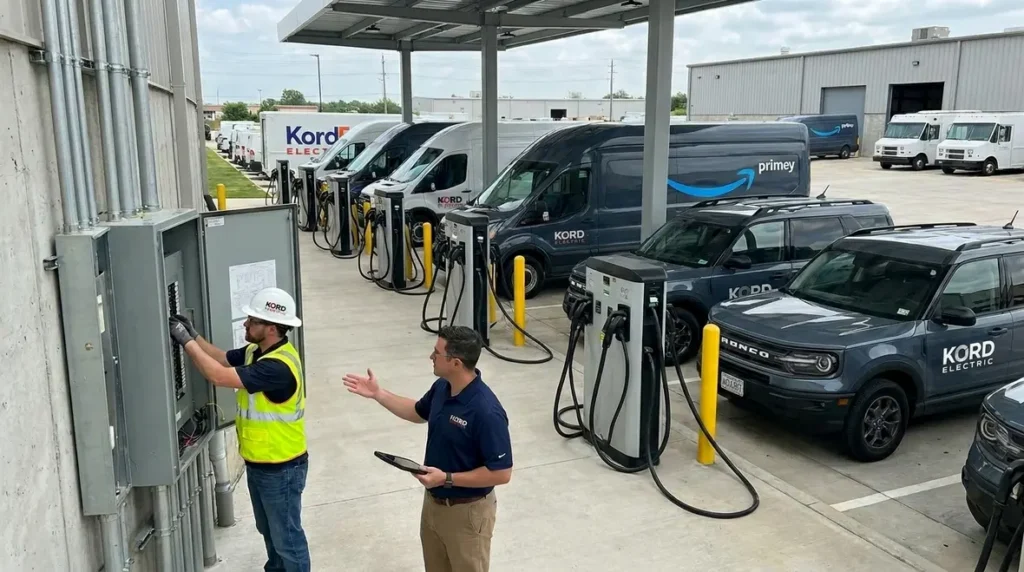
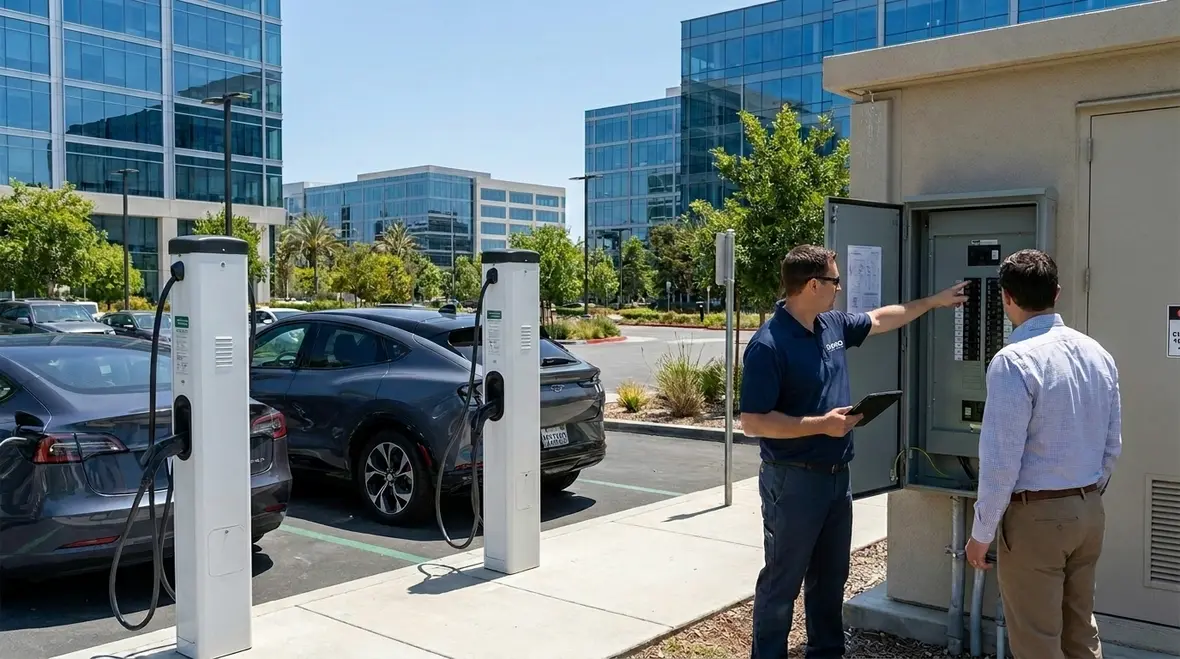
Once we understand the parking plan, we move to power planning. This step carries the weight because charging is not only about hardware. It is about electrical capacity. We review the building electrical service, switchgear, main panels, and the paths for running conduit. Then we model how the site will behave under real usage patterns.
To keep things practical, we forecast demand based on likely plug-in times, how many vehicles will charge at once, and how long they will stay connected. As a result, others do not end up with chargers that run fine during testing and struggle during peak hours. That is when businesses feel the pain, because downtime hurts tenant trust and operator reputation.
We also plan for growth. Many major property buildings and commercial developments add tenants over time. Therefore, we size infrastructure with expansion in mind, including options for future circuits, cabinet capacity, and routing that stays tidy. Our team avoids shortcuts that force expensive rework later, because we like saving money more than we like making electricians famous for duct tape.
If your facility wants to see how this plays out on real projects, you can review how Kord Electric handles EV charging infrastructure scalability for commercial sites, including phased build plans that match tenant demand.
Infrastructure design: conduit routing, transformer placement, and safety
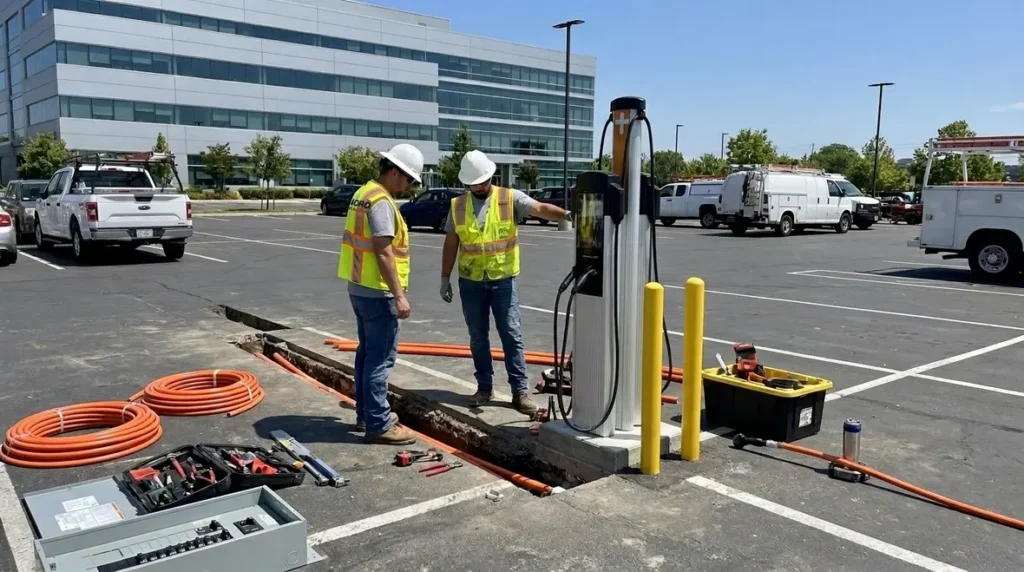
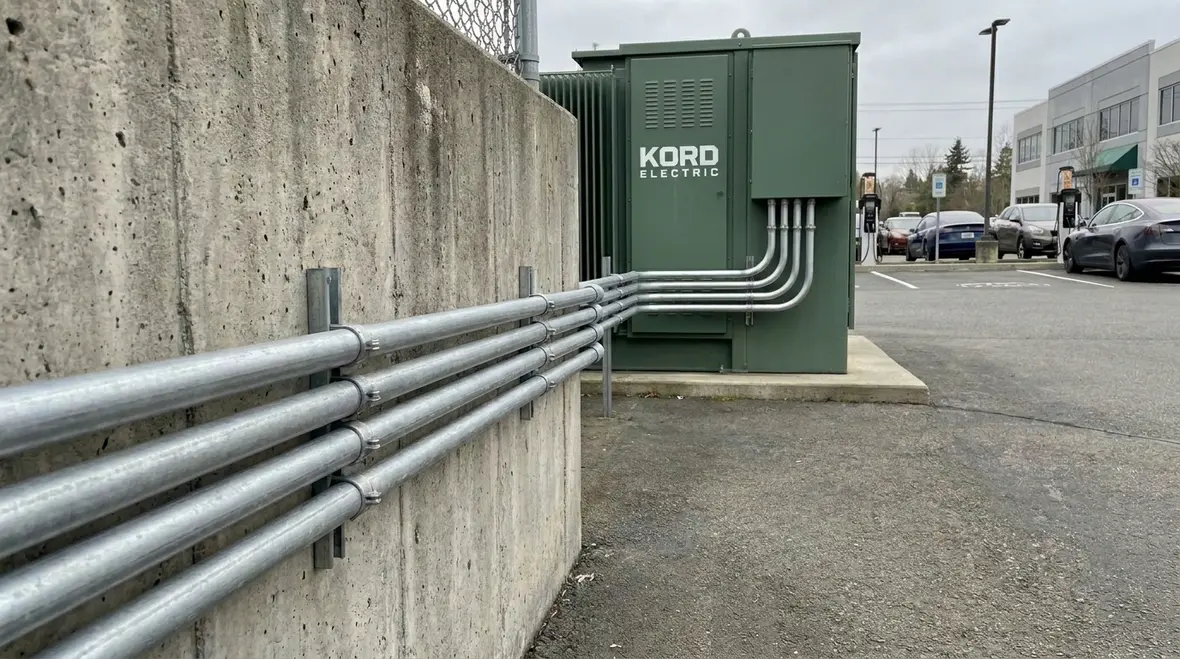
Now we design the physical backbone that supports the charging system. We choose conduit routes that stay protected, meet safety requirements, and avoid conflicts with other site utilities. Then we plan equipment placement, including transformer and electrical cabinet locations where access is safe for both vehicles and service staff.
We also think about weather exposure, cable management, and future service access. If a charging point needs maintenance in winter or during heavy traffic, the site should allow safe work without blocking critical drive lanes. We design for that. In addition, we include clear labeling and practical documentation, because even the best systems benefit from organized records.
Just as important, we plan the signage and wayfinding to guide drivers to the right parking spaces. A charger without clear direction can turn into a puzzle, and nobody wants to play “where is spot number three” during a busy workday.
Permitting and compliance: reduce delays and keep installs moving
Commercial EV charging projects live in the real world, which includes permitting, inspections, and schedule pressure. Therefore, we coordinate early with the right stakeholders and follow the required compliance steps. We help prepare the documentation needed for review and we stay aligned with property rules for construction work.
Our expert service staff also explains what inspection teams look for, and what to expect during site walk-throughs. This is where many projects stumble because others treat permitting as an afterthought. When that happens, installation can stall, and the timeline becomes an unpredictable sitcom season.
With Kord Electric, we keep the process steady. We plan so the installer, the inspector, and the property team all work from the same understanding. As a result, the install progresses in a way that protects tenants and reduces disruptions to daily operations.
If you are evaluating providers, you can also explore Kord Electric’s dedicated EV charger installation services to see how permitting, inspections, and commissioning are handled for commercial and industrial sites.
Smart charging strategy: manage demand and support operations
After physical infrastructure is set, we plan how charging behaves. Smart charging is not just a tech buzzword. It helps manage energy use across the site so operations stay stable. We configure charging controls in a way that reflects the business park’s demand patterns.
For example, we can balance loads between multiple charging points. Instead of letting every charger pull maximum power at once, the system can distribute capacity. This approach reduces the chance of overloading circuits while still supporting driver needs. It also helps the property avoid expensive upgrades that could have been staged or avoided entirely.
We also consider user experience. If drivers feel the site is dependable, they return and tenants trust the infrastructure. That trust matters for commercial properties where staff, clients, and fleet partners depend on predictable charging availability.
Of course, we do not just hand over a system and disappear. Our technicians and expert service staff explain how to operate the charging environment and how to respond to common issues. We keep the conversation clear, so the people running the property can act quickly when needed.
Maintenance planning: uptime is a feature, not an afterthought
Charging infrastructure must perform long after installation day. That means maintenance planning should begin during the early design stage. We plan for safe access to charging equipment, establish realistic service intervals, and document how components are laid out so we can troubleshoot fast.
We also think through the realities of a business park. Conditions vary by season. Vehicles park in different ways. Cables and connectors take real wear. When a system fails, businesses need response speed because downtime affects employee schedules and tenant operations.
That is why we build serviceability into our design choices. Then, our expert service staff keeps communication practical. We explain what we found, what it means for uptime, and what we recommend next. So others do not need to guess whether the problem is “probably fine” or “definitely needs attention.”
For business parks that want to take a broader view of reliability, Kord Electric also supports structured electrical preventive maintenance programs that protect critical systems beyond charging alone.
Choosing a vendor for major properties: what separates a solid install
When a company selects a partner for Commercial EV Charging Stations, the decision should not hinge on price alone. We recommend others evaluate planning depth, site readiness, and service follow-through. We work for commercial and industrial facilities and major property buildings, which means we understand the operational pressure those sites carry.
We also bring a structured method. We assess the site, plan the electrical and physical routing, manage compliance steps, and set up charging controls for real demand. In other words, we handle the full chain from concept to dependable operation. Then our technicians and expert service staff support the outcome with clear explanations and ongoing care.
And if you want the pop culture version, think of it like building a reliable “shared universe” for your parking lot. One missing detail can cause a plot hole. We prefer fewer plot holes and more chargers that work when tenants need them.
For properties across Southern California, Kord Electric’s Los Angeles County electrical services provide a single team that can coordinate EV charging projects alongside broader commercial electrical work.
FAQ
Conclusion: let’s plan the right charging infrastructure, from day one
Business parks succeed when charging infrastructure works with their power, their traffic flow, and their long term operations. At Kord Electric, we help commercial and industrial facilities plan Commercial EV Charging Stations with real demand forecasting, safe electrical design, and practical serviceability. If your property is ready for a smart, dependable network, contact us for an on site assessment and a clear installation roadmap. We will explain every step, because nobody should need a decoder ring to get reliable charging.
When you are ready to move from planning into execution, our team can coordinate your EV charging design with broader services across Los Angeles County, including panel work, lighting, and reliability upgrades, so your infrastructure strategy feels like one plan instead of separate projects.
Explore how our commercial and industrial Los Angeles County electrical services align with long term EV charging goals, and connect with our dedicated EV charger installation team to turn that plan into a stable, scalable asset for your tenants and fleet partners.