Commercial EV Fleet Charging Planning Guide
Electric Vehicle Fleet Charging Starts With Planning
At Kord Electric, the team helps commercial and industrial operations build electric vehicle fleet infrastructure that works on day one and keeps working when routes, staff, and power needs change. They plan the charging build the way a delivery schedule gets planned: with logic, clear steps, and fewer surprises than a reality show finale. Because yes, the last thing a facility manager needs is downtime that spreads like a rumor.
In this article, written in third-person Kord Electric style, they walk through how they plan for commercial charging systems across parking lots, garages, and dock areas, while keeping safety, code needs, and future growth in the spotlight.
Assess The Site and the Fleet That Uses It
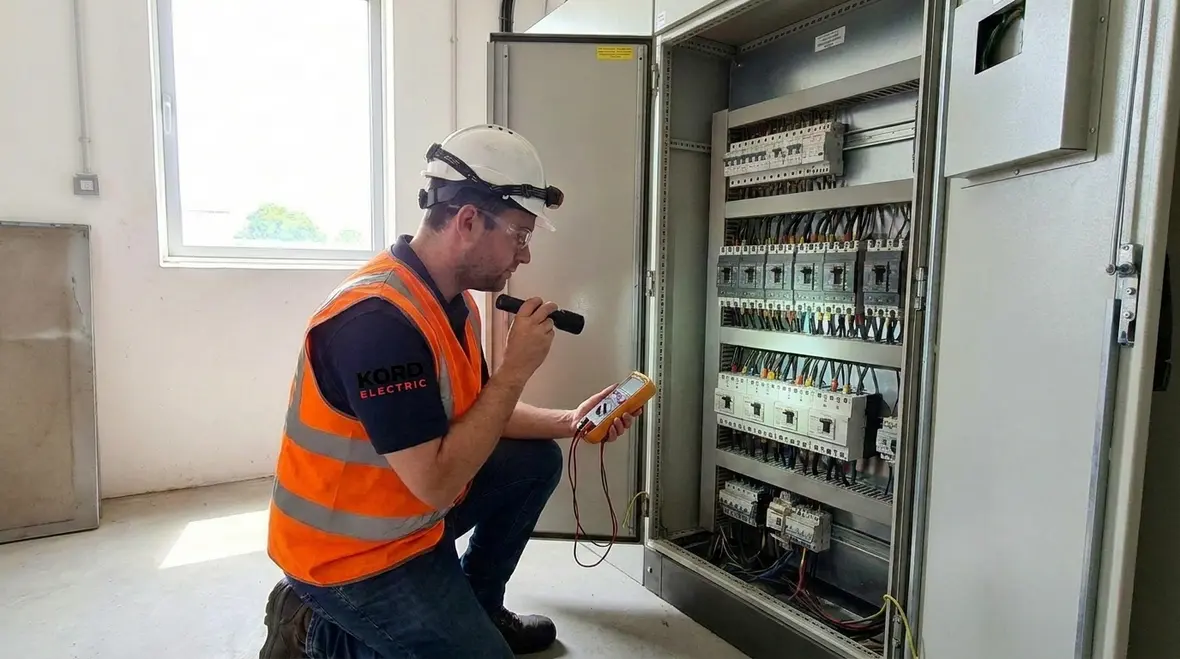
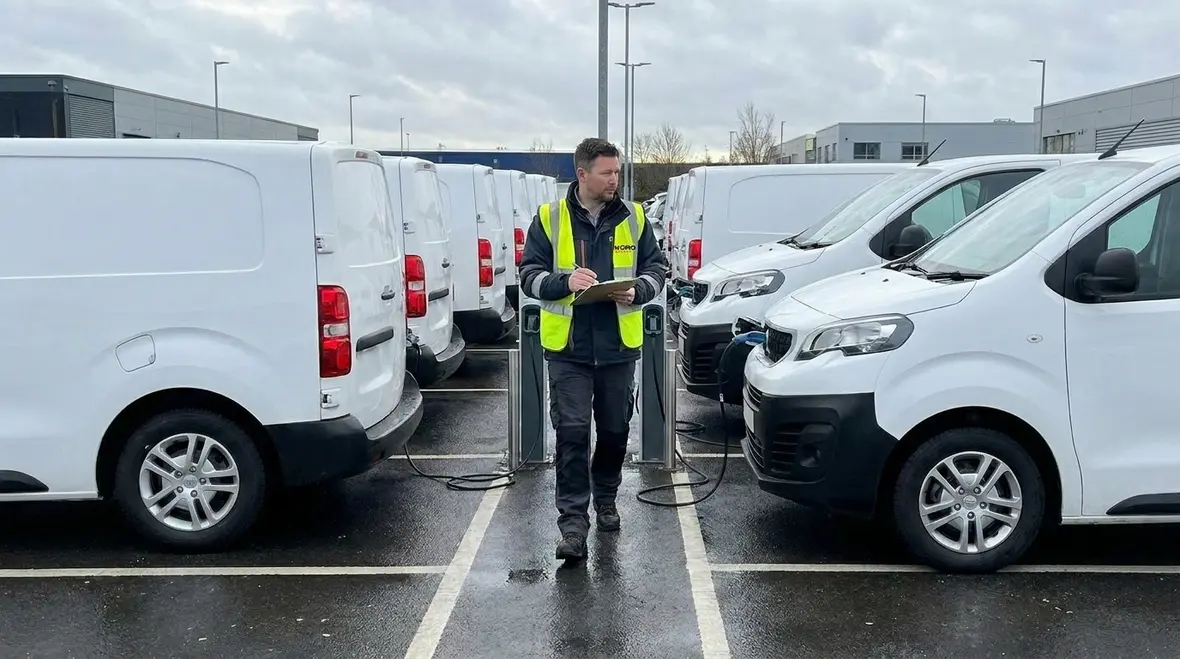
Before anyone touches a single breaker, Kord Electric’s service staff and technicians visit the property and map the real-world charging story. First, they confirm where vehicles park, how many units return each shift, and the time window between arrival and departure. Then they match charger output to vehicle needs, because a charger designed for a lighter duty day can struggle during a late season rush.
The team also checks building operations in context. For example, if the property runs multiple tenants or has shared loading areas, charging must not block traffic lanes or create safety conflicts. Furthermore, they consider how staff move around the site. Chargers should feel like part of the facility, not like a science experiment that got loose.
And because this is commercial work, they plan for uptime as a baseline requirement. They review whether the fleet charges every night, charges on off shifts, or needs partial top ups during the day. Finally, they document the plan so others on the team can understand it without needing a manual thicker than a football playbook.
Power Load Modeling and Utility Coordination for Commercial Buildings
Next, the focus shifts to electric capacity. Charging grows fast, so power gets treated like a budget. If the building cannot support it, the project stalls, and nobody enjoys that meeting. Kord Electric’s technicians build load models that include existing demand, future growth, and charging behavior. This helps prevent the classic situation where everyone agrees the plan is great, until the meter says otherwise.
The team also coordinates with the utility when needed. Utility lead times can test even the most patient schedules, so they start early and gather the right data up front. Then they outline service upgrades, transformer needs, and any switchgear work. Because in commercial and industrial facilities, you cannot just add charging like it is a software update.
When they design circuits, they plan for the likely maximum demand, not just the average day. Moreover, they consider demand response options where available, since some fleets can shift charging to lower cost hours. In short, they design for both daily use and power reality, keeping the electric vehicle fleet infrastructure aligned with what the building can actually deliver.
Charging Layout and Controls That Keep Traffic Moving
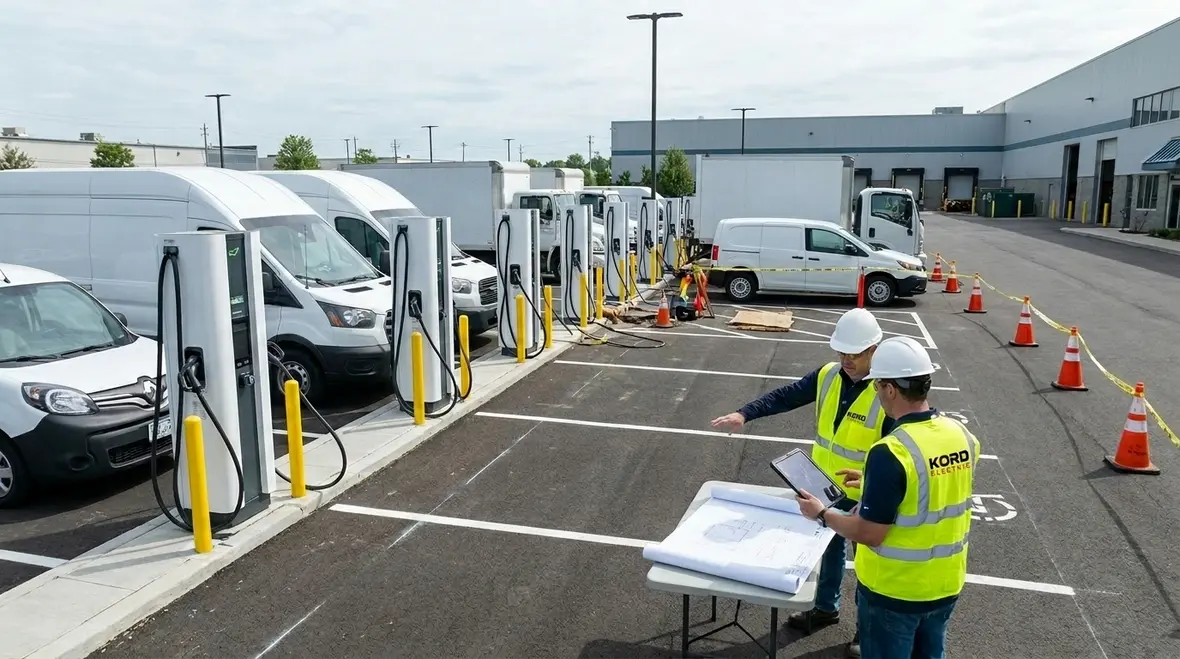
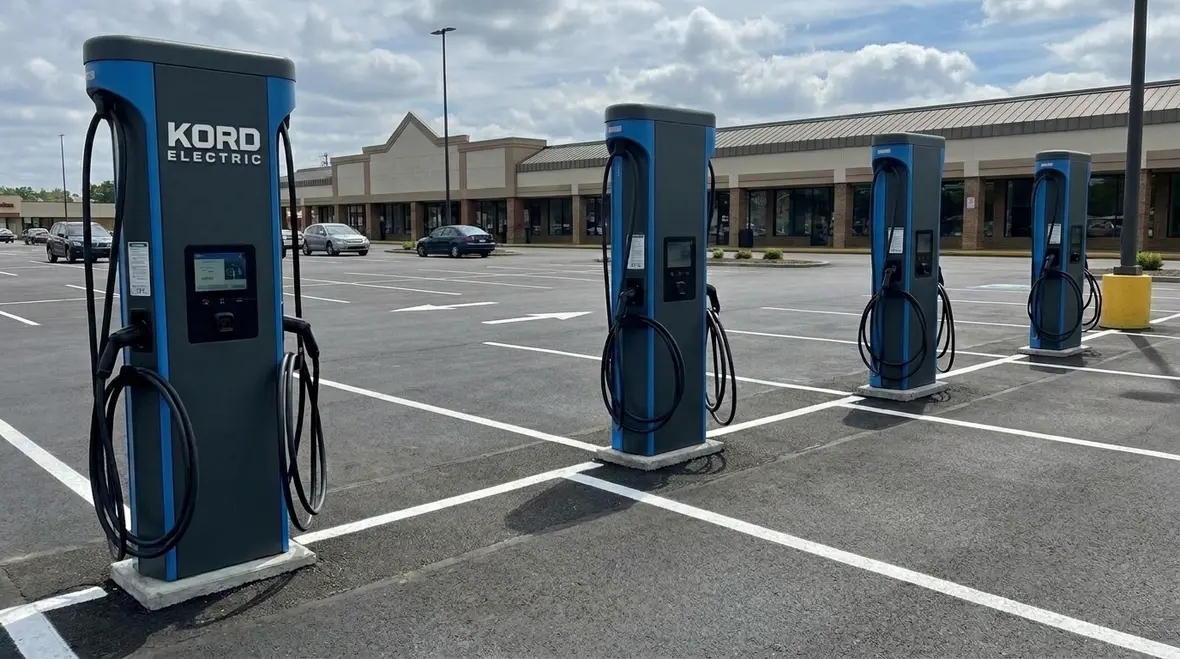
Once the power story is clear, Kord Electric designs the site layout. Here, they place chargers where vehicles can access them safely, including turn radius and cable routing. Then they align charger placement with parking rules and traffic flow so drivers can plug in without creating a bottleneck. If they sound slightly dramatic, it is because parking lots are where plans go to die.
They also plan for access control. Commercial sites often need authentication for staff and contractors, and some want rules that limit use by vehicle type. In addition, they recommend load management so one charger does not bully the others. When multiple vehicles connect at once, smart controls balance the demand and reduce the chance of overloading circuits.
Then the team considers future expansion. They design conduits and electrical paths with growth in mind, so adding more chargers later does not turn into a demolition project. In other words, they do the work now so you do not pay for it twice later, especially when the fleet grows faster than the original forecast.
Electrical Pathways, Permits, and Code Compliance Without Guesswork
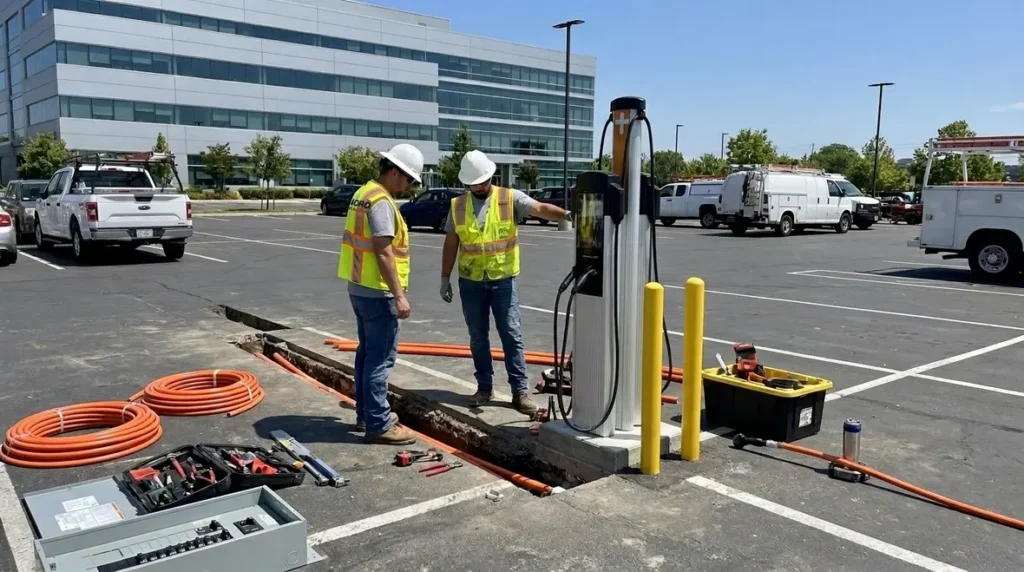
In the next phase, Kord Electric ensures the electrical design meets code and site needs. Their teams review the path for power from the main service to the charging locations, including trenching, conduit size, equipment placement, and weather protection. For commercial and industrial properties, they also consider how the facility handles dust, moisture, and impact risk.
Because projects move through permits and inspections, they document everything clearly. Technicians prepare the details inspectors look for, and they coordinate timing so work does not drag. Meanwhile, they plan for safe operation with proper grounding, protection devices, and labeling that makes sense years later when someone opens the panel.
When they build charging systems, they also account for how people interact with them. That includes clear signage, proper mounting height, and protection from vehicle strikes. Safety should feel boring in the best way. If it feels exciting, something has probably been missed.
Integrating EV Charging With Solar, Storage, and Building Systems
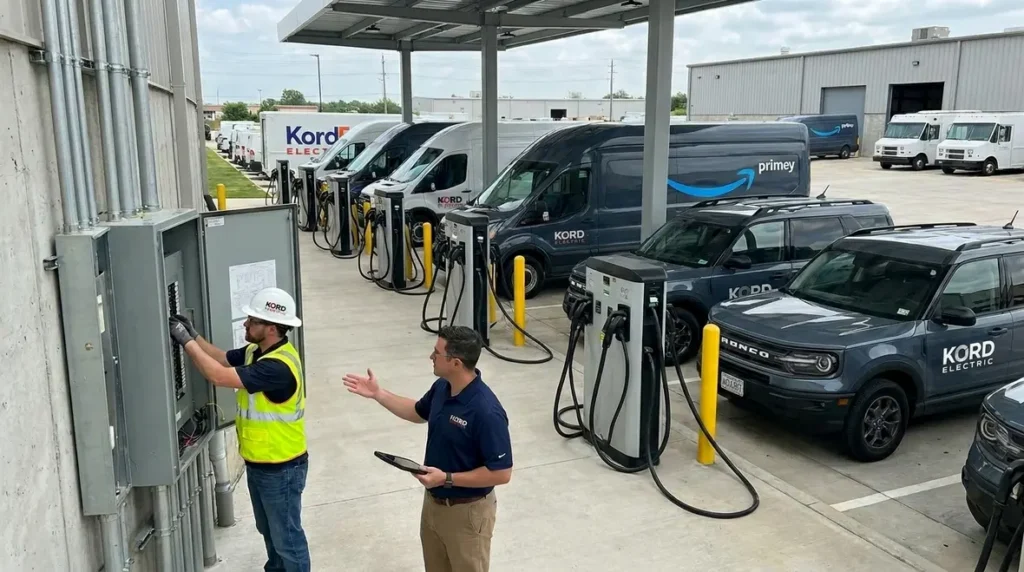
Many commercial properties also plan for solar generation or already have it on the roof. When that happens, Kord Electric helps connect the dots between EV charging and the rest of the electrical system. If a site already has, or plans to install, solar or energy storage, the coordination matters. It affects wiring paths, energy flow, and the best strategy for charging times.
In their guidance on commercial solar panel electrical integration, Kord Electric explains how careful planning supports smooth system behavior and safer connections. They apply that same careful mindset to EV-ready designs, because solar output and charging demand are not static. They shift by season, weather, and daily operations. Therefore, the team often designs charging controls so the facility can take advantage of on-site generation when it makes sense.
For example, they can plan for time-based charging schedules and consider how battery storage supports charging during peak demand windows. Additionally, they coordinate any interconnection requirements and verify that the system protects equipment correctly. They keep the build clean and maintainable, not like a tangled cable box that becomes the haunted house of every future electrician.
Maintenance, Monitoring, and Driver-Friendly Operations
After installation, the real success shows up in day-to-day use. So Kord Electric sets up a maintenance approach that fits commercial needs. That includes recommended inspection schedules, connector upkeep, and firmware updates when required by the equipment vendor. Furthermore, they recommend monitoring so your team can see charging status and spot issues early instead of discovering them at the start of a critical route.
Their expert service staff explains how the system operates, including how charging policies affect charging times and how drivers should connect. Training does not get treated like an afterthought. Instead, they walk teams through the process so drivers understand what to do and facility managers understand what to watch, from simple alerts to deeper diagnostic information.
They also plan for service response. If a charger fails, your fleet plan should not collapse with it. Therefore, they design with redundancy in mind where it fits the project goals. They also document key details so service stays quick and clear, and so scaling the electric vehicle fleet infrastructure later feels like a planned move, not a rescue mission.
Aligning EV Fleet Planning With Broader Electrical Strategy
Smart fleet charging rarely lives in its own bubble. Kord Electric often aligns EV projects with other electrical work on the calendar, such as panel upgrades, power quality improvements, or reliability projects for production lines. When charging is treated as part of a broader strategy, sites can share trenching, manage downtime more effectively, and get more value out of each capital investment.
For facilities that operate across multiple buildings or campuses, this can mean standardizing on equipment types, communication protocols, and maintenance procedures. Instead of every site inventing its own charging rules, a central plan guides decisions while still leaving room for local constraints like available parking or unique shift schedules.
Kord Electric’s team also helps facility managers think about long-term resilience. That might include how EV charging interacts with backup power, how load shedding should behave during an outage, and which circuits need priority. By treating fleet charging as a connected part of the electrical ecosystem, properties avoid surprise conflicts between charging, production equipment, and life-safety systems.
For organizations operating in and around Los Angeles County, coordinating this work with a regional partner that understands typical commercial building conditions and inspection expectations can be especially helpful. That is why many teams connect their charging plans with Los Angeles County electrical services support from Kord Electric, so each phase of the build fits local timelines and real utility requirements.
FAQ for Commercial and Industrial EV Charging
Conclusion and Call to Action
Kord Electric builds electric vehicle fleet infrastructure for commercial and industrial properties with planning that holds up in the real world. They assess your site, model power, coordinate utility needs, design a safe layout, and support smooth operations with expert technicians and clear training. If your fleet is growing or your property is preparing for charging, now is the time to lock in a design that prevents headaches later and aligns with your broader electrical plans across the property.
To connect fleet charging with a complete electrical strategy, many property teams also review Kord Electric’s dedicated service offerings for commercial and industrial clients across the region. When EV charging, solar integration, reliability work, and future expansion all share the same roadmap, each project reinforces the next instead of competing for capacity or schedule.
If you are ready to plan or upgrade charging for your commercial fleet, schedule a conversation with the Kord Electric team and move from rough ideas to a structured, code-compliant plan that your operations can rely on.