LED Retrofit ROI Analysis for Manufacturing Payback
Kord Electric helps commercial and industrial facilities calculate ROI for LED lighting retrofits with the kind of clarity that keeps projects from turning into “mystery money.” In our early LED retrofit ROI analysis, we stack measurable inputs like utility rates, fixture performance, maintenance costs, and installation downtime against realistic outcomes. Then, we validate the assumptions with field data and practical electrical planning.
Because yes, lighting upgrades can look simple from the outside. Yet, inside a plant, they touch electrical capacity, controls, and schedules. And if you ignore those moving parts, your ROI can turn into a rumor. Our technicians and expert service staff explain the steps in plain language, so decision makers can move with confidence, not guesswork.
Step by step: build an ROI model that fits your plant
When we build a retrofit business case, we start with the numbers that matter and we avoid fluff that only sounds smart. First, we quantify your baseline lighting cost. Then, we estimate energy savings, projected maintenance changes, and installation expense. Finally, we confirm the timing and operational impact.
To keep the model grounded, our team typically uses the same cost logic you would see in our rewiring cost guide for commercial electrical systems. In that spirit, we treat wiring, labor, and any electrical adjustments as real line items, not vague “miscellaneous” buckets. And because every plant has different constraints, we adjust assumptions based on lighting zones, mounting types, and existing electrical paths.
Here is the practical way others should think about the model:
- Baseline energy use: We calculate current wattage, operating hours, and demand impact when applicable.
- Retrofit energy use: We estimate new fixture wattage and expected delivered light, including driver and control losses.
- Controls and dimming: We include scenarios such as occupancy sensing, scheduled dimming, or daylight harvesting where suitable.
- Maintenance cost: We model reduced lamp replacement, fewer service calls, and lower labor for maintenance.
- Installation and electrical work: We include labor hours, material, labor access planning, and any panel or circuit upgrades.
- Downtime costs: We estimate how long crews work, and when, so production losses get included properly.
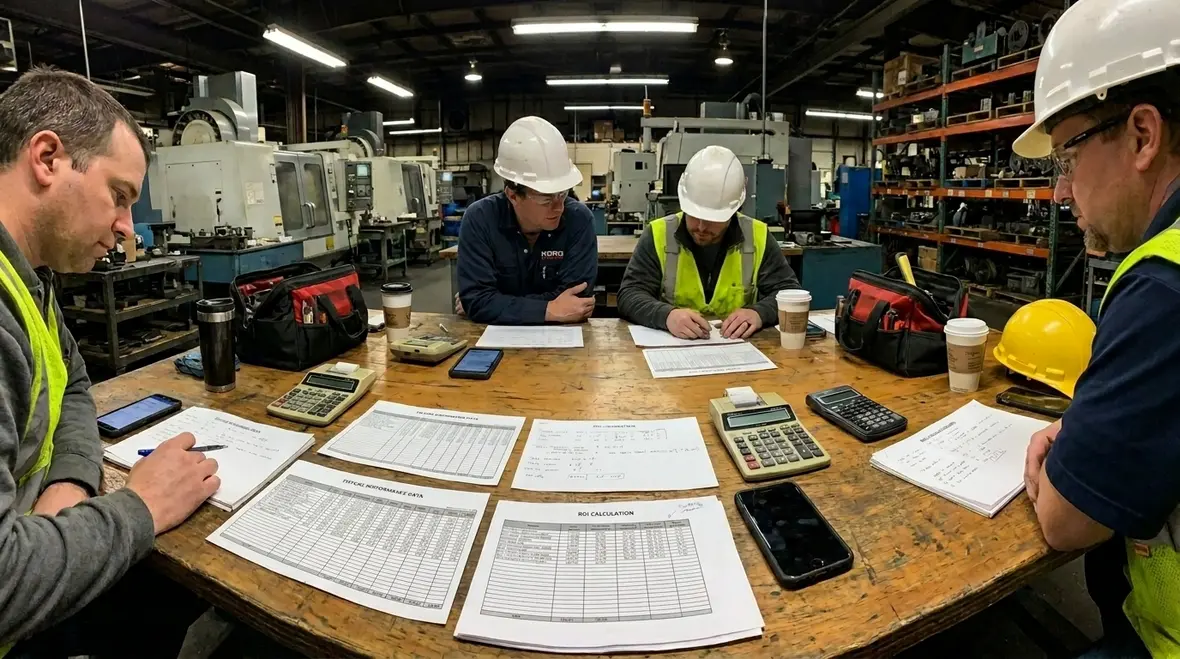
Next, we compute ROI metrics like simple payback, net savings over time, and internal rate of return when customers request it. Then, we stress test the assumptions. If utility rates move or fixture usage changes, we show how ROI still holds or where it weakens. That is the difference between a spreadsheet and a plan.

To keep your ROI thinking consistent across upgrades, it can help to compare your retrofit model with the broader capital logic used in commercial lighting projects. Kord Electric’s commercial lighting upgrade cost guide walks through fixture, controls, and installation variables in the same clear style, so your LED retrofit ROI analysis plugs into a familiar financial framework.
Energy savings: how we translate lumens into dollars
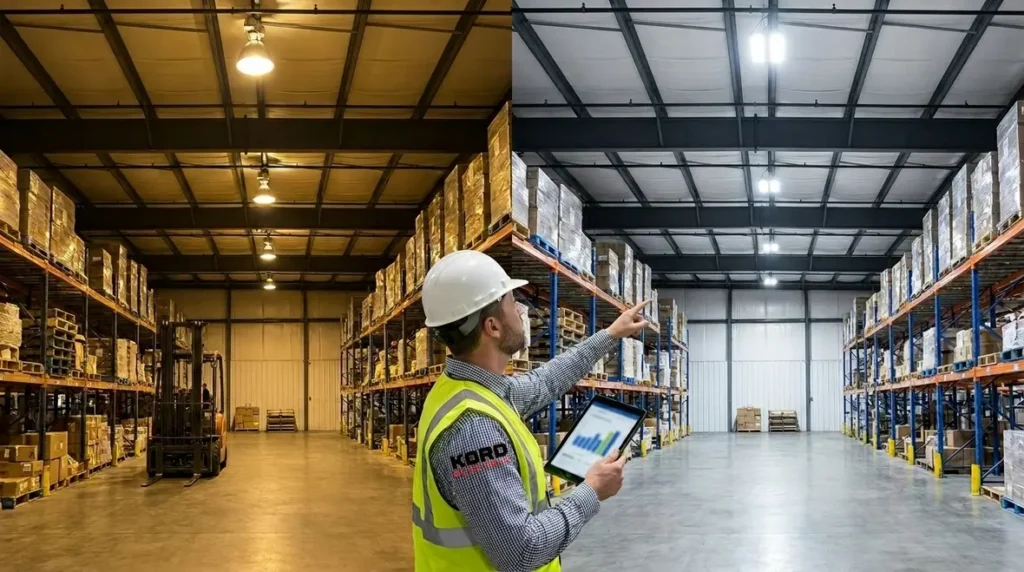
Many project teams start with lumens. We get it, because light is the goal. However, for LED lighting retrofits, the ROI starts with watts and ends with hours. So we translate your current fixtures into actual annual energy use, then we estimate new consumption based on the retrofit design.
To make the conversion accurate, we look at:
- Existing fixture wattage and number of lamps or drivers
- Ballast and driver losses where applicable
- Operating schedule, including shift changes and seasonal variations
- Control settings and how often lights dim or turn off
- Whether you use partial zone lighting for certain processes
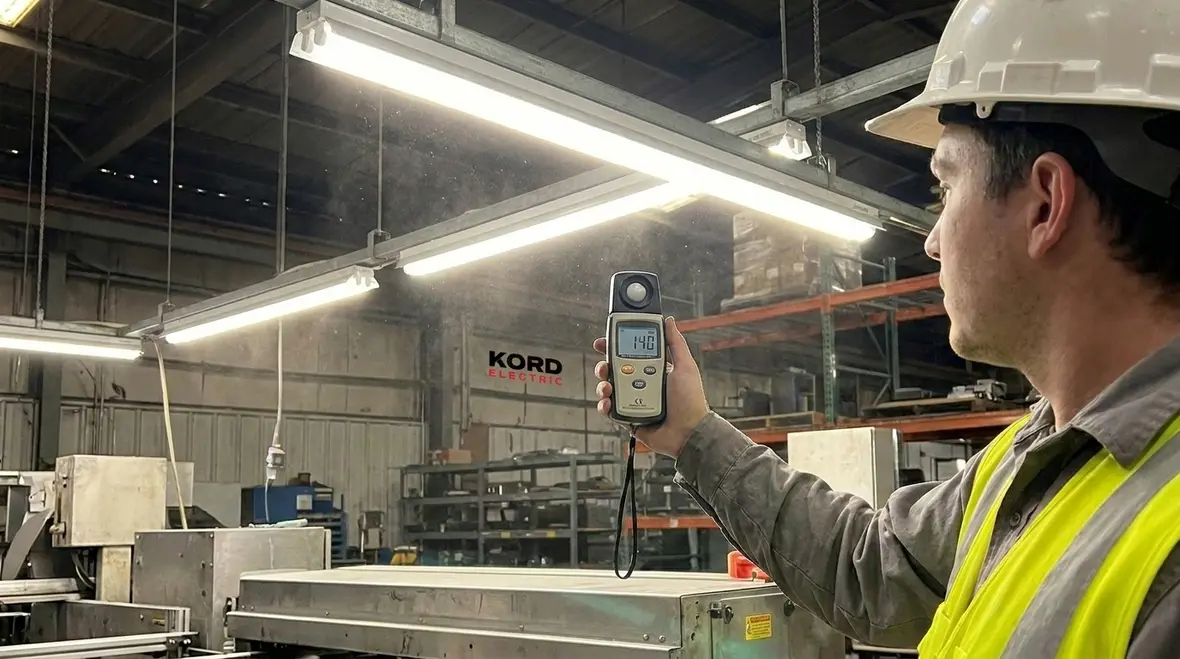
Then we handle a detail that most people skip: delivered light versus installed light. If a retrofit uses a higher efficacy fixture but also changes mounting height or spacing, the results can shift. Therefore, we confirm that the plan meets your target illumination for safety and productivity, not just “brighter on paper.”
Our technicians explain this tradeoff with the patience you would expect from someone who has seen enough “temporary” installs to last a lifetime. And when we laugh, it is because it keeps folks honest. Lighting projects should not feel like a plot twist from a superhero movie. They should feel like a repeatable upgrade.
In facilities navigating California Title 24 or similar requirements, this same discipline carries into compliance. The California Title 24 lighting retrofit ROI guide shows how lumens, watts, and controls all shape both regulatory outcomes and payback timelines, so your LED retrofit ROI analysis lines up cleanly with code expectations instead of fighting them.
Electrical work costs: the part that decides your payback
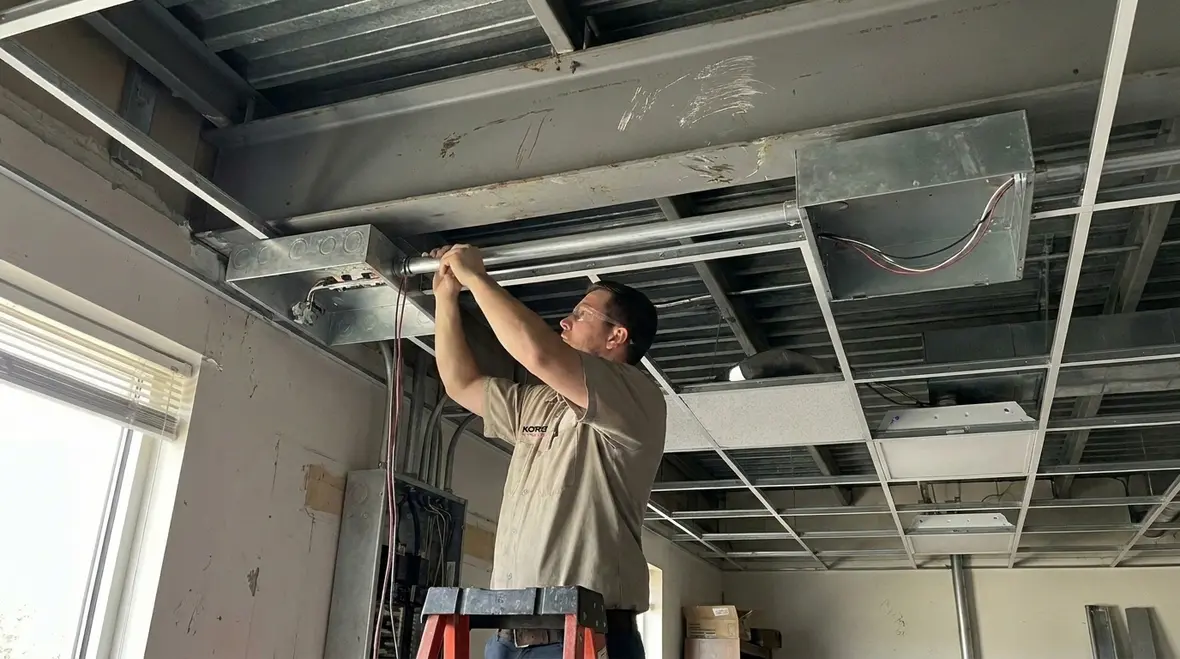
Energy savings drive the upside. Yet, the electrical scope decides the timeline and cash flow. In industrial and major property buildings, the retrofit often requires more than swapping lamps. New drivers, compatible controls, and circuit capacity can trigger wiring changes, panel work, or revised layouts.
Our approach stays aligned with the logic we share in our rewiring cost guide for commercial electrical systems. We plan for the practical realities: route access, wire gauge requirements, installation labor, and any modifications to support safe operation. We also account for the fact that existing electrical systems might not be ready for the new control and dimming behavior. In other words, we do not treat electrical work like a surprise tax. We forecast it.
Common electrical cost drivers include:
- Panel capacity and available breaker spaces for new circuits
- Existing conductor sizing and any needed upgrades
- Rewiring to support fixture level controls and drivers
- Conduit runs and pathways, including areas with restrictions
- Licensing, labeling, and commissioning requirements
As work proceeds, we also protect your facility from unnecessary disruption. We schedule installation in a way that avoids high traffic areas where possible, and we coordinate with safety teams so the job site stays controlled. Transitioning to better lighting should feel like improvement, not chaos.
For facilities where the LED project overlaps with broader reliability concerns, Kord Electric’s coverage of emergency power failures in commercial buildings underlines how thoughtful electrical upgrades can support both ROI and resilience. When your LED retrofit ROI analysis accounts for panel health and backup behavior, you are not just buying new fixtures—you are shoring up the backbone that keeps them powered.
Maintenance and labor: savings you can feel, not just calculate
ROI does not end at the electric bill. Plants also pay in maintenance time, unplanned outages, and the labor needed to swap fixtures that fail early or access them when conditions make service harder.
With LED retrofit projects, we typically see reductions in:
- Fixture replacement frequency
- Service calls for lamp failures or ballast issues
- Maintenance labor time, especially in hard to reach locations
- Operational interruptions tied to maintenance schedules
However, we model this carefully. Some facilities still face challenges like harsh environments, vibration, or dust exposure. Therefore, we validate fixture ratings and installation choices so expected service intervals match your actual operating conditions.
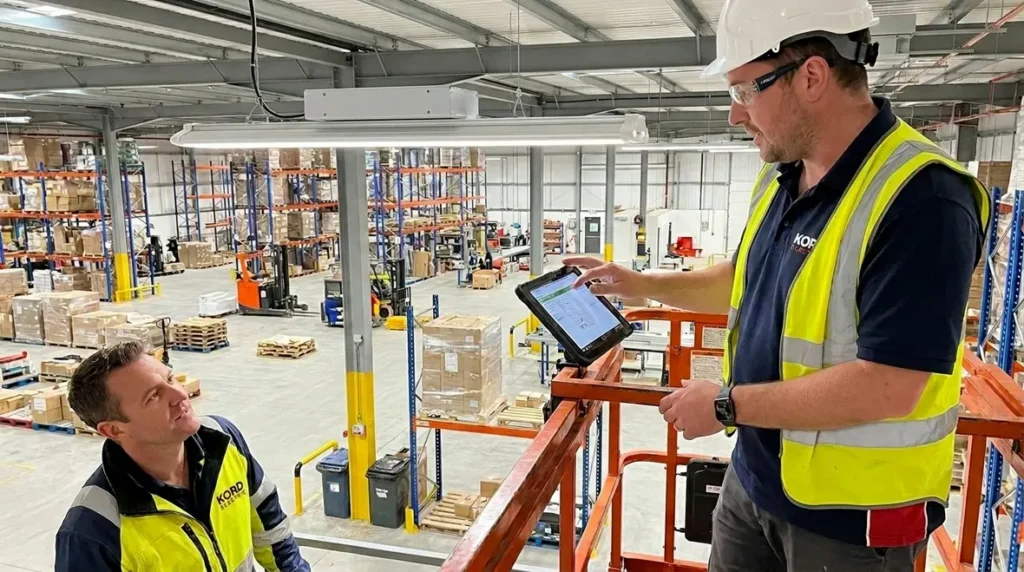
And here is where our expert service staff earns their keep. They explain what maintenance teams should monitor after installation, so the retrofit stays healthy. Think of it as training your team so you do not rely on “hope” for reliability. Hope is a great emotion, but it is a terrible maintenance strategy.
For decision makers building multi year roadmaps, it can help to view maintenance gains from LED work alongside other service line items. The electrician cost LOS guide for commercial facilities breaks down how strategic upgrades—including LED retrofit projects—shift your spend from reactive calls to planned improvements, which quietly strengthens the back half of your LED retrofit ROI analysis.
Controls, dimming, and scheduling: the ROI lever most people underuse
Controls can make your ROI move faster than expected, especially in manufacturing spaces where lighting needs change by zone and shift. We include controls in the LED retrofit ROI analysis because smart lighting reduces runtime and supports consistent illumination where work happens.
For commercial and industrial environments, we commonly evaluate:
- Occupancy sensing for secondary areas
- Daylight harvesting for spaces with external light
- Time based scheduling aligned with production hours
- Zone level switching that matches actual activity
- Dimming strategies that preserve safety while cutting energy use
Then we test the plan with realistic scenarios. For example, if a team runs two shifts but one shift uses less area, controls should reflect that. Otherwise, you pay for light where no one needs it. And while a maintenance manager might say, “At least the plant is well lit,” the spreadsheet says otherwise.
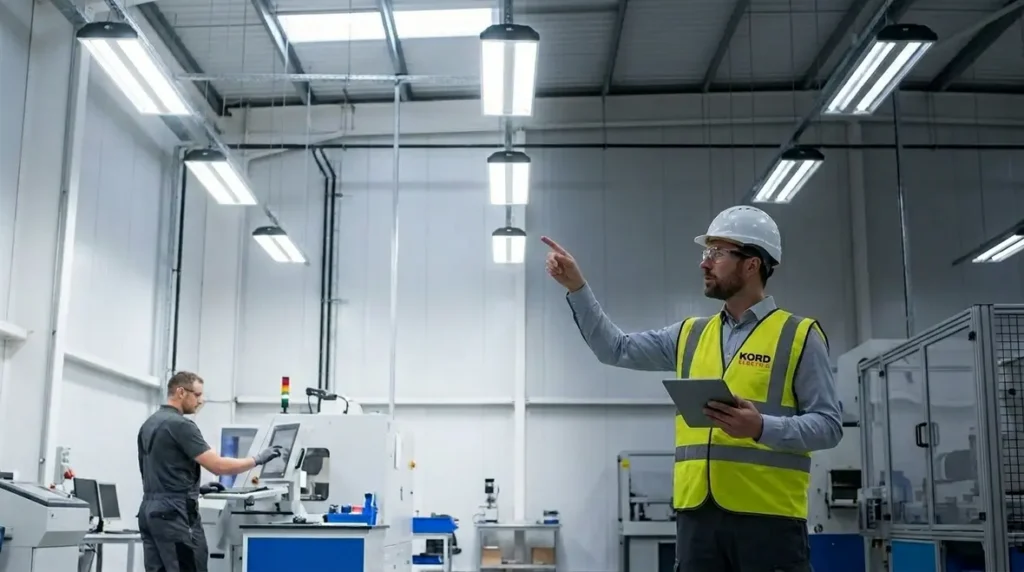
Our technicians also coordinate control integration with the electrical system so drivers and switching behavior work reliably. That avoids flicker complaints, nuisance trips, and “why did this breaker trip at 2 a.m.” phone calls. Nobody wants those. Not even the villains in late night TV.
When controls are part of a broader lighting upgrade, pairing your ROI model with Kord Electric’s dedicated lighting installation services content can help stakeholders visualize how design, wiring, and commissioning fit together. That way, the LED retrofit ROI analysis is not just a spreadsheet—it is a picture of how your plant will actually operate under smarter, more responsive lighting.
Calculating payback: choose the right metric for the right decision
Once the inputs are solid, we calculate ROI using the metric that fits your decision timeline. Some stakeholders need payback speed. Others need long term savings. So we present results in a way that matches how facilities actually approve capital work.
In practice, customers often choose one or more of these:
- Simple payback: how many months until savings cover the upfront investment
- Net annual savings: the yearly difference after project costs
- Multi year ROI: cumulative savings over a planned lifecycle
- IRR: used for broader capital planning and comparisons
Then we walk the room through sensitivity analysis. For instance, we show ROI changes if operating hours increase or if energy prices shift. Additionally, we include a range for electrical scope because real projects sometimes uncover extra needs during closeout.
That is why we prefer working with your real facility data. We do not just estimate from a brochure. We validate so the ROI stays believable after installation. In commercial and industrial settings, belief matters. It is the difference between “great idea” and “funded project.”
If your LED upgrade is part of a larger modernization push across a campus or region, you can align this payback math with what you already know about broader electrical investments from resources like the rewiring cost guide for commercial electrical systems. That way, LED retrofit ROI analysis sits beside rewiring, panel work, and new equipment projects in the same capital planning conversation instead of competing with them.
FAQ
Manufacturing teams tend to ask the same core questions when they first look at a lighting upgrade. Here are clear answers you can bring into your own LED retrofit ROI analysis conversations.
Conclusion: let Kord Electric model your ROI and plan your retrofit
If you want a lighting upgrade that pays back with confidence, we help you calculate the LED retrofit ROI analysis using real facility details for commercial and industrial projects. Kord Electric brings expert service staff and technicians who explain assumptions, electrical scope, and control options in plain terms. Next, we map ROI to your operating schedule and production constraints so approval feels easier and execution stays smoother.
For organizations planning upgrades across multiple sites in Southern California, you can also align LED retrofit projects with broader electrical work under Kord Electric’s Los Angeles County electrical services umbrella. Treating lighting, power quality, and infrastructure as one roadmap helps you avoid fragmented projects and keeps your payback math honest from the first pilot area to the last production line.
When you are ready to move from theory to a plan you can present, our team can review your layouts, gather the right data, and build a custom LED retrofit ROI analysis that respects both your budget and your production floor. Contact Kord Electric today to schedule an assessment and build a retrofit plan with measurable returns.