Commercial Kitchen Lighting Safety Requirements
In every commercial and industrial kitchen, the lights have to do more than look good. They must support safe work conditions, protect people from shock and burns, and prevent fire risk in an environment where heat, grease, and moisture show up like uninvited guests at a party. That is why Kord Electric focuses on essential safety requirements for commercial kitchen lighting systems, including correct fixture types, safe installation practices, and proper protection against water and grease. Our technicians and expert service staff explain the “why” behind each requirement, so facility teams understand what matters and what can wait.
What essential safety requirements matter most in a kitchen
Commercial kitchens create special hazards that ordinary lighting plans often ignore. First, grease and steam coat surfaces and reduce performance. Next, hot cooking equipment raises ambient temperature, which can shorten fixture life if the system was not chosen for the job. Also, moisture and cleaning chemicals can enter fixtures that were not designed for wet or damp locations.
Kord Electric approaches lighting safety with a clear checklist that our experienced service staff can walk you through. In most cases, we align to practical code expectations and recognized standards while we confirm site conditions. Then, we verify that the design uses appropriate equipment, correct spacing, and proper electrical protection.
Here is the part people forget: lighting safety is not only about the lamp. It is about the entire system, from wiring route to the way the fixture handles condensation, cleaning splash, and heat.
Choose the right fixtures for wet, greasy, and hot locations
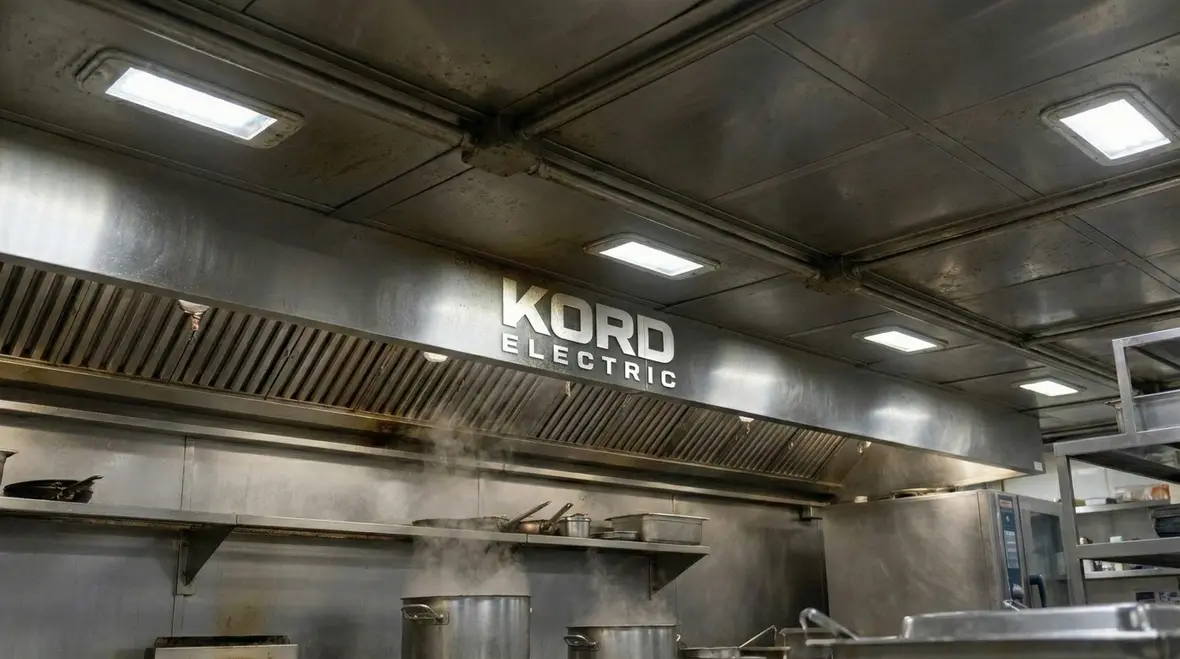
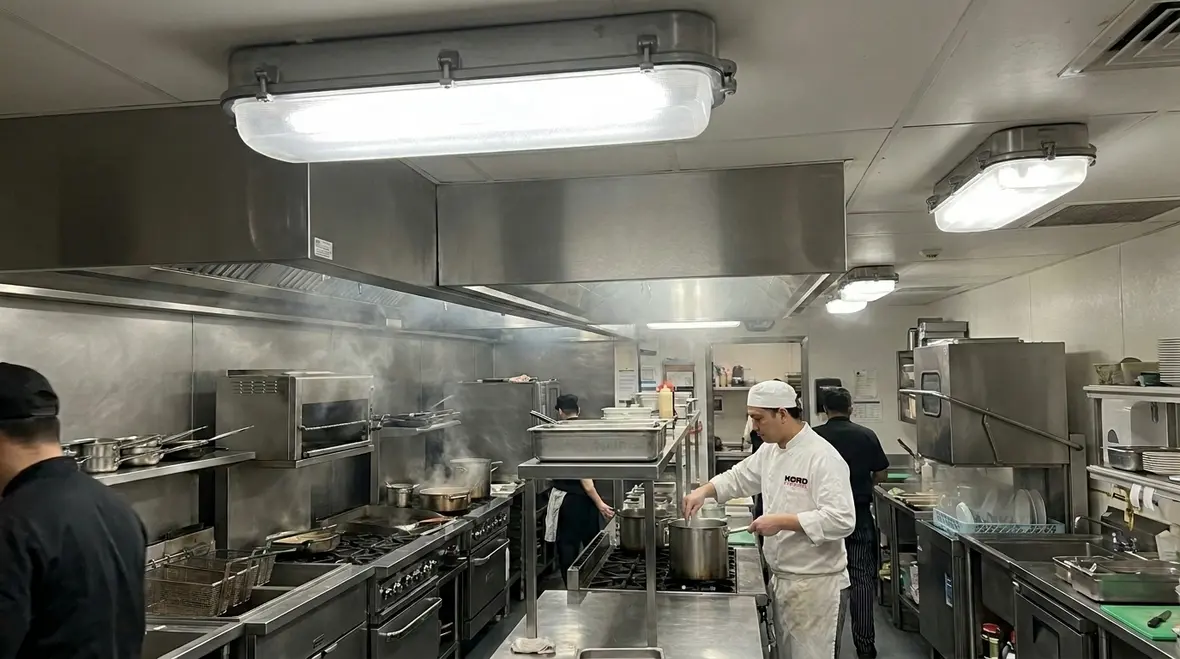
When lighting sits in a commercial kitchen, it needs housing that resists contamination and survives repeated wash downs. Therefore, Kord Electric recommends fixtures with suitable sealing, impact resistance, and thermal tolerance for the area they serve. For zones near cooking appliances, we prioritize construction that can handle heat and grease exposure without cracking, warping, or losing performance.
Additionally, we use practical rules for placement. A well-lit kitchen supports safe movement, reduces shadows near prep and cutting zones, and helps staff read controls and labels. Still, safety comes first, so we avoid fixtures that cannot handle moisture or cleaning agents. If a facility uses strong degreasers, our technicians account for the chemical reality, not just the product spec sheet.
And yes, we have seen fixtures installed where the steam behaves like a tiny weather system. With enough seasons, it always wins. Our job is to make sure the lighting wins by being the right kind from the start.
Electrical protection that prevents shock and overheating
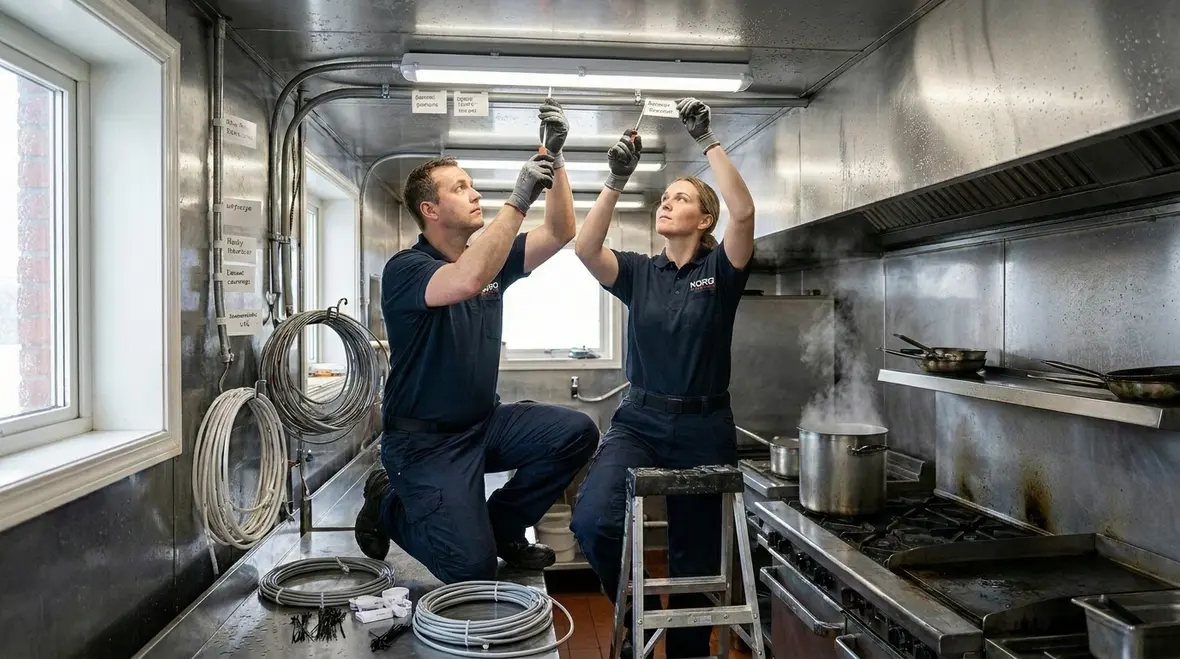
Even well-chosen fixtures fail when wiring and protection fall short. Our expert service staff focuses on safe circuiting, proper grounding, and protective devices that match the load. They also confirm that connections stay secure and insulated, since kitchen vibration, cleaning, and thermal cycling can loosen components over time.
Next, we verify that the lighting system includes correct overcurrent protection. This matters because a damaged fixture, a failing driver, or a compromised connection can draw more current than expected. If protection does not trip when it should, heat can build where it should not.
Finally, we check controls and switching. Kitchens often have multiple zones, and staff use lighting during long shifts. So, we recommend designs that prevent odd behavior like flicker, random outages, or delayed restart. Flicker looks harmless until it contributes to fatigue, errors, and missed hazards. Nobody wants their team to play “spot the spill” under unstable lighting.
How we install commercial kitchen lighting safety requirements correctly
Installation practices decide whether the system stays safe for years. Kord Electric coordinates installation details so fixtures mount securely and wiring routes remain protected from grease, steam, and physical impact. Furthermore, we ensure appropriate clearances near cooking equipment and we use cable management that supports safe access for maintenance.
Our technicians also follow a disciplined approach to labeling and documentation. They identify circuits, document fixture locations, and confirm labeling in panels and control points. This step saves time during troubleshooting and helps staff respond safely during any emergency.
Then, we test and verify. We inspect for correct polarity, check grounding continuity, test insulation where applicable, and confirm that switching behaves as designed. In addition, we verify that protective covers and seals stay intact after installation, because small gaps can become big problems once steam and grease enter the picture.
In short, we build lighting systems the way a facility would want them built if the lights were expected to stay calm during the busiest service rush.
Maintenance, cleaning, and inspections that keep safety intact
Lighting safety is not a one time project. It is a living process. Over time, grime collects on diffusers and lenses, and seals can degrade if cleaning is too aggressive. Therefore, Kord Electric helps facilities set maintenance routines that protect safety and performance.
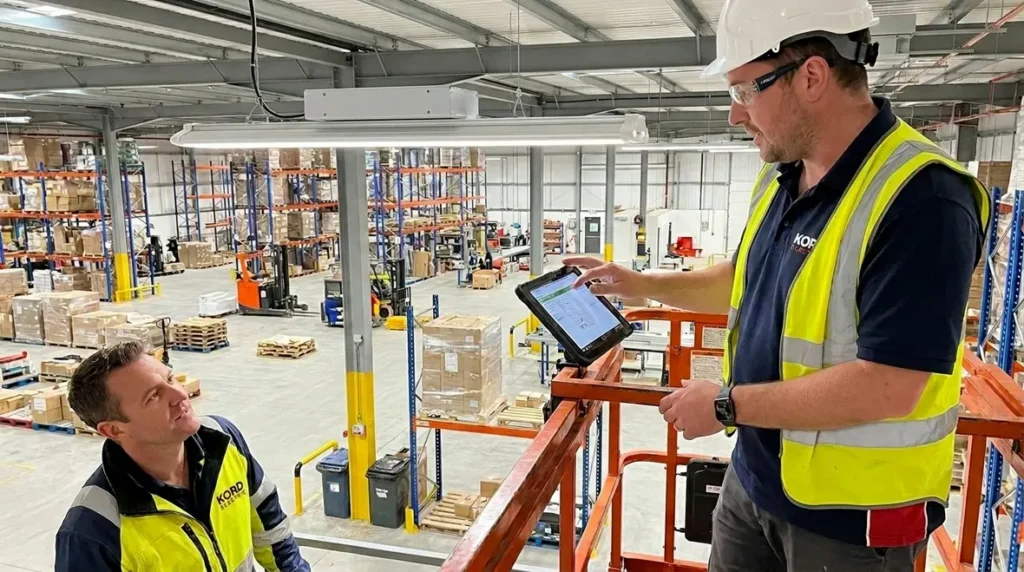
Our expert service staff recommends periodic inspection of fixtures, seals, mounts, and electrical connections. They also check for signs of heat damage, moisture intrusion, and corrosion. When the system includes controls like occupancy sensors or time schedules, they test proper operation because a control failure can lead to unsafe working conditions, especially in prep and staging areas.
Cleaning matters, too. We advise using methods that avoid damaging gaskets and coatings. If facility teams use high pressure cleaning, we guide them on safe approaches for the lighting zone. After all, the goal is to remove grease, not to pressure wash the gasket into retirement.
Additionally, we track lamp and driver performance where applicable. That includes checking for early failures, unexpected flicker, and reduced output. Early detection usually costs less than emergency replacement during the middle of dinner rush chaos.
Emergency lighting, egress visibility, and downtime planning
Commercial and industrial properties rely on predictable lighting during power disturbances. Kord Electric addresses emergency lighting needs and egress visibility as part of the lighting plan, not as an afterthought. When staff move through corridors, exits, and stairways during outages, lighting must remain dependable.
We verify that emergency lighting circuits work as intended and that battery backed units keep performance over time. Our technicians also review placement so exit paths remain visible, especially where visual clutter exists from equipment or storage.
In kitchens, downtime affects safety. If lighting fails during maintenance or service, staff need clear work areas, safe access to panels, and controlled switching to reduce risk. So, we support planned outages and staged commissioning where appropriate. Our team coordinates with kitchen management to reduce disruption while keeping safety intact.
For facilities that want a deeper dive into code expectations across their building, we often pair kitchen-focused planning with a broader review of lighting installation code compliance to keep the bigger picture aligned as well.
What does a safe lighting upgrade look like for a major building
A major property does not need a “throw parts at it” upgrade. Kord Electric delivers a methodical process designed for commercial and industrial facilities. First, we assess existing conditions, including fixture type, wiring age, control layout, and exposure zones near cooking appliances. Next, we confirm the operational schedule and cleaning practices so the system fits real behavior, not ideal paperwork.
Then, we design upgrades that improve visibility and safety while respecting the building’s workflow. We also coordinate installation planning, since kitchens rarely shut down for long. Our expert service staff explains the plan to the facility team in plain terms, so managers understand impacts, timelines, and safety outcomes.
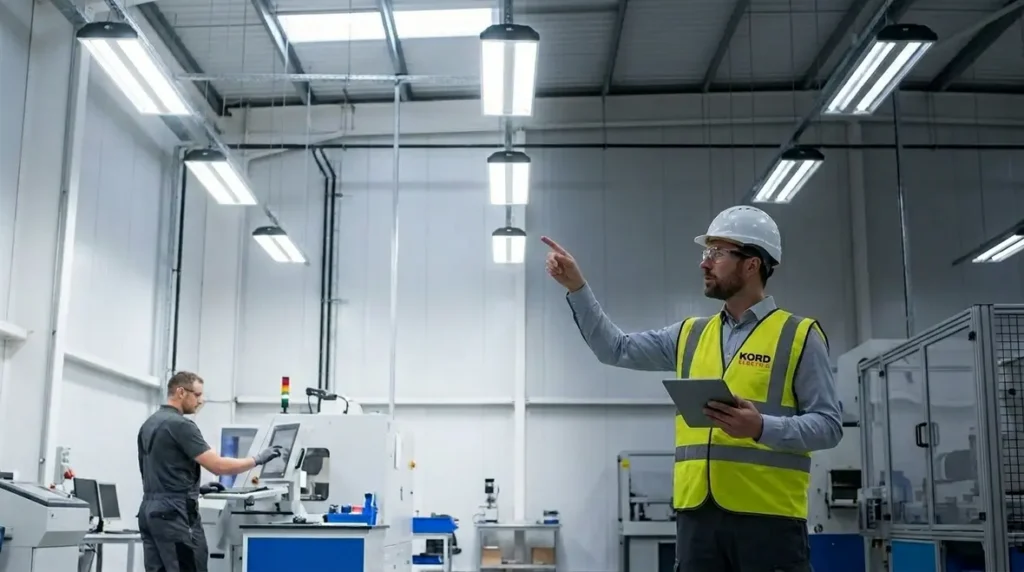
Finally, we commission and verify system performance. This includes checks for correct control behavior, stable illumination levels, and safe operation across zones. The best upgrades feel boring in the best way: they work, they stay stable, and they do not require drama.
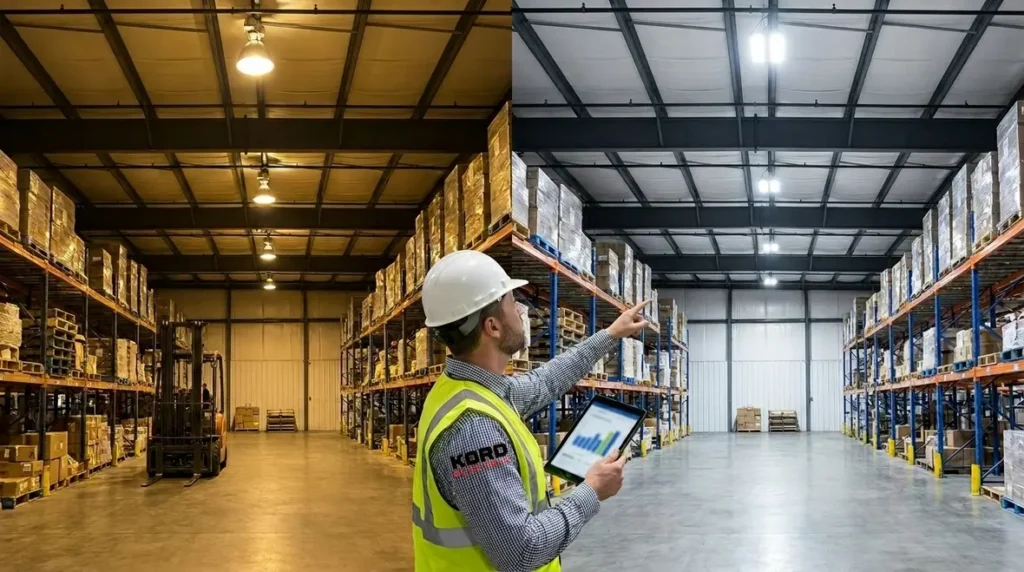
When upgrades extend beyond kitchen areas into warehouses, corridors, or exterior zones, many facility leaders also connect the project with Kord Electric’s broader lighting installation services to keep every space aligned under one safety-focused design.
FAQ
Routine inspection focus
Seals, mounting security, corrosion, moisture signs, and control behavior.
Upgrade planning focus
Fixture ratings, exposure zones, wiring condition, circuit protection, and commissioning.
Conclusion: let us make your kitchen lighting safer
Kord Electric helps commercial and industrial facilities build dependable lighting that supports safe work, protects electrical components, and stays stable through steam, grease, and cleaning routines. Our technicians and expert service staff explain each step so your team knows what is happening and why it matters. If you are planning an upgrade, a repair, or a safety review, contact us. We will assess your conditions, recommend a safer lighting approach, and help you move forward with confidence, not guesswork. Call Kord Electric today for a commercial-focused inspection, and when you are ready to expand the project, connect it with our broader electrical preventive maintenance services so your commercial kitchen lighting safety requirements stay aligned with the rest of your facility.