Commercial Lighting Control Systems Compliance Guide
Kord Electric understands that commercial lighting control systems compliance starts long before the electrician tightens a final connection. In major properties, warehouses, offices, and industrial spaces, code requirements, energy goals, and documentation expectations show up together. And when they collide, teams often discover the hard way that “it works” is not the same as “it complies.”
That is why our team approaches control design like a calm, methodical process: plan the controls, wire the logic correctly, verify performance, then document it so owners and inspectors can trust it. Meanwhile, our technicians explain each step in plain language, because no one should have to Google what a load schedule is while the building is on a timer. If someone says otherwise, we politely remind them that the timer does not care about feelings.
How commercial buildings choose lighting controls for real savings and audit readiness
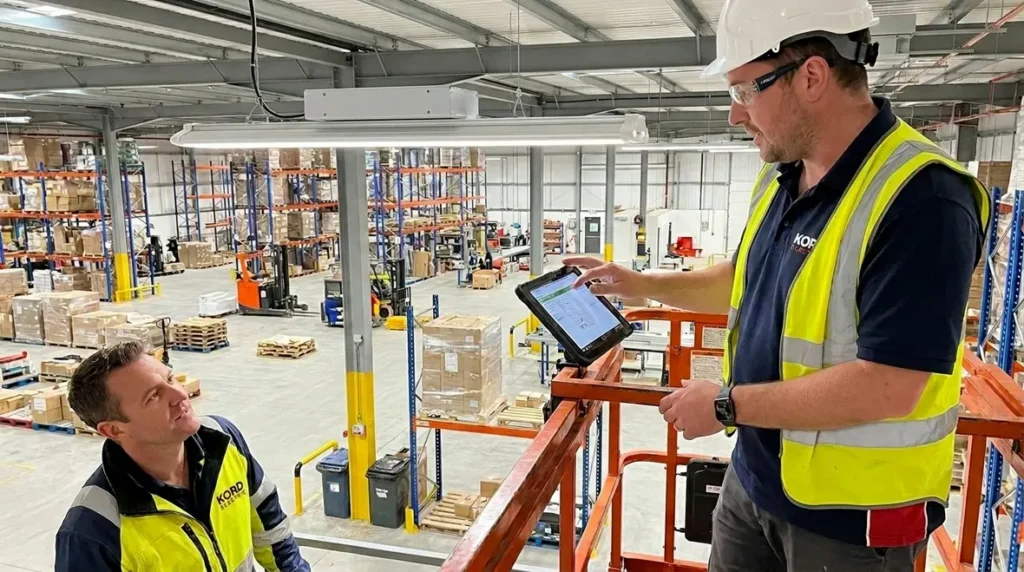
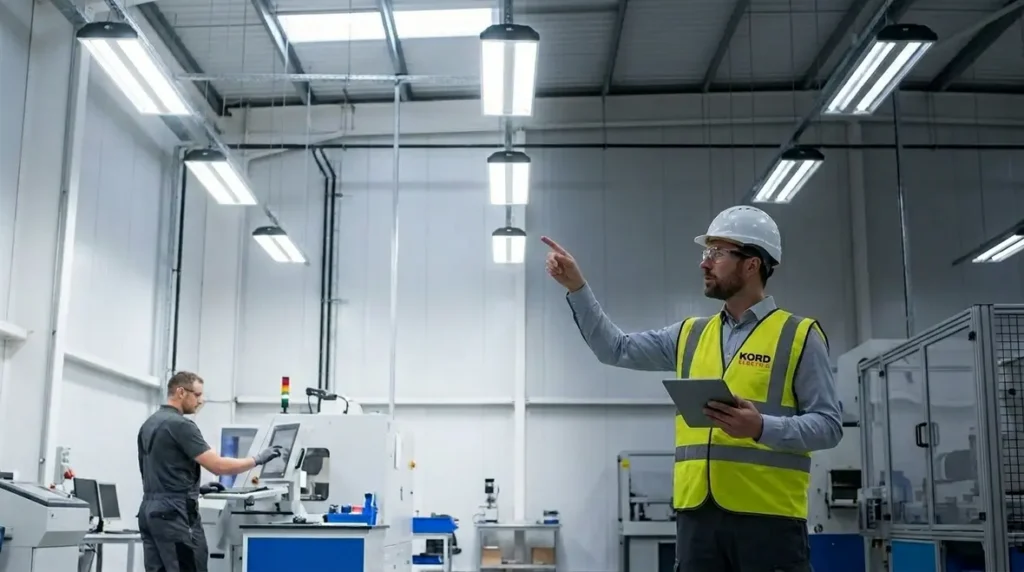
When others shop for lighting controls, they often focus only on features, like occupancy sensors or dimming. However, Kord Electric looks deeper at how a facility actually runs. For example, a manufacturing floor has different motion patterns than a corporate lobby. Therefore, we start with schedules, space usage, and how staff move through the building across shifts.
Then we map control zones to operational needs. This matters because a “one size fits all” layout creates wasted light and messy compliance paperwork later. Next, we align controls with the building’s metering and energy targets. So rather than chasing vague energy reductions, we confirm what the system will do when the lights should be off, when they should be dimmed, and when the system should allow manual overrides.
Our expert service staff also focuses on audit readiness. In other words, they build a path for verification. When the facility later needs proof that the system followed the schedule and response rules, the documentation and test results already exist. That saves time, and it saves managers from the classic “Where is that report?” scramble that happens right before a site visit.
For major facilities that want to connect code compliance with long term cost control, this planning phase pairs well with broader guidance on commercial lighting compliance in California and how Title 24 requirements shape real world lighting and control strategies.
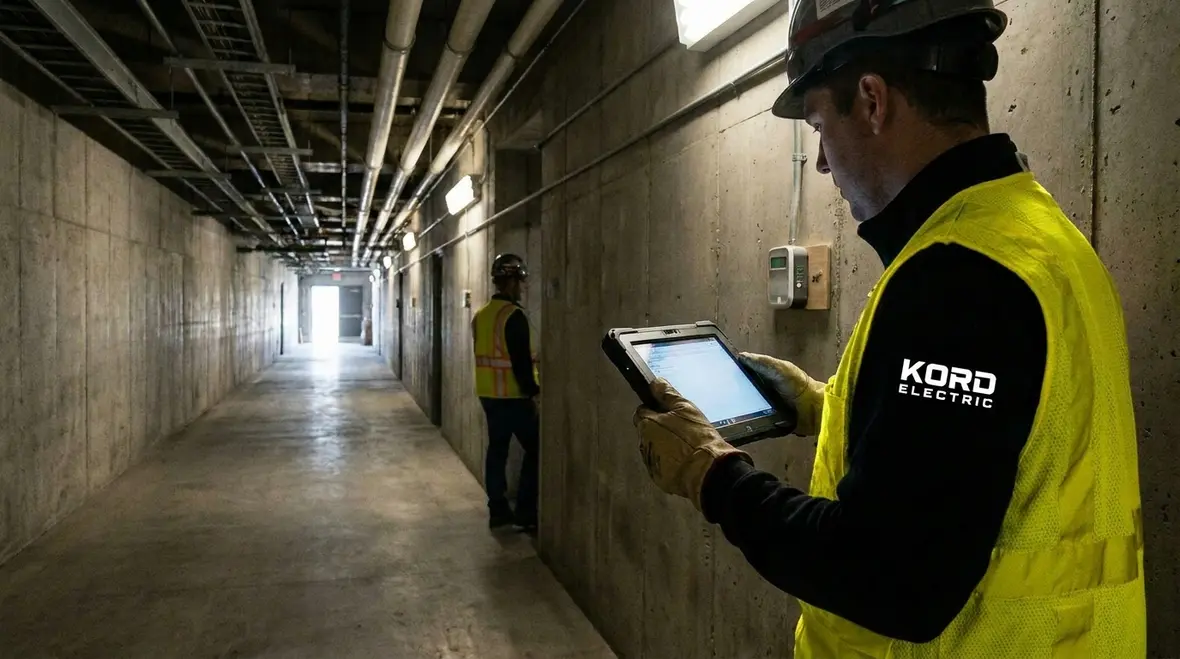
Key elements in commercial lighting control system design
Design works best when it treats the control system as a whole, not a set of separate parts. Kord Electric typically evaluates several key elements so the building behaves consistently and efficiently.
1) Zoning strategy
Controls must match the building’s function. Proper zoning prevents over-dimming and avoids leaving areas lit longer than needed. It also reduces nuisance overrides from occupants who feel like the lights act randomly.
2) Control logic
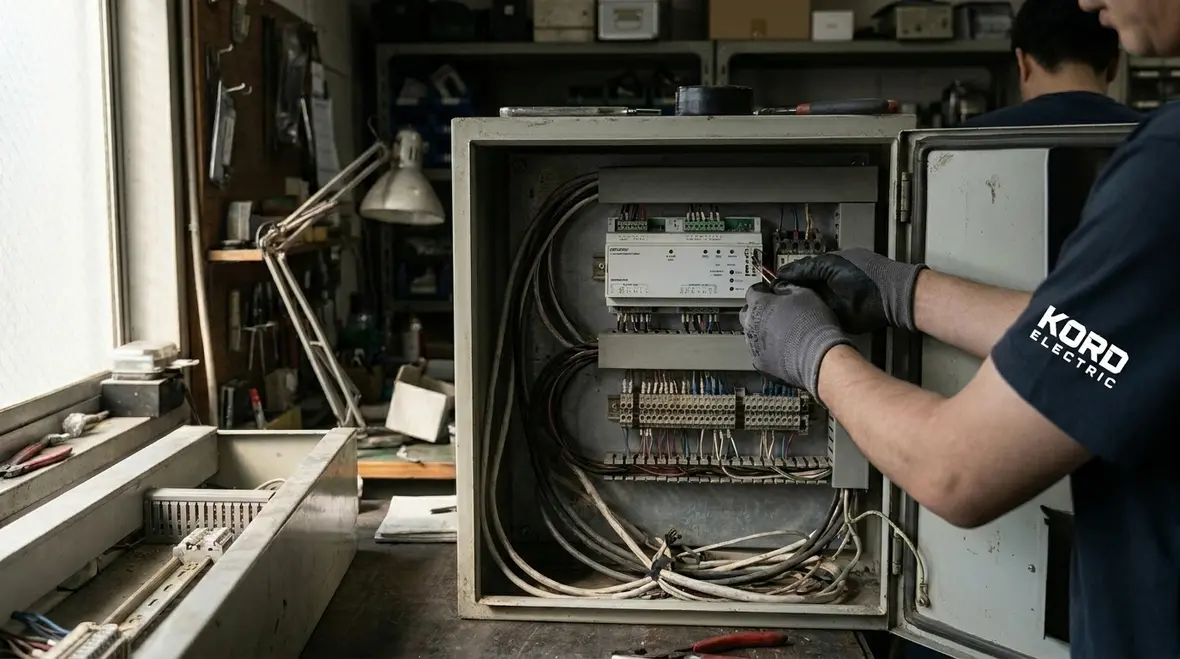
We define how sensors, time schedules, and manual switches interact. If the logic is unclear, the system can “fight itself,” such as turning lights back on immediately after a user turns them off. Our technicians walk teams through these scenarios so operations staff understand what to expect.
3) Dimming and switching
Dimming often supports smoother energy savings, but only when it ties to occupancy and daylight inputs correctly. On the other hand, simple switching may still fit certain areas. We help others choose the right approach based on tasks, reflectance, and safety needs.
4) Communication and interoperability
In major property buildings, teams frequently require integration with building management systems. Therefore, we select communication methods that support future growth and maintenance.
To keep things calm, our technicians explain these choices step by step, like guiding someone through a video game quest. You still have to do the work, but at least you know why the quest exists.
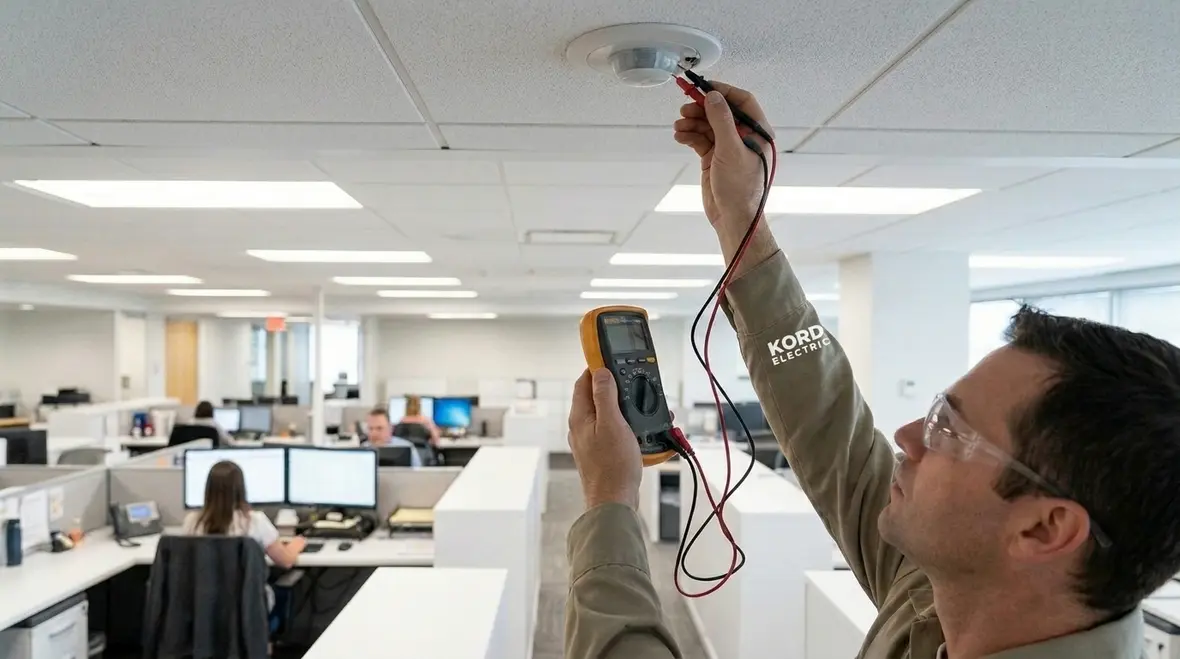
In facilities planning major LED retrofits or system upgrades, these design elements often connect directly to project budgets. For a deeper cost breakdown that includes sensors, dimming, and automation, many teams review Kord Electric’s Commercial Lighting Upgrade Cost Guide alongside their control strategy.
Compliance and documentation: what facilities must prove over time
Commercial projects do not only need working controls. They need proof that the building followed the intended rules. Kord Electric treats commercial lighting control systems compliance as an outcome supported by test records, settings, and maintenance notes.
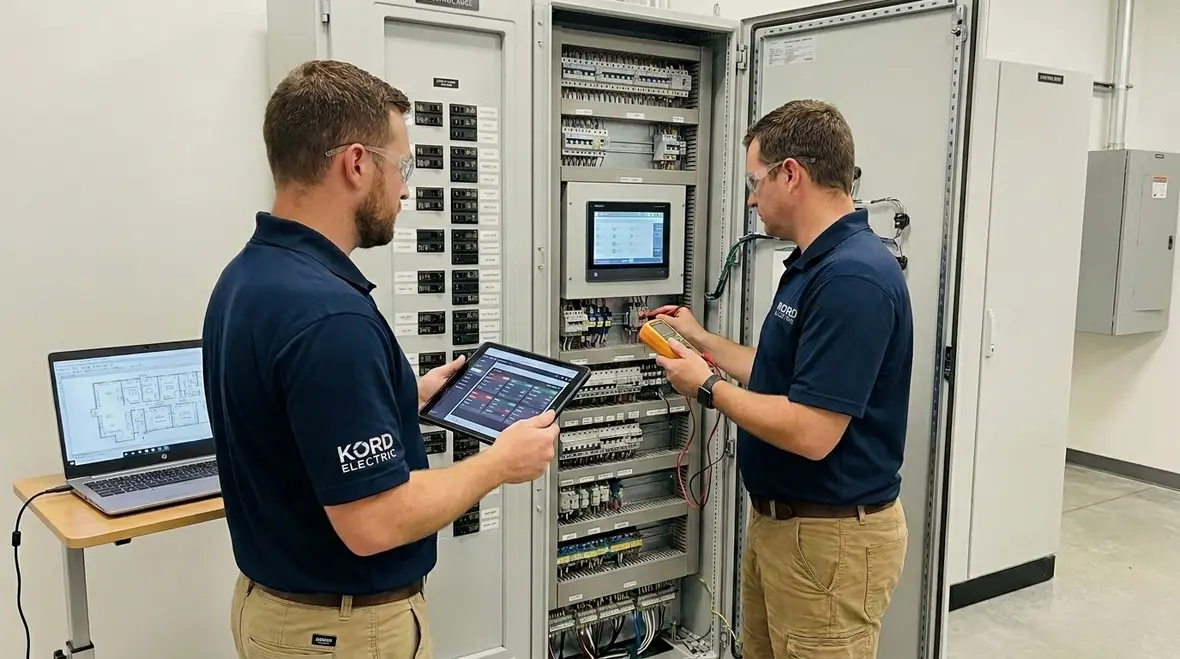
First, we verify that schedules operate as designed for each area. Then we confirm sensor response times, hold times, and override behavior. Next, we check that dimming levels land within the permitted ranges and respond properly to manual inputs. After that, we document the configuration, including the logic that ties the system together.
Because real operations change, we also plan for ongoing service. For example, a tenant may relocate, or production can shift to a new shift pattern. If the building team changes space usage without updating control settings, energy goals drift and compliance can become shaky. Our expert service staff helps maintain the system so performance stays aligned with expectations.
In short, compliance is not a one-day event. It is a living process that continues after commissioning. Kord Electric builds that mindset from the start.
For large portfolios that need structured recordkeeping and recurring checks on lighting controls, pairing control documentation with an organized electrical preventive maintenance program can make annual compliance far more predictable.
Commissioning and verification that actually reduce risk
Commissioning should not feel like a mystery tour. It should feel like someone calmly showing you the evidence. Kord Electric performs verification in a structured way so facility teams can trust the system.
We follow a sequence that others can repeat. Initially, we test controls in isolated zones to confirm wiring and addressing. After that, we run functional tests that simulate occupancy, vacancy, and scheduled operation. Then we validate overrides, including what happens when lights are manually adjusted. At each stage, we document results and capture any adjustments needed for correct behavior.
During verification, we pay attention to common failure points. For instance, a sensor mounted too high can miss movement, and a zone boundary drawn incorrectly can leave parts of a room unresponsive. Therefore, we calibrate to real space conditions, not ideal drawings.
Our technicians also explain what they see during testing. This matters because facility managers and operators often want simple answers, like “Will this turn off after 10 minutes or 20?” Our staff delivers those answers clearly, with the documentation to back them up. Because in the real world, the system cannot run on guesswork, even if someone jokes about it.
Daylight integration and occupancy sensing without the “lights that feel alive” problem
Many buildings add daylight harvesting and occupancy sensing to boost efficiency. However, if controls ignore human behavior, occupants can end up annoyed. And annoyed occupants tend to override systems. Then energy savings quietly vanish, like a snack you swore you would not eat.
Kord Electric addresses this by setting reasonable behavior rules. We calibrate daylight sensors so they respond to actual light levels, not sudden shadows from passing vehicles. We also configure occupancy sensing for the movement patterns in each space type. For example, a corridor does not behave like a meeting room.
Then we tune the hold times and transition behavior. Lights that snap on instantly or fade too slowly can trigger complaints. Therefore, we choose smooth, predictable transitions that support comfort and task needs. Our expert service staff also trains building teams on how to use the overrides responsibly so the system still meets efficiency goals.
When others install controls and leave occupants to figure out the behavior, the system gets blamed for everything. When Kord Electric installs controls with clear logic and communication, the system becomes a helpful background actor, like the reliable friend who always knows where the car is parked.
Service plans for major properties: maintenance that protects savings
Commercial and industrial facilities do not stay still. They expand, they reconfigure, and they change usage. Kord Electric supports major property owners with service practices that protect performance and keep commercial lighting control systems compliance stable as conditions shift.
We recommend periodic checks that focus on what matters. That includes sensor cleanliness and mounting alignment, schedule audits, and review of any configuration changes made during renovations. We also inspect communication health when the system relies on networked devices. Because if communication drifts, the building may not run the schedules you think you installed.
Additionally, our technicians help others manage firmware updates and settings adjustments with care. Not every update is automatically beneficial, and random changes can cause subtle issues. Our staff follows a deliberate process so the building stays consistent.
In practice, service means fewer surprises. It also means quicker restoration if a device fails. So instead of waiting for a “mysterious lighting problem” to become a full-blown fire drill, the facility has a plan and trained support.
For properties that want service woven into a wider reliability strategy, Kord Electric’s electrical preventive maintenance programs help align lighting controls, Title 24 requirements, and critical electrical infrastructure under one coordinated plan.
Dual column view: typical workflow and verification outcomes
Workflow
Assessment of space use and zoning needs
Control design with schedules and logic
Installation and configuration
Commissioning tests and documentation
Training and handoff to operations
Verification outcomes
Zone behavior matches operational intent
Sensors respond correctly to occupancy
Dimming and daylight control perform as expected
Overrides work without breaking schedules
Settings and test records support audits
FAQ: Commercial lighting control system compliance and operations
Conclusion: Let Kord Electric plan, verify, and maintain controls built for major facilities
If your facility is serious about efficiency, comfort, and commercial lighting control systems compliance that holds up over time, Kord Electric is ready to help. We plan zoning and logic, commission and verify performance, and support ongoing service for major commercial and industrial buildings. When others rush installation and hope for the best, we build certainty. Contact Kord Electric today to discuss your space, your operating schedules, and the documentation your team will need. Then we will do the calm work of making the lights behave.
For teams planning full lighting modernizations, Kord Electric also provides dedicated lighting installation services for commercial and industrial facilities, aligning fixtures, controls, and code requirements into one coordinated project plan.