Commercial Lighting Control Systems for Energy Savings
At Kord Electric, we help commercial and industrial facilities use energy with less waste by installing commercial lighting control systems that respond to how buildings actually operate. In our world, lights should not burn at full blast just because someone walked by in 1998 and the building never recovered. Instead, we design controls that dim, schedule, and automate lighting so your spaces stay bright where they need to be, and calmer where they do not. Along with that, our technicians explain the plan in plain language, because we believe the most advanced panel in the room should still come with a clear story. And yes, we have heard every joke about “lights that think for themselves,” but we also see the real payoff in bills and comfort.
How advanced lighting control systems cut energy use in modern buildings
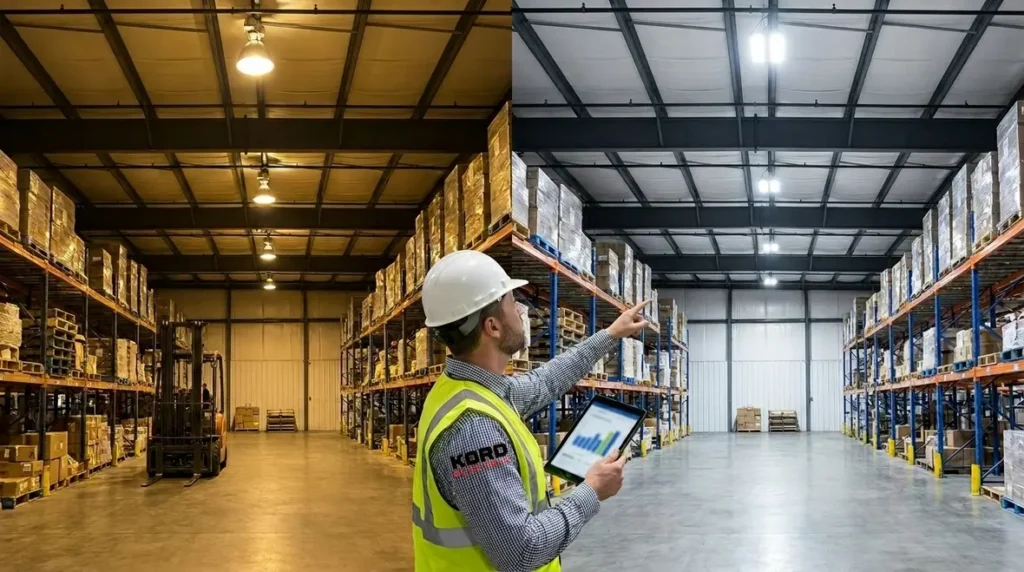
Optimizing commercial energy use starts with a simple truth: lighting often runs longer than people expect, and it rarely matches real occupancy. As a result, many buildings spend money on brightness that goes unused. With commercial lighting control systems, we reduce that mismatch. First, we measure occupancy, daylight, and schedules, then we adjust output with smooth dimming so the experience stays consistent. Next, we coordinate zones so only the right areas change, not the whole floor like a dramatic movie scene.
To build that kind of control, we take a whole building view. We do not treat lighting as a standalone task, because power, controls, and maintenance all connect. For example, daylight harvesting reduces artificial light when sun is available, and occupancy sensing prevents lights from staying on after teams leave. Furthermore, scheduled control helps during after hours, weekends, and seasonal shifts. In other words, we make the building behave like a smart professional, not like a forgetful intern.
We also align our designs with Title 24 and modern lighting code expectations, so energy savings are backed by compliance, not guesswork. When needed, we coordinate with broader lighting strategies such as commercial lighting upgrade projects and retrofit planning, helping property teams connect control logic with fixture choices and long term operating budgets.
Where efficiency gains show up inside offices, warehouses, and facilities
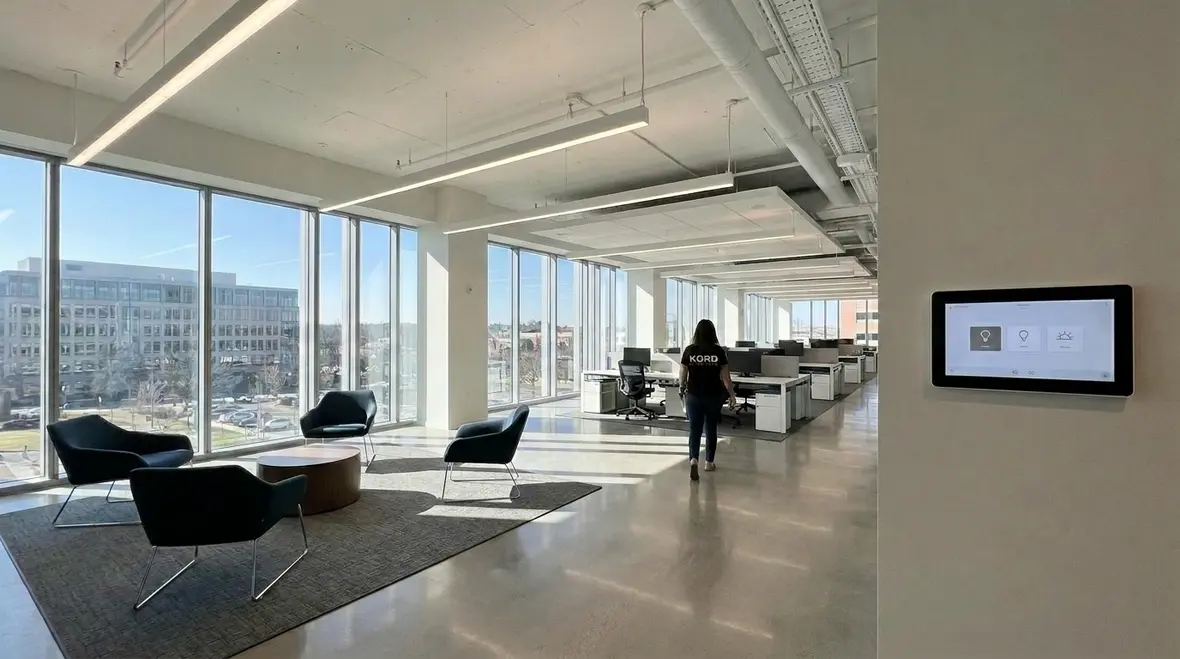
Energy savings do not arrive in one place. They show up across different spaces with different habits. In offices, we often use vacancy sensing and dimming to match lighting to how teams work during the day. In warehouses and distribution areas, we focus on safe, stable lighting levels and better control of large open zones. Meanwhile, in lobbies, hallways, and conference spaces, we tailor scenes so lighting supports wayfinding and presentation without over-illumination.

When our service team plans a project, we ask how the building behaves from morning to night. Then we translate that into control logic. For instance, retail like foot traffic patterns exist in some corporate environments too, and lighting should react without flicker or surprise. Likewise, industrial spaces often need reliable lighting that supports task performance and safety. That means controls must be tuned carefully, not just installed and hoped for. In fact, our technicians will explain how zones, sensors, and dimming steps interact so operations staff know what to expect.
In multi building portfolios, we also watch how lighting controls affect maintenance routines. A consistent control philosophy across sites makes it easier for regional teams to compare performance, spot chronic problem zones, and prioritize upgrades. When property owners connect controls with broader commercial lighting compliance efforts, they get both energy savings and fewer surprises at inspection time.
What our technicians configure for stable comfort and reliable control
People want energy savings, yes. However, they also want comfort and consistent performance. That is why we configure commercial lighting control systems with more care than a basic timer. We set up zones based on actual layout, not on guesswork. We also align control points with sensor placement, aiming for stable readings under different conditions like reflections, sun angles, and nearby surfaces.
Additionally, we plan for the “real world,” which includes late shifts, partial floor closures, and maintenance schedules. So we build in override options and time schedules that staff can use without turning the system into a guessing game. If a team needs full light for a meeting, we make that action easy. If a department leaves early, the building adapts without punishing them later. And yes, sometimes we get asked if the building can do “office cosplay,” but our controls usually stay focused on lighting, not imagination.
For major property buildings, we also help manage how the system communicates across areas. When the design includes integration points, it can support smarter monitoring and easier reporting. Then facility managers can spot issues faster, like a sensor that needs cleaning or a fixture group that is drifting from its expected behavior. On projects that also include LED retrofits or new recessed fixtures, we coordinate with services like professional recessed lighting installation so controls and fixtures operate as a single, reliable system.
Daylight harvesting and zoning: the practical path to lower bills
Daylight harvesting works when a building uses natural light effectively and controls respond smoothly. Instead of switching lighting abruptly, we track daylight levels and adjust output in gradual steps. That keeps the space comfortable and supports visual consistency. Meanwhile, zoning ensures that changes stay local. For example, we avoid the “one dimmer controls the whole wing” problem that leaves people wondering if their workplace is sinking into a sci-fi fog.
In practice, our approach focuses on a few key decisions. First, we define what daylight contributes in each area, especially near windows and skylights. Second, we set target light levels that match the task. A warehouse needs different output than an admin corridor. Third, we coordinate control with fixture types and existing wiring. Therefore, the result feels intentional, not accidental.
We also consider seasonal patterns. Daylight changes throughout the year, so control setpoints may need adjustment. We work with the project timeline and building seasonality so the system performs well when weather patterns shift. That attention to detail is where projects often separate into “it saves energy” and “it keeps saving energy.” For property teams focused on both control performance and code, pairing these strategies with insights from a modern commercial electrical systems guide helps align lighting, power distribution, and long term planning.
Smart scheduling and occupancy sensing for facilities that run uneven hours
Most commercial and industrial buildings do not operate on a perfect 9 to 5 schedule. Loads change when teams rotate, when shifts overlap, and when equipment cycles down. That is why occupancy sensing and smart scheduling matter. When sensors and schedules work together, the system can reduce lighting use during low occupancy periods without dropping comfort when people return.
We set up schedules that reflect the real calendar: holidays, weekends, and after hours events. Then we tune occupancy rules so the system reacts quickly enough to be practical, yet steady enough to avoid rapid switching. In other words, we aim for lighting that follows people, not lighting that freaks out like a thriller soundtrack.
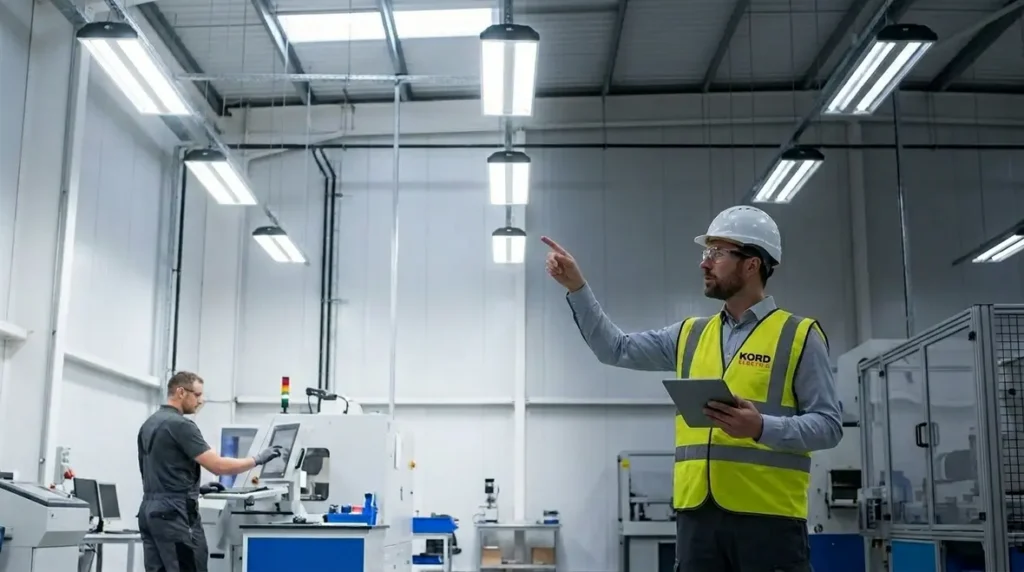
In larger facilities, we also plan for how groups behave. Manufacturing areas can have different motion patterns than administrative floors. By using zoning and consistent sensor strategy, we keep performance reliable. And if something needs correction, our technicians support the system so it stays aligned with how the building actually runs. For facilities that want a broader upgrade, integrating these commercial lighting control systems with dedicated lighting installation services ensures that hardware, software, and wiring all tell the same story.
How we manage commissioning, maintenance, and long term performance
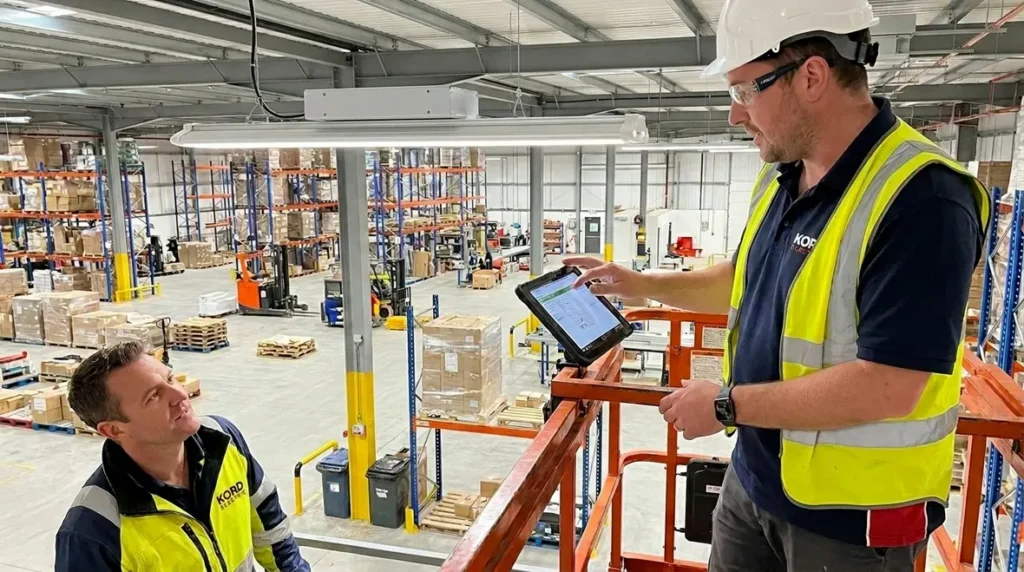
Installing control hardware is only step one. The real win comes from commissioning and keeping the system healthy over time. We test sensor behavior, dimming response, daylight compensation, and time schedules. Then we verify how each zone responds under normal conditions. Finally, we confirm that overrides work and that the building team can manage everyday needs without calling us for every small change.
Maintenance matters too. Sensors can collect dust, fixtures can age, and daylight conditions can change as construction or interior updates occur. Therefore, we recommend inspection routines that keep the control system accurate. When we support a facility, we also help explain what to watch for, like unusual dimming behavior or unexpected lighting patterns. Our expert service staff focuses on preventing issues early, because nobody likes surprise problems right before a tenant walkthrough or a compliance visit.
We also align lighting control planning with the broader electrical system approach for modern buildings. When the design includes coordination between lighting circuits, controls, and power distribution, the system runs more predictably. And predictability is a business asset. For owners planning larger upgrades, connecting controls with region wide projects such as Los Angeles County commercial electrical services keeps local facilities consistent with portfolio wide standards.
FAQ about commercial lighting control systems
Ready to lower lighting waste in your facility
If your commercial or industrial building still runs lights at fixed levels, you are paying for brightness you may not need. We at Kord Electric design, install, and support lighting control solutions that improve comfort and reduce energy use through zoning, scheduling, and daylight response. Contact us to discuss your building layout and operating hours. Then our technicians and expert service staff will walk you through the plan, so you get clarity you can trust and results you can measure. Let’s make the lights act like professionals.
Whether you are upgrading a single warehouse or rolling out commercial lighting control systems across an entire portfolio, our team helps you connect controls, fixtures, and code requirements into one practical strategy. From automated scheduling and daylight harvesting to integration with larger electrical projects, we focus on solutions that keep saving energy long after the first walkthrough is over.