Commercial Lighting Control Systems Retrofit Guide
Why Kord Electric recommends a commercial lighting control systems retrofit
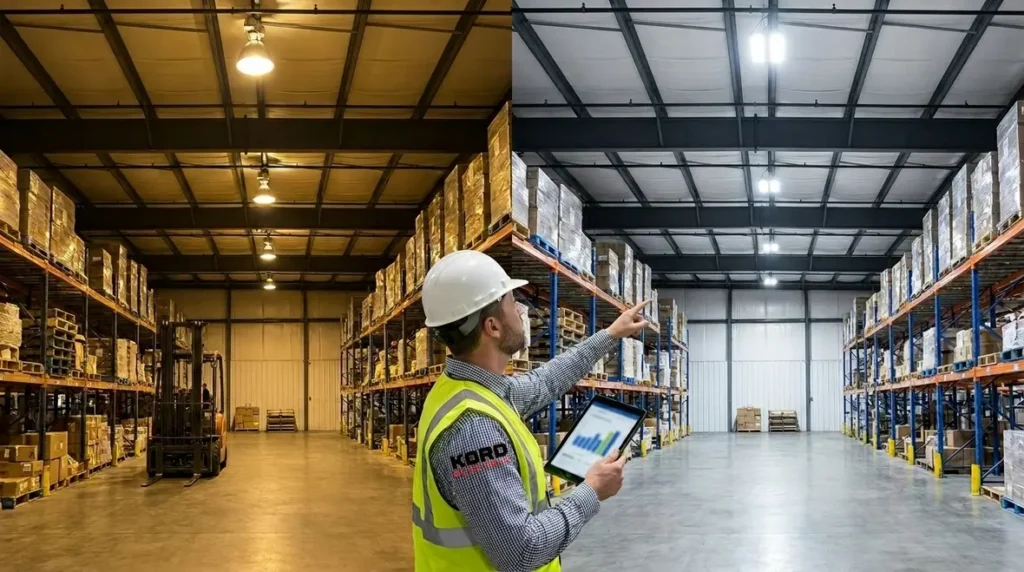
At Kord Electric, we fit commercial spaces with commercial lighting control systems retrofit that cut waste, lower costs, and help teams meet code and policy goals without shutting down their whole building. Because in commercial and industrial facilities, lighting does not get treated like a casual upgrade. It gets treated like a utility that never sleeps, and usually bills you while it does.
To do this right, we plan the upgrade like a calm, slow tune that still hits every note. First, our team audits how the lights behave today. Then, we add controls that match real usage patterns, not guesses from a spreadsheet. Finally, we verify performance so the system stays efficient after installation. And yes, we explain everything in plain language, because nobody should need an engineering degree just to dim a hallway.
Step by step: from audit to controls that actually reduce energy
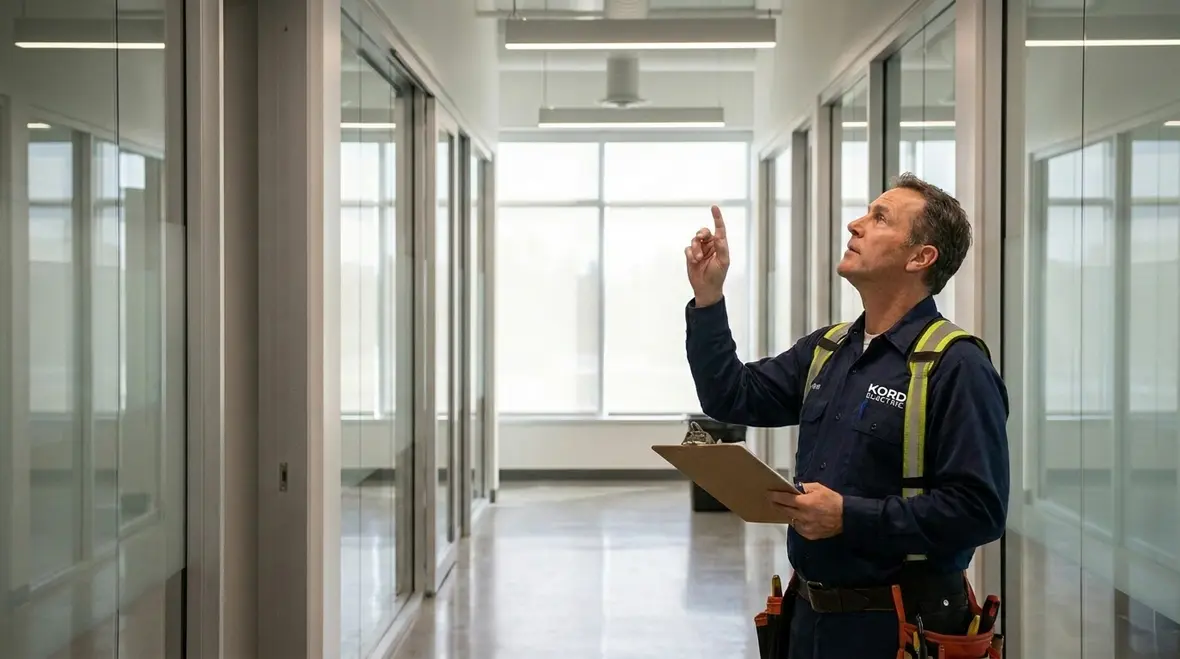
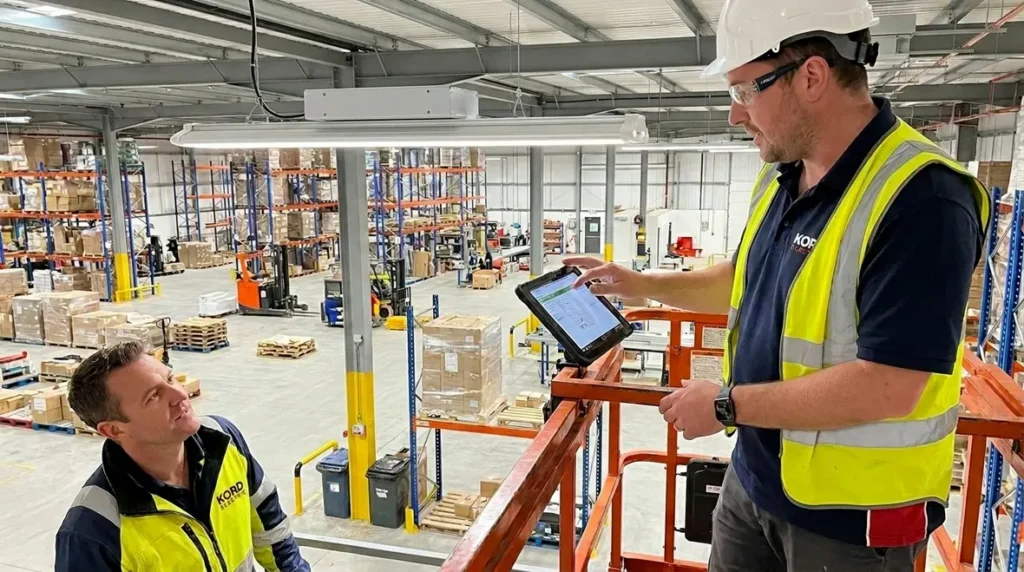
People often think the process starts with buying devices. It should not. Instead, we start with how the building operates, and then we map controls to that reality. Our technicians examine zones, fixtures, switching habits, occupancy patterns, daylight availability, and tenant schedules. After that, we confirm what can be reused and what must be replaced.
Next, we build a control strategy. For example, we may group lights by functional areas such as offices, corridors, restrooms, break rooms, warehouse bays, and exterior entries. Then, we choose the right type of control for each zone. Even when two spaces look similar, the usage can differ enough to change the entire control plan.
Afterward, we coordinate power, wiring paths, and mounting constraints. We also check that the new system can communicate with the existing electrical infrastructure. This matters because a retrofit fails when the hardware is installed but the behavior does not match the design. In other words, the lights may dim, but they may also dim at the wrong time. So we tune the settings during commissioning.
At Kord Electric, our expert service staff then trains the building team on day to day operation. In many cases, we set the system so staff do not have to “manage it like a mood.” The building manages itself, within the limits you choose.
Efficiency upgrades that go beyond dimming

Dimming helps, but it is not the whole story. A good commercial lighting control systems retrofit targets the full chain of wasted light: unnecessary run time, poor zoning, and lack of response to occupancy and daylight. Therefore, we combine multiple control methods so lights behave like they should in the real world.
For interior spaces, occupancy sensing can reduce lights when people leave. However, we do not treat occupancy sensors as a one size fits all item. We place and configure them based on traffic flow, ceiling height, and activity type. Then, we add time based schedules where appropriate, such as for offices that follow consistent start and stop times.
For areas with daylight, we use daylight harvesting controls. That means the system adjusts light levels based on natural light coming through windows or skylights. As a result, it keeps brightness steady without constantly “fighting” the sun.
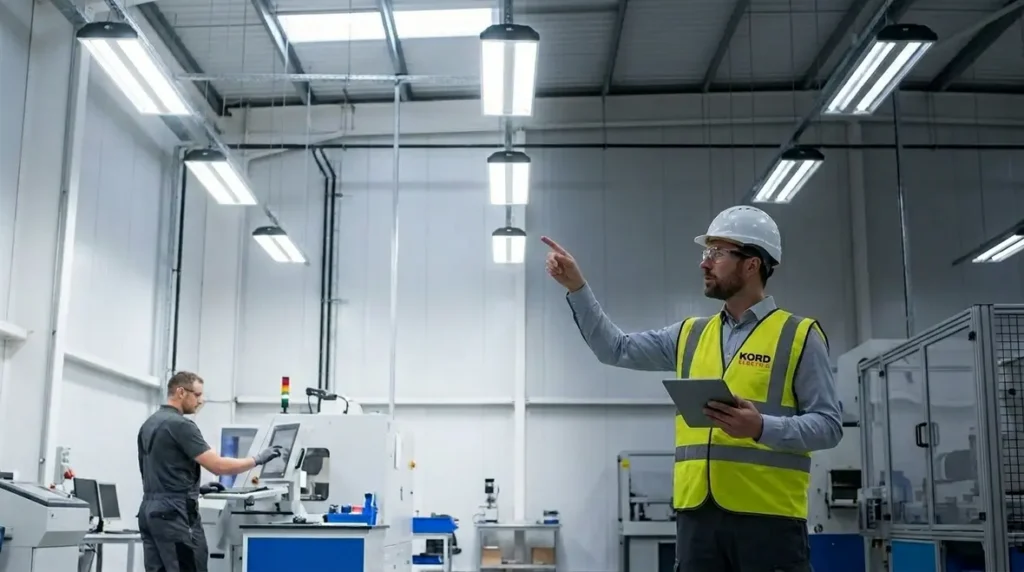
For warehouses and high bay spaces, the best approach often uses zone controls with robust sensing. Warehouse motion patterns differ from office patterns, and so the controls must match. Meanwhile, exterior lighting benefits from astronomical scheduling and overrides, so the building does not burn energy during the wrong hours.
Our technicians also set minimum light levels and transition times. This reduces flicker complaints and supports visual comfort. And when building teams want it, we can support event based scenes for inspections, safety checks, and special operations.
Compliance and documentation that helps building owners sleep
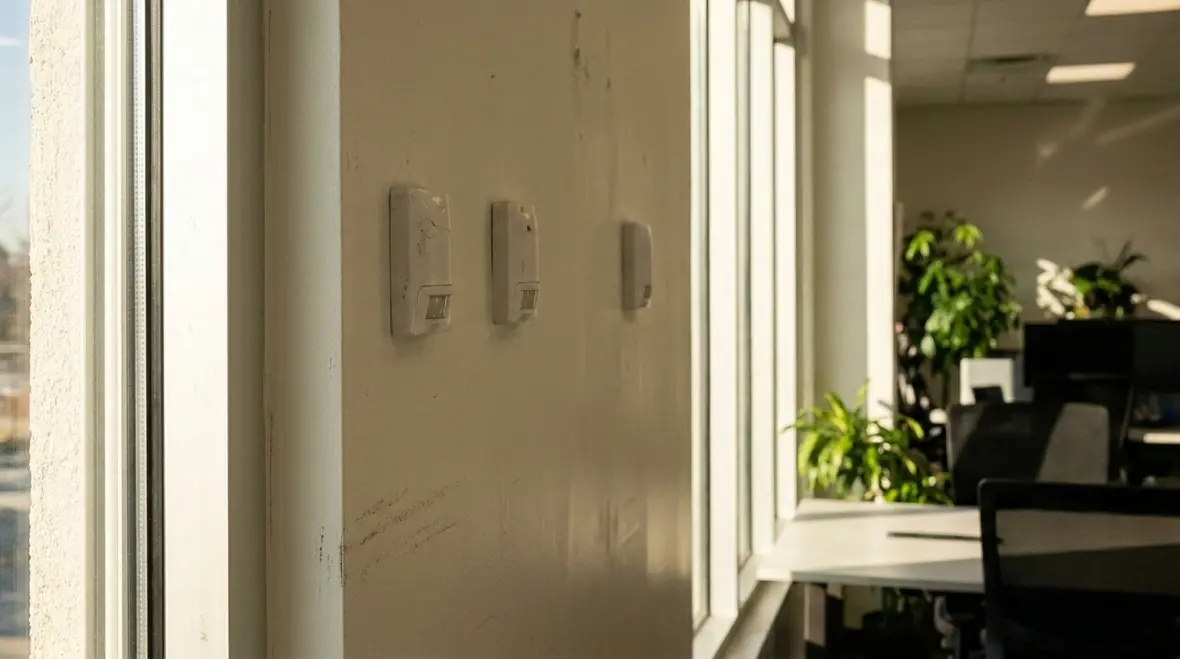
Commercial and industrial facilities face compliance expectations that do not always land gently. Therefore, Kord Electric builds compliance into the retrofit plan instead of trying to catch up at the end.
First, we confirm which standards and requirements apply to the facility. Then, we design the control zones and switching behavior to align with those needs. Next, we verify that sensors, switching levels, and automatic shutoff or dimming behavior meet the intent of the code or program you follow. For facilities operating in California, that often means aligning retrofit strategies with current commercial lighting compliance in California guidance so upgrades support both savings and inspection readiness.
We also help with documentation, because many building teams need more than “it works.” They need clear records of what was installed, how it operates, and how it performs after commissioning. So our service staff provides setup notes, as well as training for the people who run the building. When you pair that with structured electrical preventive maintenance, you get a control system that stays aligned with code and internal policy instead of drifting over time.
Now, a quick pop culture moment. Compliance is like the final boss in a video game. If you skip steps, you cannot just mash buttons and win. You still have to fight the rules. We do not make you fight alone.
When audits or inspections arrive, you will have a better story than “we think it should meet expectations.” Instead, you can show the system design and the tested behavior.
Commercial upgrade cost factors and how we help manage budget
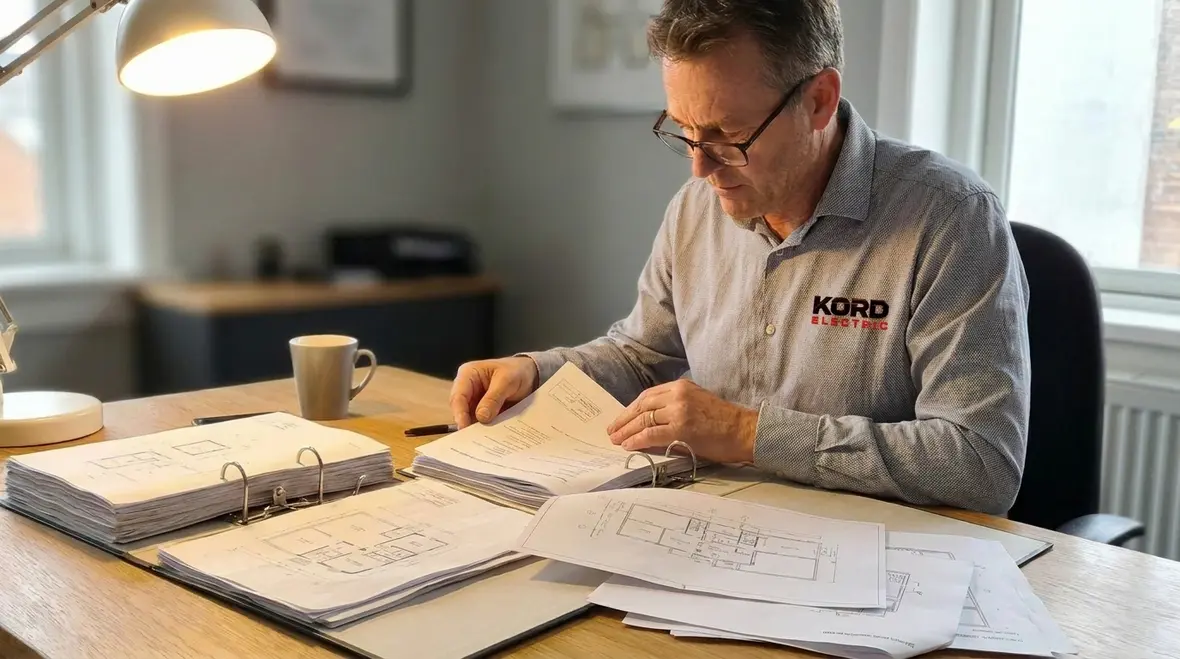
Cost depends on more than the number of fixtures. Our team at Kord Electric reviews the building plan, the condition of the electrical distribution, the layout of zones, and the existing lighting hardware. Then, we estimate the retrofit based on control points, sensors, panels, wiring needs, and any required integration.
If you want a useful starting view, we publish a commercial lighting upgrade cost guide that breaks down what often drives pricing. While every site differs, we use the same logic during our on site planning. So you can expect us to discuss the factors that shape your final scope, rather than hiding them behind a vague number.
To manage budget responsibly, we often offer phased options. For example, we can start with the highest energy zones first, like exterior lighting, break rooms, and large open areas. Then, we expand after the building team sees performance and savings in real conditions.
Also, we look for opportunities to reuse existing components when it is safe and practical. That can reduce downtime and keep the project timeline realistic. However, we do not cut corners if the reuse would hurt performance or compliance. Efficient lighting is not a place for “good enough” thinking. Not in a warehouse, not in an office, and definitely not in a facility that runs every day like it has a schedule tattooed on its soul.
Commissioning, training, and service that keeps the system performing
Installing controls is only the first act. The system has to be commissioned, tested, and then supported long term. This is where many projects stumble because the lights get switched on, and then nobody revisits the settings.
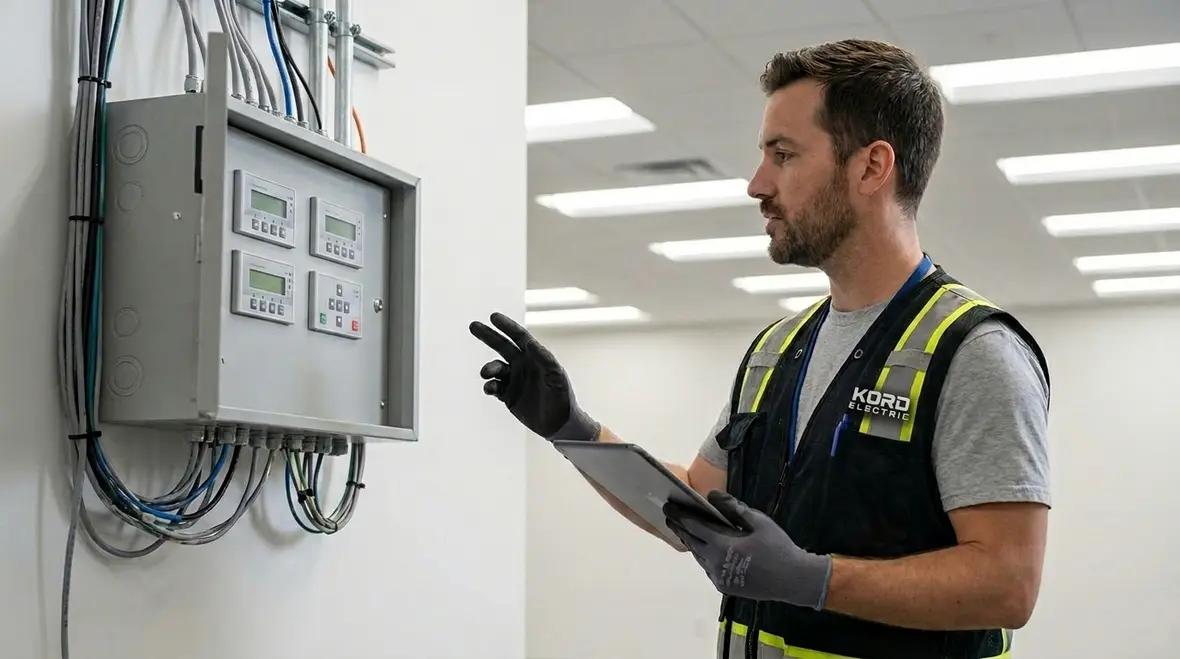
After installation, our technicians commission the controls by verifying sensor coverage, verifying time schedules, and checking daylight response where applicable. We also confirm that overrides and scenes behave as intended. If a zone responds too slowly or stays bright too long, we tune it. That tuning is what turns a retrofit into true savings.
Next, we train the building team. We show how to use scheduling tools, how to override controls during special events, and how to handle day to day adjustments. In many cases, we also provide guidance on how to report issues so repairs stay fast.
Because commercial and industrial facilities run on uptime, Kord Electric supports maintenance and service planning. So the system does not degrade over time due to missed set points or sensor drift. And yes, we explain the details so staff can understand what the system does and why it does it.
FAQ: commercial lighting control system retrofit basics
Need a retrofit plan for your facility
If your commercial or industrial building burns energy like it is trying to set a personal record, Kord Electric can help. We assess your current lighting, design a control strategy that fits your operations, and install a commercial lighting control systems retrofit that supports efficiency, savings, and compliance. Then we commission the system and train your team so it keeps working the way it should. For facilities planning broader electrical reliability, pairing your retrofit with structured electrical preventive maintenance programs can keep both lighting and power infrastructure performing at their best. Contact Kord Electric today to schedule an audit and get a clear, practical upgrade path.
If you are exploring additional upgrades beyond lighting controls, Kord Electric also provides recessed lighting installation and broader commercial lighting services that can align with the same project window, so you modernize fixtures and controls together instead of in disconnected phases.
When you are ready to see how a commercial lighting control systems retrofit fits into your budget and long term plans, you can start with the Commercial Lighting Upgrade Cost Guide and then schedule a site specific assessment. From first walk through to final commissioning, our team keeps the process calm, transparent, and tuned to how your building actually runs.