Preventive Electrical Maintenance Checklist for Warehouses
At Kord Electric, we treat a large-scale warehouse like a living system. So, we start with a preventive electrical maintenance checklist for warehouses that we build around real operating risk, not guesswork. In the first hours, our team verifies the basics that keep lights stable, motors steady, and breakers calm. Then, we move into deeper checks like panel condition, grounding integrity, circuit labeling accuracy, and the kind of load behavior that can sneak up on a facility after hours of “everything seems fine.” And yes, we also remind managers that electrical issues rarely announce themselves with a helpful sign. They just show up, like a pop-up ad nobody asked for.
Core goals of preventive maintenance in industrial buildings
In commercial and industrial facilities, electrical work is never just about power. It is about uptime, safety, and predictable operations across shifts. When we perform preventive electrical maintenance checklist for warehouses tasks, our focus stays on the parts that drive both performance and compliance. First, we reduce the chance of unplanned downtime by catching degradation early. Next, we protect staff by confirming that protective devices behave the way the equipment expects. Finally, we keep systems efficient so the facility does not burn money just to keep the lights on.
To make this concrete, our expert service staff explains findings in plain language during and after each visit. If we see a panel that is warmer than it should be or a motor that shows early signs of bearing stress, we do not just log it. We translate it into what it likely means for operations, repair timing, and budgeting. That way, facility leaders can plan instead of panic.
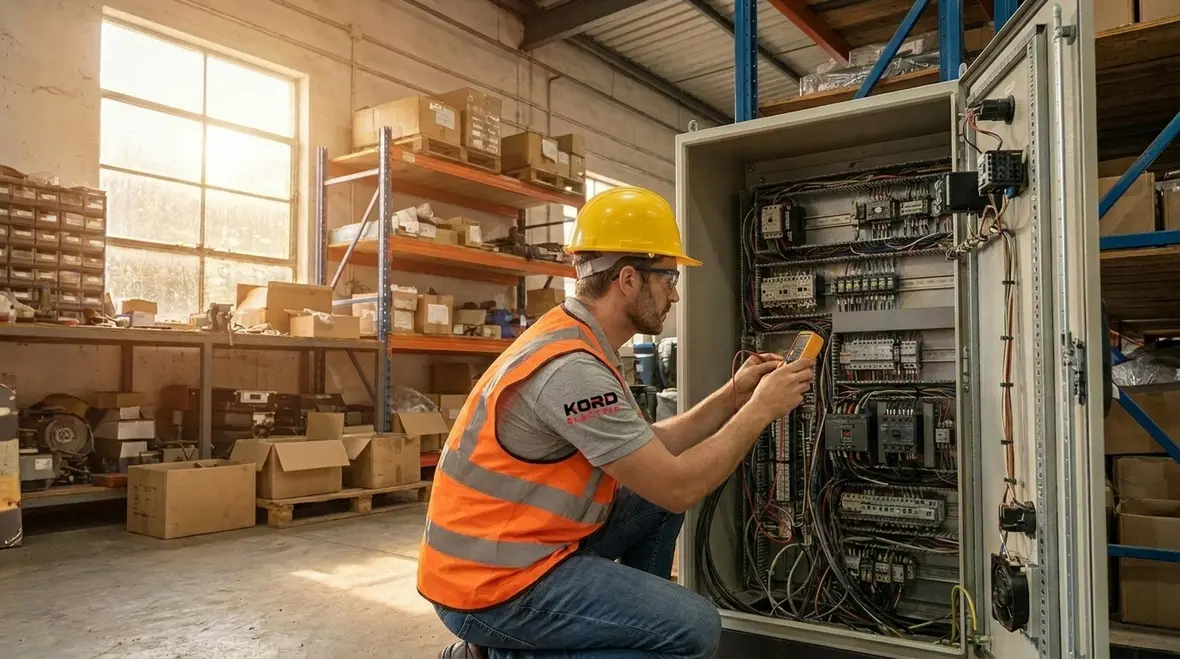
Electrical rooms and panels: what our technicians inspect first
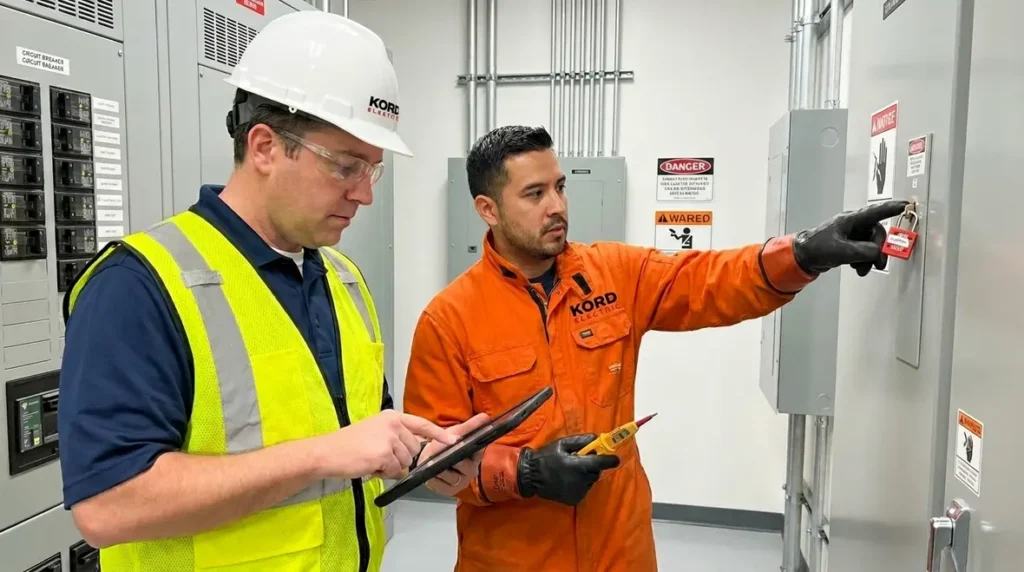
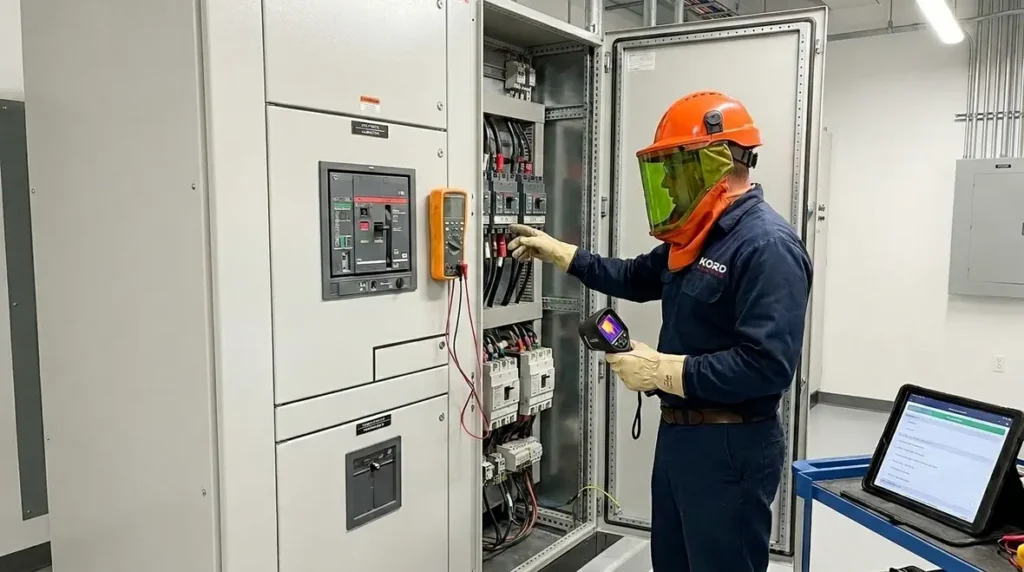
Before we touch anything connected to critical loads, we secure the environment. Then we inspect the electrical room like it is the control center it truly is. Because temperatures rise, dust accumulates, and vibrations happen, equipment condition can drift over time. Therefore, our technicians prioritize safe access, labeling clarity, and visible signs of overheating.
- Panel condition: we check for discoloration, loose fasteners, arcing evidence, and corrosion.
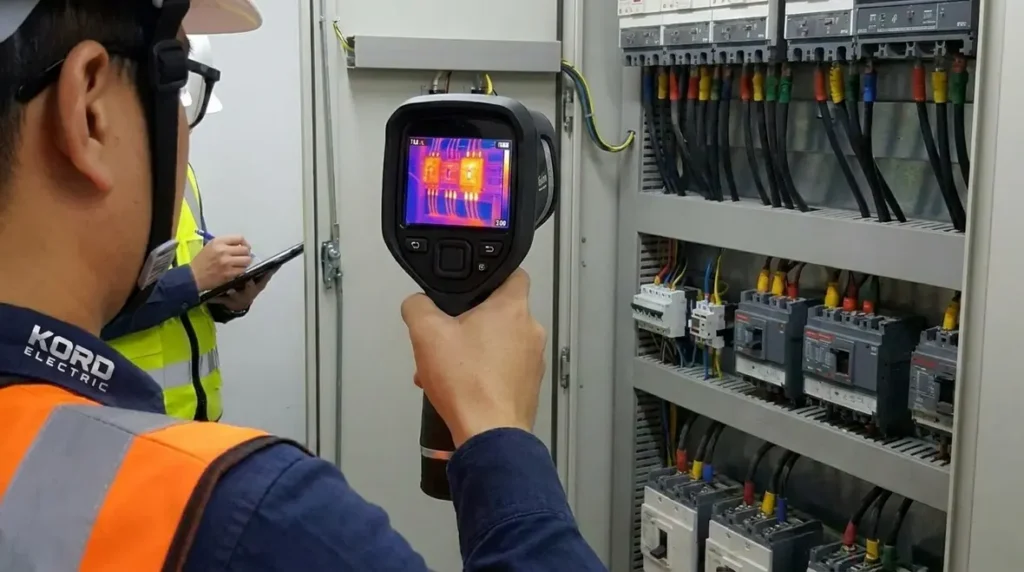
- Breaker performance indicators: we look for signs of wear, misalignment, and abnormal heat patterns.
- Busbar and lugs: we inspect physical integrity and verify connections as needed.
- Thermal signals: we plan for infrared scans to catch hotspots early.
- Grounding and bonding: we confirm continuity paths and corrosion points.
At this stage, we also confirm documentation matches reality. When labels do not match the wiring, every future troubleshooting task becomes more complicated and more expensive. And if that sounds like fun, well, it is not. It is like reassembling a guitar with half the screws missing.

Motors, drives, and warehouse power flow checks
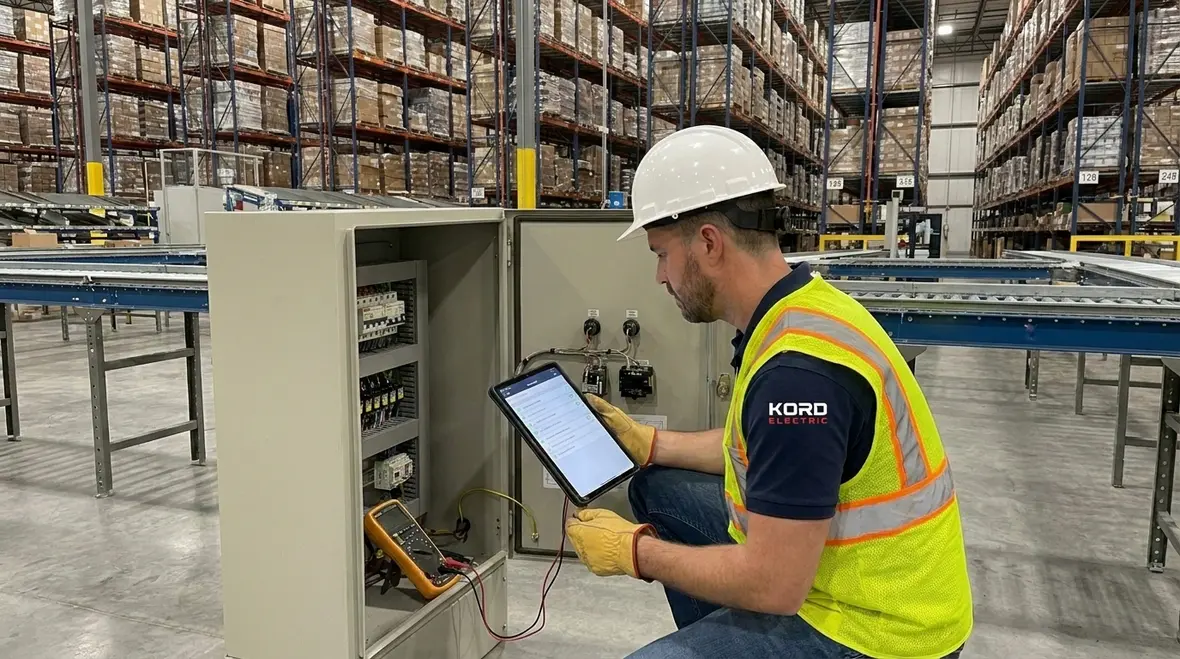
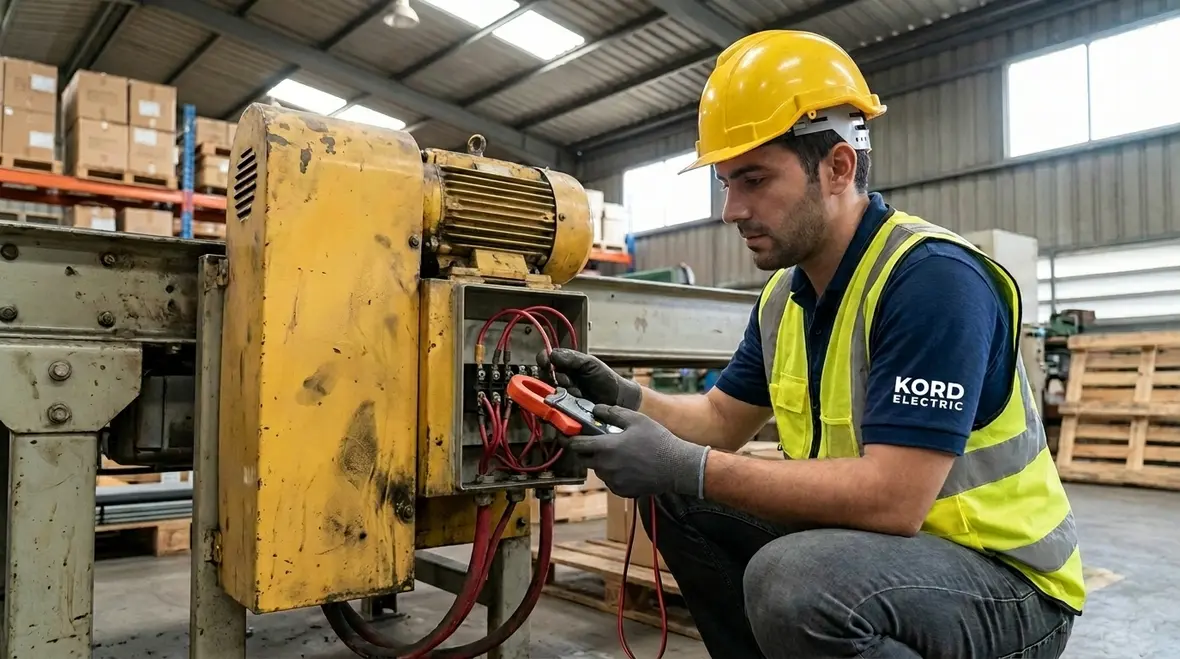
Warehouses rely on motors for conveyors, fans, pumps, dock systems, and material handling equipment. However, motor problems rarely start with a dramatic failure. Instead, they often begin with small changes in current draw, vibration, or thermal behavior. As a result, our preventive electrical maintenance checklist for warehouses approach includes checks that align with how these systems fail over time.
We typically focus on these areas during scheduled visits:
- Motor nameplate verification: we confirm ratings, voltage, and load match.
- Load behavior: we review electrical signatures to identify abnormal patterns.
- Vibration and mounting: we look for looseness that turns into electrical stress.
- Drive settings: we verify parameters so the drive supports the motor and not the other way around.
- Controls and interlocks: we ensure safety logic functions correctly.
Additionally, our expert service staff explains what the signals mean. If a motor draws slightly higher current than before, we do not just say “could be aging.” We connect it to likely mechanical causes, belt tension, alignment, and load changes tied to warehouse operations. That kind of clarity helps others avoid replacing parts too early or waiting too long.
Lighting systems and demand side reliability
Lighting in a warehouse does not just affect visibility. It impacts safety, productivity, and even comfort during long shifts. Therefore, we treat lighting and its controls as part of the electrical reliability plan, not a separate “facility maintenance” category. When we assess lighting systems, we also consider the power side of the upgrade decision.
If your building uses older lighting designs, you may be weighing an upgrade path. In many cases, commercial lighting upgrades reduce energy use and help stabilize electrical loads. Our team also references the insights from our commercial lighting upgrade cost guide to help leaders understand budgeting and timing. Then, we align lighting improvements with electrical capacity and control strategies, so the upgrade does not create new issues for panels or feeders.
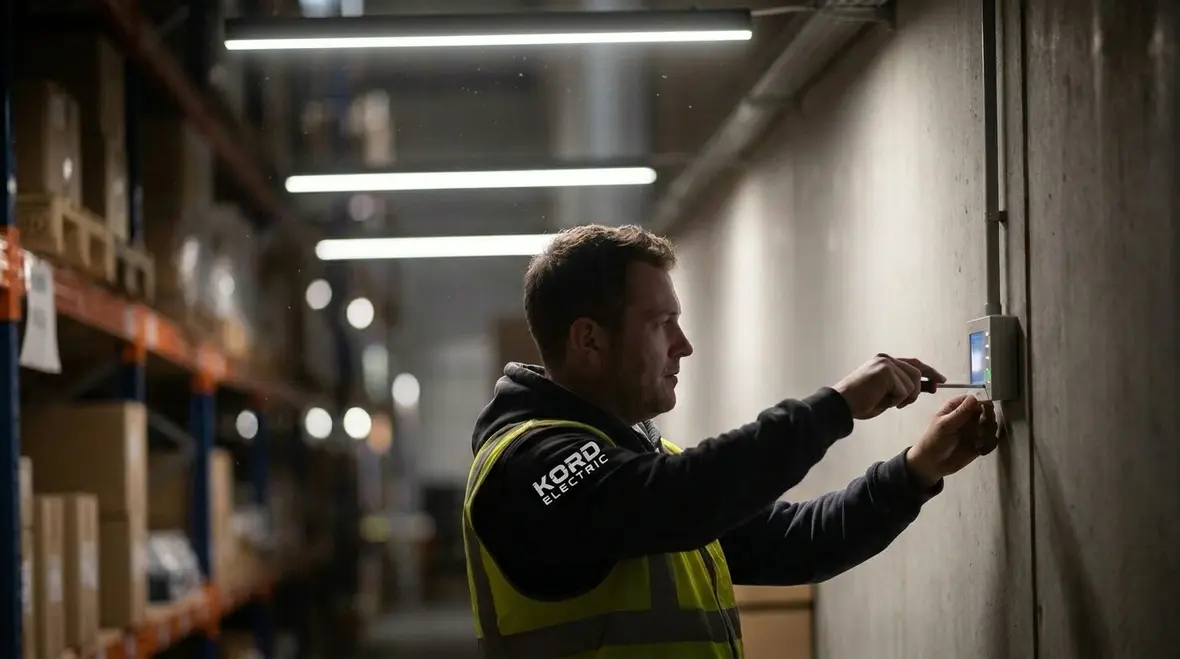
During this phase, we also verify that controls work in the real world. For instance, sensors should respond properly across motion patterns and changing dock traffic. Timers should prevent nuisance cycles. And emergency lighting should function as required during testing. In short, we keep the lighting system dependable, and we keep the electrical side coordinated, because both have to play nice together.
Grounding, surge protection, and safety assurance
In industrial settings, safety systems must perform under stress. That is why we do not treat grounding and surge protection as paperwork. We treat them as protection for people, equipment, and data side operations that warehouses often rely on for inventory visibility and logistics tracking.
We confirm grounding and bonding continuity and then evaluate how surge protection devices fit into the facility’s electrical architecture. Lightning events, switching transients, and utility disruptions can stress equipment. As a result, we verify that surge devices are appropriate for the panel and load context, and that their condition supports ongoing protection.
At the same time, we help facility managers understand risk in plain terms. If surge protection shows signs of end of life, we explain what it likely means for future events, and we recommend next steps. Think of it like a seatbelt that still looks usable after a minor jolt. It might be fine, until it is not. We prefer “fine” to be proven, not assumed.
Ground rules for maintenance scheduling across shifts
Warehouses operate. Therefore, maintenance must fit the schedule, not fight it. Our technicians plan work with shift patterns, peak demand windows, and operational priorities. Then, we document findings in a way that other teams can use immediately, from operations to procurement to compliance.
To keep downtime short and safe, we follow a simple flow:
- Pre planning: we review equipment list, electrical one line drawings, and prior reports.
- Risk walkthrough: we identify what to check without interrupting critical processes.
- Targeted testing: we perform focused inspections and measurements instead of random poking.
- Clear communication: our expert service staff shares findings while the team is still on site.
- Action plan: we deliver recommendations ranked by urgency and impact.
This structure matters because it reduces surprises. Also, it makes it easier for leadership to justify budgets. When we show a likely failure mode and its operational impact, the conversation moves from “we should” to “we will.”
FAQ: preventive electrical maintenance checklist for warehouses
Call Kord Electric for a reliability plan that fits your warehouse
If your warehouse runs on schedules, conveyors, and hard deadlines, electrical reliability should run the same way. Kord Electric builds a preventive electrical maintenance checklist for warehouses program around your equipment, your operating hours, and your safety needs. We send technicians who explain findings in business friendly terms and recommend next steps with real operational impact. If you want fewer surprises and better planning, contact us to schedule an assessment for your commercial or industrial property, or explore how our structured electrical preventive maintenance services can support long term reliability across every distribution panel, motor control center, and lighting system in your facility.
For warehouses planning broader upgrades, pairing this checklist with targeted projects like recessed or high-bay lighting improvements can further reduce energy use and enhance safety. Our team integrates maintenance insights with upgrade planning so that when you modernize lighting, add new equipment, or reconfigure storage layouts, your electrical system is ready to support the change instead of struggling to keep up.